A Groom Shouts “I Refuse!” and Runs Away on His Wedding Day – Five Decades Later, His Lawyer Shows Up with a Shocking Explanation.
The Bride Abandoned at the Altar: 50 Years Later, the Truth Finally Comes to Light
I married a wonderful man and raised three children after my first fiancé abandoned me at the altar. I had already accepted that I would never know why he walked away. Then, fifty years later, his lawyer showed up at my door with a box I wasn't sure I wanted to open.
The first time Henry broke my heart, he was standing just three steps away from me, inside a church.
The second time, he wasn't even in the same room.
I was 22 years old when he shouted, "I DO NOT!" in front of 80 wedding guests and ran out of our wedding.
Fifty years later, a young lawyer showed up at my door carrying a box that explained why.
At first, I didn't want to let him in.
"My name is Daniel," he said. "I represent Henry. He's very ill and asked me to deliver this personally."
"Then tell him I have nothing to say."
"I understand. But there's something in this box that you deserve to see."
I was holding a dish towel.
I'd just baked cookies for my grandchildren, and the kitchen timer was still ringing in the background.
"Why now?"
Daniel glanced at the box.
"Because he's afraid of dying before you learn what really happened."
I almost closed the door.
Instead, I stepped aside.
We sat at the kitchen table.
Daniel placed the box between us but didn't try to open it.
"Henry told me you might ask me to leave. If that happens, I'll go."
"Are you related to him?"
"I'm his nephew. I'm also the lawyer helping him organize his personal affairs."
That explained the emotion in his voice, but it didn't explain why a humiliation from 50 years ago had found its way into my kitchen, beside my cookies that were beginning to cool.
I lifted the lid.
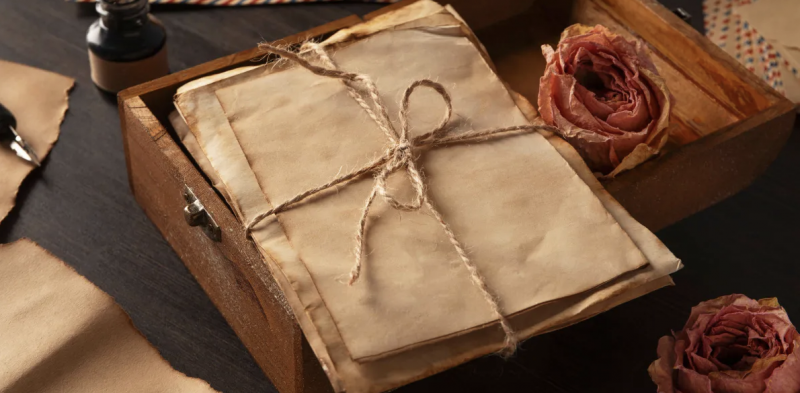
Inside was a wedding invitation, yellowed with age, a few photographs, and a thin envelope with my name written on the front.
I recognized that handwriting.
Or at least, I thought I did.
It looked like the careful handwriting I used when I was young, back when I wrote long letters instead of making phone calls.
I unfolded the paper.
"Henry, I need to be honest before we make a mistake."
"I don't love you the way you love me."
"I'm marrying you because I need security and because your family can provide the kind of life mine never could."
My mouth went dry.
The letter continued:
"Please don't expect me to become a devoted wife after the ceremony."
"I'm grateful for what you can offer me, but this marriage is a matter of necessity, not love."
"I hope you're sensible enough to accept that."
At the bottom was my name.
"Margaret."
"Where did you get this?" I asked.
"Henry kept the letter."
"I never wrote this."
Daniel nodded.
"He knows."
I read the page again.
The strokes of the letters really did look like mine.
Even the way the writer crossed the letter "t" seemed familiar.
But I had never said those things.
I had loved Henry since we were teenagers.
I loved him when he drove an old pickup truck with a broken heater.
I loved him when he worked late at his father's store.
I loved him when he saved money for months to buy the ring I wore until the day he walked away.
His family had money. Mine didn't.
I knew people noticed the difference, but Henry had never made me feel inferior for being poor.
Or at least, that was what I believed.
I folded the letter with trembling hands.
I met Henry when I was 16.
He was the boy who waited outside the school library because he knew I'd stay there until closing time.
On winter nights, he'd walk me home, even when it meant taking an extra two-mile detour.
His mother, Evelyn, never approved of our relationship.
She invited me to dinner at her house exactly twice.
Both times, she asked questions about my father's job and wanted to know whether my mother planned to return to cleaning houses.
Once, while I was helping clear the dishes, she remarked:
"Henry has always had expensive tastes. I wonder when he lost his good judgment."
I smiled because I didn't know what else to do.
Henry apologized afterward.
"She thinks she gets to have an opinion about everything. But she doesn't."
When he proposed, his mother said we were too young.
Then she suggested we wait until he had finished taking over his father's business.
Henry refused.
We chose a date in the spring.
I sewed my own wedding dress with my mother's help. She stayed up all night adjusting the hem while I practiced walking across our little living room.
On the morning of the ceremony, I could barely eat.
My father adjusted my veil outside the church.
"Are you ready?" he asked.
"I've been ready for years."
Henry stood at the altar wearing a dark suit. When he saw me, his eyes filled with tears.
That was the detail I could never understand after everything that happened.
He looked like a man who truly wanted to marry me.
Then the pastor asked whether he accepted me as his wife.
Henry stared straight at me.
His face grew serious.
"I DO NOT!" he shouted.
The words echoed through the church.
"Henry?"
He took a step backward, turned around, and hurried down the center aisle.
Someone gasped. My mother called his name.
I heard a chair scrape across the floor.
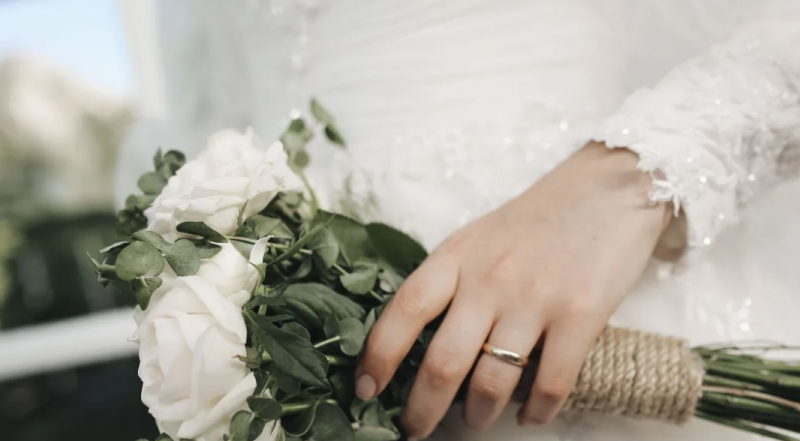
I stood frozen, holding my bouquet, while 80 people watched me.
At first, I thought he would come back.
Maybe he was feeling sick or had gotten scared.
Surely, he would explain everything.
I waited in the church until the guests had left.
Then I sat on the steps outside, my dress trailing across the stone.
By sunset, my father had to carry me to the car because I couldn't stop crying.
For weeks, people asked what I had done.
One woman even suggested Henry had discovered I was pregnant with another man's child.
My Aunt Ruth had an opinion too.
"No man walks away from a happy wedding without a reason, Margaret."
I wanted to scream that I didn't know the reason either.
Evelyn never contacted me.
Neither did Henry.
Six months later, I moved to Chicago with two suitcases and the $27 I'd saved from my part-time job.
I found work at a diner and rented a room above a grocery store.
Some nights, I cried into my pillow so the landlady wouldn't hear me.
Then I met Robert.
He came to the diner every Thursday and always ordered coffee and pie.
When I finally agreed to go out to dinner with him, I realized he asked more questions about books than about my past.
I told him the story of the wedding after we'd been dating for a few months.
He listened without interrupting.
"Do you still love him?"
"I don't know. I don't think I even know who he was anymore."
Robert nodded.
"Then we can take our time."
And that's exactly what we did.
He never pressured me to trust him quickly.
We married in a small ceremony with just 20 guests.
We raised three children.
We argued about bills, celebrated graduations, cared for our parents as they grew older, and learned to forgive each other for the ordinary mistakes of life.
Robert died four years ago.
Sometimes, I still put two cups on the counter before remembering he's no longer here.
Daniel waited while I stared at the forged letter.
"Henry's mother gave him this letter on the morning of the wedding," he explained.
"She told him I had written it?"
"Yes. She claimed you'd left it at their house the night before."
I pictured Evelyn's calm face, her pearl earrings, and the way she spoke as though every word she said ended any discussion.
"Why would he believe her?"
"She showed him the envelope. She said she'd found the letter inside a book you'd borrowed."
"That's ridiculous. I spent the entire night at home finishing my dress."
"Henry knows that now."
Daniel took another folder out of the box.
"Evelyn died 12 years ago. While Henry was sorting through her belongings, he found these documents at the back of a locked desk."
The folder contained three sheets of lined paper.
Each one was an attempt to imitate my handwriting.
One page copied the words "I love you, Henry" over and over.
Another contained a list of details:
"Margaret makes her capital M rounded. Uses a long tail on the letter y. Leaves very little space after commas."
The final page contained an earlier draft of the letter.
It began:
"Henry, I've been deceiving you."
Entire sentences had been crossed out and rewritten in a colder, more sophisticated style.
I felt sick.
"She practiced?"
"Apparently, for quite some time."
"She sat at a desk and practiced writing like me just to destroy our relationship?"
Daniel didn't answer.
He didn't need to.
My chest tightened as the pieces began to fall into place.
I remembered how my Aunt Ruth always spoke admiringly of Henry's family.
She was very close to Evelyn's sister, whom she visited frequently.
After the wedding, Ruth was the first person to suggest I'd done something shameful.
"Did my Aunt Ruth know something?" I asked.
Daniel shook his head.
"I haven't found any evidence of that."
"I don't have proof either. But she was always saying Henry's family was too good for ours. And she was constantly visiting his aunt."
Ruth had died many years earlier.
I couldn't ask her anything now.
Even so, certain memories suddenly seemed different.
The questions about my plans, the warnings not to be too ambitious, the way she didn't seem surprised when Henry ran away.
I placed the photograph on the table.
"Did his mother confess?"
"No. Henry found the drafts after she died."
"How convenient."
"He hired a handwriting expert to compare the drafts with the letter. The expert concluded that all the documents had been written by the same person."
"Henry's mother tried to imitate my handwriting."
"He recognized her handwriting in the notes. She had also kept the writing materials in the desk."
I asked the question I'd been trying to avoid.
"When did he discover all this?"
"12 years ago."
Robert was still alive then.
Our youngest son had just bought a house.
My grandchildren were still so little.
Henry had known the truth all that time.
"He found out 12 years ago and never told me?"
"He wanted to tell you."
"That's not what I asked."
Daniel lowered his eyes.
"No. He didn't tell you."
I felt a familiar anger rising inside me, but it wasn't the same helpless anger I'd felt at 22.
This time, I knew what had happened.
I knew who had written that letter.
And Henry had once again decided that I didn't deserve to know the truth until now.
Daniel explained that Henry had hired someone to find me after discovering the forgery.
The investigator found a public photograph of me with Robert, taken during our 30th wedding anniversary celebration.
Henry saw the two of us surrounded by our children.
He told Daniel he couldn't bear to interfere with that happiness.
"Interfere?" I repeated. "By telling me I hadn't done anything wrong?"
"He thought contacting you might cause you pain."
"It might have. But staying silent was a choice too."
Daniel nodded.
"He asked me not to try to justify that decision."
I looked toward the fireplace.
Robert's photograph sat on the mantel, beside a little clay bowl our granddaughter had made.
My life was right there, in that kitchen, in that house where our children had learned to walk.
I didn't want any of it erased because of a letter.
"Today marks exactly 50 years since he abandoned me at the altar. Why now?" I asked.
"Henry remembers the date. He's receiving treatment for advanced heart failure, and the doctors say his condition is getting worse."
I crossed my arms.
"Does he want me to visit him?"
"He would really like you to come. But he asked me to respect whatever decision you make."
I stayed silent for a long time.
Then I asked Daniel to leave the box with me.
That evening, my daughter Laura arrived with the children.
The kitchen filled with noise as the kids decorated the cookies I'd made.
I helped my youngest grandson decorate a star with far more frosting than any cookie needed.
I didn't mention Henry.
After everyone left, I picked up the original wedding invitation.
I'd kept it in a drawer for 50 years, although I rarely looked at it.
"Margaret and Henry request the pleasure of your company..."
I placed the forged letter beside it.
The handwriting looked painfully similar to mine, but those words didn't resemble the young woman I'd been at all.
Two days later, I called Daniel.
"I'd like to speak with Henry."
He arranged a visit at the care facility where Henry was staying after a recent hospital admission.
I drove there myself.
When I walked into the room, I barely recognized him.
His hair was white, and his shoulders were narrow.
An oxygen tube rested beneath his nose.
But when he looked up, I recognized his eyes.
"Margaret."
"Hello, Henry."
He pointed to a chair.
"Please, sit down."
I sat across from him.
For a few moments, neither of us said a word.
Then he spoke.
"I know you received the box."
"I did."
"I'm sorry."
"For what, exactly?"
He seemed surprised.
"For everything."
"That's quite a lot."
He lowered his eyes.
I asked him why he'd believed the letter.
"My mother told me you were ashamed to marry me," he replied. "She claimed you'd been laughing with your friends, saying how foolish I was for believing you loved me."
"Did you ask any of those friends?"
"No."
"Did you ask me?"
"No."
"Why?"
His fingers tightened around the blanket.
"I was angry. I felt like a fool. I thought you'd been pretending to love me."
"So you decided to humiliate me in front of everyone."
He nodded.
"I wanted you to feel what I thought you'd done to me."
Hearing that confession hurt more than I expected.
For years, I'd searched for an explanation.
One that would help me understand what he'd done.
What I found was a young man who chose revenge instead of having a simple conversation.
"Your mother lied to you," I said. "I understand that. But she wasn't the person standing in front of me at the altar."
"I know."
"Then why didn't you tell me the truth years ago?"
He looked out the window.
"After the investigator found a photograph of you with Robert, I couldn't do it. You looked happy. I thought you'd finally left me in the past."
"I had. Most days."
"I couldn't bear the thought of hurting you again."
"You weren't protecting me by staying away. You were just protecting yourself from hearing what I had to say."
He nodded slowly.
"You're right."
I leaned forward.
"You were afraid I'd be angry."
"Yes."
"And you were afraid I'd refuse to forgive you."
His eyes filled with tears.
"Yes."
I expected him to argue. Instead, he remained silent, reflecting on my words.
After a while, he asked about Robert.
I told him my husband had been kind, stubborn, and loving.
I told him we had three children and six grandchildren.
Henry managed a small smile.
"I'm glad someone truly loved you."
"He did."
Henry looked down at his hands.
"I never married."
I felt a brief sadness for the young man I'd once known, but it didn't change what I wanted.
"Henry, I didn't come here to find out whether we could have had a different life."
"I know."
"I came because I wanted to hear directly from you what really happened."
He took a difficult breath.
"My mother forged that letter. I believed her. I chose to humiliate you in the church. When I discovered the truth, I was too afraid to face you. I'm sorry, Margaret."
I remained silent for a few moments.
Then I stood up.
"I forgive you for believing someone you trusted. But I can't excuse what you did afterward, or all those years you let me believe it was my fault."
He nodded.
"I understand."
"I don't have the energy to reopen the past. I have a family and a life I love. I'm not coming back."
A tear rolled down his cheek.
"Thank you for coming at least once."
At the door, I turned around.
"I hope you're comfortable, Henry. And I hope you find peace."
"You too."
I drove home before sunset.
In the kitchen, I took the forged letter out of my bag and placed it beside the wedding invitation.
For 50 years, I'd looked at that invitation and remembered a question that had never been answered.
Now I finally knew the answer.
I placed both documents inside the old cardboard box and closed the lid.
Then I called Laura.
"Are you still bringing the children over on Sunday?" I asked.
"Of course! Why?"
"I thought I'd make Robert's favorite cookies."
She laughed.
"Mom, you make those cookies every Sunday!"
"I know. Tell the kids to come hungry."