A struggling woman discovered $50,000 on her doorstep, but the reality behind the situation led her to destroy every single bill.
The first time I found $50,000 on my veranda, I thought it was fate. The second time, there was a note — and that’s when I lit a match and watched each dollar burn.
New Neighbors
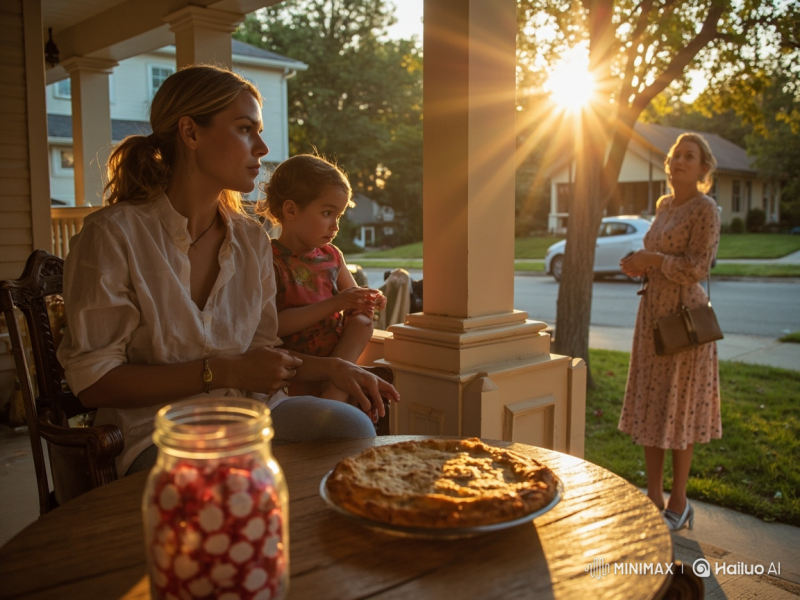
People around here called me Miss Sugar. No one knew when it started: maybe because I always kept a jar of peppermint candies on the veranda, maybe because my cakes smelled like a Sunday morning.
The kids from all the houses ran barefoot through my garden, shouting:
“Miss Sugar! Do you have any leftover cookies?”
“Only if you promise to actually have dinner later,” I’d say, giving one to each of them.
They’d laugh and scatter, their voices echoing down our street.
My heart wasn’t the same steady type anymore: the doctor told me I needed surgery I couldn’t afford, so I kept my world small — veranda, cakes, and the laughter of the children. That’s how it had always been — calm, friendly, predictable.
Until the moving truck stopped across the street one hot July morning.
A young woman stepped out first, her little girl hugging a stuffed bunny. The woman seemed kind — sun hat, soft eyes, warm smile.
Then I saw her. The older woman behind them, directing the movers, pointing with those sharp, lacquered nails. Greta. My breath stopped.
Greta — the woman my husband left me for. I hadn’t seen her in twenty years. She looked older, sure, but still had that air of satisfaction, as if the world owed her the sun.
“Good morning,” I said from my veranda.
She glanced in my direction, froze for half a second, and then turned her head as if I were invisible. Meanwhile, the young woman shyly waved at me.
“Hello! I’m Abby. This is my mother, Greta. We just moved in.”
“Welcome. It’s a nice place to raise a child.” I gestured to the little one. “What’s your name, dear?”
“Lottie,” the girl whispered, hiding behind her mother’s skirt.
Abby smiled apologetically. “She’s shy.”
“Don’t worry. All little girls are, until they try my cake.”
That made her laugh — soft, warm, nothing like Greta’s sharp smile.
Later that week, I saw Abby in her garden, planting marigolds. We started chatting over the fence. I liked her immediately. A gentle soul, no malice in her eyes.
But Greta... started showing her teeth soon enough.
One afternoon, when little Lottie tried to play with the neighborhood kids in my garden, Greta suddenly appeared.
“Lottie! Come here! I told you not to bother this woman.”
I blinked. “It’s no bother, Greta. The kids are just...”
“She should not be around strangers,” Greta cut me off, yanking the girl’s arm.
Abby rushed from the veranda. “Mom, please, she’s fine!”
“Fine?” Greta hissed. “You don’t know these people.”
I stood still, my hands trembling slightly. The old wound stirred. But there was something else too... a strange gleam when I looked at Abby. The same mark on her chin my daughter had. The same eyes, that soft gray-green.
I didn’t say a word. I just watched as Greta dragged the granddaughter inside, muttering something under her breath.
And for the first time in twenty years, I wasn’t sure if what I had buried had really stayed buried.
The Birthday
When August came, our street smelled of peaches and freshly cut grass. Abby and I started talking more. Once, she even brought me a jar of her homemade jam.
“Your peach jam is better than mine,” I said.
“I doubt it, Miss Sugar. Everyone says your cakes are legendary.”
She smiled.
“We’re having a little gathering for my birthday this Saturday,” Abby said. “Some neighbors, some friends. I’d love for you to come.”
“I’d love to.”
And in that moment, something clicked. Abby had just mentioned her birthday, and for a second, my heart skipped.
It was the same day my daughter was born... and passed away. But I stayed silent. In this town, you learn to wait until the truth reveals itself on its own.
Saturday came with the crickets singing and the smell of roasted corn rising through the street. Lottie ran after bubbles while the neighbors clapped to an old country song playing on the radio. When Abby saw me at the gate, her face lit up.
“Miss Sugar! You came!”
“Of course I came,” I said, holding a still-warm cake from the oven. “You can’t have a birthday without something sweet.”
“Thank you! This means so much.”
Greta was sitting at a distance, her glass of lemonade untouched, her eyes watching every movement like an eagle watching something that wasn’t hers. Later, when Abby went inside to bring the cake, Greta stood up and crossed the garden to me.

“You shouldn’t be here.”
I looked at her calmly. “I just came to wish Abby happiness. Nothing more.”
“You’ve caused enough damage.”
“I don’t know what you’re talking about.”
“You never know,” she said, and her lips curved into a cold smile that I remembered from another life.
Later, I sang “Happy Birthday” with everyone, but my voice trembled in the middle. Watching Abby close her eyes to make a wish, I couldn’t help but notice the small mark on her chin — the same spot my daughter had.
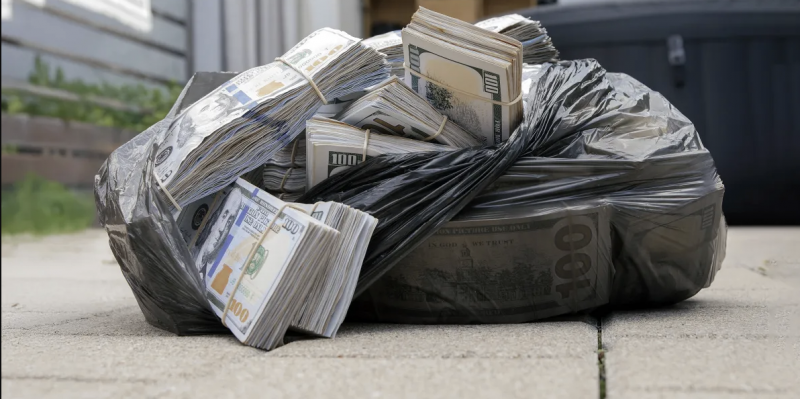
When I got home that night, the sun was setting behind the oaks. I almost tripped over something on my veranda — a plastic bag, no name, no note. Inside, there were fifty thousand dollars. I counted twice.
The bills were new, with a faint scent of expensive perfume.
My breath faltered. I even checked the mailbox, the doormat, even between the bushes. Nothing else. Just the plastic bag full of money.
The next morning, I took it straight to Sheriff Dale’s office. He turned the stacks of bills in his hands.
“No note, no fingerprints, no complaints. Doesn’t look stolen.”
“So who would leave something like this?”
“Maybe you’ve got a guardian angel. Maybe someone just wanted to thank you for being you.”
I let out a dry laugh. “Most angels don’t pay in cash, Sheriff.”
“You could finally get the surgery, Helen. Maybe this is the blessing being fulfilled.”
I nodded, though something about it didn’t feel like a blessing.
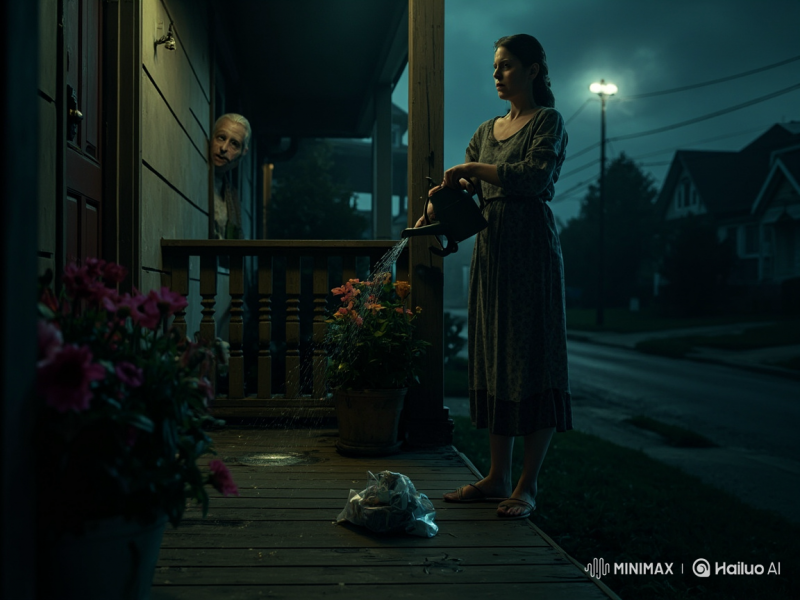
That evening, while watering my flowers, I saw Greta across the street, half-hidden behind the veranda post. Her face was pale. Her eyes — scared.
And that’s when I knew: whoever left that bag didn’t do it out of kindness. It was out of guilt.
The Second Bag
September came quietly, with fog wrapping the fields like breath on glass. The air smelled of wet earth and persimmons.
I had started to think that whole story about the plastic bag was just an accident — maybe a mistake by a rich man or some confusion at the bank. Life went on.
I baked, did some gardening, watched the neighborhood kids run after fireflies at dusk. Abby waved when she saw me. Greta didn’t. One night, Abby called me back over the fence.
“Miss Sugar, I still think about that cake you brought. Do you teach how to make sweets?”
I smiled. “Dear, if you want to learn, come one morning — I’ll teach you how to make the dough behave.”
She reminded me more of home each day — not this street, but the one I lost when my daughter didn’t live long enough to breathe the first air. That pain never left. It learned to stay silent.
The next morning, I woke up to a dull thud on my veranda.
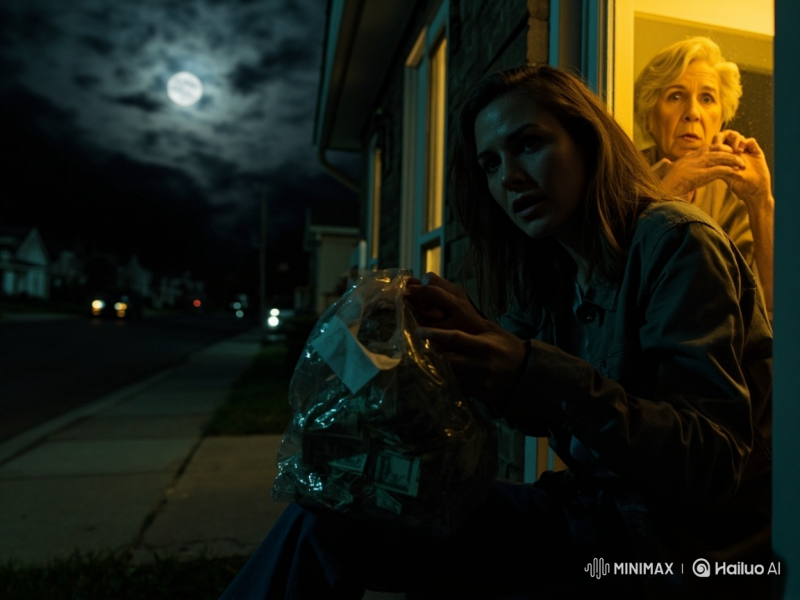
At first, I thought it was the newspaper, but there it was again — another plastic bag. I looked at it as if it might bite me. My hands trembled as I picked it up.
Inside: fifty thousand dollars. Again.
But this time, there was a bill: Stay away from your new neighbors.
That was it. Black ink, no name. I sat on the steps, the paper trembling between my fingers.
By noon, I was back at Sheriff Dale’s office.
He looked at the note. “Hmm. Have you bothered anyone lately?”
“I bake cakes for half the town. If that’s bothering, I might need to use less sugar.”
“I’ll check the serial numbers on the bills, see if they match the first time. But, Helen, if I were you, I’d stay quiet. Sometimes good luck attracts bad company.”
That night, I sat on my veranda with the note by my side and thought about Greta.
She hadn’t looked me in the eye since the birthday. When she saw me in town, she turned away so quickly it was as if I were contagious. Abby, however — still stopped by. She brought jars of honey, asked me about the flowers, told me stories about Lottie’s school.
I liked her too much to believe the note.
Still... the handwriting drew me in. Something about it, the way the “T” was crossed — wide and flat, as if someone was in a hurry to hide their clues.
Greta wrote like that. I saw her letters to my husband. She knew about the affair.
I tried to sleep, but the night was restless — crickets singing, my heart pounding in my chest. At midnight, I got up and looked out the window.
Greta’s lights were still on across the street. She was at the window, talking on the phone, pacing back and forth. When she turned, the light illuminated her face — pale, tense, scared.
What was she afraid of?
The Truth Knocks at the Door
The knock came early, just as the sun filtered through the kitchen curtains. When I opened the door, Sheriff Dale was there, his hat in hand.
“Good morning, Helen! Can I come in?”
“Did you find something?”
“Maybe. Maybe enough.”
He placed a folder on the table.
“Those bags of money... the bills came from a local bank. The serial numbers match a withdrawal made last month from a joint account — your ex-husband’s name was there, along with Greta’s.”
I felt the floor crumble a little.
“But he died years ago.”
“I found out he left everything to her — the house, the savings, even that account. She’s been withdrawing fifty thousand each time. And before you ask, no, she didn’t report anything missing.”
He looked at me with the same expression of someone who already knows the ending. “I don’t know what’s going on between you two, but whatever it is... it’s not charity.”
He touched the visor of his hat and left, leaving me alone with the truth weighing heavily in the room.
I didn’t even take off my apron. I went straight to cross the street.
Greta opened the door before I could knock twice. Her face was pale.
“You need to stop this,” I said. “The bags. The money. The notes.”
“You shouldn’t have come.”
“I want the truth, Greta.”
She swallowed hard, her eyes drifting to the stairs.
“Long ago. What was done, was done.”
“Then say it,” I whispered. “Tell me what you did.”
Her lips trembled. “You were in the hospital... you lost a lot of blood. The babies were born the same night — mine was born dead, yours was alive. He made the switch.”
For a moment, everything in the room blurred.
“You took my daughter! You two did it!”
Greta collapsed into a chair, crying into her hands.
“We didn’t want to. We wanted a child so badly. Jack and I... we were planning to stay together after you gave birth. But then... my baby was born dead, and yours was alive. He said it wasn’t fair, that you’d be left alone with the pain while we had no child. So he... we... decided to switch.”
“He said it was an act of mercy. He said you’d never know, and that Abby would grow up in a complete family.”
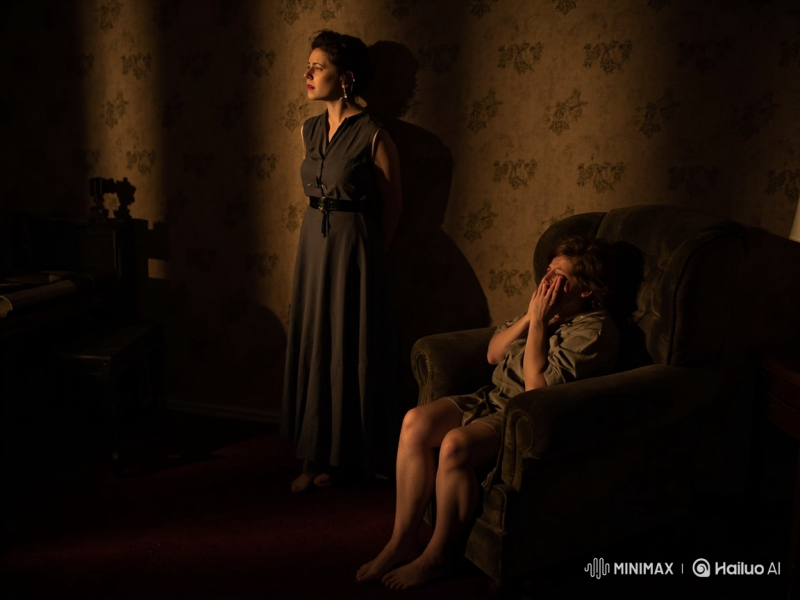
“And now she’s grown…”
Greta looked up, the mask melting from her cheeks. “You can’t tell her. Please. She’s happy. She doesn’t need to know. That’s what money is for — to keep this buried.”
I looked at the neat pile of money on her table. “Do you think a hundred thousand dollars can buy twenty years of motherhood? Do you think guilt has a price?”
Greta didn’t answer — she just cried, small and pitiful, like the ghost of the woman who took everything from me.
I turned toward the door. “You don’t need to worry, Greta. I’m not going to take her from you.”
“You’re not going to?”
“No. Because you didn’t take her love from me. She has my blood, and somehow, she’s already found her way back — without anyone’s permission.”
That night, I took every bag of money to the garden. One by one, I put them in the embers of the fire. They shriveled and darkened, the scent burning into a bitter smoke until there was nothing left but ashes and silence.
Across the street, Greta’s light flickered behind the curtain. I knew she was watching.
The next morning, Abby came to see me, holding a box of cupcakes.
“My mom said you weren’t feeling well. I just wanted to check in.”
I smiled and took the box. “You’re kind, dear. More than you know.”
“You remind me of someone. Someone I can’t remember.”
I looked at her: the mark on the chin, the gray-green eyes I saw in my mirror every day.
“Maybe you’ll remember. Dear, maybe you will.”
She smiled, waved, and walked away, her laughter floating down the street like music. And I stayed there, on my veranda, finally leaving behind the past that had possessed me. Because some debts aren’t meant to be paid. They’re meant to be burned.