After my 5-year-old gave a mailman a glass of water, a red Bugatti showed up at his preschool the very next day.
When my five-year-old son offered a glass of water to a tired mailman on a scorching afternoon, I thought it was just a sweet moment. But the next day, a red Bugatti appeared at his school’s front door. What happened next changed everything I thought I knew about kindness, wealth, and the power of a simple gesture.
The heat was unbearable that Tuesday afternoon, the kind that makes you wonder if breathing is worth it. I was on our porch with a glass of sweet tea, watching Eli draw dinosaurs in chalk on the driveway. His cheeks were flushed red, and his hair was sticking to his forehead in damp curls.
“Mom,” he said, suddenly looking up, “why is that man walking funny?”
I followed his gaze down the street. A mailman I didn’t recognize was coming toward us, walking slower than usual.
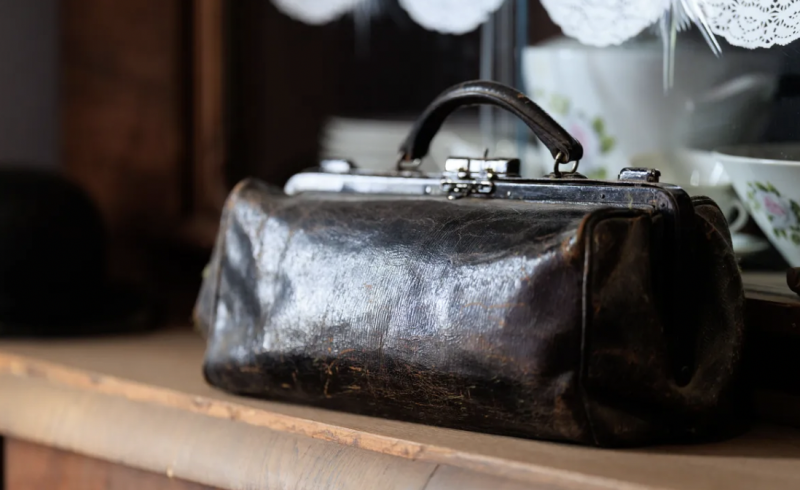
His uniform clung to his body, dark with sweat, and he seemed to be dragging himself from one mailbox to the next. The leather bag slung over his shoulder was heavy, pulling him to one side with every step.
He couldn’t have been over 60. Strands of gray hair mixed with his standard-issue cap, and his face was flushed from the heat. Every few feet, he stopped to catch his breath, one hand pressed to his back.
I figured he must be filling in for someone who was off sick. I’d never seen him on our route before.
“He’s just tired, sweetie,” I said softly. “It’s really hot out here.”
But Eli wasn’t satisfied with that answer. He stood up, chalk still in hand, watching the man with those serious eyes of his that made him seem older than his five years.

Across the street, Mrs. Lewis was standing next to her shiny SUV, arms crossed. She turned to her friend and spoke loud enough for the whole block to hear: “Oh my God, I’d die before I let my husband do a job like that at his age. Doesn’t he have any self-respect?”
Her friend laughed, a shrill sound that cut through the hot air. “Honestly, he looks like he’s gonna drop dead right there in someone’s yard. Someone should call an ambulance before he passes out.”
The mailman’s shoulders tensed, but he didn’t look up. He just kept walking, one foot in front of the other, as if he had learned long ago that answering back only made things worse.
Mr. Campbell, the retired dentist two houses down, was leaning against his garage door with a half-smile. “Hey, buddy! Maybe you should pick it up a little. The mail’s not gonna deliver itself, you know?”
A group of teenagers rode by on bikes. One of them, a skinny kid with a backwards cap, muttered loud enough for us to hear: “Bet he couldn’t retire. That’s what happens when you don’t plan right.”
Another laughed. “My dad says people like that made bad decisions. That’s why they’re stuck doing grunt work.”
I felt something hot and sharp twist in my chest. These were our neighbors. People we waved to in the supermarket, whose kids played at the same park as Eli. And here they were, treating that man like he was invisible—or worse, something to be mocked.
Eli’s small hand found mine. “Mom, why are they being so mean to him? He’s just trying to do his job.”
My throat tightened. “I don’t know, sweetie. Some people forget to be kind.”
The mailman finally reached our driveway, breathing heavily. He forced a weak smile as he approached. “Good afternoon, ma’am. I’ve got your electricity bill and a few catalogs for you today.”
His voice was hoarse, probably from dehydration. His lips were cracked and pale despite the heat, and I could see his hands shaking slightly as he pulled the mail from his bag.
Before I could say anything, Eli jumped to his feet. “Wait here, mom!”
He ran inside, his sneakers slapping against the concrete. I heard the screen door slam, then the sound of the refrigerator opening. Cabinets banged. Something fell in the kitchen.
The mailman looked at me, confused. “Is everything okay?”
“I think so,” I said, though I wasn’t sure what Eli was up to.
Thirty seconds later, my son came running back outside. In his hands, he carried his Paw Patrol cup, condensation already forming on the plastic, filled to the brim with cold water. Under his arm, he had one of his precious chocolates, the kind he usually hoarded like it was gold.
“Here, Mr. Mailman,” Eli said, holding out the cup with both hands. His face was serious, almost worried. “You look really tired. And hot.”
The man blinked, clearly surprised. For a moment, he just stared at the cup, as if he couldn’t believe it was real. “Oh, buddy, this... this is so kind of you, but you don’t have to…”
“It’s okay,” Eli insisted, pushing the cup closer. “Mom always says that if someone’s working really hard, they deserve a break. You’ve been walking a lot.”

The mailman’s eyes glazed over. He took the cup with both hands, as if it were something precious. “You’re a good boy. A very good boy.”
He drank the whole thing right there in our driveway, not stopping until it was empty. Then he unwrapped the chocolate bar and ate it slowly, savoring each bite. When he finished, he knelt down to Eli’s height, groaning slightly as he heard his knees crack.
“What’s your name, champ?”
“Eli.”
“Do you go to school, Eli?”
My son nodded enthusiastically. “Yes! Sunshine School. It’s just two blocks away.” He pointed down the street. “I’ve got lots of friends there. We’re learning about dinosaurs this week.”
The mailman smiled, a real smile this time, one that reached his eyes. “That’s wonderful, kiddo. You know what? You made my day. Maybe my year, actually.”
He slowly stood up, tipping his hat to both of us. “Thank you, ma’am. He’s a wonderful boy. You’re raising him right. And thank you, Eli.”
My eyes welled up with tears. “Thank you for saying that.”
That night, Eli couldn’t stop talking about the mailman. He sat at the kitchen table, swinging his legs, while I prepared dinner.
“Mom, did you know he walks all day? Even when it’s super hot. He delivers the mail to people so they’ll be happy and know what’s going on.”
“That’s true,” I said, stirring the spaghetti sauce. “It’s an important job.”
“I think he’s like a superhero,” Eli said seriously. “But instead of a cape, he has a mailbag.”
After dinner, he grabbed his crayons and drew a picture. It was unmistakably the mailman, tall with gray hair, but Eli had given him white wings sprouting from his back. At the bottom, in his careful kindergarten handwriting, he wrote: “Mr. Mailman - My Hero.”
I stuck it on the fridge, right between the finger-painted turkey from Thanksgiving and last week’s spelling test. Mark, my husband, came home from work and looked at the drawing.
“Who’s this?” he asked.
“It’s the mailman Eli gave water to today,” I explained. “He decided he’s a superhero.”
Mark smiled. “Well, for someone who walks around in that heat all day, a cold glass of water probably feels like a superpower.”
The next afternoon, I went to pick up Eli from Sunshine School as usual. He came running out, backpack swinging, talking about the papier-mâché dinosaur they’d made. We were walking toward the car when I noticed something at the end of the street.
A red car. But not just any car. Even from a distance, I could tell it was expensive. Very expensive. It looked like something out of a magazine—sleek and impossibly shiny, completely out of place among the minivans and old sedans usually parked on our street.
As we got closer, I realized it was a Bugatti. I’d seen them in movies, but never in real life. The engine hummed like a living creature, powerful and confident.

When the car pulled up right in front of us, I instinctively pulled Eli closer. Every house on the block suddenly had people peeking through windows. Mrs. Lewis practically had her face pressed against the glass.
The driver’s door opened with a soft click.
Out stepped the mailman.
But he wasn’t in his uniform. He wore a suit, tailored and crisp, so white it almost hurt to look at in the afternoon sun. His silver hair was slicked back instead of hidden under his cap, and without the heavy mailbag weighing him down, he stood straighter. Taller. When he removed his sunglasses, I saw his face clearly for the first time. He looked younger somehow, and more polished.
Eli gasped beside me. “Mom! It’s him! It’s Mr. Mailman!”
I couldn’t form words. My brain was trying to make sense of what I was seeing. Yesterday’s exhausted postal worker and today’s man in the luxury suit didn’t match up.
He walked toward us with easy confidence, smiling. “Hello again.”
“I... you’re... what?” I stammered brilliantly.
He laughed, a warm sound. “I know this is confusing. Is it okay if I talk to Eli for a minute?”
I nodded, still unable to process what was happening.
He crouched down beside Eli, who was staring at him with wide eyes. “Hey there, champ. Do you remember me?”
“Yeah! But you’re not wearing your mailbag today. And you have a fancy car.”
“You’re right.” He reached into his pocket and pulled out a small velvet box. “I want to give you something. Thank you for yesterday.”
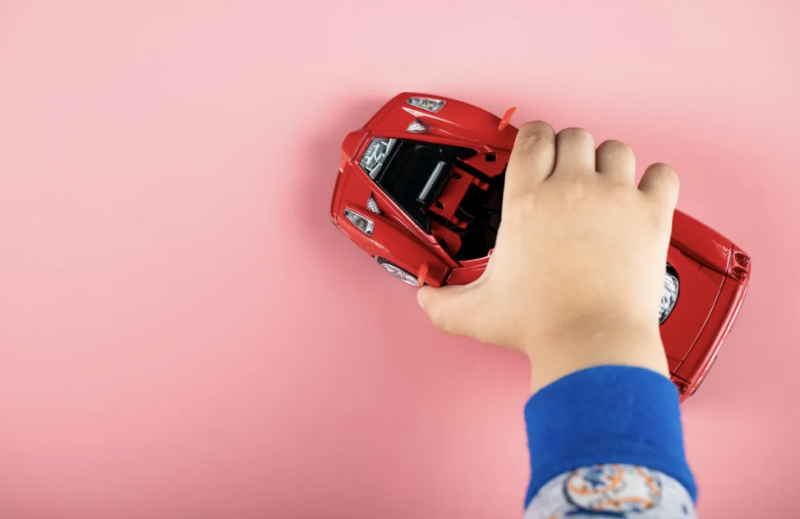
He opened the box. Inside was a tiny metal car, painted red, an exact replica of the Bugatti parked behind him.
Eli’s jaw dropped. “Wow!”
“I used to collect these when I was your age,” the man said softly. “My dad gave me the first one. I thought maybe you’d like to have this one.”
“That’s the coolest thing I’ve ever seen!” Eli said, carefully holding the little car, turning it over in his hands as if it were made of glass.
The man looked at me. “Don’t worry, ma’am. It’s not expensive. It just has sentimental value.”
He stood up slowly, brushing the dust off his pants. “The truth is, I’m not a mailman anymore. It’s been about 10 years.”
My brain finally processed that information. “What?”
“Let me explain,” he said kindly. “My name is Jonathan. I used to be a mailman, a long time ago. I built a business from the ground up, got lucky, worked hard. These days, I run a foundation that provides benefits for delivery workers and mail carriers. Medical coverage, funds for their kids’ college… that sort of thing.”
I stood there, just staring at him.
“Every summer, for one week, I walk a mail route,” he continued. “I wear the uniform, carry the bag, do the whole job. It reminds me of where I came from. It reminds me why the foundation is important.”
“You were pretending?” I asked, still trying to understand all of this.

“Not exactly pretending. More like remembering.” He looked at Eli, who was flying the little car through the air. “When you build something successful, you meet a lot of people. Most of them shake your hand because of what they think you can do for them. But yesterday, your son saw someone who needed help, and he helped. No second thoughts. No expectations. Just pure kindness.”
He crouched down again, meeting Eli’s gaze. “You gave me more than water yesterday, kid. You gave me something I’d forgotten I needed. You reminded me that good people still exist.”
Eli looked at the toy car. “Does this mean I can drive your big car when I grow up?”
Jonathan laughed, a real laugh. “You never know, kid. You never know.”
Two weeks passed. Life returned to normal, or so I thought. Then, one morning, I opened our mailbox to find a thick envelope with no return address. Inside was a handwritten letter and a check.
I had to look at the amount three times before I could believe it: $25,000!
The letter was simple:
“Dear Eli,
Thank you for reminding me what kindness is. This is for your future... college, adventures, or to help someone else in the same way you helped me. Pay it forward.
With gratitude, Jonathan”
My hands were shaking so much that I almost dropped it. I ran inside and found Mark in his office. “Look at this. Just look at this.”
He stared at the check for a full minute. “This can’t be real.”
I called the bank. It was real. Very real.
We didn’t tell Eli about the money. He was five. How do you explain a gift like that to a five-year-old? Instead, we opened a college savings account in his name and told him that his friend Jonathan had given him “a special gift for when he grows up.”
But Eli did something that broke my heart. He grabbed his crayons again and drew another picture. This time, it showed the red Bugatti next to his toy car. Above them, in his shaky handwriting, he wrote: “When I grow up, I want to be nice like Mr. Mailman.”
He held up the drawing to the window, where the sunlight made the red pencil gleam. “Do you think Mr. Mailman will come visit us again?”
I hugged him. “Maybe, sweetie. But even if he doesn’t, you’ll always have that toy car to remember him by.”
Eli smiled and put the drawing in his backpack. “Then I’ll save it for the next mailman who gets thirsty. Mom, do we have more Paw Patrol cups?”
I laughed, tears in my eyes. “Yes, sweetie. We have more cups.”
Because that’s the kind of person my son was. And that’s the kind of person I hoped he would always be. Not someone who passed by those in need. Not someone who mocked others for doing hard work. But someone who saw another person struggling and thought, “I can help.”
Mark came up behind me, wrapping his arms around my waist as we watched Eli make the toy car race across the kitchen table. “You know what’s crazy?” he whispered. “A billionaire pulled up in a Bugatti to thank our son for a glass of water.”
“I know,” I whispered back.
“And Eli’s already planning to do it again. For the next person who needs it.”
That’s when I realized. Jonathan’s gift wasn’t really about the money. It was about showing Eli that kindness matters. Simple acts of humanity spread in ways we can’t predict. And sometimes, the smallest gesture changes everything.
My five-year-old, with a glass of cold water and a melting chocolate bar, reminded a millionaire that the richest hearts are often in the smaller houses. And now, with a toy car and a drawing on the fridge, he was already looking for the next person to help.
Maybe that’s the real legacy. Not the money in the bank account, but the lesson that stuck.
“More cups, then,” I said, squeezing Mark’s hand. “Always more cups.”