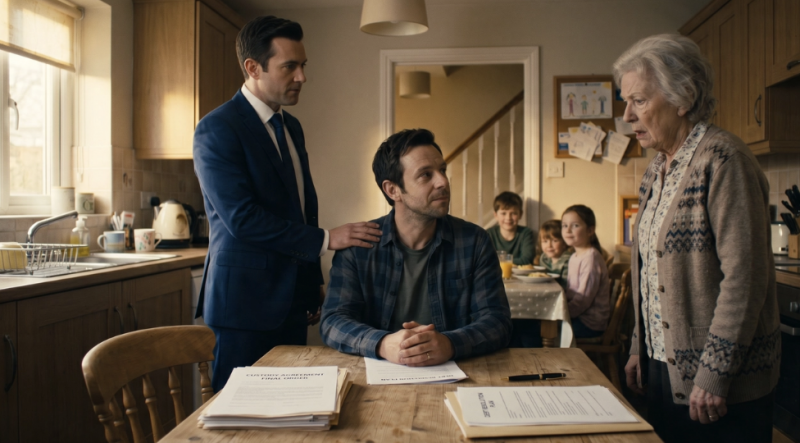
After my wife died unexpectedly, leaving me to raise our four children alone, my mother-in-law gave me a sealed box after the funeral and told me it was something my wife had wanted me to have.
My wife died without warning, leaving me alone to raise our four children. Four days after her funeral, my mother-in-law handed me a sealed box and said: “Sarah made me promise this would reach you.” When I finally opened it, I realized my wife had discovered a betrayal that could destroy our family.
For most of my adult life, I believed I was one of the lucky ones.
Fifteen years of marriage gave me a wife I adored and four wonderful children.
Then, on an ordinary Tuesday, Sarah came home from work pale and trembling.
“I think I just need to lie down,” she said, brushing off my concern. “It’s probably nothing.”
“You’re burning up, Sarah. Let me take you to the hospital.”
“Don’t scare the kids. I’ll be better in the morning.”
She wasn’t better in the morning.
Less than forty-eight hours later, a doctor told me she was gone.
I don’t remember driving that night.
I only remember standing in our bedroom doorway, looking at her side of the bed, unable to walk in.
I didn’t know it yet, but she died carrying a huge secret.
The funeral passed in fragments.
Casseroles arrived from neighbors.
People hugged me and whispered things I couldn’t retain.
Through it all, the four children stayed close to my legs like ducklings afraid of losing the last parent they had.
On the first morning after the burial, Joan climbed into my lap before sunrise. “Daddy, are you going to get sick too?”
“No, sweetheart. I’m not going anywhere.”
“Promise?”
“I promise.”
Jeremy came in behind her, dragging the blanket Sarah had sewn with his name on it.
He didn’t speak.
Just climbed up and pressed his face into my chest.
Julie watched from the doorway.
“Daddy, who will braid Joan’s hair for school?” she asked.
“I will learn,” I said. “Give me a week. I’ll be terrible at first.”
“Mommy did fishtail braids.”
“Then I’ll learn fishtail braids.”
Joyce slipped past her sister and tugged my sleeve.
“Can we have cereal for breakfast?” Joyce asked. “Mommy always made pancakes on Saturdays, but I don’t want pancakes today.”
“Cereal it is.”
I set out four bowls and watched them eat in silence.
The kitchen, once the loudest room in the house, felt like a library.
And I had no idea how I was going to keep myself and my children standing.
That afternoon I tried to fold laundry and ended up sitting on the floor with one of Sarah’s sweaters pressed against my face.
I cried until I couldn’t breathe.
Then I wiped my eyes because Jeremy came in looking for his stuffed rabbit.
“Are you sad, Daddy?”
“Yes, son. I am sad.”
“Me too.”
He sat beside me, leaned against my arm, and didn’t move for a long time.
The following days became a gray blur of school runs, half-eaten dinners, and bedtime stories I could barely read without my voice breaking.
I told myself I just had to survive one hour at a time.
I thought it would get easier.
But a knock on the door proved the nightmare was only beginning.
The knock came just after three in the afternoon.
I expected a neighbor or maybe one of Sarah’s friends.
Instead, I opened the door and found my mother-in-law on the porch, holding a small wooden box to her chest.
“Can I come in?” she asked, though she was already stepping inside.
I closed the door slowly.
The children were upstairs, their light footsteps the only sound in the house.
She went straight to the kitchen and set the box on the table.
No hug.
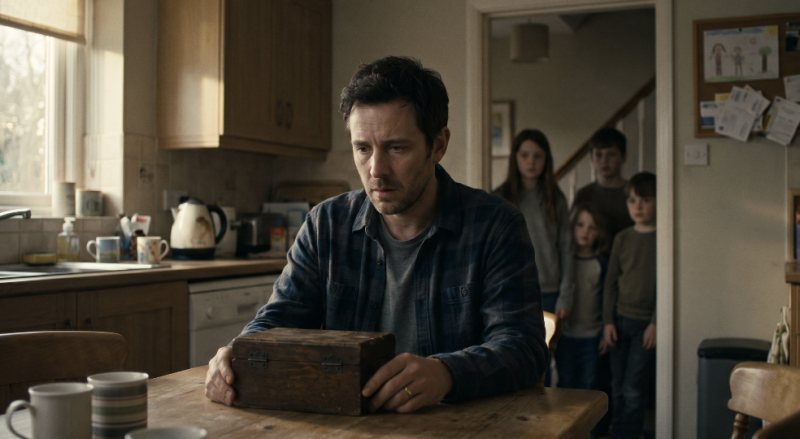
No questions about how the children were doing.
“Sarah made me promise,” she said, turning to me. “If anything happened to her, this was to go to you.”
I looked at the box.
“Why would she leave something like that with you?” I asked. “She was thirty-six. She wasn’t sick.”
“I don’t know what’s inside. She just made me swear.”
Something about her tone felt rehearsed, like she had repeated it in the car.
“You don’t seem shaken up to be here,” I said quietly.
She tilted her head. “Excuse me?”
“You just buried your daughter four days ago. And you’re standing in my kitchen like you’re delivering a package.”
Her jaw tightened. “Don’t twist this. I am honoring her wishes.”
She grabbed her bag and turned toward the door. “Open it when you’re ready. But open it alone.”
The door closed, and the house was silent again.
I sat at the table and stared at the box for a long time.
What could Sarah have left for me?
My hands trembled when I finally lifted the lid.
There were no keepsakes inside.
Only papers.
When I started going through them, I realized Sarah had uncovered a huge secret.
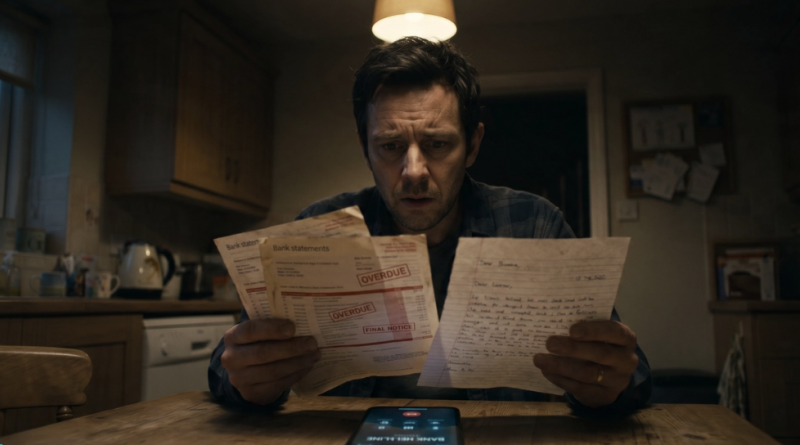
There was a thick stack of bank statements clipped together with a black clip.
Underneath them was a single letter in Sarah’s handwriting.
I opened the letter first.
My love, if you are reading this, something has happened to me, and I am so sorry I couldn’t tell you everything in person. Please don’t panic. Read every page. Trust the numbers, not the words she will use.
I read it twice.
Then I picked up the statements.
They were copies of the children’s college fund accounts.
I had opened those accounts myself, eight years ago.
Sarah’s mother had insisted on being a co-owner, saying it was for tax reasons.
The current balances at the bottom of each statement made my stomach turn.
Julie’s account: four hundred twelve dollars.
Joyce: three hundred sixty.
Joan: less than three hundred.
Jeremy: empty.
All of the accounts had been drained over six years through small withdrawals.
The withdrawals were signed by one person.
HER.
My heart broke.
Why would Sarah hide this instead of telling me?
I picked up the letter again.
I found out two months ago. I was going to tell you after confronting her, but I wanted proof first. I asked the bank for everything. If you are seeing this, I didn’t make it. Please be careful with her. She is not who she pretends to be.
I slumped into the chair and stared at the wall.
For six years, while we saved, clipped coupons, skipped vacations, and told the kids to wait for new toys, Sarah’s mother had been quietly stealing from them.
And the woman who handed me that box, who pretended not to know what was inside, had looked me in the eyes and called it Sarah’s final wish.
Why?
I heard Julie’s footsteps on the stairs.
“Dad? Are you okay?”
Quickly I pushed the papers back into the box and forced a smile.
“Yes, sweetheart. I’m fine.”
She nodded and went back upstairs.
I grabbed the phone and searched for her grandmother’s name.
I called.
She answered on the third ring.
“I opened the box,” I said. “You stole from the children for years. How could you do that to Sarah? To them?”
“Don’t be dramatic,” she said. “I borrowed it. It doesn’t matter anymore.”
“You don’t sound shaken at all,” I said.
“I am honoring her wishes,” she replied. “Now we need to talk about the life insurance payout.”
“What?”
“I want my share.”
“You cannot be serious, Linda.”
“Simple,” she said. “You transfer the money. I disappear. The children don’t need to know anything.”
“Why?”
“Sarah owed me,” she said. “She knew it.”
I closed my eyes.
“How long do I have?”
“Forty-eight hours.”
“Don’t overthink it,” she said before hanging up.
I sat in silence.
Then I found something at the bottom of the box.
A false layer of wood.
Under it, legal documents.
Sarah had created a trust six days before she died.
Everything—insurance, accounts—was protected in a trust in my name.
And a restraining order against her mother.
I called Linda that night.
She arrived twenty minutes later.
“You made the right choice,” she said.
Then she stopped.
A woman in a blue suit was in the kitchen.
“My name is Rebecca,” she said. “I am your daughter’s attorney.”
The smile on Linda’s face disappeared.
“You lied.”
“You threatened to take my children,” I said.
The attorney pushed a folder forward.
“We have proof of unauthorized withdrawals.”
Her face went pale.
She left without anyone stopping her.
That night, I sat with Julie, Joyce, Joan, and Jeremy at the table.
The woman who tried to destroy their future was gone.
The future Sarah protected was still there.