After our 85-year-old neighbor lost his wife, we decided to take him into our family. But before he agreed, he said, ‘There’s something I need to confess.’
For two years, our elderly neighbor had dinner at our table, played with our five children, and answered to “Grandpa” so naturally that it seemed as though he had belonged to our family from the beginning. But when we tried to make him officially part of the family, his reaction made me question how much we really knew about him.
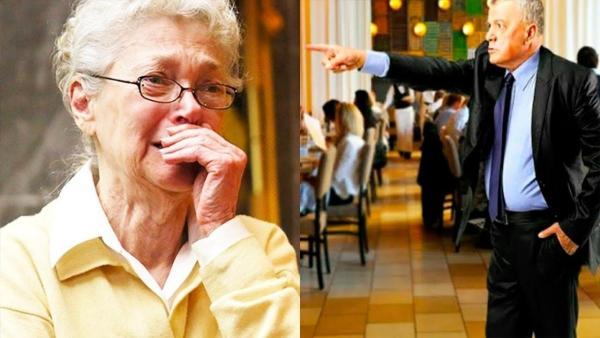
Walter went pale when he saw the adoption papers.
He wasn't emotional.
He wasn't surprised.
He was frightened.
He placed the folder on the dining room table so carefully that, for one strange moment, I thought there was something dangerous inside it.
“There’s something I need to tell you,” he said. “I was going to tell you anyway. I’ve waited too long.”
Then he looked at my five children, who were still eating birthday cake.
“Could they finish eating in another room?”
That was when I realized something was wrong.
Two years earlier, Walter had moved into the little house next door.
He was 86 at the time, recently widowed, and so lonely that he once admitted the silence in his new house was worse than the silence of the home he had shared with his wife for 41 years.
Our house didn't have that problem.
My husband and I have five children.
There is always a missing shoe, someone yelling upstairs, something sticky on the counter, and a grocery bill that makes me question whether everyone really needs to eat every day.
Walter started coming around whenever the kids were playing outside.
Soon, he was playing catch with them, fixing a loose bicycle chain, and drinking coffee at our kitchen table.
Eventually, I stopped inviting him to dinner because the invitation seemed to imply there was a chance he might not show up.
The kids started calling him Grandpa.
Nobody suggested it.
It just happened.
Then Walter got sick that spring.
It wasn't anything serious, but sitting in a hospital waiting room while people kept asking what my relationship to him was made something painfully clear.
I wasn't his daughter.
Legally, I wasn't anything.
So we started researching adult adoption.
For Walter's 88th birthday, we decided to ask if he would let us make official what had already happened.
Instead, he asked my children to leave the room.
My husband sat beside me.
Walter stared at the folder.
“I can't let you do this without telling you why I came here,” he said.
“Why did you come here?”
He pointed toward the wall separating our properties.
“I knew you lived next door when I bought that house.”
I actually laughed.
It was a short, dry laugh because I thought I had misunderstood him.
“What?”
“I didn't end up next door to you by accident, Abby.”
My husband reached for my hand.
I pulled it away.
Not because of him.
Suddenly, I needed both hands free.
“How did you know who I was?”
Walter looked older than I had ever seen him.
“After Margaret died, I took one of those ancestry DNA tests.”
That didn't answer anything.
“Okay.”
“I wasn't interested in finding out whether I was twelve percent this or twenty percent that.” He swallowed. “I was looking for someone.”
“Who?”
“My granddaughter.”
I stared at him.
He looked directly at me.
“Her name was Abby.”
I felt my husband turn toward me.
Walter continued before I could say anything.
“My daughter was named Kate. She had a baby when she was 19. A little girl she gave up for adoption.”
The room seemed to shrink around us.
“No,” I said.
Walter's eyes filled with tears.
“Kate was your mother.”
I stood so quickly that my chair scraped backward.
“No.”
“Abby…”
“No. You don't get to just say that.”
“I know.”
“You know?”
I had spent my entire childhood not knowing where I came from.
I was placed with a family as a baby, but it didn't last.
Then came foster homes. Some were decent. Others weren't. None were permanent.
By adulthood, I had stopped imagining some beautiful reunion where a woman with my eyes would appear and explain everything.
Years ago, though, I took a DNA test.
At first, I checked the results obsessively.
Most of the time, distant relatives appeared.
Nobody who answered the questions I actually had.
Eventually, I stopped logging into the account.
I looked at Walter.
“Show me.”
He nodded immediately.
I grabbed my laptop.
It took three attempts to remember my password and another reset before I could get into the account.
There were notifications I had never seen.
And there it was.
A close-family match.
Walter.
I stared at the screen until the letters blurred.
My husband quietly said my name.
I ignored him.
“When?” I asked Walter.
“When did you get your result?”
“Two years ago.”
“Before you moved here?”
“Yes.”
“Before you ever spoke to me?”
His answer was barely audible.
“Yes.”
I pushed the laptop away.
Every memory from the past two years changed all at once.
Walter appearing at the fence while the kids played.
Walter accepting his first cup of coffee.
Walter sitting at my table while I complained about homework and laundry.
Walter smiling the first time my youngest called him Grandpa.
“You knew.”
“Yes.”
“You sat in this house and knew?”
“Yes.”
“My kids called you Grandpa.”
His face crumpled.
“I know.”
“And you said nothing.”
“I'm sorry.”
I stood again.
My husband asked,
“Abby, do you want a minute?”
“No.”
Because there was one question that mattered more than all the others.
I looked at Walter.
“Where were you when I was eight?”
He stopped breathing for a second.
“Where were you when they moved me again?” I asked. “Where were you when my belongings were in garbage bags? Where was Kate?”
Walter closed his eyes.
“We didn't know.”
I laughed again, but there was nothing funny about it.
“You knew I existed.”
“Yes. But we thought you were with your family.”
“I didn't have a family.”
“We thought you did.”
Then Walter told me about Kate.
She was 19 when she got pregnant.
My biological father disappeared before I was born, and Kate never heard from him again.
Walter and Margaret begged her to reconsider the adoption.
They offered to help her raise me and even said they could take me themselves if she couldn't manage.
But Kate was convinced that giving me to parents who were ready for a baby would give me a better life than anything they could provide.
She chose adoption.
“She thought she was giving you what she couldn't,” Walter said. “Two parents. A home. Stability.”
“Well, that worked out.”
He flinched.
I regretted saying it almost immediately, but I didn't take it back.
“She didn't know,” Walter said. “Neither did we. We believed you had gone home with the family who would raise you.”
I stared at him.
“You never knew I ended up in foster care?”
“No.”
Something shifted at that moment.
It didn't make anything better.
But the story I had carried all my life had always been simple: someone gave me away, and nobody came back.
Now Walter was telling me there was another version.
“Did she ever try to find me?”
Walter nodded.
“Yes.”
“When?”
“More than once.”
“How could she not find me?”
“The adoption was closed. We didn't know what name they had given you or where the family lived. Kate tried when you were older. Margaret tried again later. They made calls, wrote letters, followed every lead they could find. Nothing led anywhere.”
“Then where is Kate?”
That was the question that broke him.
Walter lowered his eyes.
“She died nine years ago.”
I sat down.
For more than 40 years, I had a biological mother who existed only in the abstract.
She could have been alive or dead, happy or miserable, thinking about me or never thinking about me at all.
Now she had a name.
Kate.
And she had been dead for nine years.
“You expect me to believe she searched for me?”
“No,” Walter said. “I expect you to ask me to prove it.”
I looked up.
He stood.
“I have something at my house.”
“I'll come with you.”
My husband started to get up, but I shook my head.
“I need to do this.”
Walter and I walked next door in silence.
I had been inside that house hundreds of times.
Suddenly, it felt as though I had never been there before.
He went to the bedroom and returned carrying a faded cardboard box.
He placed it on the coffee table.
Inside were papers, old photographs, envelopes, and a tiny hospital bracelet.
He handed me a photograph first.
A young woman was holding a newborn baby.
I knew before he said anything.
Kate had my chin.
Or I had hers.
“That's you,” Walter said.
I touched the corner of the photograph.
Then I found the letters.
Some were addressed simply to “My Daughter.”
“She couldn't send them,” Walter said. “For a while, she kept writing anyway.”
“Did you read them?”
“Not all of them.”
I opened one.
Kate had written that letter when I was six.
She wondered if I liked books.
She wanted to know what color my bedroom was and whether I had a night-light.
She hoped my adoptive parents celebrated my birthdays in a special way and had created traditions that were already becoming mine.
More than anything, she hoped there was always someone waiting for me when I came home.
I stopped reading.
At six, I had already left the home that was supposed to be permanent.
At eight, I kept my belongings carefully packed because I had learned that moving could happen quickly.
Kate didn't know.
She imagined I was safe.
That didn't erase what she had done.
But for the first time, giving me away and not wanting me no longer meant exactly the same thing.
“Margaret tried too,” Walter said.
He showed me pages written in my grandmother's handwriting.
Names, dates, phone numbers, crossed-out addresses, and notes beside every lead that had gone nowhere.
“After Kate died, Margaret kept saying someone had to find you. Then she got sick.”
“And then she died.”
He nodded.
“So you finally took the test.”
“Yes.”
I looked around his little living room.
“Why did you move here?”
“I didn't know how to contact you.”
“You could have called.”
“I know.”
“You could have written.”
“I know.”
“You could have knocked on my door and said, ‘Hi, I'm your grandfather.’”
“I know.”
His refusal to defend himself only made me angrier.
“Then why didn't you?”
Walter sat across from me.
“I intended to. Before I moved, I practiced what I would say.”
“What happened?”
“I met you.”
I stared at him.
“That sounds ridiculous.”
“It is.”
He rubbed his hands together.
“The first week, you told me something about growing up in foster care. You mentioned it casually. You were explaining why you wanted your children to have a home they could always come back to.”
I remembered that conversation.
I had been pulling weeds.
Walter had been standing beside the fence.
“I went home,” he continued, “and realized that what we had believed all those years wasn't true. Kate thought she had given you a stable home. Margaret thought you had parents somewhere. And there you were, telling me you had grown up being moved from place to place.”
His voice cracked.
“I didn't know how to tell you that I belonged to the family that had lost you.”
“So you stayed silent.”
“That first day, yes. Then I told myself I'd tell you the next day.”
“And then?”
“Your kids started coming over.”
I looked away.
“Then you invited me for coffee. Then dinner. And then your youngest called me Grandpa.”
He smiled for half a second, but the smile disappeared.
“That should have been the moment I told you. Instead, I got scared.”
“Scared of what?”
“Losing all of you.”
I stood and walked toward the window.
My house was visible from there.
Two houses.
One fence.
Two years.
“You found me,” I said. “Do you understand that? I spent my childhood wondering why nobody came. You finally found me, and then you let me spend another two years without knowing.”
“I know.”
“No. I don't think you do.”
“I do, Abby.”
His voice was quiet.
“Finding you late wasn't my choice. Not telling you once I found you was.”
That stopped me.
“I was a coward,” he said. “Every week I waited made it worse. And every week I loved all of you more made me even more afraid. There is no excuse for that.”
I looked down at Kate's letter.
“Why now?”
“I had decided to tell you after I got sick.”
“But you didn't.”
“No.”
“Then we gave you the adoption papers.”
Walter gave a sad little laugh.
“And there you were, asking if I would become part of your family, when I had been lying about the fact that I already was.”
I went home carrying the box.
I didn't forgive Walter that night.
I didn't ask him to leave either.
Over the next few days, I read.
Kate had written about ordinary things.
Songs she listened to.
Jobs she hated.
Birthdays when she wondered what kind of cake I liked.
None of those letters could give me back what I had lost.
But they gave me something I hadn't realized I still wanted.
Proof that I had existed in someone's mind.
On the fourth evening, I found Walter sitting alone on the porch.
I sat beside him.
“I would have wanted to meet her,” I said.
“I know.”
“I'm angry that I can't.”
“I know.”
“And I'm still angry with you.”
“You have every right to be.”
I looked at him.
“But I'm glad you found me.”
Walter covered his face with his hands.
That was when he finally cried.
We told the children the next day.
There was silence for approximately four seconds before my eight-year-old announced that this meant he had been right to call Walter Grandpa all along.
“Actually,” my husband said, “he's your great-grandfather.”
Walter groaned.
“Absolutely not. I just turned 88. There's no need to exaggerate.”
The kids thought that was hilarious.
Later, I found the adoption folder still sitting where Walter had left it on his birthday.
I picked it up and carried it into the kitchen.
Walter was already there, helping my youngest with homework.
He saw the folder and fell silent.
“We'll figure out whether all this paperwork still makes sense,” I told him. “But that's not what matters anymore.”
He nodded.
I put the folder away.
For most of my life, I thought there were only two possibilities.
Either someone kept you, or they didn't want you.
Kate's letters didn't make my childhood any less painful.
Walter being my grandfather didn't erase the homes I had moved through.
Blood didn't excuse the two years he had spent in silence.
But I finally understood something I had never understood before.
I hadn't been forgotten.
I had been lost.
My family had spent years searching for me without being able to find me.
And eventually, one stubborn old man did.
That evening, after dinner was ready, Walter stood beside the table.
For two years, he had pulled out the same chair without asking permission.
Now, for the first time, he seemed unsure whether it was still his.
I placed a plate in front of it.
“Sit down, Grandpa,” I said. “Dinner's getting cold.”
Walter looked at me.
Then at the chair.
Then at the five children arguing over who would get the last dinner roll.
He sat down.
The house was loud.
Nobody was bored.
And this time, we all knew exactly why he was at our table.