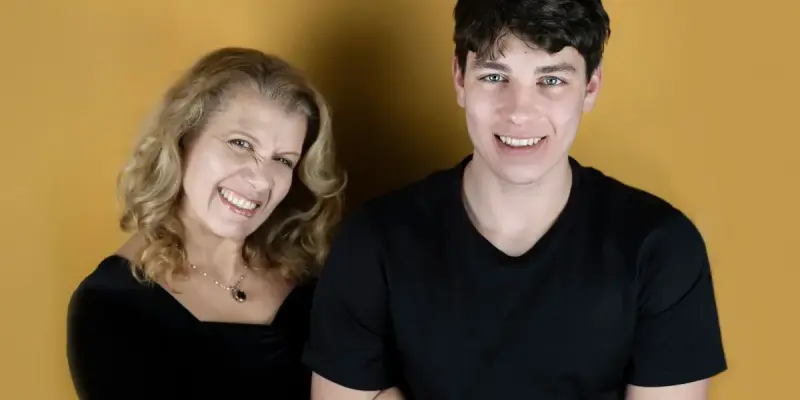
Bound by love: A daughter’s journey through loss and family
Has anyone ever tried to erase you from your own story? Tried to tell you that the love you lived wasn't real enough? That was what happened when my brother decided that I wasn’t “family enough” to say goodbye to our mother.
The house feels so empty now. I walk through rooms that still smell like her lavender hand cream and I wait to hear her voice calling me from the kitchen. It's been two weeks since we lost Mom to ovarian cancer, and the emptiness in my chest has only grown with each passing day.
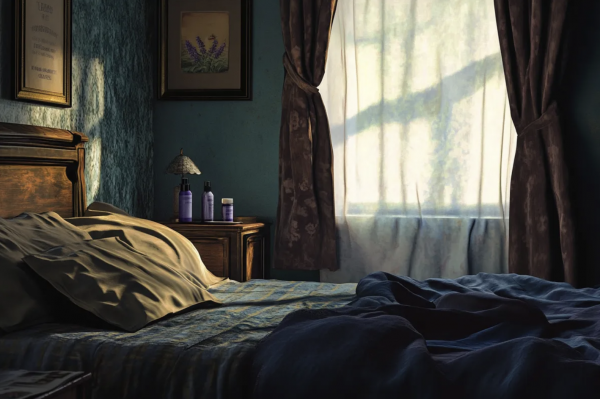
—"Emily, darling, are you eating?" —Aunt Susan calls me twice a day to make sure I'm okay—"Your mom would want you to take care of yourself."
I answer with a weak "yes," even though the fridge is full of casseroles from well-meaning neighbors. Food has no taste these days.
Mom was everything to me. And not just because she chose me. Although that part matters too.
I was five when she and Dad adopted me, a scared little girl with an oversized backpack and deep wounds in her trust.
They already had Mark, their biological son, who was eight years old and had inherited Mom's dimples and Dad's confident smile.
—"She's your sister," Mom said, her warm hand on my shoulder.
—"And this is your home forever," she whispered to me that very night when I couldn’t sleep.
Those weren’t just words. She lived them. Every day.
Dad was wonderful too. Patient, kind. He taught me how to ride a bike.
But when he died of a heart attack, eight years after I came home, Mom became my whole world. She attended every dance recital with flowers, stayed up with me through science projects, and held me in her arms after my first heartbreak at 16.
—"Blood doesn’t make a family," she would say every time someone made insensitive comments about adoption. "Love does."
We were inseparable, especially after I graduated from college.
I took a job at a design firm only 20 minutes from her house because I couldn’t imagine being far. Weekend brunches, impromptu movie nights, Christmas traditions... we did it all together.
Then came the diagnosis: stage three ovarian cancer.
—"We're going to fight," I promised her, in that sterile hospital room, while the doctor delivered the news with a resignation in his eyes that froze my soul.

And for two years, that’s exactly what we did.
Two years of chemotherapy, doctors avoiding eye contact, late-night trips to the ER, and a pain that gradually stole her voice.
And through it all, I was there. Every. Single. Day.
I moved into her house. I cooked every bland meal that wouldn’t make her nauseous. I helped her bathe when her body was betraying her. I sat beside her in palliative care, holding her trembling hand.
And Mark? He came twice.
Once, for her birthday, with an expensive bouquet that made Mom smile despite the sedatives.
Another time, five minutes after she was transferred to hospice. Just to say, "I can't see her like this," and left.
He lived three hours away, in Chicago. He had a successful career in finance. A beautiful wife. Two kids that Mom barely knew.
But that wasn’t why he didn’t show up. It was because he didn’t want to.
And still, I never held it against him. Mom didn’t either.
—"Everyone grieves in their own way," she would tell me at night when disappointment made her eyes glisten with held-back tears. "Mark just needs time."
But time was exactly what she didn’t have.
The morning of the funeral was cold and clear. It was the kind of autumn day Mom would have loved.
I looked at myself in the bathroom mirror, smoothing the navy blue dress we had chosen together months ago.
—"This one," she had said. "You look so beautiful in this, darling."
The memory tightened my throat. I tucked the folded pages of my speech into my purse, the paper soft from so many readings.
It wasn’t just an eulogy. It was a goodbye. A thank you. A love letter to the woman who chose me and taught me what family truly means.

—"Emily? The cars are here," Aunt Susan knocked softly on the door. "Are you ready, sweetheart?"
No. I would never be ready. But I nodded anyway.
The church was already filling up when we arrived. Mom was so well-loved: her book club friends, neighbors, former colleagues from the elementary school where she taught second grade for thirty years.
I greeted them in a kind of fog, accepting hugs and condolences that all blurred together.
I saw Mark near the front, with his wife Jennifer and their kids.
He had aged years since Mom passed. We spoke little during the preparations. He delegated almost all decisions with brief, cold messages.
—"Emily," he nodded when he saw me. "The flowers look good."
—"Mom loved lilies," I whispered. "Remember how she used to plant them in front of the house?"
He turned away, uncomfortable with the shared memory.
Pastor Wilson was getting ready to start the service when Mark pulled me aside, near the church stairs.
—"Hey," he said, his voice tense. "You should let it go this time."
I blinked, not understanding. —"What?"
He looked around as if he didn’t want anyone to hear him, and then said the words I wasn’t ready to hear.
—"No one wants to hear from the adopted one. The speech should come from real family."
Adopted.
I felt the blood drain from my face. Everything around me faded as his words echoed in my head.
He had never used that word before. Not even when we were kids fighting over toys. Mom and Dad never allowed distinctions between us.
We were their children. Period.
I wanted to respond. Remind him of all the nights I held Mom's hand while he was absent. The doctor visits. The pills organized with care.
But I saw his jaw tighten. He had already decided. Grief had made him cruel.
So I nodded.
—"Fine," I whispered. "Whatever you say, Mark."
He gave his speech. It was fine. Generic. Some childhood anecdotes and a few phrases about "how much Mom meant to all of us."
People clapped politely.

I sat in the front row, tears silently sliding down my face. The speech I had written burned in my purse. All those carefully chosen words remained silent.
When Mark stepped down from the pulpit, Grace, a hospice volunteer, approached him and handed him an envelope.
—"Your mom wanted you to have this," she said loudly enough for everyone to hear.
Mark opened it and took out a sheet of pale blue paper, the kind Mom reserved for important letters.
I saw his hands shake as he read. He cleared his throat once. Then again.
And began to read aloud:
“To my children, Mark and Emily. Yes, both of you. Blood makes relatives. Love makes you mine.”
I choked on a sob.
“Mark, you were the first. My restless boy. The one who never stopped running. Emily, you were my answered prayer. The soul that chose to come to me in a different way, but just as deep.”
The church was silent.
“Emily, I hope you keep the words we wrote together. Because they are mine too.”
Mark looked up. His face reflected shame and sadness. He looked for me with his eyes.
—"Please," he said, his voice cracking. "Come here. I’m sorry."
I stood up, my legs trembling. Everyone was looking at me as I walked to the front.
My hands shook as I unfolded my speech.
Mom had helped me write it during those quiet hours between medication doses, when her mind was clear and we talked about everything and nothing.
I took a deep breath and began to read the words we wrote together.
I spoke of her bravery. Her kindness. How she made everyone feel like the most important person in the world. How she taught generations of kids to read, and still received Christmas cards from former students in their forties.
And how she made the best apple pie in three counties, though she never revealed the secret ingredient.
After the reception, the day ended, but the feeling of emptiness didn’t go away. As I drove home, Mom’s image kept invading my mind. Despite everything that had happened, I felt strange, as if the pieces of a puzzle were about to fall into place, but something was missing.
When I got home, Mom’s house, I sat on the couch where I always saw her reading, the soft afternoon light illuminating the pages of her favorite books. Everything was in its place, but at the same time, everything had changed. Nothing was the same without her.
Mark called me the next day. The first thing he said was:
—"Emily, can we talk?"
I felt my heart race, but I agreed. We met at a nearby café, the place Mom always chose for our family talks. At first, it was awkward. Neither of us knew where to start.
—"I..." Mark began, his voice breaking. "I know I hurt you yesterday. I was so blinded by my own pain and guilt that I didn’t know how to handle it."
I looked at him, not knowing what to say. How do you respond to a brother who turned his back on you for years but now seemed truly remorseful?
—"Don’t worry about that, Mark," I said calmly. "It’s not about yesterday. It’s about everything we never said before. Everything we never understood."
Mark nodded, the sadness reflected in his eyes.
—"I know Mom brought us together, but I didn’t listen to her, I didn’t see what she meant to you. I only saw myself, trapped in my own life, my family, my career. I was never there for her, like you were."
Those words hurt, but they also freed me. I wasn’t angry. It was just that the weight of love had made me feel so heavy, so alone. The guilt of not doing more. But at that moment, I understood that forgiveness doesn’t always mean forgetting. It means healing.
—"It’s time for both of us to heal, Mark. Mom always told us that family is chosen by love, and it’s always hurt me that you didn’t see that. But... I’m ready to let it go. She would want us to see the good, not what separates us."
Mark looked at me as if those words weren’t just mine, but the ones he needed to hear too.
—"I’m ready too," he said, with a faint smile, though he still carried the weight of guilt on his shoulders.
After that day, our conversations became more frequent. Little by little, we began to rebuild what had been broken between us, not because the pain disappeared immediately, but because we understood that the only way to honor Mom was to move forward, together.
One afternoon, while I was organizing some of Mom’s things, I found a letter she had written. It was one of those letters she kept for special occasions. I knew she had written it when she was weaker, when cancer had started to rob her of strength, but her words were clear, firm, and full of love.
“To my two children, Mark and Emily: Life was never easy, but I always knew I was doing the right thing. You both gave me everything I needed to keep going. Mark, you were my first love, and Emily, you were my greatest gift, the soul I chose. Thank you for being who you are. My love for you has no end. Never forget it. I love you, Mom.”
Tears fell, but not out of sadness. It was a mix of gratitude and deep love. It was as if Mom had left us not just a legacy of memories, but a map to the future.

Mark and I talked about the letter, and for the first time in a long while, we laughed together, remembering Mom as she wanted us to remember her. Not with pain, but with a smile.
Life went on, as it always does. The seasons changed, but something in us changed too. I learned that we don’t always have control over circumstances, but we do over how we choose to live with them. Mom had taught us that: family isn’t something you can lose if you keep cultivating it with love.
And although the pain never went away completely, I understood that that didn’t mean you couldn’t keep moving forward. In fact, it was love that allowed me to move on—the love Mom gave us and the love we chose to give each other, despite everything.
Life continued, but never without remembering the most important lesson Mom left us: that the true family bond isn’t measured by blood, but by the decisions we make every day to be better, to be family, to be love.