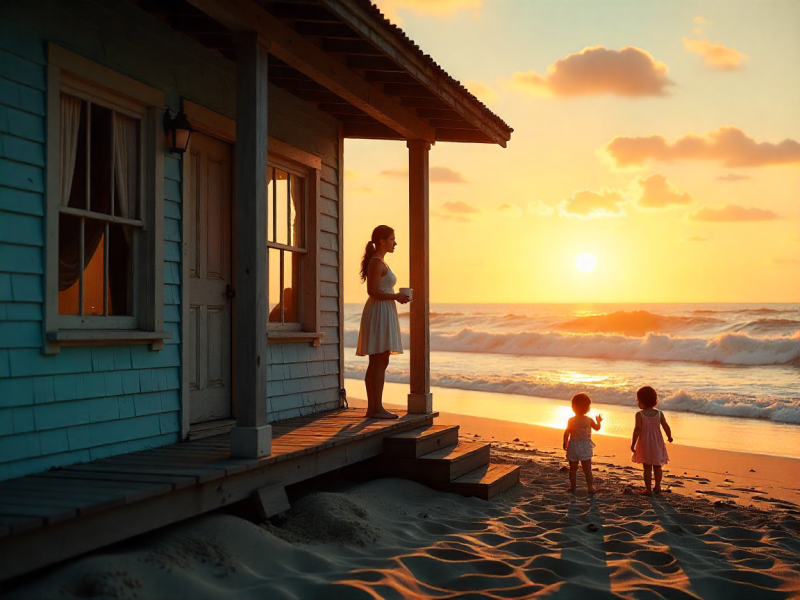
Broken Walls, Unbroken Bonds
When Becky took her kids to the beach house she'd inherited, she expected comfort — not chaos. But what they found shattered her memories and tested her strength. As family tensions rise and hidden loyalties come to light, Becky must decide how far she's willing to go to protect her home — and her peace.
The house smelled like betrayal.
I knew it the second I turned the key in the lock and the door creaked open. It wasn’t the scent of sea air, or wood, or anything even close to nostalgia. It was sour — like spilled beer left to fester in the heat.
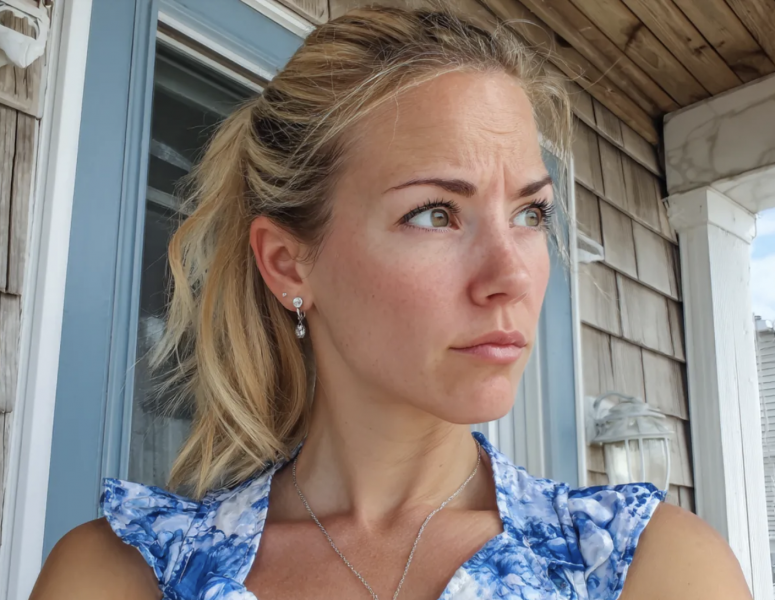
And underneath that? Cigarette smoke. And deeper still… something rotten. Something that didn’t belong.
Behind me, Daniel and Rosie paused on the porch. They’d been buzzing with excitement all morning, asking if the house was close, if the sand was soft, and if they could sleep in bunk beds.
I’d promised them this trip for months. It was supposed to be the first thing we did for us in a long time.
Instead, I walked straight into a disaster.
I inherited the house in the spring, after Grandma Roslyn passed. It wasn’t much — two bedrooms, a sagging porch, and a kitchen so narrow you had to turn sideways to stand at the stove. But it was mine.
And it sat right on the edge of the dunes, the ocean close enough to scent your hair and clothes. I hadn’t been back since I was a teenager, but I remembered it clearly…
The morning light through lace curtains, the hum of Grandma’s old radio in the kitchen, and the creak of her rocker on the porch at night.
That house had held me up through the worst of times.
Every time work wore me down, or the bills piled up, or the kids argued too loudly in the heat, I thought of this place. Of flinging open the windows and letting the sea breeze in.
It was my secret image of hope, hidden between pay stubs and night shifts. A reminder that beauty was still out there — waiting.
I imagined Rosie’s laughter echoing down the hall, and Daniel digging holes in the sand so deep he’d forget the rest of the world.

Over time, I built a dream around this house.
But that dream vanished before we even crossed the threshold.
The carpet squelched under my shoes — damp and sticky. Just the sound of it made my skin crawl. I scanned the living room, trying to make sense of what I was seeing, but nothing about it made sense.
Grandma’s coffee table — her table — was splintered in a corner, like someone had jumped on it. The carved edge where she used to rest her teacup was cracked. One of the legs had snapped clean off.
Empty liquor bottles lined the kitchen counter like trophies. Crushed pizza boxes mingled with plastic cups and cigarette butts ground into the floor.
In the far corner, near the window, sat Grandma’s rocker — on its side. One leg broken clean through. It looked like it had given up.
Rosie slipped her hand into mine. Her palm was warm and a little sweaty.
“Mom?” she whispered. “What happened here?”
Her voice broke my heart.
Childhood shouldn’t come with questions like that — the kind that make a mother feel powerless in her own home.
I didn’t answer right away. My throat was tight. I could feel her little eyes on me, waiting for an explanation that made any kind of sense. But what could I say? That someone had treated our home like it was theirs and trashed it? That they stomped on every childhood memory like it meant nothing?

“I don’t know, sweetheart,” I said gently. “I really don’t know.”
“Is this… the house you told us about?” Daniel asked, stepping inside, his curiosity still typical of a nine-year-old.
His voice had lost its earlier excitement. I turned to him, but couldn’t meet his eyes.
“Yes,” I said. “But it didn’t used to be like this. Go play on the sand, both of you. I need to clean up a bit, okay?”
They backed away slowly, and the screen door squeaked shut behind them.
I went room to room, and the damage only got worse. Kitchen drawers hung open. One dangled from a single hinge. In the sink, a pan coated in something red and sticky. A window shattered, letting in the salty breeze.
Then I heard it — a deep, uneven snore coming from the main bedroom. Not loud, but out of place. The rhythm of it made my skin crawl. Too calm. Too comfortable — like someone had claimed this house as their own.
I froze. Every muscle in my body tensed, bracing for something I couldn’t name.
Slowly, deliberately, I moved down the hall. Over the ruined carpet, past a shattered lamp with a crooked shade. My heart thudded as I reached the bedroom door.
My fingers hovered on the doorknob. I had no idea who was inside. Could be a careless teenager, a drifter… or someone dangerous.
But this house was mine.
I took a deep breath and pushed the door open.
There she was.
Susan.
My mother-in-law. Sprawled across my grandmother’s bed like she owned it. Still wearing her boots. One leg draped over the sheets, a half-empty bottle of wine resting on the nightstand.
I stared, trying to process what I was seeing.
“What the hell…?” I whispered.
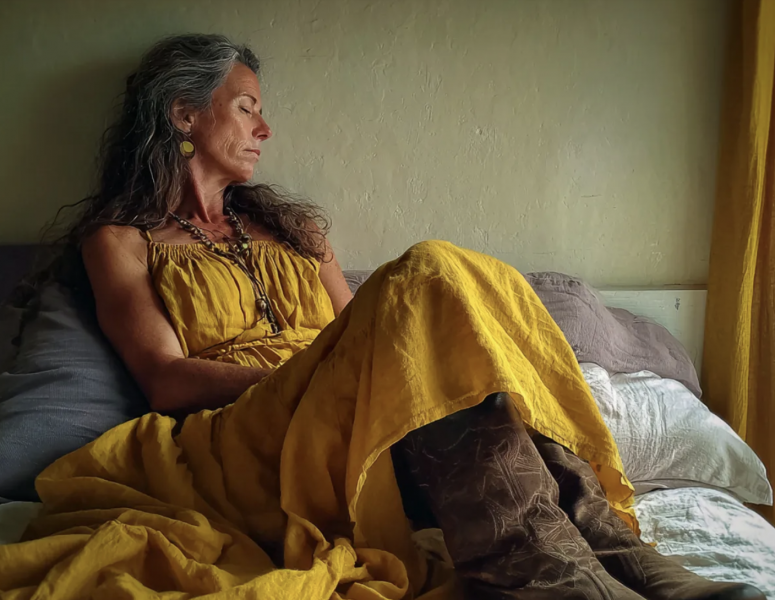
Susan blinked awake. Smiled like I’d just interrupted a spa treatment.
“Oh,” she said, stretching. “Surprise, Becky-Boo.”
I couldn’t speak. The words were there, but my brain hadn’t caught up.
She sat up slowly with a groan, like she was the one being inconvenienced.
Seeing her there felt like theft — not of furniture, but of something sacred. She had desecrated something that held dignity for me.
“Don’t get all bent out of shape,” she said. “The students left a few hours ago. I was going to clean up before you arrived. Obviously.”
“What students?” I finally managed to ask. My voice sounded far away.
“My friend Janice’s niece. Tara. She’s an art student. I let them borrow the place for their little summer bash. They paid cash, if that helps. Brought their own drinks.”
She yawned.
“How did you get in, Susan?”
“I saw the spare key hanging by your front door last week when I watched the kids. You weren’t using it. So I thought… why not?”
I stared at her. Rage rising up my throat like fire.
“You thought wrong, Susan,” I said, spitting the words.
“Oh come on, Becky. Don’t be so dramatic,” she snapped. “It’s just a little mess. College kids. You’ve been one — or did you forget your twenties?”
“Get up,” I said. “Now.”
“Excuse me? Who do you think you’re talking to?”
“I said get up. And start cleaning.”
She rose slowly, brushing crumbs off her jeans like I was the unreasonable one.
“I did you a favor,” she muttered. “Made a little extra cash, too.”
“You ruined the last thing I had left of my grandmother,” I said, jaw tight.
“It’s just a house,” Susan scoffed.
But it wasn’t.
It was every Sunday morning with Grandma, every whispered bedtime story, every thread of belonging sewn into me since childhood.
“No,” I said. “It’s not.”
I stepped outside and called Steven. He was due to meet us the next morning — working a night shift and planning to arrive at dawn with pastries from the bakery by the hospital and sprinkle-covered donuts for the kids.
He wanted it to be a soft weekend. A reset.
Instead, he’d be walking into a war zone.

When he answered, I could barely speak. I heard the way he sat up, how his breath shifted as I told him what happened. No blame. No questions.
“I’m on my way,” was all he said.
Twenty minutes later, I heard the crunch of gravel under tires. No pastry box in his hands — just gloves, garbage bags, a giant bottle of cleaner… and enough fury to level a building.
His face was tight, eyes heavy from a long shift, but he didn’t say a word. He hugged and kissed the kids, then wrapped me in a long, grounding embrace before stepping inside.
For the first time that day, I felt solid. His silence wasn’t avoidance — it was strength. The kind that holds you up when everything else falls apart.
He looked around once. Then started clearing bottles, wordless.
The kids stayed on the beach, wrapped in towels. I gave them sandwiches and promised we’d play Uno when we finished. Rosie looked worried; Daniel asked if the rocker could be fixed.
Inside, the three of us cleaned in silence.
“You’re overreacting,” Susan grumbled every time she bent down. “It’s not like they stole anything. You always make everything into a drama.”
We ignored her. Steven, too.
By sunset, the house was livable again. Not perfect. Not whole. But no longer a nightmare.
“You’re paying for all of it,” I said. “The couch. The rocker. The carpet. Everything. And that’s me being kind, Susan. Minimum a thousand dollars.”
“You’re insane, Becky,” she scoffed. “I don’t have that kind of money.”

“Then you shouldn’t have rented out what wasn’t yours. It’s really not that hard to understand.”
“You’re pathetic,” she hissed, stepping toward me. “Think you’re better than everyone just because you lucked into this house? You’re a nurse, Becky. A broke little nurse. You could’ve sold this place. Used the money for your kids. Or rented it out yourself.”
“I’m not charging strangers to destroy something I love.”
Steven didn’t flinch.
“She’s right, Mom,” he said firmly. “You crossed a line. I don’t even recognize you right now.”
“You’re taking her side?!” Susan snapped.
“I saw the damage myself. I heard how you talk to my wife. What kind of man would I be if I took your side?”
Susan spat on the floor — right there in the entryway.
And left, slamming the door so hard the cracked window shuddered in its frame.
We didn’t follow her.
The silence she left behind wasn’t heavy. It was clean. Like something toxic had finally cleared from the air.
I stood for a moment at the threshold, watching the last light of the day drift through the fractured glass. Then I stepped out onto the porch.
Sometimes, peace doesn’t come in grand gestures. Sometimes it’s just the absence of cruelty. A quiet that lets you breathe again.
Steven took Rosie into town for fish and chips. The kitchen still reeked of grease and rot, and the pantry was bare.
I’d packed a bottle of cocoa concentrate just in case — and now, it was our small comfort while we waited.
I lit a lavender candle I’d found in the closet, opened every window, and wrapped Daniel and myself in old blankets. We sat on the porch, warm drinks in hand. The air was crisp and salty. The ocean whispered in the distance.
For the first time all day, everything felt calm.
“You think Dad will want cocoa when he gets back?” Daniel asked, leaning against me.
“He’ll need two cups,” I smiled. “Cleaning wore him out.”
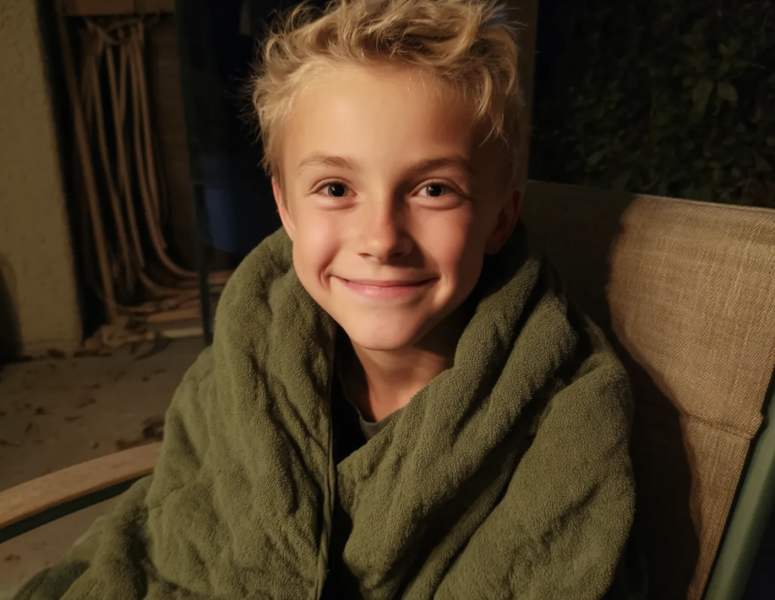
We both knew cocoa wouldn’t fix anything. But in that moment, it proved we still had warmth left to give.
Daniel smiled… and yawned.
It wasn’t the trip I imagined. Not even close. But it felt real. Not forced. Not borrowed.
Moments later, a car horn pulled me from my thoughts.
“Ready to eat?” Steven called, helping Rosie out of the car. “We’ve got fish and chips for an army!”
The next morning, I drove into town for new locks. Steven stayed behind with the kids, fixing the window, reinforcing the frame with sanded wood from the shed.
By noon, the house didn’t feel like a ruined memory anymore. It felt like something we could still grow into.
Then my phone rang. It was Susan.
“My house flooded… a pipe burst,” she said. “I don’t know what to do. My home’s… destroyed. Please let me stay with you, Becky. I’ll sleep on the couch — the floor, anything!”
“You should have enough for a hotel,” I replied. “After all, you made money renting out my property for a party…”
The last thing I heard was her stunned gasp before I hung up.
That night, the air smelled like sea salt and lemon cleaner. The wind rattled the porch rail, but inside, everything was still.
The next day, we gave ourselves to the ocean. Daniel and Rosie ran ahead, leaving deep footprints in the sand. I watched Steven help them dig moats and castles, the three of them laughing as the tide swept it all away.
The sun warmed my shoulders, and for the first time in months, the weight in my chest began to lift.
On our last night, Steven fired up the grill in the backyard. The smell of burgers and toasted buns floated through the open windows. Rosie darted around with her stuffed bunny. Daniel set the table, already planning next time — he insisted we make s’mores.
Their laughter tangled with the cries of gulls, threading itself into the walls of the house. It was like the house itself was healing — soaking in that joy, rebuilding with it.
Later, wrapped in blankets, the kids whispered plans for decorating their rooms. Rosie wanted pink curtains. Daniel dreamed of enough pillows and blankets to build the biggest fort in the state.
I listened, smiling, floating back to my own childhood. To Grandma humming on the porch while I traced shapes in the sand. To her saying the sea always returns what it takes — if you’re patient enough to wait.
Steven sat beside me, handing me a chipped old mug with tea.

“You okay?” he asked.
“I will be,” I nodded.
“It’s coming together, Becks,” he said. “We’ll keep building this home. I promise.”
And that’s when I knew:
Home isn’t in the walls or the furniture. It’s in the people who refuse to give up on you — or with you.
I didn’t answer. I just smiled.
Outside, the waves crashed softly.
Inside, peace settled in.
And for the first time since Susan’s mess, I slept without dreaming of broken things. For once, sleep wasn’t escape — it was rest.
And that — that felt like the inheritance Grandma meant to leave all along.