Every day, my daughter packed an extra lunch for a homeless man who stayed near her school. But today, he showed up at our doorstep with a shocking message: “There's something your daughter is too scared to tell you.”
My 15-Year-Old Daughter Took an Extra Lunch to a Homeless Man Every Day. But One Morning, He Knocked on Our Door Holding the Untouched Lunchbox.
Before I could ask why, he told me that Chloe had been spending her afternoons with him because there was something she was too afraid to tell us.
The first thing I noticed was the weight of the lunchbox.
It should have been empty.
Instead, when the older man held it out to me on our front porch, the blue insulated lunch bag hung heavily from his hand.
Exactly as it had when Chloe left the house that morning carrying it.
“How do you know where we live?”
The man glanced at the white label I had stuck underneath the handle months earlier.
Our last name.
My phone number.
Our address.
“Your handwriting is quite informative, ma’am.”
Under any other circumstances, I might have laughed.
But I didn't.
His coat was so worn that the elbows had developed a shine from years of use. Gray strands were mixed into his beard. His face had the weathered look of someone who had spent many nights outdoors.
But his eyes were fixed on mine, dark with concern.
He pushed the lunchbox a little farther toward me.
“I think you should have this.”
“Where is Chloe?” I asked.
“At school.”
“Did something happen?”
His hesitation frightened me.
“There’s something she’s terrified to tell you.”
“Is someone hurting my daughter?” I asked, barely able to breathe.
“No.”
“Has she said she's in danger?”
“Not exactly.”
I took the lunchbox.
“Then what's going on?”
He glanced quickly toward the street.
“My name is Bram.”
“I know.”
That seemed to surprise him.
“Chloe told me,” I explained.
For half a second, his expression softened.
Then it became serious again.
“Ma’am, I think your daughter has become very good at making sure nobody worries about her.”
I tightened my grip on the blue handle.
That's when I realized I had heard almost exactly the same thing before.
Only that time, it had sounded like a compliment.
Three months earlier, Chloe had been coming home as if she'd spent the entire day crossing a desert.
She would walk through the door around four in the afternoon, drop her backpack, and head straight for the pantry in search of crackers, granola bars, and peanut butter.
Once, I watched her eat cold leftover pasta straight from the container while standing in front of the refrigerator.
“Didn't you eat lunch?”
“Mhm.”
Her mouth was full.
“What did I pack in your lunchbox?”
She hesitated.
“A sandwich.”
I frowned.
“What kind?”
She swallowed.
“Turkey?”
Actually, I had packed pasta salad.
The next day, I decided to test her.
I picked her up after a school appointment and waited until we were halfway home.
“Was the chicken good today?”
Chloe smiled automatically.
“Yes. It was really good, Mom. Thank you.”
I looked at her.
“I didn't put chicken in your lunchbox.”
Her face fell.
For the rest of the block, she stared at her hands.
Finally, she whispered:
“You're going to be mad.”
“We'll see.”
“I've been giving him my entire lunch.”
I pulled into our driveway.
“Giving it to whom?”
She told me.
There was an older homeless man who usually stayed near the bus stop, a short distance from her school.
“The first time I saw him, the temperature had suddenly dropped. He was sitting in the bus shelter wearing a really thin jacket. I walked past him, but then I turned around.”
“I just thought he might be hungry, Mom.”
“So you gave him your lunch?”
She nodded.
“Once?”
Silence.
“Chloe?”
“A few times,” she admitted.
“How many?”
She looked embarrassed.
“Most days.”
I should have been upset.
But instead, I reached across the center console and hugged her.
“You wonderful little lunatic.”
She laughed against my shoulder.
“I knew you'd be mad.”
“I'm mad because you're not eating.”
“I can eat when I get home.”
“That's not the point, sweetheart.”
The next morning, I packed two lunches.
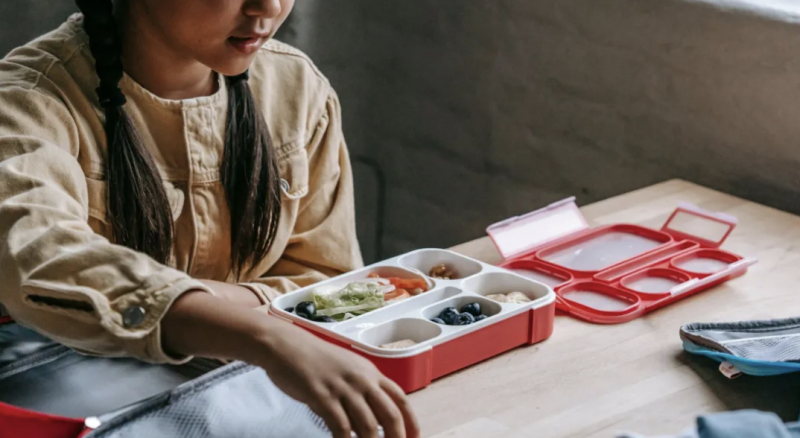
Chloe's red one.
And a blue one we'd had stored in the cupboard for years.
I wrote BRAM on a piece of tape and stuck it to the lid.
I also put one of our identification labels underneath the handle in case the lunchbox ever got lost.
Chloe stared at it.
“You don't even know him.”
“I know that apparently he likes turkey.”
She grinned.
And after that, packing two lunches became part of our routine.
What I didn't realize was that almost everything else was far from normal.
Bram had become part of our kitchen without ever setting foot inside our house.
Chloe told us things about him over breakfast.
“According to Bram, grapes are just overpriced water balloons.”
“Bram is also convinced oatmeal cookies are a scam.”
“His biggest rule? Anyone who puts raisins in cookies should be arrested.”
Kenny loved hearing these stories.
My husband had never met Bram, but he started adding things to the grocery list.
“Get the good mustard. Apparently, I'm feeding a food critic.”
At first, I thought the arrangement was simple.
Chloe handed Bram the blue lunchbox before school.
After school, she stopped to pick it up on her way home.
That explained why she sometimes arrived ten minutes late.
Then fifteen.
“Sorry,” she'd say. “Bram talks too much.”
I never questioned it.
Why would I?
Chloe had always been responsible.
She got good grades.
Never skipped classes.
We never received calls from the school.
Whenever her teachers talked about her, I heard the same words:
“Helpful.”
“Mature.”
“Quiet.”
Once, during a parent-teacher conference, her English teacher smiled and said:
“Chloe is one of those students we simply never have to worry about.”
I remember squeezing Kenny's hand under the table, feeling so proud.
Now, standing on the porch with Bram, I suddenly remembered something else.
That morning, Chloe had come downstairs with her backpack on, ready to grab the lunches.
But somewhere between the last step and the kitchen, her smile had disappeared.
I had asked:
“What's wrong, sweetheart?”
She adjusted her backpack.
“Nothing, Mom.”
And I believed her.
That morning, everything had started normally.
I prepared the lunches while Chloe stood beside me, pretending she wasn't sneaking her crackers into Bram's container.
I put two oatmeal cookies in the blue lunchbox.
Chloe secretly added a third.
I turned around to put the grapes in a container.
When I looked back, her cookie compartment was empty.
“Excuse me!”
Her eyes widened.
“What?”
“Where are your cookies?”
“I have no idea.”
“Chloe.”
“He likes them.”
“You like them too.”
“He likes them more, Mom.”
I took a cookie from Bram's lunchbox and put it back in hers.
“Even communism has its limits.”
Chloe rolled her eyes.
I still didn't know that Bram had taught her that joke.
Kenny walked into the kitchen carrying his coffee.
He kissed the top of Chloe's head.
“Big test today?”
“Chemistry.”
“You're going to crush it.”
She groaned.
“Don't say that.”
“Why?”
“Because if I don't, it'll be your fault.”
“Deal.”
She smiled.
Everything seemed absolutely normal.
Except that when Chloe picked up the blue lunchbox, she stood still for a few seconds, holding the handle with both hands.
I noticed.
I just didn't understand.
“Sweetheart?”
She blinked.
“What?”
“Are you okay?”
“Yeah.” Then she smiled. “I'm great.”
That answer should have worried me.
But it didn't.
Not yet.
Bram stepped away from the porch and carefully sat on the top step, as if he wasn't sure I wanted him any closer to the house.
I remained standing.
“Tell me what happened this morning.”
He rubbed his hands together.
“She brought me lunch, like she always does.”
“And?”
“She told me to keep the lunchbox.”
My heart started racing.
“Why?”
“Because she said she wouldn't be coming back to pick it up.”
I looked at the blue lunchbox again.
An ordinary, almost ridiculous object.
Still full.
Still cold.
“What does that mean?”
“She said she was going to the school office after classes.”
“For what?”
A dark expression crossed his face.
“To ask how she could leave.”
“Leave where?”
“School.”
I actually laughed because it made no sense.
“Chloe loves that school.”
Bram didn't answer.
“Her grades are excellent.”
He remained silent.
“She worked for years to get in.”
“I know.”
“You know?”
“She told me,” he admitted.
Those three words carried more weight than I was prepared for.
I hadn't even known my daughter talked about school with that man.
“Why would she leave?”
Bram looked down.
“That's the part she doesn't want to tell you.”
My phone was already in my hand.
I called Chloe.
Straight to voicemail.
I tried again.
Voicemail.
It was during school hours.
Of course.
I called Kenny.
He answered on the second ring.
“Hey, Fiona.”
“I need you to leave work.”
“What happened?”
I looked at Bram.
At the blue lunchbox.
At the label with our address that, without realizing it, had shown a stranger the way to our front door.
“It's Chloe.”
That was all Kenny needed to hear.
“I'm coming.”
Bram stood up.
“I should probably go.”
“No.”
He looked surprised.
“You came here because you thought I needed to know.”
“Yes.”
“Then you're going to finish telling me.”
He looked down.
“I promised her I wouldn't share every detail.”
“She's fifteen years old.”
“I know.”
“I'm her mother.”
“I know that too.”
“Then stop protecting a secret that's making my daughter try to leave school without telling us.”
Bram didn't raise his voice.
“I'm not protecting the secret. I'm protecting the difference between what she told me and what she's ready to tell you herself.”
That made me stop.
Then he added quietly:
“But there's one thing you need to know before you talk to her.”
I waited.
He reached into his coat pocket.
Pulled out a folded piece of notebook paper.
It wasn't Chloe's handwriting.
It was his.
There were two groups of tally marks.
RED CARS.
CITY BUSES.
I stared at it.
“What is this?”
“Our game.”
“What game?”
“After school.”
He pointed to one of the columns.
“She says there are more red cars than buses.”
“And?”
“She's wrong.”
Despite everything, I almost smiled.
Then Bram folded the paper again.
“Your daughter doesn't just stop by to pick up this lunchbox. Some days, she sits with me until she can find the courage to go home.”
I couldn't speak.
Because suddenly, I was seeing all those late arrivals differently.
Every fifteen-minute delay.
Every time she'd said, “Bram talks too much.”
Every snack she'd devoured before dinner.
Bram held my gaze.
“And today she said something she'd never said before.”
“What?”
He looked toward the street just as Kenny's truck turned the corner.
Then he looked back at me.
“She said she could survive another three years if she had to.”
Kenny pulled into the driveway before I could respond.
He got out of the truck without even properly closing the door.
“What happened?”
I handed him the blue lunchbox.
“Bram says Chloe was planning to ask today how she could leave school.”
Kenny stared at me.
“Leave school?”
Bram nodded.
“She thinks she's costing you too much. She said you're working overtime because of the school. She believes that if she leaves, everything will become easier.”
My husband went completely still.
“What?”
Twenty minutes later, we were sitting in the school counselor's office.
The counselor listened to everything and frowned.
“Chloe?”
“Yes.”
She blinked, surprised.
“But she's one of our quietest students.”
“Quiet enough that nobody noticed she was unhappy?” I asked.
The counselor lowered her eyes.
A few minutes later, Chloe walked into the room.
She saw Kenny.
Then me.
Then Bram, who was waiting near the door.
Her face crumpled.
“You told them!”
Bram nodded.
“I trusted you!” she shouted.
“I know,” he replied gently. “That's why I couldn't let you disappear in silence.”
Chloe started crying.
My first instinct was to ask why she hadn't told us.
But I stopped myself.
Instead, I pulled out the empty chair beside me.
“Sit down, sweetheart.”
She did.
For several seconds, nobody spoke.
Then I said:
“I'm sorry.”
Chloe wiped her face.
“For what?”
“For making it seem like being strong was the thing I loved most about you.”
That broke her.
She covered her face with her hands.
“I hate that place,” she whispered. “Not because anyone has done anything terrible to me. It's just that I eat lunch alone. I spend the entire day trying not to show that I don't fit in. Then I hear Dad talking about working overtime, and I start thinking about how much that school costs.”
Kenny leaned forward.
“Chloe, sweetheart, look at me.”
She wiped away her tears.
“How could I tell you I was unhappy somewhere you were working so hard to pay for?”
My husband's eyes filled with tears.
“You have every right to cost us something, Chloe. Money. Time. Sleep. Worry. You're our daughter. That's exactly how it's supposed to be.”
Chloe reached into her backpack.
She pulled out a folded note.
And handed it to me.
I unfolded the paper.
I read until one sentence made me stop.
“Mom, Dad... I'm going to get a job and pay back every dollar you spent on me.”
I carefully folded the note.
“You don't owe us anything for being our daughter, sweetheart.”
Chloe cried even harder.
The counselor began talking with us about possible options.
A different place to have lunch.
Clubs and extracurricular activities.
Someone she could talk to regularly.
A school transfer, if Chloe still wanted one after we explored every other possibility.
For the first time, nobody demanded that she make a decision immediately.
When we left, Chloe still seemed furious with Bram.
And I understood.
Trust isn't rebuilt simply because someone had good intentions.
He gave her a crooked smile.
“You can yell at me tomorrow.”
“Maybe I will.”
“Excellent. Now I have something to look forward to.”
Later, I asked Bram what he needed.
Automatically, he answered:
“Nothing.”
Chloe shot him a look.
“Don't do that.”
He sighed.
“Apparently, I've created a monster.”
“Finally, you're noticing.”
Eventually, he admitted that he needed help receiving mail and getting replacement identification documents.
Kenny found a nearby social services center.
We drove him there.
No miracle happened.
He walked out holding a folder of documents and the date of his next appointment.
And that was enough.
While we waited, Bram finally ate the lunch he'd returned that morning.
He saved the oatmeal cookie.
Chloe opened the blue lunchbox in the parking lot.
Inside was the cookie.
She broke it in half.
And handed one piece to Bram.
He groaned.
“We've talked about this.”
“Eat.”
“Bossy.”
“Old.”
He looked offended.
“Teenager.”
For the first time that day, Chloe laughed.
That afternoon, two girls from the art club were sitting outside the school.
One of them moved her backpack from the empty spot beside her.
“Chloe?”
My daughter hesitated.
Then she sat down.
I didn't tell her to go over there.
I let her choose.
Bram started walking toward the bus stop.
I rolled down the car window.
“Need a ride?”
“No, I'm fine.”
He stopped.
Looked at Chloe.
Then looked back at me.
“Actually... yes.”
He got into the car.
Chloe's backpack was on the floor near his feet.
I reached over.
Picked up the backpack and placed it in the back seat.
And made room.
Because sometimes, helping someone doesn't mean having all the answers.
Sometimes, it simply means making room so they don't have to face everything alone.