For years, my classmates made fun of my grandma, calling her the 'lunch lady' – that is, until my graduation speech left them speechless.
My classmates mocked my grandmother's aprons, her voice, and even the lunches she made for me. But when I stood at the podium at graduation, the truth I shared left the gymnasium in silence.
I’m 18 years old, and I graduated high school last week.
People keep asking me what's next, but honestly, I don’t know how to answer. It doesn’t feel like anything has started. If anything, it feels like something ended too soon, and the world forgot to press "play" again.
Everything still smells like the cafeteria — like warm bread and cleaning spray.
Sometimes I think I hear her footsteps in the kitchen, even though I know that’s impossible.
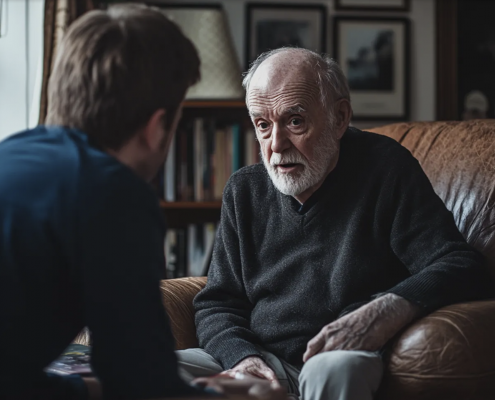
My grandmother raised me. It wasn’t part-time. It wasn’t joint custody. It wasn’t "She helped now and then." I mean, she was everything. The whole story. She became my mother, my father, and all the pillars of my life since childhood, when my parents died in a car accident.
I don’t remember the accident. Just a few memories from before. My mom’s laughter. My dad’s watch ticking on the steering wheel. And a song playing quietly on the radio.
After that, it was just me and my grandmother.
She was 52 when she took me in. She was already working full-time as a cook in my future school’s cafeteria and lived in a house so old it creaked whenever the wind changed. There were no emergency plans. Just the two of us and a world that didn’t stop to help. And she made it work.
Her name was Lorraine, and people at school called her Miss Lorraine, or just "the lunch lady," as if it were some anonymous job title rather than the woman who practically raised half the kids in town. She was 70 years old and still went to work before dawn, with her gray hair tied up in a scrunchie she made herself. Every apron she wore had a different fabric — sometimes sunflowers, sometimes little strawberries. She said it made the kids smile.
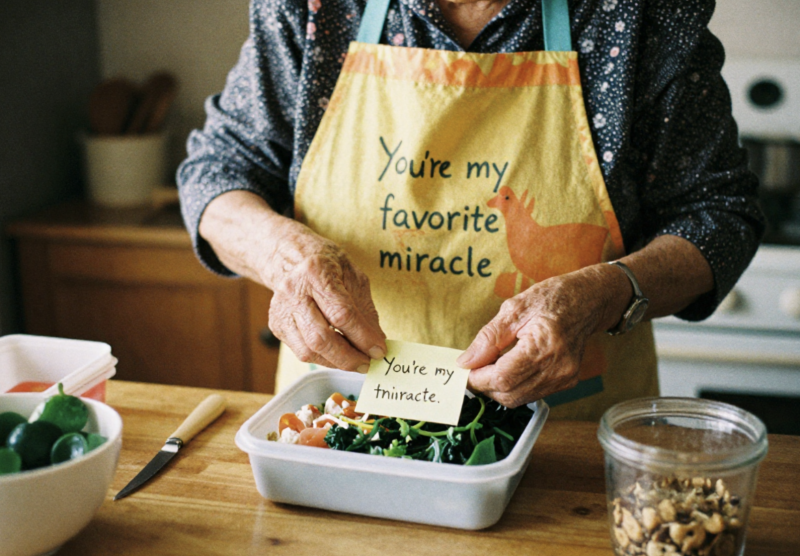
Every morning, even after spending the whole day cooking for other people’s kids, she would still make my lunch and leave a sticky note inside. There was always something sweet or silly, like "Eat the fruit or I’ll haunt you" or "You’re my favorite miracle." We were poor, but she never acted like we were missing anything.
When the heater broke in the winter, she filled the room with candles and blankets and called it "spa night." My prom dress cost $18 from the thrift store, and she sewed rhinestones on the straps while singing Billie Holiday.
"I don’t need to be rich," she once said when I asked her if she ever regretted not going back to school. "I just want you to be okay." And I was. At least, until high school made things hard.
It started in freshman year, as whispers often do — low and cruel. People would walk past me in the hallway and say things like, "Better not answer her, her grandma might spit in your soup." Some thought it was funny to call me "Cafeteria Girl" or "PB&J Princess."
Some would even go to the counter and mock my grandmother’s sweet southern accent or imitate the way she always said "sugar" or "honey" to everyone. Some of them were kids I had gone to elementary school with — kids who used to come to my house for popsicles and run around in our backyard. I remember one day when Brittany, who had cried at my eighth-grade birthday party because she didn’t win the musical chairs game, asked in front of a group: "So, does your grandma still put your underwear in your lunch?" Everyone laughed. I didn’t.
At school, the students treated her like a joke — mocking her apron, imitating her "How are you, dear?" and calling her "the dumb lunch lady." Nothing loud enough to punish, but enough to hurt. Even the teachers heard it. But no one said anything. Maybe they thought I would get stronger or that it wasn’t that serious. But for me, every comment felt like a piece being taken away from the only person who gave me a reason to get out of bed.
I tried to protect her from it. She already had arthritis in her hands and would often come home with her back aching. I didn’t want to burden her with the cruelty of adolescence. But she knew. And still... kept being kind.
My grandmother knew everyone’s name, gave extra fruit to hungry kids, asked about their games, and loved them like they were her own children.
I buried myself in books, scholarships, and anything that would get me out of that school and into college. I spent more nights in the library than at parties. I missed the prom and the game nights. I could only see the finish line, and the only sound I heard was her voice saying, "One day, you’re going to do something beautiful with all of this."
In the spring of senior year, everything changed. It started as a tightness in her chest. At first, she acted like it was nothing. "It was probably the chili," she joked, tapping her clavicle. "That jalapeño was mad at me."
But it kept happening. She’d make a face while stirring the pot or press her palm to her ribs when she thought I wasn’t looking.
I begged her to go to the doctor. We didn’t have very good health insurance. Most of the time, it was urgent care and hoping for the best. She always said, "Let’s wait until you finish the year first. That’s what matters."
I didn’t realize how serious it was until that morning. It was a Thursday. I was awake early because I had to present my final project. When I walked into the kitchen, I expected the smell of coffee and cinnamon toast, but everything was silent. The silence hit me first. Then, the scene.
She was on the floor, slightly curled up, one slipper twisted under her foot. The coffee pot was almost full. Her glasses were next to her hand.
"Grandma!" I screamed, running to her. My hands were shaking so much that I could barely open the phone. I tried CPR while shouting her name repeatedly. The paramedics arrived quickly — too quickly, actually, because I hadn’t even finished begging her to stay.
They said "heart attack" like it was a period.
I said goodbye to her at the hospital, under fluorescent lights, with a nurse telling me she would do her best to keep her comfortable. I whispered, "I love you." I kissed her forehead and waited for a miracle that never came. She passed before dawn. And all I could think was, "If we had more money — would she still be here?"
People told me I didn’t have to go to the graduation. But she had saved up for that all year. She’d worked extra shifts so I could wear the purple honor cords. She’d ironed my dress and left the shoes ready by the door two weeks before.
So, I went. I wore the dress she picked for me. I styled my hair the way she used to on Sundays. And I walked into that gymnasium like my bones weren’t made of pain.
Then came the moment I wasn’t prepared for.
I had been chosen to give the student speech weeks before, when everything still seemed safe and whole. At the time, I wrote about dreams, futures, and cheesy metaphors. But backstage, holding the folded paper in my hand, none of that felt right.
When they called me, I walked out like I was stepping onto a stage I hadn’t asked to be on.
I looked at the audience and the students who had mocked my grandmother. The teachers who had watched. The parents who didn’t know me.
And I let the truth fall from my mouth.
I cleared my throat and spoke into the microphone: "Most of you knew my grandmother."
I felt the air shift.
Some students looked up from their phones. Others blinked, confused. A few turned their heads to look at each other.
In the last row, I saw Mrs. Grayson, my first-year English teacher, sit up in her chair like she already knew what was coming.
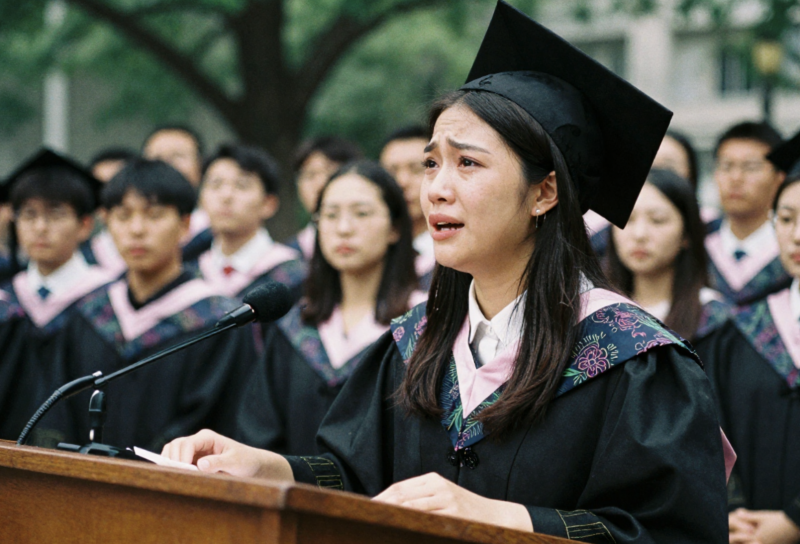
I didn’t look at the paper in my hand anymore. I didn’t need it.
"My grandmother served lunches to you all thousands of times — so tonight, I’m serving the truth you never wanted to taste."
"She was the lunch lady here. Miss Lorraine. She was the one who greeted you all every day, remembered your allergies and birthdays, asked about your games, and told you to warm up when it snowed."
My voice cracked. I didn’t try to hide it.
"She was the woman behind the counter who smiled at people who never returned the smile. She raised me after my parents died. She worked hard to keep the lights on and still found time to ask about my day."
There was a heavy silence in the gym, so thick I could feel it settle on my shoulders.
I went on.
"I know some of you thought it was funny. I know some of you laughed. I know some of you made jokes about my grandmother. Mocked her voice. Rolled your eyes when she said hello. Called me names because she made my lunch and kissed me on the cheek."
I looked at them. I forced myself to look at them.
"She heard you."
No one moved.
"She heard every little laugh. Every insult. Every time you made her the punchline of a joke."
I gripped the podium until my fingers hurt.
"But she never stopped being kind, never stopped asking if you were okay, never stopped practicing love, even when it hurt."
I heard someone sniffle in the second row. I kept my eyes fixed on the back wall so I wouldn’t start crying too.
"She used to tell me I was her 'North Star.' That I was the light she followed, the reason she got up every day. But the truth is... she was mine."
I looked down for a second, just to breathe.
"She taught me that love isn’t loud. It doesn’t get applause all the time. Sometimes it’s like a warm meal you didn’t ask for. A smile when you feel invisible. A firm hand holding yours when the world is falling apart."
Some teachers had their heads down. My science teacher, Mr. Connors, was pressing his fingers to his lips.
"She passed away last week. A heart attack. She didn’t get to see me in this cap and gown. But she gave me everything that made this moment possible. She mattered. More than any of you will ever understand."
I let the silence stretch long enough to be absorbed.
"If you take one thing away from tonight, let it be this: when someone shows kindness, don’t laugh. Don’t scoff or think it’s a weakness. Because one day, you’ll realize it was the strongest thing you’ve ever known. And maybe, just maybe, you’ll wish you’d said ‘thank you.’"
I stepped back from the microphone. My legs were trembling. My heart felt like it was being pulled in two directions — raw pain and silent pride.
The applause didn’t come right away. For a second, it was just stillness.
Then it started. Slowly. First from the teachers. Then, a few claps from the parents. Then, surprisingly, from the students. No cheers or whistles. Just calm applause, that seemed more like mourning than celebration.
When it ended, I stepped off the stage and went to the side hallway to get some air.
Then came what I didn’t expect.
Brittany. Her perfect curls were slightly undone at the ends. She approached like she was walking through glass.
"I’m sorry," she said. Her voice almost broke.
I stared at her.
"We were so cruel," she said. "And we thought it was nothing. But it wasn’t. And I... I’m sorry."
Behind her were others. Tyler, who once drew a caricature of my grandmother holding a broom. Marcus, who used to mock the "five-star chef of the cafeteria." Even Zoey, who once made a TikTok mimicking my grandmother’s voice.
They all looked the same now — red-eyed, embarrassed, and small.
"We didn’t think," Zoey said, murmuring. "She was always there."
Tyler nodded. "And we took her for granted. I feel bad about that."
I didn’t know what to say. Part of me wanted to shout. Another part wanted to say they didn’t deserve to feel sad. But then I thought of Grandma. I remembered her calling people "dear" even when they didn’t respond.
Giving the last cookie to a kid who always seemed hungry. Like she used to say, "You never know what someone’s going through, so be kind."
"We talked," Brittany added. "All of us. After your speech. And... we want to do something."
I crossed my arms. "Like what?"
"We want to plant a tree-lined path on campus," she said, her voice quickening. "Like a street of trees leading to the cafeteria entrance. A place to sit. A place that’s peaceful. And we want to name it after her. The Lorraine Path."
Something inside me broke. Not in a bad way. Just in that way things break when they’ve been tightly held for too long.
"You’d do that?" I asked, almost in a whisper.
"Yeah," Marcus said quickly. "We’ve made a group chat. We’re going to talk to Principal Adler. Raise money. Involve the PTA."
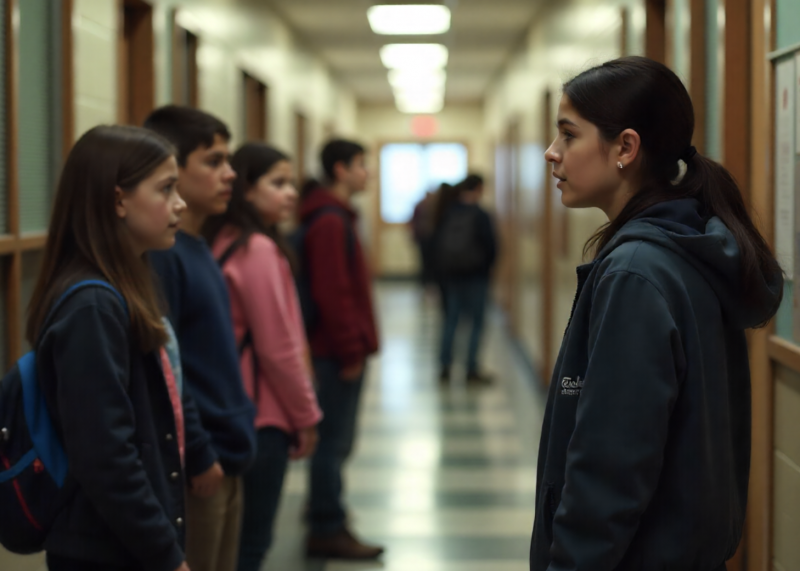
"She fed us," Brittany said. Her lips were trembling. "Even when we didn’t deserve it."
I looked at them, those kids who had made my life difficult, and saw something real in their eyes. Not just guilt. Change.
"She would have fed you anyway," I said.
That’s when Zoey started crying. Really crying, right there in the hallway, in high heels and bright eyeliner.
"That’s what makes everything worse," she choked out.
Later that night, when the crowd had dispersed and the music was still echoing in the parking lot, I went home. Alone.
I opened the front door and stood in the stillness that had once been full of buzzing and the clatter of dishes. I sat at the kitchen table where she used to drink her coffee.
The hook for her aprons on the wall was empty.
I whispered, "They’re going to plant trees for you."
No one answered. But for the first time in days, I didn’t feel alone.
I like to think she heard me. That, wherever she is, she knows she mattered. She knows she taught me to love out loud. To stand tall. To forgive.
And maybe, if I try hard enough, I’ll be someone’s North Star too.