Found My Daughter Forced to Eat in the Garage Because Grandma Excluded Her — My MIL Was Shocked When She Learned My Next Move.
My mother-in-law spent years finding elegant ways to remind me that I did not belong in her world. I told myself I could live with it. Then, one summer afternoon, I received a call from my daughter that made me realize Evelyn’s cruelty had finally reached a point I could no longer ignore.
When I married Daniel, his mother shook my hand at the reception as if she were greeting a guest who had wandered into the wrong room.
Evelyn was wealthy, elegant, and impossible to confront. She never said anything openly cruel. She preferred the kind of comment that sounded harmless unless you were the person being targeted by it.
With me, she suddenly became distant, and all of her comments carried a sharp undertone.
At our wedding, she looked at my dress, smiled, and said, “Well. Daniel has always been full of surprises.”
People laughed.
I laughed too, because I was young, in love, and already learning that reacting to Evelyn would only make me look overly sensitive.
At family dinners, she praised everyone else’s schools, jobs, tastes, and connections. With me, she suddenly became distant, and all of her comments carried a sharp undertone. If I brought dessert, she called it “homemade.” If I dressed up, she said I looked “so confident.”
No matter what I did, Evelyn found a way to make me feel like I was standing outside the room.
Then Lily was born, and for a while I thought things might change.
Whenever I talked about it, Daniel would sigh and say, “That’s just how she is.”
I hated that phrase almost as much as I hated the way Evelyn treated me.
Then Lily was born, and for a while I thought things might change.
Evelyn loved appearances, and a granddaughter fit perfectly into the image she had of herself. She bought monogrammed blankets, organized sophisticated birthday parties, and told people Lily had “wonderful posture for a child.” She loved Lily the way she loved fine silver: as long as it was always polished.
Every summer, Evelyn invited all the grandchildren to spend a week at her estate.
Lily is eight years old now. She is kind, observant, and at that age where she still believes adults know what they are doing. She loves drawing, hates tomatoes, and still sleeps with a stuffed rabbit she insists is only “for decoration.” And lately, she had started noticing how Evelyn’s smile changed whenever I entered a room.
Every summer, Evelyn invited all the grandchildren to spend a week at her estate. The older cousins spent most of the day outside, and the younger ones usually ate together on the back terrace with the nanny while Evelyn entertained the adults inside the house.
This year, Evelyn was also hosting a lunch for a few people she wanted to impress.
Daniel was in our bedroom while I packed Lily’s bag.
That was part of the reason I did not want Lily to go.
Daniel stood there while I packed and said, “She’ll be fine.”
I zipped the suitcase harder than necessary.
“Your mother has important guests coming. That usually makes her worse.”
“She won’t do anything to Lily.”
“No,” I said. “She’ll do what she always does. She’ll make her feel small in a way that sounds reasonable.”
He opened his mouth, but then closed it again.
“Do I have to wear the blue dress?”
Lily was standing in the doorway holding her rabbit by one arm.
“Mom?”
“Yes, sweetheart?”
She hesitated.
“Do I have to wear the blue dress?”
“What does Grandma like?”
She nodded.
“Grandma likes me, right?”
“Wear whatever you want.”
She looked relieved, but only for a second.
Then she asked:
“Grandma likes me, right?”
I immediately put a smile on my face.
“Of course she does.”
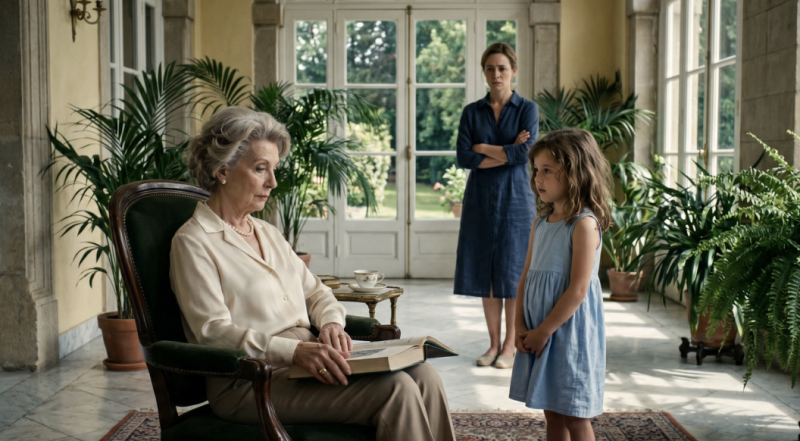
I almost took Lily back home right then.
Instead, I kissed her forehead and told her to call me if she needed me. She nodded as if that was silly, as if of course she would not need to be rescued from her own grandmother.
Three hours later, my phone rang.
The second I heard Lily crying, I felt something inside me drop.
“Mom, please come get me.”
I stood up so quickly my chair fell over.
“Lily, what happened? Are you hurt?”
I grabbed my keys.
“Where are you?”
She tried to explain through her sobs.
At lunch, Evelyn allowed Lily to sit inside with the adults for the first course because Lily had asked to be with the adults instead of the younger children who were eating outside on the back terrace with their cousins and the nanny. Then Lily bumped into a glass of water.
From Evelyn’s tone, you would have thought she had done something terrible.
But that was all it was.
From the way Evelyn spoke, you would have thought Lily had done something awful, but she had only spilled water.
“Grandma got mad,” Lily said.
“How mad?”
A silence.
Then, very quietly:
“She took away my plate.”
At that moment, my hand squeezed the phone so tightly it started to hurt.
I stopped in the middle of the kitchen.
“What do you mean?”
“She said I didn’t belong at the table with the guests.”
At that moment, my hand squeezed the phone so tightly it started to hurt.
This was Evelyn’s favorite kind of punishment. Removal. Exclusion. Making distance feel deserved.
“Where exactly are you, sweetheart?”
There was more crying now, but quieter.
Almost like she was trying not to draw attention.
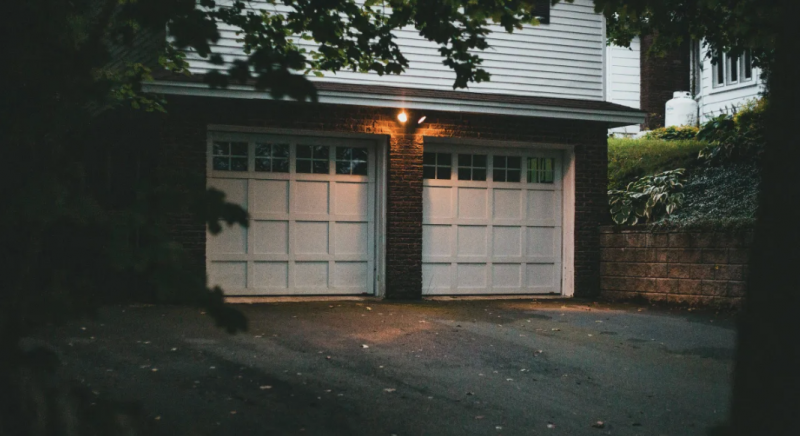
“In the attached garage.”
I closed my eyes.
“She had them put a little table here.”
The attached garage.
A little table.
My daughter, alone, because she spilled water in front of important people.
I called Daniel before I even reached the car.
He answered:
“Hey, what happened?”
“Your mother put Lily in the garage.”
Silence.
Then:
“What?”
He met me halfway and followed my car up the long gravel driveway.
“She told Lily she didn’t belong at the table with the guests.”
His voice changed immediately.
“I’m coming now.”
Daniel had always explained Evelyn when it came to me. But he had never heard Lily like that. I knew he was imagining her crying, trying to apologize for existing, and every excuse he had ever made for his mother finally collapsed in the face of our daughter’s voice.
He met me halfway and followed my car up the long gravel driveway.
We did not go through the main entrance.
We went straight to the side garage.
The door was open. Inside, beside stacks of folding chairs and boxes of sparkling water, was a small round table with a white tablecloth. A lunch plate sat mostly untouched.
And there was Lily, sitting with her hands in her lap, her stuffed rabbit pressed against her stomach, as if she was trying to take up as little space as possible.
When she saw us, she looked relieved first.
I dropped to my knees and hugged her.
Then she looked embarrassed.
That almost destroyed me more than anything else.
I dropped to my knees and hugged her.
“You did nothing wrong,” I said. “Nothing.”
Daniel knelt beside us. His face was blank in a way I had only seen a few times during our marriage. For the first time, he had no prepared phrase to defend his mother.
“Lily,” he said, “look at me.”
She looked.
“You will never be left like this again.”
She nodded and started crying even harder.
We took her outside. Daniel got into the back seat with her; she refused to let go of his hand.
I closed the door.
And Evelyn was sitting at the end of the table, smiling at her guests.
So I turned around and walked back inside the house alone.
The dining room looked exactly the way Evelyn wanted it to. Sunlight, flowers, linen, silver, soft laughter. A beautiful room built to hide ugly things.
Evelyn was sitting at the end of the table, smiling at her guests.
She saw me and stiffened.
“Claire,” she said. “We’re having lunch.”
I recognized one of the women immediately.
“I can see that.”
Everyone looked up.

I recognized one of the women immediately. Margaret Leland, director of Saint Bartlett Academy, the private school Evelyn had been trying to impress for months because she wanted Caroline’s son to be accepted there next year.
I looked around the table.
“Sorry to interrupt lunch,” I said. “But I think everyone here should know where Evelyn put my daughter.”
Evelyn said my name in a warning tone, but I continued.
The room went silent.
“Lily accidentally spilled a glass of water. Evelyn removed her plate from the table and told her she didn’t belong there with the guests.”
Nobody moved.
I kept my voice calm because that made it worse.
“They put a small table for her in the attached garage, where she sat and ate alone.”
Evelyn straightened.
“That is not what happened,” she said. “She was careless, became upset, and needed a moment to calm down.”
Margaret looked directly at her.
“You put a child in the garage?”
Evelyn lifted her chin.
“It is attached to the house.”
She knew exactly what Margaret had just seen.
Margaret stared at her for a long moment. Then she placed her napkin on the table.
“I see.”
That was all.
No speech. No lecture. Nothing Evelyn could later turn into a story about exaggeration.
Just:
“I see.”
Outside, she bent down near the car window and spoke softly to Lily.
Inside the house, everything became quiet.
“A spilled glass should never decide where a child belongs.”
Lily looked at her and then nodded once.
Margaret squeezed her shoulder and left.
That night, Daniel called Evelyn from our kitchen.
“We’re not coming back for the rest of the summer,” he said.
He sounded ashamed, and he should have.
A pause.
“No. Not even weekends.”
Another pause.
“When you treated Claire badly, I told myself it was just your way. I’m not going to say that about what you did to Lily.”
I looked at him then. Really looked at him.
He sounded ashamed, and he should have.
Three days later, Evelyn showed up at our house.
She stood in my living room holding her purse tightly with both hands.
No gift.
No flowers.
No performance.
She said:
“I never wanted this to become what it became.”
I looked at her.
Her fingers tightened around the strap of the bag.
“I handled it the wrong way.”
“You humiliated an eight-year-old child.”
She looked toward the hallway, where Lily’s drawings were pinned to the wall.
Her mouth tightened. For a second, I thought she was going to leave.
Instead, she said quietly:
“I know.”
I waited.
She looked back at the drawings.
“I was focused on the lunch,” she said. “On how it looked. On who was there.”
“That’s not an explanation.”
I told her she would not get credit for regret that only appeared once it became public.
“No,” she answered. “It isn’t.”
That was all she gave me. Just a small visible crack in the brutal façade she had maintained for years.
I told her she would not get credit for regret that only appeared once it became public.
She nodded as if it hurt, which was probably the first time pain had done something useful for her.
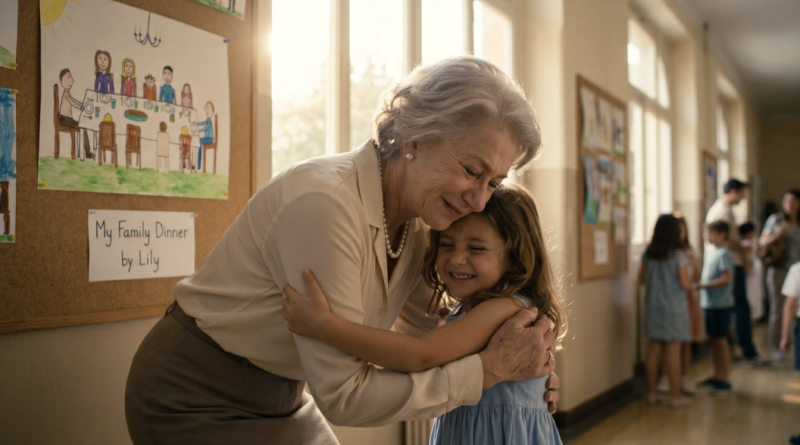
Months later, Lily’s school held a charity art exhibition in the gymnasium. The paintings were displayed with bid sheets underneath, and parents walked around pretending they were not emotional.
Lily showed us her artwork: a long dinner table with every family member sitting together. At the end there was an empty chair.
Below it, in careful block letters, she wrote:
“Room for everyone.”
And Evelyn arrived quietly.
She stood looking at the painting for a long time.
Then she wrote her name on the bid sheet and bought the artwork.
Daniel told me afterward that she hung the painting in her formal dining room, where guests would see it the moment they sat down.
I don’t think Evelyn became kind overnight.
A week after the art exhibition, Lily asked if she could invite two quiet girls from her class to sit with her at lunch.
I said:
“Of course.”
She shrugged like it was nothing important, but I knew what she was doing.
I don’t think Evelyn became kind overnight.
But she was finally forced to look at herself.
And my daughter would never again wonder if she belonged somewhere.
She had already started making space for other people too.