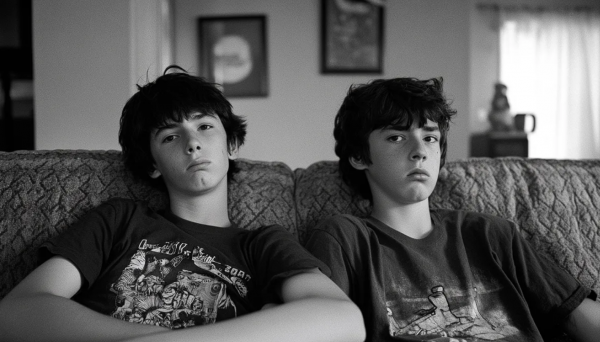
I arranged and paid for my son’s crush to ask him to prom, but when I later saw the photos from the night, I was completely shocked.
“He deserves one perfect night,” I whispered, holding an envelope of cash. It was meant as a gift, but it became the thing that set off everything I believed I understood about him.
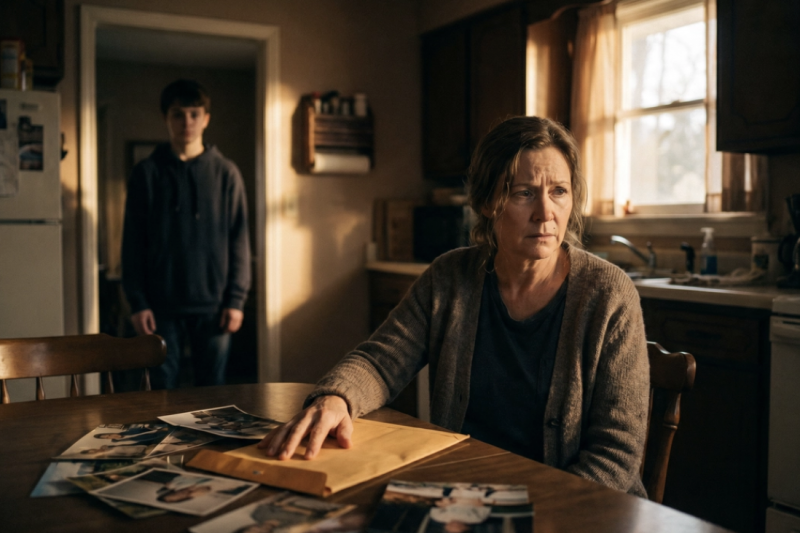
The kitchen table was covered in photographs—old, yellowed at the edges, all showing Jeremiah at different ages. I had been sorting them since morning, and the afternoon light had shifted across the floor without me noticing. His whole childhood was laid out in front of me, and it still somehow felt incomplete.
I picked up a fourth-grade class photo and traced his face. He stood slightly apart from the other kids, as he often did.
Jeremiah’s voice came from the hallway, soft and careful, the way he spoke about everything.
“I had toast,” I lied.
He entered the kitchen in socks, taller now, shoulders narrow under a gray hoodie. He paused behind my chair, looking down at the photos but not touching them.
“You’re doing this again,” he said.
“I’m just remembering.”
“You remember a lot.”
I reached up and squeezed his hand the way I had since he was small. He didn’t respond right away, then sat across from me, eyes landing on a middle-school photo of a girl—Ella.
“Have you thought more about it?” he asked.
I looked up. “Thought about what?”
“What you said. About Ella.”
My hand stopped moving over the photos. I had only mentioned it once, late at night, half-joking and half-wishing that I could somehow give him a better prom. I didn’t realize he had taken it seriously.
“You said you’d think about it,” he said evenly. “I’m asking if you have.”
“Honey, that’s just nerves. Prom is in three weeks. Don’t put that kind of pressure on yourself.”
He studied me for a long moment, then softened into a tired smile.
“You’re right. Sorry. I just don’t want to spend that night alone again.”
My chest tightened.
“You won’t,” I said quickly. “I promise.”
He nodded, stood, and brushed my shoulder as he passed before going back down the hallway, his door clicking shut softly.
I sat there as the photos blurred together—birthday parties with barely anyone present, school projects done alone, group pictures where he stood at the edge like he didn’t fully belong.
I thought about bruises I had never seen but imagined anyway, about cafeteria tables where he ate alone, about years of being called strange. I told myself a girl like Ella—quiet, overlooked, from a struggling family—might understand him.
“He deserves one perfect night,” I whispered. “Just one.”
I slipped her photo into my pocket and reached for my phone, believing I was acting out of love.
The next morning, I stared at my screen for almost an hour before messaging Ella. Her profile picture looked back at me—gentle smile, tired eyes.
I told myself I was helping both of them.
“Hi Ella, this is Jeremiah’s mom. I know this is unusual, but I have a proposal. Could we talk privately?”
She replied quickly.
“Um, sure. Is everything okay?”
I explained as carefully as I could: one night, a kind gesture, money that could help her family with rent.
There was a long pause, then another shorter one.
“I need to think about it. Can I message you tomorrow?”
The next day she agreed in a single message.
“Okay, I’ll do it. My mom is behind on rent and the landlord keeps coming. But please don’t make it weird.”
I arranged everything—her dress, her hair, her makeup—quietly, so no one would recognize what was really happening.
On prom day, she arrived at our house holding a small bouquet, tense and unsure.
Then Jeremiah came down the stairs in a rented tuxedo. He looked older, sharper, like I was seeing his father in him for the first time.
“You look beautiful,” I told Ella.
“Thank you, Mrs. Carter,” she said without meeting my eyes.
When Jeremiah saw her, something flickered across his face—not surprise, not joy, something controlled and unreadable. A small, tight smile.
“Wow,” I whispered.
Ella kept her gaze on the floor. “Hi, Jeremiah.”
His voice was steady in a way I had never heard before.
I brushed the feeling aside and took photos outside by the bushes, adjusting his jacket, fixing her corsage. At one point he leaned close to her, and she flinched slightly. I told myself it was just nerves.
“Smile, sweetheart,” I said. “You’re glowing.”
She tried, but it didn’t reach her eyes.
At the curb, I told them to have a safe, kind night.
“We will, Mom,” Jeremiah said.
He opened the car door with a flourish I didn’t recognize in him. The car drove away.
Back inside, I poured wine and checked my phone again and again. On social media, I saw fragments—Ella in the limo, looking uncomfortable, Jeremiah’s voice somewhere off camera.
Then a message from his teacher appeared, Mrs. Patterson, asking urgently about what she had heard.
I dismissed it at first.
Until she sent a photo.
A hallway. Jeremiah and Ella. Her posture broken, her face in tears.
My stomach dropped.
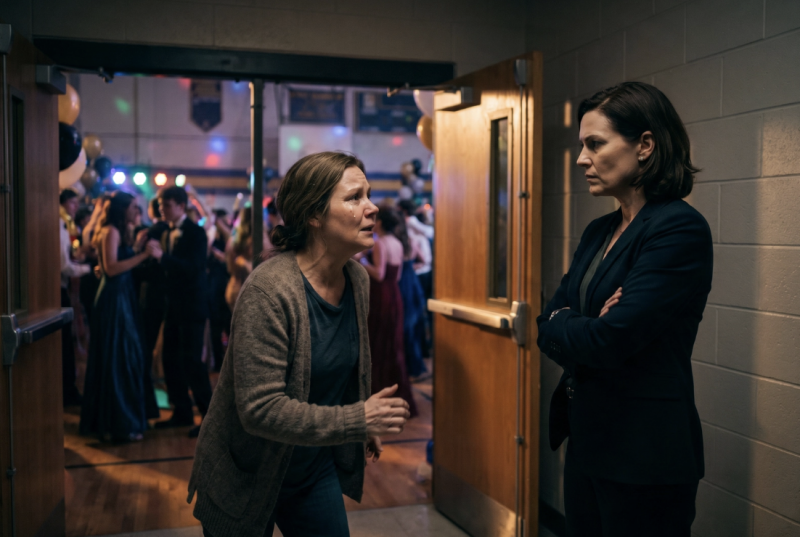
I drove to the school in a blur.
Mrs. Patterson was waiting near the gym.
“You came,” she said.
“Where are they?”
“Listen to me first.”
She told me she had watched the night unfold—that Jeremiah had told people I paid Ella, that he mocked her, pressured her, followed her when she tried to leave, and made her perform for photos while she tried to pull away.
“That’s not possible,” I said.
“He knew what he was doing,” she replied. “Did you pay her?”
I couldn’t answer.
“Go find him,” she said. “East corridor.”
I found him leaning against lockers, calm, drinking punch.
“There you are,” he said.
“Where is she?”
“Her friend took her. She’s emotional.”
“What did you do?”
He looked bored. “What I wanted.”
“Don’t say that.”
“I didn’t humiliate her. I showed everyone what she is.”
“You knew I contacted her.”
“Of course I did.”
“How?”
“Because you always do things when you feel guilty enough.”
My voice shook. “You told me she was bullying you—”
He smiled faintly. “And you believed it. You handed her to me.”
I didn’t recognize him anymore.
“Pay her off again. Fix it,” he said quietly. “You always fix things.”
At that moment, footsteps approached—Ella’s mother, furious, demanding answers. We moved outside into the parking lot.
I admitted it. I had paid her.
Ella’s mother looked devastated.
“My daughter called me from a bathroom stall,” she said. “She was shaking. Did you pay her?”
“I did,” I said. “I thought I was helping. I was wrong. I’m sorry.”
Jeremiah stepped closer. “Mom, tell her it’s not what it looks like.”
I looked at him.
“It is exactly what it looks like.”
Silence fell.
I pulled out the envelope.
“I’ll pay for counseling. Anything she needs.”
“You’re choosing her over me?” he snapped.
“I’m choosing responsibility,” I said.
His expression hardened. “You need me.”
“Loving you doesn’t mean ignoring this.”
He stared at me, then walked away into the dark.
Weeks later, the house was quiet. He had left for university with barely a goodbye.
I wrote Ella an apology letter I knew couldn’t undo anything.
I started therapy.
And I put away the old photo, closing the drawer behind it.