I bought baby shoes at a flea market with my last $5, put them on my son, and heard crackling from inside.
I never thought a pair of baby shoes costing 5 reais would change my life, but when I put them on my son’s feet and heard a strange cracking sound, everything I thought I knew changed.
My name is Claire. I’m 31 years old, a single mother, and most days, I feel like I’m walking a tightrope. I work as a waitress at a diner three nights a week, take care of my little boy, Stan, and also care for my mother, who has been bedridden since her second stroke. My life is a strange mix of exhaustion and urgency, as if I’m always just one unpaid bill away from everything falling apart.
Some nights, I lie awake listening to the hum of the old fridge, wondering how much longer I can keep this pace before something breaks.
I didn’t always live like this. Mason and I were married for five years. Back then, we shared dreams of a modest house and a big backyard where our son could play. But all of that came crashing down when I discovered he was cheating on me with a woman named Stacy, of all people. She used to be our neighbor. I still remember the way he looked at me when I confronted him, as if I were the one to blame for everything falling apart.
When we divorced, he convinced the court to let him keep the house. He said it was better for Stan to have a “stable environment,” even though Stan didn’t even live with him full time.
Now, Mason lives with Stacy, while I struggle to pay the rent on a falling-apart apartment, with two rooms that smell like mildew in the summer and freeze in the winter. The faucet leaks and the heater makes noise, but it’s all I can afford.
Some nights, I find myself driving past that house, seeing the lights glowing in the windows, and it feels like I’m looking at the life that should have been mine.
So, yes, money is tight. It hurts.
It was a foggy Saturday morning when I found myself at the edge of a flea market, holding the last 5 reais bill in my wallet. I had no reason to be there, but Stan had grown and his shoes were too tight. His little toes were starting to curl at the tips, and every time I saw him stumble, an overwhelming guilt settled in my chest.
“Maybe I’ll get lucky,” I murmured, pulling my coat tighter against the cold.
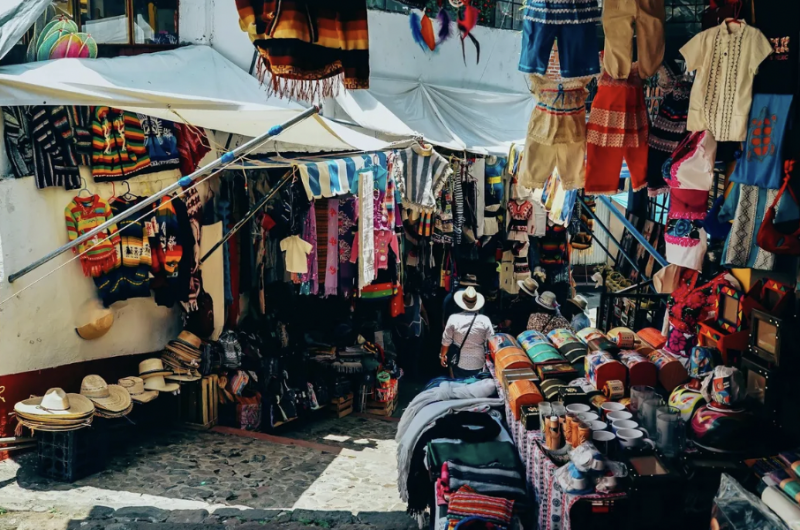
The flea market stretched across an empty parking lot, with rows of uneven tables and old tents, filled with forgotten things waiting for a second chance. I passed chipped mugs, tangled wires, and plastic bins full of yellowed books. The air smelled like wet cardboard and old popcorn.
Stan tugged at my sleeve. “Mom, look! A dinosaur!”
I looked down. He was pointing at a broken figurine, missing half its tail. I smiled weakly.
“Maybe next time, sweetheart.”
That’s when I saw them.
A pair of small brown leather shoes. Soft, worn, but in amazing condition. The stitching was perfect and the soles were almost pristine. They were a child’s size, exactly what Stan needed.
I rushed over to the seller, an older woman with short gray hair and a thick wool scarf. Her table was covered with trinkets: frames, costume jewelry, and a few old bags.
“How much for the shoes?” I asked.
She looked up from her thermos and smiled warmly. “Six reais, dear.”
My heart sank. I stretched the crumpled bill between my fingers. “I only have five. Would... would you accept that?”
She hesitated. I saw the conflict cross her face. Then she nodded slowly.
“For you, yes.”
I was surprised. “Thank you. Really.”
She waved it off. “It’s cold. No child should be walking around with cold feet.”
As I walked away with the shoes under my arm, I felt like I’d won a small victory. Nothing life-changing, but enough to make me feel like I’d protected my son, in some way. The leather felt soft under my arm, and for the first time that week, the weight on my chest lightened a little.
At home, Stan was on the floor, building crooked towers with his plastic blocks. He looked up when I came in.
“Mom!”
“Hey, buddy,” I said, trying to keep my voice cheerful. “Look what I bought for you.”
His eyes lit up. “New shoes?”
“That’s right. Try them on.”
He sat on the floor, legs stretched out. I helped him put on the shoes, gently sliding the leather over his socks. They fit like a glove.
But then we heard it. A soft cracking sound coming from one of the shoes.
Stan frowned. “Mom, what’s that?”
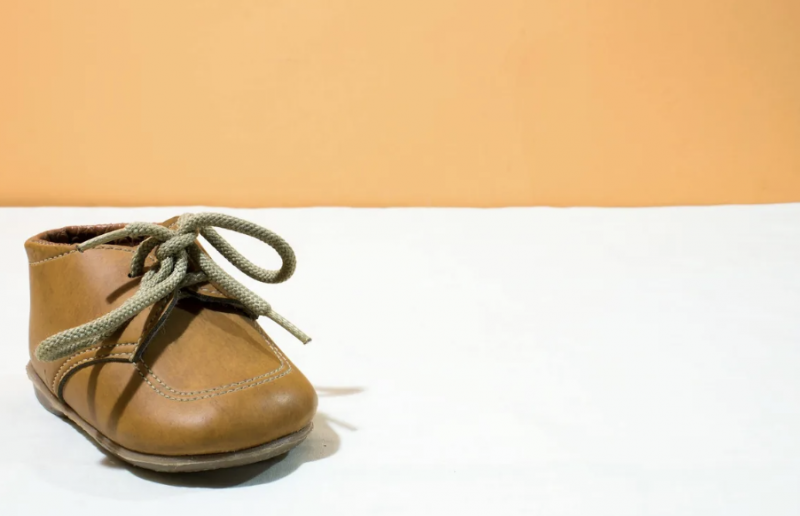
I paused, confused. I took off the left shoe and pressed the insole. There it was again—a soft crackling, like paper rubbing against itself.
My stomach twisted. I slipped my hand inside the shoe and slowly lifted the padded lining.
Hidden underneath was a piece of paper, carefully folded, its edges yellowed with time. The handwriting was small, almost cramped, but clearly human. My hands trembled as I unfolded the paper.
Stan leaned closer, his small hands gripping my knee as if he already knew this wasn’t just any secret.
“To whoever finds this:
These shoes belonged to my son, Jacob. He was only four when he got sick. Cancer took him from me before he ever had the chance to live his childhood. My husband left us when the medical bills piled up. He said he couldn’t handle the 'burden.' Jacob never wore these shoes. They were too new when he passed away. I don’t know why I’m keeping this. I don’t know why I keep anything. My house is full of memories that suffocate me. I have nothing left to live for. If you are reading this, please... just remember that he was here. That I was his mother. And that I loved him more than life itself.
—Anna.”
I stared at the letter, the words blurred by the tears that began to well in my eyes. My throat tightened. I covered my mouth, trying to breathe.
“Mom?” Stan’s voice was soft. He tugged at my arm. “Why are you crying?”
I wiped my tears and forced a smile. “It’s nothing, sweetie. Just... dust in my eyes.”
But inside, I was falling apart. I didn’t know who Anna was, or how long ago she had written this letter. All I knew was that, somewhere, a mother like me had poured her pain into those shoes, and now her story was in my hands.
That night, I couldn’t sleep. I kept thinking of her, of Jacob, and of the pain hidden in that small note. I felt like this was more than just a coincidence, it was as if fate was waking me up.
When the sun rose, I knew what I had to do.
I had to find her.
The next Saturday, I returned to the flea market. The fog was low again, and my heart was racing as I walked toward the woman who had sold me the shoes. She was setting up her things in the same spot as always when I approached.
“Excuse me,” I said, folding my hands. “Those leather shoes I bought from you last week... do you remember where they came from?”
The woman frowned, trying to remember. “Oh, those? A man dropped off a bag of kids’ clothes. He said his neighbor was moving and asked him to get rid of everything.”
“Do you know the name of the neighbor?” I pressed.
She tilted her head, thinking. “I think he said her name was Anna.”
That word was enough to push me forward. I thanked her and left, my heart pounding. For the rest of the week, I couldn’t stop thinking about Anna. I asked around at work, searched Facebook community groups, and even checked obituaries late at night. After days of searching, I finally found her: Anna Collins, in her 30s, living in an old house just a few miles away.
The next Saturday, I visited her with Stan in the backseat. My stomach was in knots the whole way. When I arrived, the house looked abandoned; weeds had overtaken the yard, the blinds were crooked, and the curtains were tightly shut. For a moment, I wanted to turn the car around and leave. But then I remembered the folded paper in my drawer and her words that had broken me in two.
I knocked on the door. At first, nothing. Just silence. Then, slowly, the door creaked open.
A woman appeared. She looked fragile, with dull, lifeless hair, her body so thin I wondered when the last time she had eaten was. Her eyes were vacant, surrounded by red circles, as if she had been crying for years.
“Yes?” Her voice was monotone, suspicious.
“Are you... Anna?” My words trembled.
Suspicion crossed her face. “Who wants to know?”
I swallowed hard and pulled the folded paper from my pocket. “I think I found something that belongs to you.”
Her gaze fixed on the paper. She extended trembling fingers, and as soon as she saw the letter, her body gave way. She leaned on the door and started crying.
“You shouldn’t...” Her voice cracked. “I wrote that when I thought... when I wanted...”
Her words faded, lost in the tears. Without thinking, I stepped forward and took her hand.
“I found it in the shoes,” I said softly. “My son is wearing them now. And I had to find you. Because you’re still here. You’re alive. And that matters, even if you don’t see it right now.”
Anna collapsed completely,
falling into my arms as if we’d known each other forever. I held her tight, feeling her pain pour out in the form of tears against my shoulder.
In the weeks that followed, I made sure to visit her. At first, she resisted.
“You don’t have to come,” she said one afternoon when I showed up with coffee. “I don’t deserve this. I don’t deserve friends.”
“Maybe not in your mind,” I responded, handing her the cup, “but we don’t choose who cares about us. Sometimes people just... care.”
She shook her head. “Life took everything from me.”
“I know what that feels like,” I whispered.
Little by little, she began to open up. During our walks in the park or the quiet afternoons in her living room, she told me about Jacob. Her eyes softened as she described how much he loved dinosaurs, how every Sunday he’d ask for pancakes, and how he still called her “Supermom,” even on days when she collapsed in the bathroom, thinking he couldn’t hear her.
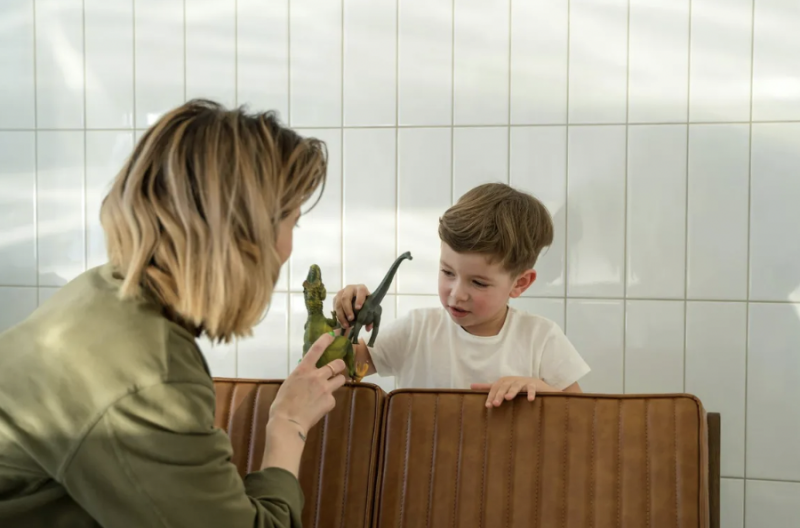
“He made me laugh when I thought I had no strength left,” she said one day, smiling faintly. “That kid saved me, even while he was dying.”
I told her my story too. I talked about Mason and how betrayal had torn my life in half. I talked about my mom and how many times I felt buried under responsibility.
“You kept walking,” she said after listening. “Even when you were drowning.”
“And you can too,” I reminded her.
Our conversations became a lifeline. Two broken women holding each other up.
Months later, something changed in Anna. The sadness in her eyes began to soften. She started volunteering at the children’s hospital, reading stories to the kids who were facing the same battle Jacob had lost. She’d call me afterward, her voice more upbeat.
“Today they smiled at me,” she said once. “One of them hugged me and called me Aunt Anna. I felt like my heart was going to burst.”
I smiled into the phone. “Because you have more love to give than you realize.”
One cold afternoon, Anna surprised me by knocking on my door. She was holding a small box, carefully wrapped.
“What is this?” I asked.
“Open it,” she said softly.
Inside was a delicate gold locket, worn but beautiful.
Her hands trembled as she placed the locket in my hand, as if she wasn’t just giving me a piece of jewelry, but a piece of her heart.
“It belonged to my grandmother,” Anna explained. “She always said it should go to the woman who saved me. I thought she meant it metaphorically. But Claire... you saved me. You reminded me that life wasn’t over. That Jacob’s love didn’t die with him.”
Tears filled my eyes. “I don’t deserve this.”
“You do,” she insisted, fastening the chain around my neck.
As if that wasn’t enough, she even tried to share part of her inheritance with me.
“I want you to have this,” she said. “You’ve suffered enough.”
I firmly refused. “Anna, I can’t. We’re friends, not charity cases.”
She smiled sadly. “No, now you’re my sister. Let me love you like family should.”
I cried more than I had in years.
Two years later, I was standing in a small church, holding a bouquet and trying to control my tears. This time, they weren’t tears of sadness, but pure joy. Anna walked down the aisle, radiant in white, with her arm intertwined with the man she had fallen in love with at the hospital — Andrew, a kind soul who adored her.
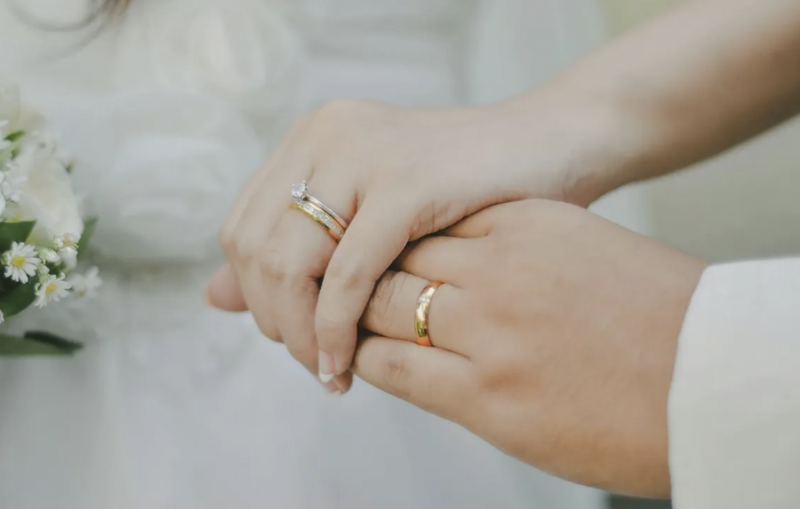
When she reached him, I saw a light in her eyes that I had never seen before. It was like life had started flowing through her veins again.
At the reception afterward, she approached me with a small bundle in her arms.
“Claire,” she whispered, gently placing the baby on my chest.
I looked down at her, a rosy, perfect little girl, her eyes opening for the first time as if she were absorbing the world. I held my breath.
“She’s beautiful,” I murmured.
Anna smiled through her tears. “Her name is Olivia Claire. In honor of the sister I never had.”
I stood there, speechless. My chest ached with so much gratitude, love, and awe for how life could turn upside down in ways I never imagined.
At that moment, all the struggles, the losses, and the nights when I thought I couldn’t keep going seemed to fit into something much bigger, something that finally made sense.
Now, as I write this, I still can’t believe how it all happened. I thought I was just buying a pair of shoes for my son with my last five reais, but what I really found was a second chance for Anna, for me, for both of us.
And maybe, just maybe, that was the miracle I didn’t know I was looking for — a miracle that came from a pair of little shoes, carrying not just steps, but a story that changed everything.