I pretended my niece was actually my daughter to put my fiancé to the test, and his reaction ended up breaking off our engagement
Sometimes, the only way to uncover the truth is to construct a lie. I had one weekend to decide whether my fiancé’s affection was real or simply a calculated move. I only needed the right bait.
The kitchen was too immaculate again. I sat at the long oak table with roasted chicken and a glass of pinot, the ceiling light glinting off polished silverware I had cleaned out of habit rather than necessity. Outside, the maples were shifting into autumn color, and I realized I hadn’t spoken out loud all evening since locking my office.
I was a senior partner at a law firm, earning more than I had ever imagined, living in a four-bedroom home I had bought alone. And most nights looked like this.
But life hadn’t always been this way.
My second husband left with most of my savings and a note saying he needed to “find himself.” After that, I stopped searching for anything for a long time.
Until Richard.
I met him six months earlier at a charity gala for a children’s hospital. I stood near the bar, distracted, wondering if I’d locked my car, when a tall man in a charcoal suit leaned in and said, “You look like someone already regretting coming here.”
“Is it that obvious?”
“Only to someone who feels the same,” he replied, offering his hand. “Richard.”
He was 55, with silver at his temples—the kind of man who naturally pulled out chairs and remembered small details like how I took my coffee.
For six months, he was steady. Never pushy. He brought soup when I was sick and sent flowers to my office for no reason at all.
When he proposed on my porch in September, I said yes before I could overthink it. And afterward, I started overthinking everything.
It began with small things. The way he ran his hand along my kitchen counter and said, “You’ve built something impressive here, Maggie. It would be a shame if anyone disrupted it.”
Or when he casually asked over wine whether my finances were centralized or spread out, saying it mattered for “planning ahead at our age.”
I told myself it was caution. Responsibility.
But then there was the waitress at the café—young, maybe 26. I noticed how long his gaze lingered. And I noticed that he noticed me noticing.
I stared at my ring afterward. One carat, platinum, a careful statement.
I turned it around my finger again and again.
“He’s just thoughtful,” I said to myself. “Just careful. That’s a good thing.”
But the kitchen stayed silent, and something beneath my reasoning kept growing louder.
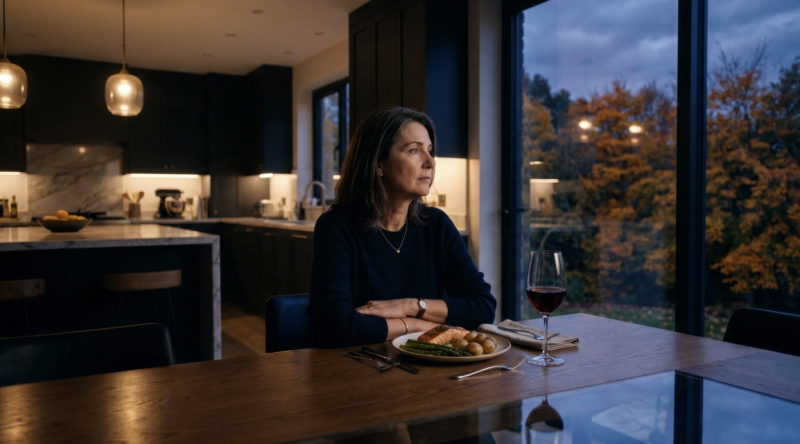
At dinner two nights later, my doubts sharpened. Richard poured wine and asked casually, as if discussing the weather, “Have you thought about consolidating your retirement accounts, sweetheart? It would simplify everything for our future.”
I set my fork down slowly.
“They’re already organized.”
“I just mean once we’re married, it’s easier if everything is visible together. Joint oversight.”
I smiled the way people do when they’re trying not to react.
“Let’s not rush. We have time.”
He reached for my hand.
That night, I called my aunt late.
“I need to talk about Richard,” I said.
I told her everything: the subtle questions, the comments about money, the way his attention shifted in public, the quiet pressure I couldn’t fully name.
After a long pause, she said, “You’ve been hurt before. That changes how everything feels.”
“Maybe,” I said. “That’s why I need certainty.”
“What do you want to do?”
“I want to test him. Just once.”
I told Richard the next evening that I had something to admit. I made it sound hesitant, almost ashamed.
“There’s something I never told you. I have a daughter.”
His expression flickered for just a second—gone almost instantly.
“A daughter?”
“She’s 25. We had a falling out years ago.”
His shoulders eased slightly, barely noticeable.
“What’s her name?”
“Chloe.”
“Chloe,” he repeated. “Twenty-five… so she’s fully grown.”
“Yes.”
“I’d like to meet her.”
I suggested coffee on Saturday.
That morning, I sat in my car for ten minutes before entering. Through the window, I saw him arrive early, adjusting his collar, scanning the room.
Chloe arrived beside me and tapped the window.
“You ready?” she asked.
I wasn’t. But I nodded.
We walked in together.
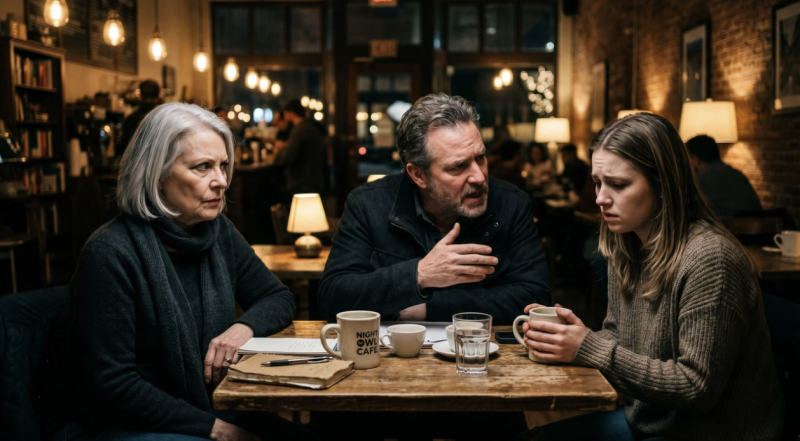
“You must be Chloe,” Richard said warmly, pulling out her chair. “Your mother hasn’t told me much about you—you’re even more lovely than I expected.”
Chloe laughed politely and sat.
I tried to catch her eye, but Richard’s attention was already locked onto her.
“What do you do?” he asked. “Your mother’s been a bit secretive.”
“Marketing,” she replied.
“Very impressive.”
He barely looked at me as he spoke.
I stood.
“I’ll be right back.”
In the restroom, I let cold water run over my hands and stared at myself in the mirror, wondering when I had started looking so tired to others.
My phone buzzed. A message from Chloe:
“Come back now.”
I returned slowly, dread building.
When I reached the table, Richard had shifted entirely. His posture was softer, more concerned, almost paternal.
“I worry about her,” he was saying quietly. “She’s been stressed. Forgetting things. I’m sure you’ve noticed.”
Chloe’s face was tense.
“There’s a lot on her right now,” he continued. “Planning, paperwork. She shouldn’t rush decisions. She listens to you more than me.”
I felt my stomach drop.
He was no longer testing me. He was testing her.
He was trying to move through her to reach me.
Chloe looked up and met my eyes, silently warning me.
I stepped forward.
“What did you just say to my daughter?”
His expression shifted instantly.
“Maggie, you misunderstood—”
“I don’t think I did.”
I sat down slowly.
Then I told him I had already gathered copies of everything—financial records, property documents, the prenup—and had left them with a trusted friend for safekeeping.
His composure broke.
“You set me up.”
“I tested you,” I corrected. “There’s a difference.”
His voice sharpened. “You’re paranoid.”
He stood, leaning in slightly. “You’ll end up alone in that house.”
I removed my ring and placed it on the table.
“Leave the key by seven. Don’t contact me again.”
He looked at the ring, then at me, and left without another word.
Chloe exhaled like she had been holding her breath for hours.
“I’m sorry,” she said.
That night, she stayed with me. We sat at the kitchen table with wine I had saved for years.
“I thought I was lonely,” I said quietly.
She waited.
“I think I just didn’t know what peace felt like.”
She reached for my hand, and for the first time in a long while, the silence in the house felt like mine again.