I Took in a Little Girl Who Was Unwanted Due to Her Cancer – Just a Month Later, a Limo Arrived at My Doorstep
When everyone else walked away from a little orphan girl battling cancer, I chose to stay and adopt her. What I didn't know was that love has a way of returning, sometimes in ways you never expect.
For years, people asked me the same question at family gatherings, work parties, and anywhere strangers felt entitled to know my life story: "Are you married? Do you have children?"
And every time, I had to smile and answer, "No. Just me."
What I never said was how much that answer cost me. How many nights I cried myself to sleep. And how many baby showers I attended with a smile on my face while my heart broke a little more.
"I'm 48 now, and I've made peace with loneliness. Or at least I've learned to pretend I have. But why does it still hurt so much?" I used to ask myself every time someone inquired about my life.
When I was younger, I imagined a different life. Noisy Saturdays with pancakes burning on the stove. Small socks disappearing in the laundry. Crayon drawings covering the fridge. A house full of chaos, laughter, and love.
Then the doctors told me I would never have a child because my body just couldn’t.
I tried everything. Fertility treatments that drained my savings and my hope. Medications that made me sick. Whispered prayers in the cold waiting rooms of doctors' offices. But all the tests came back the same, and eventually, I had to accept the truth.

Dating became a minefield after that. Some men said they understood. They would hold my hand and promise it didn’t matter. But weeks or months later, when reality set in, I could see it in their eyes. First pity. Then disappointment. And finally, distance.
One by one, they all walked away.
So I stopped waiting to be chosen and learned to choose myself.
I bought a little house at the end of the town, with two bedrooms, a porch with a hammock, and way too much space for just one person. I filled it with books, plants, and all the things people collect when they try not to feel lonely.
But no matter how much I redecorated, the silence always returned.
Some nights, I would sit by the window and wonder what it would be like to hear footsteps running down the hallway. I no longer dreamed of perfection. I just wanted laughter, someone to care for, and someone to love.
The idea of adoption whispered in my mind for years. I pushed it away, convincing myself I was too old. I was stuck in my routines and scared.
Because this was the truth. I was terrified of hoping again, of opening my heart, and risking losing everything once more.
But the thought never went away. It grew stronger with every solitary breakfast, every quiet weekend, and every holiday spent alone.
And one gray Tuesday, after making coffee for one, and looking at the empty chair across from me, I finally decided it was time.
I drove to the children's shelter on the outskirts of town, my hands trembling on the wheel the whole way.
The building was old, painted an overly cheerful yellow for the sadness it held. Inside, the smell of crayons and cleaning products lingered in the air. Children's voices echoed down the hallways, soft and musical.

A woman named Mrs. Patterson greeted me at the reception. She had kind eyes and a tired smile, like someone who had seen too many goodbyes.
"Feel free to look around," she said softly. "Take as long as you need. The children are in the common room."
I walked slowly, my heart pounding. Children were everywhere — building block towers, coloring at tables, and playing tag in small groups. Their laughter should have been carefree, but I felt the weight they carried. Every smile hid a story.
Then I saw her.
A small girl was alone by the window, curled up as if she were trying to take up the least space possible. She wore a woolen hat pulled low, and her thin fingers held an ice pop.
She looked up, and our eyes met.
Hers were huge and brown, filled with a sadness that seemed too old for her face. But when she smiled, she smiled back shyly.
I loved that smile and approached her. "That's really beautiful. What are you drawing?"
"A house," she said quietly.
"Is that your house?"
She shook her head. "No. It's the one I want someday. With big windows to see the stars."
My throat tightened. "That sounds perfect."
She looked at me for a moment. "What's your name?"
"I’m..." I hesitated, then smiled. "You can call me whatever you want."
"I'm Lila," she said.

Mrs. Patterson appeared beside me in a low voice. "She's been with us for about a year. She’s been through several foster homes before this. When her illness came back, the families... well, they couldn't handle it."
I looked at her, surprised. "Illness?"
Mrs. Patterson's face softened with compassion. "Leukemia. Diagnosed when she was five, went into remission, but it came back last spring. She's stable now, but she needs ongoing treatment. It’s too much for most families."
I looked back at Lila, who was still coloring her imaginary house. She hummed softly to herself, lost in her own world.
"Do you think..." Lila's voice was so soft I almost didn’t hear. "Do you think anyone would choose me? Even if I get sick again?"
The question broke me inside.
I reached out and gently tucked a strand of hair behind her ear. "Sweetheart, I think someone has already chosen you."
The paperwork took weeks, with background checks, home visits, and interviews that seemed endless. But finally, on a sunny Thursday morning, Lila was officially mine.

On the first night at home, she stood at the door of her room, holding a small backpack with all she owned.
"Is this really mine?" she whispered.
"All yours, sweetheart," I said, my voice breaking. "For as long as you want."
She didn’t want to sleep alone that first night. I sat on the edge of her bed, holding her hand until her breathing calmed and her hand loosened.
A few days later, I heard her crying softly around midnight. I rushed to her room and found her curled in her blankets, tears streaming down her face.
"Hey, hey, what happened?" I whispered, sitting next to her.
She looked at me with those big brown eyes. "Mom?"
I froze. She had never called me that before.
"Yes, sweetheart?" My voice faltered. "I'm here."
She squeezed my hand tightly. "Don’t leave, okay?"
"I promise," I said. "I won’t leave."
And in that moment, I felt every empty space in my heart fill.
The first month flew by with medical appointments and medication schedules. We learned each other’s rhythms. I discovered Lila loved strawberry pancakes and hated porridge. She found out I couldn’t sing a note, but sang anyway.
Some mornings, she woke up too weak to get out of bed, and we spent the day on the couch watching movies. On other days, she insisted on baking cookies, even if half the ingredients ended up on the floor.
We were learning to live together, one quiet moment at a time.
Then, one Wednesday morning, exactly one month after she had moved in, everything changed.

I was making tea in the kitchen when I heard a low, constant thudding outside. It wasn’t an engine, but several. The kind of sound that makes the windows shake.
I looked outside and froze.
A long black limousine was parked in front of my house, flanked by five black sedans. They looked like something out of a movie, polished, expensive, and completely out of place in our neighborhood.
My hands started to tremble. "What is this...?"
The car doors opened in perfect sync. Men in dark suits stepped out, their movements precise and deliberate. One of them, tall with gray hair, holding a briefcase, walked up to my door.
I opened the door before he could knock, my heart racing. "Can I help you?"
"Are you the guardian of Lila?" he asked politely.
"Yes. Who are you?"
"My name is Mr. Caldwell. I’m an attorney representing an estate. May I come in? There’s something important you need to know."
I let him in, my mind spinning with possibilities, none of them making sense.
He sat down at the kitchen table and opened his briefcase with efficient practicality. "Lila’s biological parents, Robert and Emily, died in a car accident when she was still a baby. Before they passed, they established a trust in her name. The instructions were very clear. Once Lila was adopted by someone who truly loved her, the estate would be transferred to that person as her guardian."
I stared at him, unable to process those words. "I don’t understand."
He slid a thick legal document toward me, with legal papers, bank statements, property deeds... all real, official, and overwhelming.
He grabbed the briefcase again and handed me a cream-colored envelope, sealed with wax. "This was left for Lila. And for whoever became her family."
I carefully broke the seal. Inside was a letter, written in delicate, feminine handwriting:
To our dear Lila,
If you are reading this, it means we are watching over you from somewhere better. We wanted to make sure love would find you again. True love, not bought with money, but given from the heart. To whoever becomes your family: thank you. Please take care of our little girl. She was our world.
With all our love, Mom and Dad
Tears blurred my vision. I pressed the letter against my chest, unable to speak.
"Mom?" Lila’s sleepy voice came from the hallway. "What’s going on?"
I turned around and saw her standing there in her pajamas, her favorite blue scarf tied around her head.
I crouched down and opened my arms. She ran to me, and I held her tight.
"Your parents," I whispered, "they loved you so much. They made sure you would always be well taken care of."
A week later, Mr. Caldwell took us to the house.
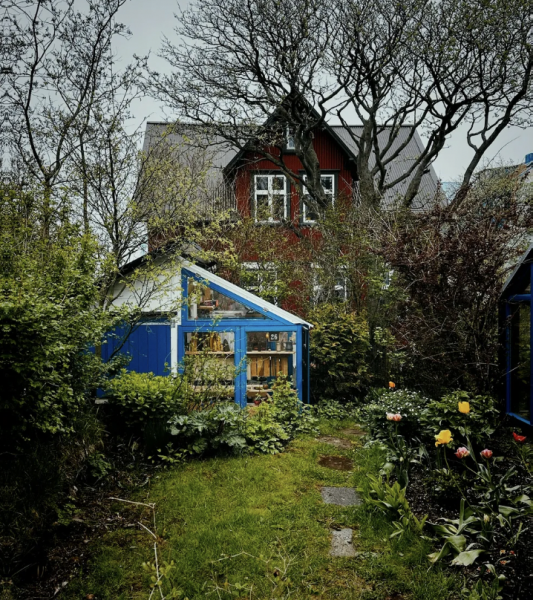
It was about an hour outside the city, on a quiet street where oak trees formed a canopy above. The two-story house had white shutters and a porch, while the garden had grown wild, with tulips and daisies fighting to emerge from the weeds.
Lila stood still on the sidewalk, staring at it with wide eyes. "Mom, it looks like the house I always draw."
I smiled through my tears. "Maybe you’ve remembered it all along."
Inside, sunlight poured through the dusty windows, illuminating the wooden floors. The air smelled of old wood and memories. Above the fireplace, there was a framed photo of a young couple holding a baby wrapped in a yellow blanket.
Lila walked up and gently touched the photo. "They look nice."
"Yes," I said softly. "And they loved you more than anything."
She looked at me. "Do you think they’re happy I found you?"
I pulled her closer. "I think they’re celebrating."
With the inheritance, I could now give Lila the care she needed. A specialist who truly listened to her. Better treatment options. And a room painted the exact lavender color she wanted.
She was still fragile, but now there was hope. Real, palpable hope.
Tests began to use words I had been afraid to dream of: "Improvement. Response. Remission window."
One afternoon, while she colored on the porch, she said: "Mom, maybe my biological parents chose you for me."
I looked at her, smiling. "What made you think that?"
"Because you came exactly when I needed you. They probably told God, 'Give her to that woman. She looks lonely.'"
I laughed and hugged her tightly. "Then I owe it all to them."

In the fall, the doctors confirmed: Lila was in remission.
I cried so much that the nurse had to bring me tissues. Lila just patted my hand and said, "See? I told you we’d win."
We moved into her parents' house that winter. The first thing Lila wanted to do was plant new tulips in the garden... pink and white.
"For my two moms," she explained.
Every night, we sat on the porch, wrapped in blankets, looking at the stars she loved so much. She would rest her head on my shoulder and whisper, "Do you think they can see us?"
"I know they can," I’d say. "And I think they’re proud."
It’s been three years now.
Lila is 13, healthy, and full of life. The garden she dreamed of flourishes year-round. On the living room wall, that letter from her parents is framed and treasured. Every morning before school, she touches it gently.
Sometimes, I pass her room at night and see her sleeping under the stars we glued to the ceiling. Her blue scarf is on the chair, untouched for months, because she no longer needs it.
I used to think I had missed my chance to be a mom. That life had decided it wasn’t for me.
But maybe I was just waiting for the right child. The one who would teach me that motherhood isn’t about biology. It’s about showing up... and about a love that doesn’t give up, even when things get tough.
Lila was born twice. Once in this world, and once in my heart. And in both lives, she was absolutely perfect.