

India's shifting consumer landscape: The rise of premium markets and the challenges facing the middle class
India is home to 1.4 billion people, but a new report reveals that about one billion of them do not have the financial means to spend on discretionary goods or services. This highlights a significant disparity in the country’s consumer market.
According to a report by Blume Ventures, a venture capital firm, the country's “consuming class” — which refers to the potential market for businesses and startups — is relatively small, only about 130-140 million people, roughly the size of Mexico’s population. These are the individuals who have the financial capacity to purchase goods and services beyond basic necessities.
Additionally, another 300 million people in India fall into the category of “emerging” or “aspirant” consumers. While they have begun to show some inclination to spend, they are cautious and reluctant, with many still holding back on opening their wallets. This shift is being made easier due to the rise of digital payments, which make transactions fast and simple.
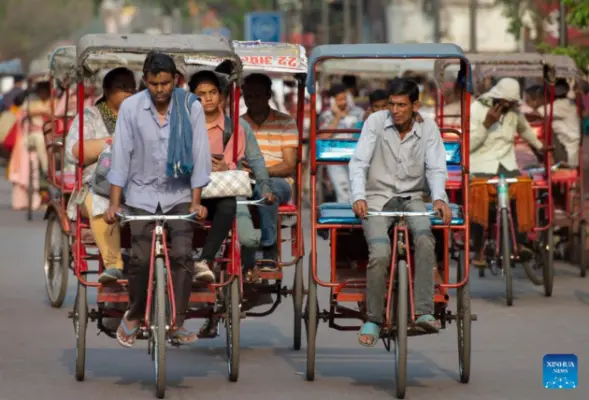
The report further emphasizes that India's consuming class is not “expanding” as much as it is “deepening.” In other words, the country’s wealthiest population is not growing in numbers, but those who are already affluent are becoming wealthier. This situation has important implications for how India’s consumer market is evolving.
One major trend is the acceleration of "premiumization," where businesses are focusing more on high-end, expensive products rather than catering to mass-market demands. This is increasingly apparent in sectors like real estate and mobile phones, where sales of ultra-luxury homes and premium phones have soared.
In fact, ultra-luxury housing is outperforming more affordable options, with affordable homes now only making up 18% of India’s real estate market, compared to 40% five years ago. Similarly, branded goods are becoming more popular, and the “experience economy” is also thriving.
Concert tickets for international stars like Coldplay and Ed Sheeran are selling out quickly, as people are increasingly willing to spend on experiences rather than tangible goods.

According to Sajith Pai, one of the authors of the report, businesses that have successfully adapted to these shifts are thriving, while those that remain focused on mass-market products or do not tap into the premium market have lost ground.
In his words, companies that focus too much on lower-end products or neglect the high-end market have seen their market share decline.
The findings also support the view that India’s recovery from the pandemic has followed a “K-shaped” trajectory. This means that while the wealthy have become even wealthier, the lower-income population has seen its purchasing power diminish.
This is not a new trend, as India’s wealth inequality has been growing for decades. The top 10% of earners in India now hold 57.7% of the country’s national income, compared to just 34% in 1990. Conversely, the share of income held by the bottom 50% has dropped from 22.2% to 15%.
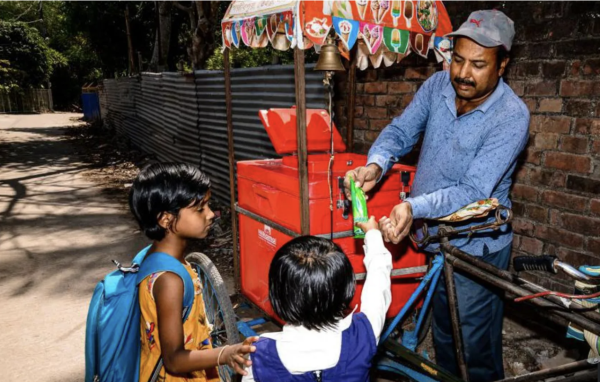
The latest slump in consumer spending is partly a result of a weakening in purchasing power, but also due to a significant decrease in financial savings and an increase in household debt. Much of the spending among the “emerging” or “aspirant” class was supported by borrowing, and with a crackdown on easy, unsecured lending by the Reserve Bank of India, consumption could be impacted.
Despite these challenges, there are a few short-term factors that could help stimulate consumer spending. One is an expected rise in rural demand, driven by a record harvest, and the other is a $12 billion tax rebate provided in the recent budget.
Although these measures may not lead to a dramatic shift, they could boost India’s GDP, which is largely driven by consumption, by more than half a percentage point, according to Pai.
However, longer-term challenges persist. One significant issue is the stagnation of wages, particularly for India’s middle class. Data from Marcellus Investment Managers reveals that the middle 50% of India’s tax-paying population has seen little to no growth in income over the past decade.
When adjusted for inflation, this indicates a halving of real income. The financial strain on this group has led to a dramatic reduction in their savings, and the Reserve Bank of India has pointed out that household savings are nearing a 50-year low. This has serious implications for sectors that rely on middle-class spending, as these products and services may struggle in the coming years.
Another concern highlighted by Marcellus is the increasing difficulty in securing white-collar jobs, especially as automation and artificial intelligence take over routine clerical and administrative tasks.
As automation becomes more prevalent in India’s services-driven economy, many low-value-added jobs are at risk.
The economic survey recently released by the Indian government also points out the potential consequences of labor displacement caused by technological advancements, which could hurt the country’s growth trajectory.
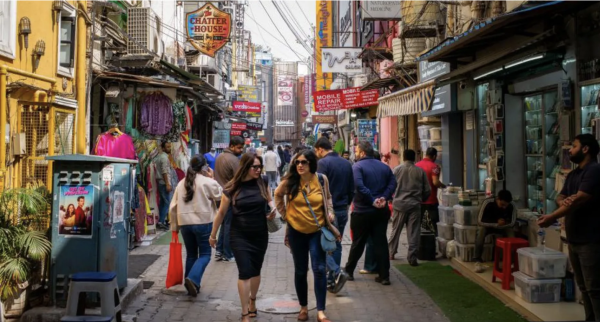
The government’s survey also acknowledges the macroeconomic implications of a potential decrease in consumption, given that India’s economy is largely driven by consumer spending.
If job displacement leads to a significant drop in consumption, the consequences could be detrimental to India’s overall economic performance in the long run.
In conclusion, while India’s consumer market is still growing in certain areas, such as premium products and experiences, there are significant challenges ahead.
The widening inequality, stagnating wages, and decreasing savings among the middle class, combined with the rise of automation, are all factors that could impact India’s economic future.
source: bbc.com


