I’ve always known I was adopted, but when I turned 25, I discovered that my adoptive mom had lied to me. The reason she did it was completely unexpected and left me in shock.
I thought I knew where I came from. However, when I began searching for answers, I uncovered a family secret that no one ever wanted me to discover. What I learned about my real mother changed everything.
I’ve never had a "normal" memory of childhood. No fuzzy flashbacks of warm cookies after school or lazy Sundays curled up with a smiling mom.
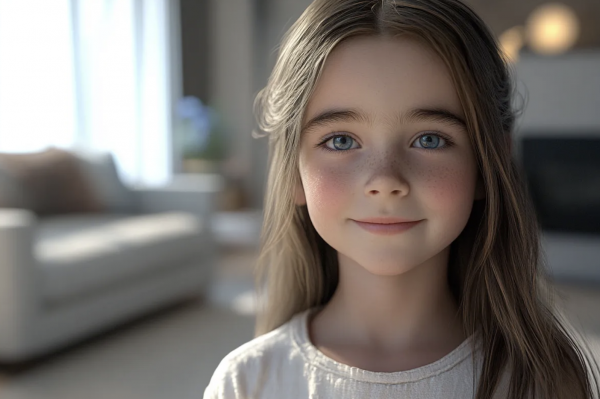
My name is Sophie. I’m 25 years old, and I work at the front desk of a small physical therapy clinic in Tacoma, Washington. It’s not glamorous, but it pays the bills and keeps me distracted most of the time.
I read mystery novels to calm my nerves and bake cakes late at night because recipes make more sense than people. I never understood why I felt so out of place until everything I thought I knew about my life came crashing down.
Growing up, I carried one truth like a scar across my chest: "You’re adopted. You should be grateful I saved you."
That’s what Margaret always told me.
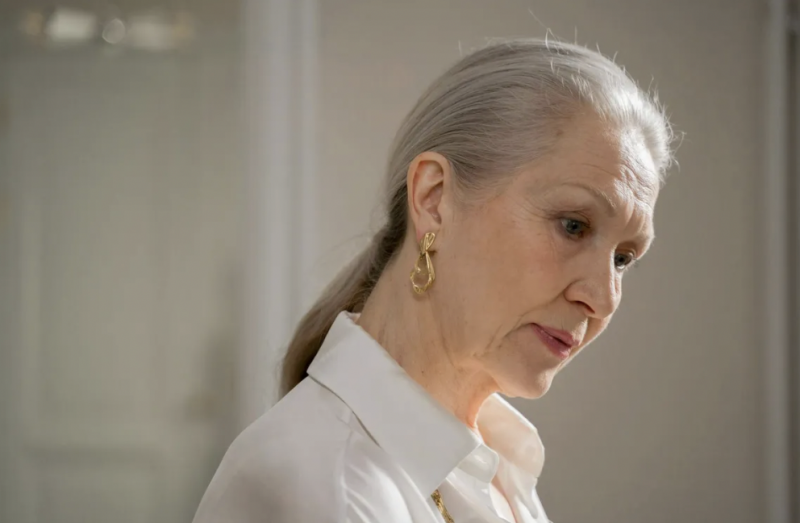
She was the woman who raised me. I never called her "Mom." Not once. Even as a kid, the word didn’t fit her. She wore beige skirts, kept her house spotless, and spoke like someone rehearsing lines for a play. Her hugs were stiff and rare, like she was scared they would mess up her perfectly ironed clothes.
Margaret was never violent. But she wasn’t kind either.
Everything about her felt cold. Calculated. Distant.
She ran the house like a business and treated me like a charity case she wished she had never taken in.
My childhood felt like I was a guest in a stranger’s home, walking on eggshells, too scared to breathe too loudly. There were no bedtime stories. No "I love yous." Just rules. So many rules.
But her husband, my adoptive father, was different. His name was George. He had kind eyes and deep laugh lines that creased even more whenever I messed up a math problem. He’d smile and say, "Good thing I’ve got a calculator for a brain."
George made me feel seen. He was the one who taught me how to ride a bike on the cracked sidewalk out front. He’d pick dandelions and tuck them behind my ear. I remember him rubbing my back when I had the flu in fourth grade, whispering, "Don’t worry, honey bun, I’m right here."

But when I was ten, he died of a heart attack. No warning. One moment, he was pouring cereal; the next, he was on the floor.
After the funeral, it was like someone switched the heat off in our house.
Margaret didn’t cry. She didn’t speak much. She just... hardened.
No more back pats or quiet meals in front of the TV. No softness. No warmth.
She didn’t hit me. She didn’t scream. But I swear the silence was worse. Like I was living with a ghost who kept the lights on and the fridge stocked, but nothing else.
She stopped hugging me. Stopped saying goodnight. She barely looked me in the eye.
And she never let me forget I wasn’t really hers.
When I once asked if I could join ballet like the other girls, she stared at me and said, "You could’ve been rotting in an orphanage. Remember that and behave."
She said it often, that same cold line, in front of anyone who could hear. Family, neighbors, even my fifth-grade teacher during parent-teacher night. Like it was just another fact about me, the way someone might say, "She’s allergic to peanuts," or "She has brown eyes."
Kids at school heard everything. And kids? They know exactly how to use words like knives.
"Your real family didn’t want you."
"No wonder you don’t fit in. You’re not even from here."
"Does your fake mom even love you?"
I started skipping lunch. Hiding in the library. I didn’t cry at school. Margaret hated tears.
At home, I learned how to blend in. I learned to be small, to be quiet, and to be thankful.
Even when I didn’t feel it.
By the time I was 15, I’d perfected the role of the "Grateful Adopted Kid." I said thank you for everything, even when it stung.
But deep down, I felt like I owed the world a debt I could never pay off.
That was my life.
Until Hannah spoke the words I’d buried my whole life.
Hannah had been my best friend since seventh grade. She had curly blonde hair that she always wore in a messy bun and a laugh that made people feel comfortable instantly. She saw through me before I even knew I was pretending.
She never pushed. Just... stayed close.
That night, I stormed out of the house after yet another passive-aggressive fight with Margaret over the way I "rolled my eyes" during dinner.
I didn’t even remember doing it, but she made a big deal out of it, saying I was disrespectful and spoiled. Again.
I didn’t say a word. I just grabbed my jacket and left.
Hannah lived just two blocks away. When she opened the door and saw my face, she didn’t ask anything. She simply stepped aside. I slipped off my shoes and sank onto her couch. She brought me tea, the cheap grocery store kind with too much cinnamon, and we wrapped ourselves in a fleece blanket that smelled like vanilla.
I repeated the words I’d heard all my life.
"You should be thankful I even took you in."
She stayed quiet for a moment. Her fingers curled around the mug, and I could see her jaw tighten.
Then she looked at me, really looked at me, and said, "Soph... don’t you ever wonder who your real parents were?"
I stared at her. "What do you mean? Margaret told me she had adopted me from Crestwood Orphanage. She said it a hundred times."
"Yeah, but have you ever checked? Like, actual proof? Papers? Anything?"
My mouth opened, then closed. "No, I just... I mean, why would I? She’s always been clear about where I came from."
"Sophie," she said, her voice softer, "what if she’s lying? What if there’s more you don’t know?"
My stomach twisted. "Why would she lie?"
Hannah leaned closer. "I don’t know. But doesn’t it bother you that you’ve never seen your own birth certificate? Never met anyone who knew you before Margaret?"
I didn’t sleep that night. I stared at the ceiling in Hannah’s guest room, feeling something crack open inside me.
It wasn’t just curiosity. It was this deep, rising need.
I didn’t actually know who I was.
The next morning, the thought burned through my mind like fire.
I was brushing my hair in the bathroom when Hannah knocked on the door.
"We’re doing this," she said. "You’re not going alone."
I didn’t argue.
The drive to Crestwood Orphanage was silent. My heart was racing the entire way, as if it already knew what was coming.
The woman at the front desk wore thick glasses and had a kind voice. She asked for my name, then checked her computer, the paper files, and finally the old archives.
Her expression shifted from neutral to confused, then quietly sympathetic.
She looked at me and said the words I still hear in my sleep.
"I’m sorry, dear... we’ve never had a child named Sophie. Not ever."
I felt the air leave my lungs.

"No, that can’t be right," I whispered. "Are you sure? Could it be under a different name? Margaret? Ms. Lane? She said she adopted me in 2002."
She shook her head slowly. "I’ve worked here for thirty years. I’d remember."
Hannah wrapped an arm around me as I stared at the woman’s face, trying to make sense of it.
But there was no sense to be made.
Margaret had lied.
And not just a little.
Everything I thought I knew about my life, where I came from, and who I was, had just crumbled into dust.
I wasn’t sad.
I was angry.
Betrayed.
And terrified of what I might find next.
Outside the orphanage, the air felt too thin. I stood there blinking, like the sun was too bright and the sky wasn’t the same one I had lived under just an hour ago. My whole life, all twenty-five years of it, suddenly felt like a lie wrapped in silence.
Hannah didn’t say anything at first. She just watched me, her lips pressed together, eyes searching mine.
Then, gently, she reached out and squeezed my shoulder. "I’m coming with you," she said. "Let’s confront her together."
I wanted to say yes. God, I wanted someone to hold my hand through it and keep me from unraveling. But deep down, I knew this moment had to be mine.
"No," I said, shaking my head. "This has to be between me and her."
Hannah nodded slowly. "Okay," she whispered, then pulled me into a hug. "Call me the moment you’re done."
I held on to her for a second longer than I meant to, then turned and walked away.
The drive back home was a blur. My fingers gripped the steering wheel so tightly, they ached. Every red light felt like a test, and every turn was familiar but suddenly strange, like I was driving through a life that no longer belonged to me.
When I pulled into the driveway, my heart pounded in my chest like it wanted out.
I didn’t knock.
I walked in.
Margaret was in the kitchen, slicing something, carrots, I think. She looked up, surprised, but before she could say a word, I let it all out.
"I went to the orphanage. There are no records of me. Why did you lie? Who am I?"
My voice cracked in the middle of the sentence, but I didn’t care. I needed answers. I needed the truth.
Her eyes widened. She didn’t yell. She didn’t deny it. Instead, her shoulders dropped, as if someone had placed a thousand pounds on them.
She lowered her gaze, and to my complete surprise, tears started falling down her face.
"I knew I’d have to tell you the truth someday," she said quietly. "Sit down."
She walked to the dining table and sank into the chair like her legs couldn’t hold her anymore.

I didn’t sit down. I just stood there, arms crossed, waiting. No, I was demanding the truth.
She was silent for a long time. I almost thought she wouldn’t speak again. But then, in a thin, trembling voice, she said something that made my heart stop.
"Your mother was my sister."
I froze. "What?"
"She was pregnant at 34," Margaret whispered. "Right around the time she was diagnosed with cancer. It was advanced. Aggressive. The doctors begged her to start treatment right away, but she refused. She said she’d rather risk her life than lose you."
I could hardly breathe.
"She carried you for nine months knowing it could kill her," Margaret continued, her voice distant, like she was reliving it in her mind. "She told everyone she didn’t care. She just wanted you to live."
A lump formed in my throat. My hands shook at my sides.
"But she didn’t survive the birth," Margaret said softly. "There were complications. She died a few hours after you were born."
I collapsed into the nearest chair, my legs too weak to hold me.
"She was... she was my mom?" I whispered.
Margaret nodded, her lips trembling. "And before she died," she said, wiping her eyes, "she asked me to raise you. She said she didn’t trust anyone else."
Tears streamed down my face. My mom, someone I’d never met, had died so I could live. I didn’t even know her name.
I sat there, paralyzed, my mind spinning.
"Why did you tell me I was adopted?" I finally asked. My voice barely made it out, but she heard it. "Why did you lie to me?"
Margaret’s face broke apart. She covered her face with her hands.
"Because I didn’t want a child," she said, her voice cracking. "I lost my sister. And suddenly, I had a kid. I blamed you. I didn’t know how to love you. I never even tried. It was wrong. I know it was wrong."
I swallowed hard. I wanted to scream at her. I wanted to ask why she made me feel like a burden for all these years, like I owed something for just existing. But I also couldn’t ignore the pain in her voice. It was the first time I had ever seen her show that.
She looked at me, tears still falling.
"Saying you were adopted was the only way to keep distance from you," she whispered. "I thought it would be easier if I pretended you weren’t mine. And I was ashamed. Ashamed that your mother died, and I survived."
My chest ached. All these years, I thought she hated me. And maybe, in some way, she did. But now I saw the guilt, the pain, and the years of silence that weighed on her like anchors.
For the first time in my life, Margaret didn’t seem cold.
She seemed broken.
I slowly got up and walked over to her. I didn’t know what I was doing. My arms moved on their own, and I sat beside her. We didn’t hug, but we cried. We sat there, side by side, both broken and bleeding from different wounds.

I didn’t say I forgave her. I’m not sure I have.
But in that moment, we weren’t enemies. We weren’t strangers trying to be mother and daughter.
We were two women grieving the same person, and maybe, for the first time, understanding each other.
Months have passed since that day.
Margaret and I are still learning how to be a family. It’s strange. Some days, we fall back into old habits, with stiff conversations and long silences. Other days, we talk about my mom, and it feels like we’re building something new from the rubble.
I found out my mom’s name was Elise. Margaret showed me an old photo album hidden in a box in the attic. There weren’t many photos, but the ones there took my breath away.
She had my eyes, my hair, and my smile.
There was one photo where she was visibly pregnant, her hands resting on her belly, her expression so full of hope that I had to look away.
Now we visit her grave together.
The first time was silent. Margaret brought daisies, Elise’s favorite flowers. I didn’t know what to say. I just stood there, reading her name over and over, like somehow that would make her seem real.
Eventually, Margaret broke the silence.
"She was the brave one," she said. "I never told her that enough."
We stood there, in the wind, neither of us ready to leave.
Now, when we visit, we bring flowers, sometimes snacks, sometimes stories. I talk to Elise in whispers, telling her how things are at work, how Hannah is, and what books I’ve been reading. I don’t know if she hears me, but it helps.
Margaret and I talk more now. Not about everything, but enough. We talk about forgiveness, about what we’ve lost, and about what we’re still trying to rebuild.
She’s not the mom I dreamed of.
But she stayed.
Even when she didn’t know how to love me, even when she was drowning in her own pain, she stayed.
And maybe that was her version of love.
It wasn’t kind or gentle. It wasn’t easy.
But she didn’t leave.
Sometimes love is loud and obvious, with warm hands, sweet words, and open hearts.
And sometimes, love is staying when it hurts. Raising a child when you’re broken. Telling the truth, even when it destroys the only lie that kept you going.

I’m still learning how to forgive her.
But I know this: my mom loved me so fiercely that she gave up her own life so I could live. And Margaret, with all her mistakes, honored that promise.
She raised me.
And somehow, despite everything, I’m grateful she stayed.
I think somewhere, wherever she is, Elise would be grateful too.