

Meta's ambitious underwater cable project: A global connectivity revolution
Meta has announced plans to construct a 50,000km (31,000-mile) underwater cable spanning the globe. The project, known as Project Waterworth, aims to connect regions such as the US, India, South Africa, Brazil, and others, and will be the longest underwater cable once completed.
The company, which owns Facebook, Instagram, and WhatsApp, has been expanding its focus beyond social media, venturing into artificial intelligence (AI) and the infrastructure that supports it.
Meta highlighted that this new cable project will offer advanced connectivity across five major continents and play a crucial role in bolstering its AI initiatives.

It emphasized that the cable would promote economic collaboration, support digital inclusion, and create opportunities for technological growth in the regions it serves.
This new cable will be the longest to date utilizing a 24-fiber pair system, which will enhance its capacity.
Undersea cables have become essential for powering digital services and facilitating rapid data transfer across the globe. Studies show that over 95% of global internet traffic is transmitted through these underwater cables.
TeleGeography, a telecommunications market research firm, reports that there are currently over 600 publicly known undersea cable systems in operation worldwide.
One notable example is the 2Africa cable, supported by Meta alongside other mobile network operators like Orange, Vodafone, and China Mobile. This cable links three continents and stretches across 45,000km.
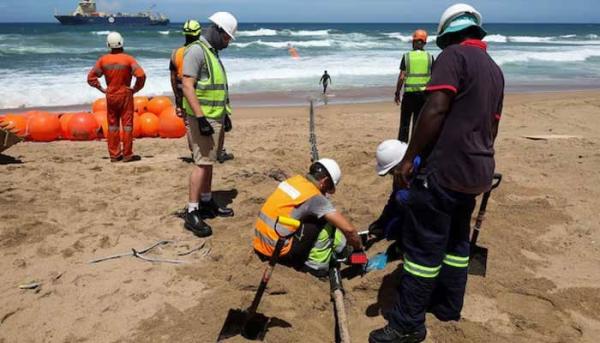
Over the years, major tech companies have made significant investments in cable infrastructure. Google, for instance, announced plans to build the first undersea cable connecting Africa and Australia in 2024 and invested $1 billion to enhance connectivity in Japan with two new undersea cables in the Pacific Ocean.
Experts note that the past decade has seen a shift, with large tech firms increasingly taking the lead in laying and financing these cables.
Historically, such projects were funded and managed by national telecom companies due to their substantial investment requirements. This shift reflects the growing power and financial capacity of tech giants, allowing them to independently fund such infrastructure.
This trend may have implications for policymakers concerned with the concentration of power in digital markets.

Industry analysts point out that Meta’s new project aligns with its broader ambitions.
Meta is striving to secure a larger share of global connectivity and is determined to offer users a more integrated experience by combining hardware, software, platforms, and increasing connectivity.


