More than enough: A fiancée’s fight for respect beyond appearances
I’m about to marry the man of my dreams, but his parents made it clear I would never be good enough.
They mocked my career, reminded me I didn’t fit their standards, and smiled through every insult. I stayed silent… until the night they discovered who I really am.
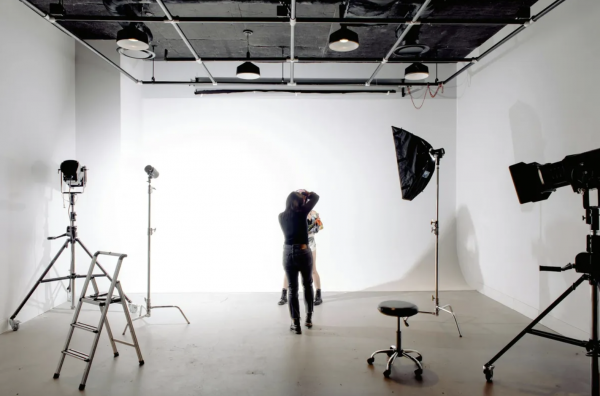
My name is Elena, and in three months I’ll walk down the aisle to marry the most incredible man I’ve ever met. I’m 27, Hispanic-American, and the proud owner of Capturing Light Photography — a studio fully booked for the next eight months.
That studio is my pride, my effort, my heart. But none of that seemed to matter the first time I met Albert and Candace, the parents of my fiancé, Liam.
“So, Elena!” Candace said with a smile sharp as broken glass. “Photography? How\... artistic of you.”
I felt a chill down my spine but kept my voice steady.
“I love what I do.”
“Of course, dear,” Albert laughed condescendingly. “Liam has always been drawn to creative types. Quite an achievement. It’s refreshing, really… to see someone who doesn’t take life so seriously.”
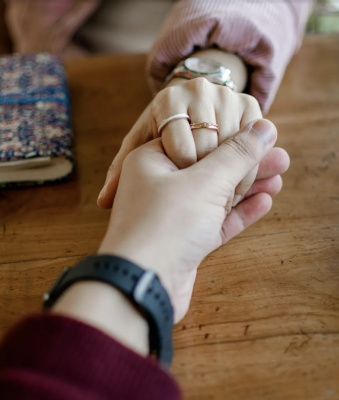
Liam squeezed my hand, jaw tight. I just smiled and nodded because what else do you do when someone dismisses your career in one sentence?
“Well,” I said softly, “everyone needs a bit of creativity in life, right?”
That was how our dance began. They threw little jabs disguised as false concern and plastic smiles, and I dodged them with a grace I didn’t know I had.
“You know, Elena,” Candace mentioned at Sunday dinner, fork paused over her organic quinoa salad, “in our family, we really value intellectual achievement. Real education, you know?”
My chest burned, but I kept cutting my chicken.
“Education comes in many forms.”
“Really?” Albert leaned back, voice sharp like a professor ready to attack. “Anyone can pick up a camera nowadays. With all those filters and apps, it’s hardly a skill anymore!”
Liam’s fork hit his plate.
“Dad...?”
“It’s fine,” I interrupted, placing my hand on his arm. Inside, I was screaming, but on the outside, I was composed. “Not everyone understands the technical side of professional photography.”
Candace’s laughter sounded like bells amid a hurricane — sweet on the surface, but razor-sharp underneath.
“Oh honey, I’m sure what you do is… charming. It’s just that in our family, we’re used to more substantial careers. Photography, well… it’s more of a cute hobby, don’t you think?”
The breaking point came at Candace’s 60th birthday party. After three weeks of planning, the guest list was packed with department heads and research directors from Whitmore University — all academics with enough ego to fuel a small town.
I was putting on earrings and touching up my makeup when Candace knocked and entered the guest room without asking.
“Elena, dear,” she said, “I want to talk to you for a moment before tonight.”
My reflection looked back at me — the same eyes my mother had, who cleaned offices at night so I could have books by day.
“Of course!” I answered.
“The guests tonight are... very distinguished people. Researchers, professors, folks who have dedicated their lives to serious work.” She smoothed her jacket like it needed fixing, but it was perfect already. “I wouldn’t want there to be... misunderstandings about our family’s standards.”
Her words landed like punches wrapped in silk.
“What do you mean?”
“Just that it would be better if you kept the conversation light tonight. Maybe don’t mention your little photography business too much. A brief intro about what you do will be enough. These people won’t understand that world, and I’d hate for them to get the wrong idea about what we value.”
I turned fully to face her, hands trembling just a little.
“The wrong idea about what you value?”
“You know what I mean, dear.” Her smile was icy kindness. “We have a reputation to uphold.”
I wanted to scream. I wanted to tell her exactly what I thought about their reputation. Instead, I nodded.
“I understand perfectly.”
The party was everything I expected: crystal glasses, intellectual conversations, and enough condescension to drown in. I stood next to Liam, his protective hand over mine, as his parents ran the room like politicians.
“And this is Elena,” Candace introduced me to a group of women all wearing pearls and pressed blazers. “She’s our son’s… girlfriend.”
Not fiancé. Just... the photographer girlfriend.
“How lovely,” one said with the kind of smile reserved for kids and pets. “Do you do weddings?”
“Among other things,” I replied.
“What a sweet hobby,” another added. “I always thought photography was so relaxing. Like adult coloring books.”
Liam tightened his hold on my waist. I just nodded, lost in my thoughts. Let them think what they want. Let them bury themselves in their assumptions.
Then I saw them enter — a group of distinguished academics I recognized immediately. My heart pounded as Dr. Reeves, someone I’d worked with for three years, scanned the room.
Her eyes landed on me, confusion quickly turning to recognition.
“Wait,” she said, approaching with colleagues. “Miss Elena?”
Time seemed to slow. Candace’s smile faltered as Dr. Reeves approached, excitement growing.
“Oh my God, it can’t be! It’s you!” Dr. Reeves took my hands. “We worked together on the sustainable agriculture project at Riverside Institute. What are you doing here?”
I saw Candace stiffen beside me. Albert’s conversation with the dean was cut off mid-sentence.
“Hello, Dr. Reeves,” I said warmly. “So good to see you.”
“Elena, this is amazing!” Dr. Martínez, another researcher I recognized, joined in. “We just cited your work on soil remediation in our latest paper. Your research changed everything we thought about desert farming techniques.”
The silence around us was deafening. I felt Candace’s burning stare on one side of my face.
“Your research?” Albert’s voice trembled slightly.
Dr. Reeves looked confused.
“You didn’t know? Elena was one of the most promising environmental scientists of her generation. Her PhD thesis on climate-resilient agriculture won the Henderson Award. Universities all over the country courted her before she…” Dr. Reeves paused and looked at me. “Before you disappeared. Where have you been?”
I took a deep breath, heart pounding but voice steady.
“I have a photography studio now. I chose to follow something more creative.”
“Photography?” Dr. Martínez raised her eyebrows. “But Elena, you were brilliant. Your work could have revolutionized how we tackle food security in developing countries.”
“And it still could,” Dr. Reeves added. “The scientific community has wondered what happened to you for years.”
The ending was spectacular in its awkwardness. Candace excused herself to the bathroom and didn’t return for 20 minutes. Albert stared at me like I’d grown a second head.

Later, when guests started leaving, Candace cornered me in the kitchen. Her composure cracked, revealing something ugly underneath.
“You made us look like fools,” she hissed, voice shaking with rage.
“I didn’t do anything,” I replied calmly. “I just answered their questions.”
“You let them think you were just a... amateur photographer. You humiliated us in front of our colleagues and guests!”
“I never lied to them.” I set my glass down and faced her. “They never asked about my background. They judged my worth by my current job and my accent... and treated me accordingly.”
“That’s not—”
“Isn’t it?” I stepped closer, and for the first time since I met her, she took a step back. “For months, you made comments about my education, career, and value. Tonight, you told me to stay quiet because your friends wouldn’t understand my world. You introduced me as your son’s ‘photographer girlfriend,’ not his fiancée.”
Tears of frustration stung my eyes, but I didn’t let them fall. Not in front of her.
“Want to know why I didn’t tell you? Because I knew it wouldn’t matter. You’d already decided I wasn’t good enough for your son based on how I looked and what I did for a living. My PhD wouldn’t have changed your minds… it would have only made you resentful for being shown up.”
Albert appeared at the door, pale.
“Elena, we never meant—”
“Yes, you did. Every word, every look, every sneer. The only thing you didn’t want was to be found out.”
I found Liam in the backyard, head in his hands.
“I’m sorry,” he said without looking up. “I should’ve defended you more. Should’ve told them to stop.”
“It’s not your fault.” I sat beside him, exhausted. “But this can’t continue. I’m not going to spend my life being treated like I’m not good enough for your family.”
He looked at me with eyes full of anger and pain.
“You’re too much for all of us. The way they spoke to you tonight… the way they always have…” He shook his head. “I’m ashamed of them.”
“I don’t want you to be ashamed of your family, Liam. I want them to respect me. Not for my degree, but because I’m a good person who loves their son.”
“They will,” he said firmly. “After tonight, they have to.”
I wanted to believe him. But respect earned through humiliation isn’t real respect.
So here’s my question: Was I wrong not to tell my future in-laws about my background? Should I have announced my credentials from day one to avoid their condescension? Or is it okay to let people reveal their true selves before deciding if they deserve to know your whole story?
Because here’s what I learned: When people show you who they are, believe them. And when they judge you by your job, your accent, or your skin color, they’re telling you everything you need to know about their character.

I didn’t hide my PhD out of shame. I have a Master’s and a Doctorate in Environmental Science, and I’m proud of every sleepless night, every research paper, every conference presentation that got me there. I hid it because I wanted to see if they could love me for who I am, not for what I’ve accomplished.
Turns out, they couldn’t. And that says more about them than me.
Maybe the real question isn’t whether I was wrong… maybe it’s whether I’m strong enough to marry into a family that needed a shock to treat me with the basic dignity I deserve.
What do you think?