My daughter-in-law forced me out of my own home and left me living in an old cow barn — but she had no idea what would happen next
I always thought heartbreak would be the hardest thing I’d ever face, until I was forced to sleep on a moldy yoga mat in a freezing barn while my daughter-in-law threw parties in the house my husband and I had built from scratch.
I’m 75 years old, and I’ve learned that the worst kind of evil doesn’t come with horns or fangs. It walks into your life wearing lipstick, carrying designer handbags, and shedding crocodile tears.
My name is Dahlia. I’ve lived in the same farmhouse just outside Lancaster, Ohio, since I was 24. My late husband, George, and I built this place from the ground up. It wasn’t fancy, but it was sturdy, just like us.
I still remember those early days. George would be out in the July heat, shirtless, mixing cement by hand. I’d wear his old flannel shirts, hammering nails until my fingers ached.
We poured our hearts into every wall and floor, building something lasting with every swing of the hammer. We were never rich, but we had everything that truly mattered. That house held our laughter, our fights, and all the dreams we shaped together.
We had one son, Adam, and our whole world revolved around him. He had George’s quiet patience and my fire. He was smart, kind, and always the first to help someone change a flat tire or shovel a neighbor’s walkway. I was so proud of the man he became.
When he introduced us to Tara, I wanted to like her. I really did.
She was in her early 30s, pretty in a polished, showy way. Long lashes, perfect makeup, nails that probably cost more than my weekly groceries. She hugged me too tightly, called me “Mom” too soon, and smiled with teeth that never reached her eyes.
The first time we met, we went out to dinner. At first, everything seemed normal, until I noticed how she spoke to the waitress.
“Sweetheart, I asked for lemon in my water. It’s not that hard.”
George gave me a look across the table, the kind only a husband gives after decades together. No words were needed.

When he offered her another slice of the cherry pie I’d made from scratch, Tara laughed and flipped her hair over her shoulder.
“I don’t eat dessert,” she said, wrinkling her nose. “Some of us have to watch our figures.”
Later that night, while we were alone in the kitchen doing the dishes, George leaned in and whispered, “That girl likes herself more than she’ll ever love our boy.”
And, Lord help me, he was right.
Still, we smiled. We kept the peace. Adam was in love, and that mattered more than our instincts.
He married her two years later. They bought a sweet three-bedroom house in a quiet neighborhood near Columbus. Adam paid most of it, but you’d never know it from the way Tara bragged.
“Finally,” she giggled at one family dinner, swirling her wine, “we have a home that meets my standards.”
I said nothing, just passed the potatoes. Adam looked at her like she’d hung the moon.
Then everything changed. Three years ago, my world shattered with one phone call.
Adam collapsed at work from a massive heart attack. Just like that, he was gone. He was only 41.
I don’t remember the drive to the hospital. Just George’s hand in mine and the sterile smell of the waiting room. I squeezed him so hard I left marks on his skin.
Tara arrived in designer sunglasses, carrying a handbag that screamed money. She cried loudly for about ten minutes, then started scrolling her phone like it didn’t matter anymore.
At the funeral, while I stood dazed by Adam’s casket, she leaned toward the funeral director and asked, “Are these the premium flowers or just the basic package?”
I felt George flinch beside me. He said nothing. We both knew grief made people act strangely. But this wasn’t grief. This was something else.
Two months later, George passed away, too. They said it was heart failure, but I knew better. He died of a broken heart. The light left his eyes the day we buried Adam.
After that, I stopped answering the phone. I barely left the porch. I’d sit for hours, staring at the sunset reflecting on George’s old Chevy pickup. Sometimes I whispered, “I’m still here, honey. I’m trying.”
Then, one cold November evening, a car pulled into the gravel driveway. I assumed it was a neighbor. But when I opened the door, there stood Tara, looking like she owned the place. Fake lashes, tight jeans, a suitcase in one hand and a bottle of wine in the other.
“Hey, Mom,” she said, smiling like this was a casual visit. “Rough year, huh? I sold the house. Too many memories.”
My stomach churned. “You sold Adam’s house?”
She stepped inside without waiting. “Technically, it was mine after he died. And memories don’t pay the bills.”

She set her wine on the coffee table and plopped down on George’s favorite couch as if she’d lived there her whole life.
“You don’t mind if I stay a while, right?” she asked, though she wasn’t really asking. “Just need a little time to reset. Men are trash lately.”
She never asked how I was or mentioned George. She poured a glass of wine and turned on the TV like she belonged.
By the next week, she had rearranged my living room. She took down all the family photos and packed them, saying the décor needed to feel “fresh.”
One afternoon, I came home and noticed George’s recliner was gone.
“What happened to his chair?” I asked, heart in my throat.
“Oh, that ugly thing?” she laughed. “I had the trash guys take it. Smelled like the ’70s.”
I couldn’t speak.
She started hosting “girls’ nights” with loud music, clinking glasses, and laughter past midnight. One night, I found empty beer cans in my rose bed. When I asked her to lower the volume, she rolled her eyes.
“You’re being dramatic,” she said. “Maybe you should check your hearing.”
The final straw came one Wednesday morning. I walked into George’s study and found her crouched by his old desk, trying to force open the small lockbox he’d kept for years.
“What are you doing?” I snapped.
She froze, then smiled. “Just organizing your paperwork, Mom. You’re not getting younger. Someone has to handle things when you… fade away.”
Something shifted inside me, like the earth cracked beneath my feet.
That night, she poured two glasses of wine and sat across from me at the kitchen table. Her voice was saccharine.
“We need to talk,” she said, brushing off imaginary lint from her designer blouse. “This house is huge, and you seem… overwhelmed. I think you’d be more comfortable in the guest space.”
I blinked. “What guest space?”
She pointed past the apple trees to the old cow barn George used as a workshop in summer.
“That hasn’t been touched in twenty years,” I said. “It doesn’t even have insulation.”
She shrugged. “Then you’ll have to figure it out. I’m done living like your roommate. This is my home now.”
I studied her face, cold calculation behind that polished smile.
But I said nothing.
Not yet.
“It’s my home,” I said, trying to sound steady. My hands trembled, but I hid it. “George and I built it. The deed is in my name.”

Tara leaned back, swirling her wine like we were talking about wallpaper instead of my life. Her smile wasn’t warm; it was the kind that knows it has the upper hand.
“Yeah, about that,” she said, tilting her head. “You might want to check your mail sometime.”
My heart thudded. “What do you mean?”
She reached for her phone. “While you were busy crying over old albums, I’ve been handling things—helping, you know.”
“What things?” I asked, though I already felt the pit opening under me.
“Mail, bills, boring stuff,” she said lightly. “You never read anything, so I started managing it. Redirecting mail is easy. Just fill out a form.”
I stared, trying to understand.
“I paid the mortgage,” she said. “With your account, of course. Paid the taxes. Forged a few things—nothing major. The kind of stuff families do for each other.”
“That’s fraud,” I said, voice cracking.
She shrugged lazily. “Only if someone finds out.”
The next morning, I woke hoping this nightmare would vanish in sleep, but the doorknob wouldn’t turn. Locked from the outside. I banged, calling her name. No answer.
When I finally got outside, all my belongings were packed in boxes on the porch. Every piece of clothing, every book, even my wedding photo.
Tara stood there, arms folded, grinning.
“Congrats, Mom,” she said, tossing me an old yoga mat. “You’re the new queen of the barn. Enjoy your country retreat.”
I couldn’t move. My feet were frozen. My eyes burned.
“I want you out of my house,” I whispered.
She leaned in, voice dripping with sweetness. “That’s the thing. It’s not your house anymore.”
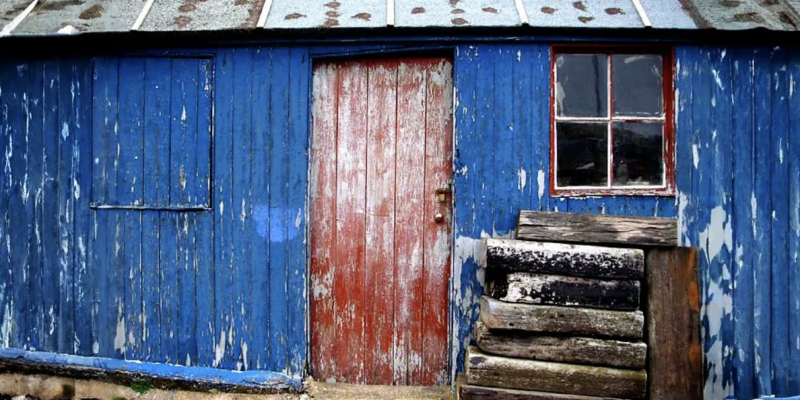
From that day on, I lived in the old cow barn behind the apple trees. No insulation, no heat, rattling windows. George had used it as a workshop, so nails, paint cans, and rusted tools were everywhere. I cleared a corner, laid down the yoga mat, put a blanket over it. Not enough.
The air was damp; the mildew clung to my clothes. My joints ached from the cold, especially mornings. Sometimes I cried, only when sure no one could hear me. I didn’t want to give Tara satisfaction.
Every night, I saw lights in the windows of my house. It was still our home in my heart. I heard her laughter through the trees, brittle and forced, mixed with men’s voices and the clink of beer bottles. One evening, someone passed out on the porch swing George had built.
I tried talking to neighbors, but she had gotten to them first. In town, I overheard their comments: “Poor Tara, taking care of her elderly mother-in-law,” and “What a sweet girl, always so helpful.”
I was the crazy old lady in the barn. She made sure of it.
But then, something shifted.
One evening, just as the sun dipped below the trees, a police cruiser pulled up. I peeked and saw an officer walk her to the car.

Later I found out she’d been pulled over for drunk driving. Her license was suspended on the spot.
A few days later, she had a screaming fight with a man in the driveway. Younger than her, leather jacket, sunglasses. He kept his back turned as she shouted.
“You’ll regret this!” mascara smudged, barefoot on the gravel.
He didn’t flinch. Just got in his car and drove off.
Then came her comeback party.
She actually called it “my comeback.” I heard her brag to someone on the phone. She wasn’t wrong.
Cars filled the yard. Music pounded so loudly the barn shook. Someone even set off fireworks at midnight. I curled up under my thin blanket, trying to block the chaos.
Then a sharp, chemical smell crept in. Something wasn’t right. I sat up, my nose burning.
Smoke.
I ran outside barefoot, heart racing. One side of the house was on fire. Flames had reached the curtains, lighting the sky like a warning.
“TARA!” I screamed. “FIRE!”
People stumbled out, coughing, laughing. Glass shattered. Someone cried. Then Tara burst out, barefoot, holding a half-empty vodka bottle like it was sacred.
“My house!” she shrieked. “My house is gone!”
Firefighters arrived fast, but it was too late. The flames had taken over. Roof collapsed like a sandcastle in the tide.
I stood there, barefoot, watching everything George and I built turn to black ash.
When the fire chief asked who owned the property, Tara stepped forward.
“I do,” she said quickly. “She’s just a guest.”
But her lie didn’t hold.
The fire report listed me as the legal owner. Despite everything, George and I never removed our names from the deed. Tara had forged mail but never changed the actual title. That requires more than forms and fake smiles.
Then came the final blow.
Tara tried to file an insurance claim, but it was denied. Cited negligence and illegal occupancy. She wasn’t on the policy. I was.
I got a call the next week.
“Mrs. Hayworth,” said the adjuster. “You’re entitled to full coverage. The property is in your name. We’ll begin restoration immediately.”
I didn’t cry. Not then. I just stared at the barn, feeling something lift from my chest.
When Tara found out, she lost it.
“You can’t do this!” she screamed, arms flailing. “This is MY house! I live here! You’re old and don’t even need it!”
I looked her in the eyes, calm for the first time in months.
“You stole my peace, my memories, and my dignity,” I said quietly. “And you did it in my own home. But God has a funny way of balancing the scales, doesn’t He?”
Two days later, the sheriff delivered the eviction notice.
I stood near the barn, arms crossed, as Tara packed her things into a dented car. Neighbors watched silently from their porches. No one waved, no one helped.
She slammed the door, muttering curses I couldn’t hear, and drove off without looking back.
Silence fell over the yard like a prayer answered.
Over the next few months, the insurance company rebuilt everything. New roof, kitchen, windows. Even restored George’s beloved porch swing. I cried the first time I stepped back inside. It smelled of fresh paint and sawdust, like a new beginning.
A few weeks later, a letter arrived. No return address. Shaky handwriting on a plain envelope.
Inside, it read:
“I’m sorry. I was angry and stupid. And I lost everything. Please forgive me.”
No signature, but I didn’t need one to know who it was from.
I folded the letter and slid it behind the photo of George and Adam on the mantle.
I’ve learned forgiveness isn’t for the person who hurt you. It’s for your soul to breathe again.
Now, every morning I sit on the porch with my coffee. The apple trees are blooming again. The barn still stands, quiet and hollow, like a scar that no longer aches.
And sometimes, just before bed, I walk through the house, check the windows, and lock the doors.
Then I whisper to the walls, “You’re safe now. She’s gone.”