My Fiancée Abandoned Me with Triplet Newborns and a Letter – Nine Years Later, She Showed Up at My Door on New Year's Eve
When Ben’s fiancée disappeared a few weeks after giving birth to their triplets, he had to raise the three girls on his own. Nine years later, she returned, knocking on the door with a request that threatened everything he had built...
People always said that becoming a parent would change me. But no one warned me that it would start with a note under the coffee maker and end with a daughter whispering, “Dad, we still have you.”
I was 26 and almost out of the honeymoon phase of my twenties. I had a job I didn’t mind, a secondhand bed waiting in a freshly painted nursery, and a woman I thought would be by my side for the rest of my life.
Nancy wasn’t just my fiancée; she was my home. We met in college, fell in love quickly, and built a life together full of inside jokes, grocery shopping, and late-night conversations about the kind of people we wanted to raise.
When she got pregnant with triplets, I was scared, but I was ready to be scared with her. I thought that’s what love looked like.
I thought we were stepping toward forever.
Except forever only lasted six weeks.
Nancy kissed my forehead one morning, told me she was going to work, and never came back.
At first, I thought maybe there had been a car accident. So I called her cell phone. Then again. And again.
Voicemail. Then nothing.
I called her office, and they said she hadn’t come in.
That’s when the panic started to turn. That’s when I saw it — something folded under the coffee machine, barely visible.
My name wasn’t on it, nor were our kids’ names. There was no apology.
“Please don’t look for me.”
And just like that, she was gone.

The police searched for weeks. They issued a missing persons report, pulled traffic camera footage, and interviewed her coworkers. Nothing. Her car had disappeared with her. No evidence of foul play, no transactions on her credit cards, no final phone call to anyone.
It was like she folded herself out of our lives.
I kept telling them that she couldn’t have just left like that. There had to be more to it. There had to be something wrong...
But deep down, I knew.
Grief didn’t come like waves. It came slowly, like fog in my lungs, filling all the spaces that once felt safe. But I didn’t have time to fall apart. I had three girls who needed someone to keep the lights on and someone to keep breathing for them.
My parents, Julie and Malcolm, moved in right away. They didn’t ask questions, they just did it. My dad showed up with a suitcase and an old thermos, smiling.
“We’ll take turns at night, son,” he said. “You sleep. That’s how we survive.”
And we survived. Barely.
My mom couldn’t understand Nancy’s decision to leave.
“Honestly, Ben,” she said one morning while making scrambled eggs. “I get postpartum depression, honey. I really do. But leaving these beautiful babies at six weeks? That... can’t be forgiven.”
I had no answer for her.
The house smelled of baby powder, formula, and panic. I lived each day as though I was wearing someone else’s skin. Some nights, I sat in the rocking chair with all three girls on my chest.
“Mom will come back,” I whispered to them over and over.

“But she won’t,” I told my dad one night, as we folded baby clothes at 2 AM. “Nancy isn’t coming back.”
“I agree, Ben,” he said, looking tired. “But you’re here. And you keep coming back every day. That means everything.”
Years passed quickly after that.
Lizzie grew fast — curious, direct, and always the first to voice her opinion. She asked tough questions and expected real answers. Emmy was softer on the outside, but as tough as steel inside. She spent hours drawing in her spiral sketchbook, always listening even though she pretended not to.
And May, the quietest one, would crawl into my lap at bedtime and grip my fingers like she was anchoring me there.
They became my world. Not because of obligation, but because they reminded me what love looked like when it’s earned every day.
I finally tried dating again, slowly easing back into the dating world. But most women didn’t last past the second or third date.
“Three kids?” one woman laughed. “Wow. You must be... exhausted. I bet there won’t be much time for... fun.”
“I’m not exhausted,” I said. “I’m different now.”
But she didn’t get it. Most of them couldn’t see past the fact that I had three amazing girls.
So I stopped trying.
And I decided that being their dad was more than enough.
Almost nine years later, on New Year’s Eve, my parents came over to celebrate. The girls were laughing and running around the living room, debating which fireworks were the best. I was in the kitchen, pouring sparkling juice into plastic cups, the scent of cinnamon rolls filling the air.

It was the kind of night that made the house feel full in a good way.
Then someone knocked on the door.
At first, I thought maybe it was a neighbor coming over to wish us a happy new year. But as soon as I opened the door, time seemed to slow.
Nancy was standing there.
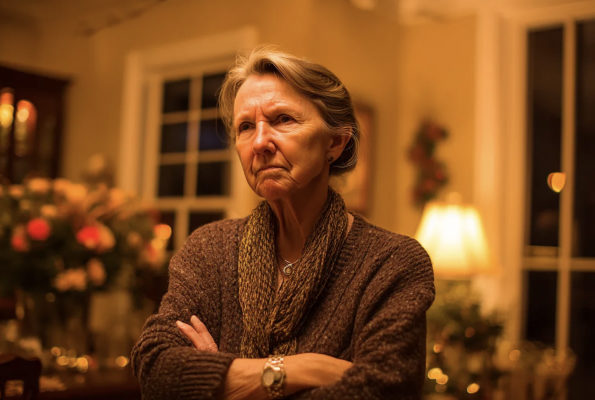
Snow clung to her sleeves, melting into her dark woolen coat. Her eyes looked tired, older, but it was unmistakably her eyes. She looked like someone I knew in another life.
I stepped outside and shut the door behind me.
“What are you doing here?”
“I want to talk, Ben,” she said, hesitating while clutching the strap of her bag. “And I want to see the girls.”
“After nine years?” I asked, shocked. “You think you can just show up and be welcomed back?”
“I’ve been back in the States for two years. I thought about showing up a hundred times. But I didn’t know what I’d say. I didn’t think you’d open the door. Oh my God, Ben, I didn’t even know how to contact you.”
“You didn’t know? Or you didn’t try? Nancy, you left a note under the coffee machine. A note. And then nothing. No phone calls, no goodbye, no explanation... just gone.”
“I panicked,” she said, hugging herself. “I drowned, Ben. The crying, the feeding, the weight of it all — I couldn’t breathe. It felt like the walls were closing in and no one could hear me scream.”
“So you left a newborn?” I asked. “You disappeared while I was trying to figure out how to keep three babies alive with two hours of sleep?”

“There was a man,” she said quietly. “It wasn’t like that, Ben. But... his name was Mark. He was someone I met at the hospital — he worked at the facility. He saw how stressed I was. One night, I said I didn’t know if I could do it, and he said he could help me get away. I wasn’t thinking clearly, Ben.”
I didn’t say anything.
“I didn’t fall in love with him. I was just desperate. And he gave me an escape. I accepted it to save myself.”
“Where did you go?”
“Dubai, at first,” she started. “Then India. He worked for a shipping logistics company. I didn’t even have a passport — he took care of everything. I thought I would be able to breathe again, but I just traded one prison for another. He became controlling, cruel. I wasn’t allowed to contact anyone. I didn’t even have my own phone.”
“And it took you seven years to get out?” I asked. “I don’t even know if I believe you.”
“Yeah,” she whispered. “I finally escaped when we were in the UK for a visa renewal. I’ve been in Chicago ever since. Working in a restaurant, honestly. But I’ve been trying to save money... to make things right.”
“You can’t just come back after nine years and say you’re ready,” I said. “You don’t get to decide when your consequences expire.”
“They’re my kids, Ben,” Nancy said, her lower lip trembling. “I gave birth to them. I carried them.”
“And I raised them. Every feed, every nightmare, every scraped knee and growing pains. You weren’t there. You’re a stranger, Nancy.”
Her face changed, and her voice grew sharp.
“So, I guess we’ll let the courts decide, Ben.”
And just like that, she turned and walked back into the snow. As though she had never done this before. As though she had mastered the art of leaving.
One week later, the papers came. Nancy filed for joint custody. When I opened the envelope and read the documents, my hands went cold. It was right there, in black and white — a request for shared custody, citing “renewed emotional stability and commitment to reunification.”

She even wrote a handwritten letter explaining that she had “reconnected with her purpose.”
I sat on the edge of the sofa for a long time, the letter in my lap.
That night, after dinner, I called the girls to sit down and decided to tell them the truth.
“There’s something I need to tell you,” I said calmly.
They sensed the shift immediately. Emmy closed her sketchbook. May sat up straighter, as if she could hear something approaching. Lizzie crossed her arms, her eyes locked on me.
“Nancy filed a petition to meet with you. She wants to reconnect with you, kids. She’s asking for visitation.”
“Like... our mom?” asked May.
“She wants to meet with us? Seriously?” Lizzie asked, her voice clear but cautious.
“Yes, sweetheart. But only if you feel comfortable with it. And I’ll be there the whole time. I promise.”
They exchanged glances. Then, one by one, they nodded.
We met at a small café in the neighboring town. Nancy was already there, sitting up straight at a corner table, wearing soft colors and trying to smile — but the smile didn’t reach her eyes. Her hands trembled slightly as she stirred her coffee.
The kids sat beside me, with hot chocolate in front of them. They didn’t speak, but the air around them felt tense. Nancy extended her hand, awkwardly.
“Hello, kids,” she said. “It’s nice to meet you.”

Lizzie gave a small nod. Emmy didn’t say anything, preferring to draw shapes on a napkin with her fingertip. May clutched my arm tightly.
Nancy tried to start a conversation. She asked the kids about school, their hobbies, and their favorite books. It was a shallow conversation that might have worked with strangers, but not with the three children who had been abandoned by the woman asking them those questions.
“Why did you leave us?” Emmy finally asked.
“I wasn’t ready to be a mom. I thought I’d have time to adjust, but everything came at once. I panicked. I made a mistake,” she said.
“And now you’re ready?” Lizzie asked.
“I’ve changed, sweetheart,” Nancy said. “I’ve been through a lot. I’ve worked hard. And I want to be in your lives again.”
“We’ve lived without you,” May said. “You feel like a stranger.”
“Please, give me a chance, kids. I can make it right,” Nancy said, her eyes beginning to fill with tears.
“We can see you sometimes,” Lizzie said, crossing her arms. “But only if Dad is there.”
“Okay. Thank you,” Nancy said, nodding and wiping her tears.
Two weeks later, the court rejected her custody request. I retained full custody and guardianship of the kids. The judge ordered her to pay retroactive child support. When Nancy saw the amount, her face went pale and she started nibbling her nails — a habit she had picked up back in college.
She was supposed to meet the kids that weekend. There were plans to take the kids to the nearby nail salon.

However, Nancy sent a message instead.
“Coming back was a mistake, Ben. Tell the kids I love them, but they’re better off without me.”
I read it twice before deleting the message. When I told the kids, there were no tears.
“It’s okay, Dad,” Lizzie said, smiling. “We still have you, and that’s more than enough.”
That sentence... it shattered me. I didn’t say anything. I just pulled them close and hugged them like my life depended on it.
Because, for a long time, it did.
“But that means you owe us one day for a manicure,” Emmy said, smiling at me.
“I think we can arrange that, sweetheart,” I said, smiling.
That weekend, I called my office and told them I was sick for the following week, then I prepared the car.
But not for Disneyland. Not yet.
First, as promised, we went to the little nail salon the kids loved — a small place, of course, with soft music playing and rows of pastel nail polish bottles arranged like candy jars. A place where they knew my kids' names.
“Three services for my daughters,” I said, smiling at the receptionist.
The woman behind the desk smiled brightly.
“Welcome back, Lizzie, Emmy, and May.”

“Dad, we don’t have to do this,” Lizzie said, bending down. “We know this isn’t cheap.”
“I know,” I replied, bending to their height. “But I want you to feel good. It’s not about money. It’s about being there for the people we love. And that’s all I’ve ever wanted to do for you.”
“Will you be with us?” May asked, pulling on my arm.
As they did their nails, they talked about school and their favorite teachers. Emmy picked a soft lavender color. Lizzie chose a bold red. May, of course, picked the sparkly one. I just sat there, listening, my heart full.
When we left, they walked out like queens — hands flat, freshly done nails, and confidence shining through their skin.
That’s when I told them about Disneyland. The car exploded with screams and laughter.
“You’re kidding!” Emmy shouted.
“I don’t joke about roller coasters,” I said.
We drove all night, with soft music playing and snack wrappers piling up in the backseat. The kids finally fell asleep, bundled up like the babies they used to be.
At Disneyland, they screamed on roller coasters, ate too much sugar, and laughed until their cheeks hurt. I looked at them with admiration that words couldn’t express.
That night, when the fireworks exploded above us and the crowd sang songs we all half-remembered, I held one thought.
Nancy may have left us. But in doing so, she gave me something she never intended: the chance to raise three amazing girls. Lizzie, who was brave and brilliant. Emmy, who was wise and tough. And May, who was gentle and wise.
They knew what love was. It wasn’t perfect, but it was real.