Pope Francis in critical condition: Vatican reports stability amid pneumonia and kidney failure
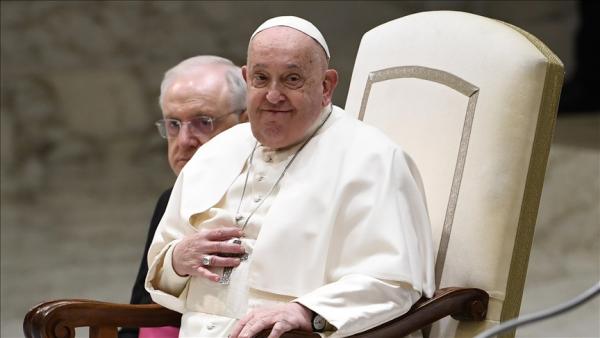
Pope Francis remains in critical condition, with the Vatican reporting that blood tests have revealed mild signs of kidney failure, though it is currently being managed. The 88-year-old pontiff is still fighting pneumonia in both of his lungs.
The Vatican further confirmed that Francis, who was hospitalized over a week ago, has not experienced any new respiratory crises since the previous evening. His blood tests show mild early-stage kidney failure, which is under control, and the Pope is described as alert and oriented.
While continuing to receive oxygen, Francis participated in Sunday Mass from an apartment arranged on the 10th floor of Gemelli Hospital. His medical team also took part in the service.

The Vatican stressed that the complexity of the Pope's condition, combined with the need to wait for the effects of treatment, means his prognosis remains cautious.
Earlier on Sunday, the Vatican revealed that Francis had received high levels of oxygen after experiencing a respiratory crisis, but he had a peaceful night in the hospital. It was also stated that, due to his pneumonia diagnosis in both lungs, he would remain in the hospital, and for the first time in his almost 12-year papacy, he did not deliver the weekly Angelus prayer.
In his Sunday sermon, which was shared with the press beforehand, the Pope thanked the medical team for their commitment to his care.
Earlier in the week, the Vatican had noted that the Pope's health seemed to be improving, with positive responses to treatment for pneumonia.
Pope Francis was admitted to a Roman hospital on February 14 after undergoing tests for a respiratory infection. A subsequent CT scan confirmed a diagnosis of pneumonia in both of his lungs.
Dr. Jamin Brahmbhatt, a kidney specialist at Orlando Health Medical Group, reassured that the signs of kidney failure mentioned in the Vatican’s latest update are not alarming.
He explained that while the kidneys are delicate, they are also resilient, and the current condition is not necessarily cause for concern.
Brahmbhatt also noted that in older adults, infections like pneumonia can lead to sepsis, which causes inflammation that can harm multiple organs, including the kidneys.
In Pope Francis’ case, this has manifested as mild renal failure. Brahmbhatt emphasized that kidney damage could be temporary and improve with treatment or could be permanent, depending on the circumstances.