Standing up at register four: A cashier’s story of courage and compassion
Being a cashier means dealing with all kinds of people every day—including selfish and arrogant ones, like this wealthy woman. After witnessing how she mistreated her employee in the store, I set aside my fears and stood up for a hardworking coworker.
I’ve been a supermarket cashier for over eight years. It’s not glamorous, but it pays the rent and gives me a strange front-row view of human behavior. Over time, you start to memorize the quirks and patterns of regular customers. But some people don’t just blend into the crowd—they leave a mark.
One of those people was Verónica.
Every Sunday, without fail, this rich woman would enter the store as if it were her personal domain. She wore huge sunglasses and heels that loudly echoed down the aisles. Always dressed in designer clothes, she dragged behind her a fragile woman who clearly wasn’t there by choice.
Her name was Alma. I learned that much later.
Verónica was a bit over forty, about the same age as Alma, though she acted much younger—always glued to her phone and talking down to Alma like she owed her money. Alma, on the other hand, was quiet, thin, and spoke broken English that made it clear she came from humble beginnings.
It was obvious her background was far poorer than her ostentatious boss’s.
At first, I thought it was just a language barrier, but over time I realized Verónica only hired people who didn’t speak English well so she could say whatever she wanted without consequences. She was very calculating.
And cruel.
Every Sunday she showed up with that cold, harsh condescension. Alma pushed the cart as if it weighed five hundred pounds, always two steps behind. Her boss walked arrogantly, pointing and insulting like she was running some unwanted pageant.
“Hurry up! I’m not going to put down roots here!” she ordered, criticizing everything.
“No, not that brand! Do you have any neurons left?”
“If you can’t stack tomatoes without bruising them, what can you do? What do you expect me to do with this trash? Eat it?”
“Are you blind or just lazy?”
I wanted to scream! But I needed the job.
The worst part was seeing Alma shrink under Verónica’s voice, trying to hold on to what little dignity she had left. She always wore the same worn sandals, held together by a safety pin on the back strap. Her shirts were always a bit big, probably secondhand.
Her hands trembled slightly every time she picked up fruit or vegetables, checking each tomato twice as if it would prevent punishment. She reminded me of my mom, who once worked as a housekeeper, and that made my blood boil.
What many people don’t know is that domestic workers are terribly underpaid, which is why I feel sympathy for them when they’re forced to shop only where their employers allow.
One day, after weeks of seeing how Alma was abused, I finally had the chance to try to help.
When they reached my register, Alma stepped away from Verónica and placed a few items on the conveyor belt: rice, a bottle of oil, and a bar of soap. She avoided looking at me.
“Do you have a membership?” I asked.
She looked confused, so I repeated it more slowly. Nothing.
Verónica stepped up from behind, taking off her sunglasses and clapping like we were kids in daycare.
“Oh, please,” she said. “She doesn’t understand you. English isn’t her first language, or her second, or even her third.”
I kept my professional smile. “I can help her sign up for our discount program. It only takes two minutes. Or you could use your membership for her items,” I gently insisted.
But Verónica laughed like I’d told a joke. “For her? No way! Let her pay full price like everyone else. I’m in a hurry.”

“But she could save quite a bit and—”
“She’s not my daughter,” she interrupted. “Why should I care? She’s lucky I even let her shop here while I’m around! Maybe she should get her act together and stop being poor! If she tried harder, she could pay for her stuff without that stupid membership.”
“I’m not going to waste my day on her rice and soap!” she added, crossing her arms and looking away.
I was shocked. That was the moment I knew Verónica talked to anyone she saw as “lesser” like that.
Poor Alma, used to her boss’s harsh tongue, stayed silent, clutching a few bills in her hand. It wasn’t much.
I bit my tongue, nodded, and charged her full price.
Then it was Verónica’s turn. Her cart was full of imported cheeses, premium cuts of meat, and organic products everywhere. I calculated her total was over \$700.
“All right,” she said, smoothing her silk blouse, “I’ll sign up now for the discount.”
I smiled. This was my chance!
I pressed a few buttons and gave her the most sympathetic look I could.
“Sorry... our registration system is temporarily down. It’s a known issue.”
“What?” she raised her voice.
“It should be working later if you want to come back. I can’t sign anyone up right now.”
She furrowed her perfect brow. “This is ridiculous. I shop here every week.”
I shrugged, feigning sympathy. “That’s odd, isn’t it? Anyway, you didn’t want to wait before, remember?”
“This is unacceptable! Do you know how much I spend?” she growled.
“About as much as decency costs,” I murmured to myself. I wasn’t proud, but I didn’t regret it either.
She huffed and started furiously typing on her phone. Probably messaging her lawyer or someone to pity her. But no one came to save her from paying full price.
I finished scanning her items and gave her the final total. Full price. Just like Alma.
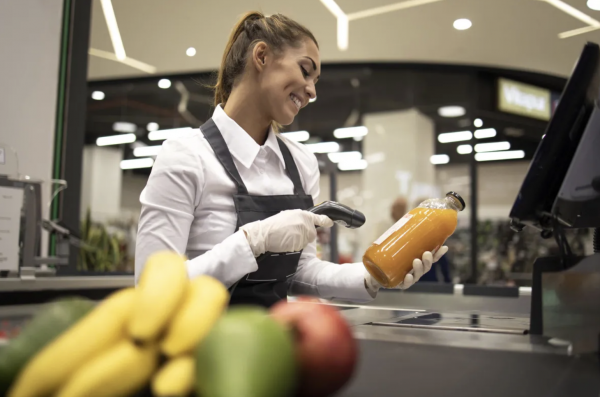
Verónica shot me a deadly look. If looks could kill, I’d be dead. You could tell she didn’t like my attitude, but she didn’t know what to do. At one point, before paying, I saw her nervously glance around, searching for someone to back her up.
Maybe she hoped to see a manager. But that day I was lucky: Max was swamped with office work and wouldn’t be on register until closing.
When Verónica’s card beeped to pay, the atmosphere in the store shifted. The customers behind her had been watching the whole scene: the arrogance, the scolding, the sarcastic comments. And now, seeing her total without a discount, some couldn’t hold back.
“Looks like the rules apply to everyone,” murmured a teenager behind her, nudging his friend. They chuckled quietly.
A woman in yoga pants, arms crossed and sharp-eyed, said, “Maybe next time she won’t act like she owns the place.”
A few suppressed giggles turned into quiet laughter. A cashier two lines down whispered something to a bagger who laughed so hard he had to look away.
Verónica flared her nostrils.
She tried to keep composure as she gathered her designer bags with stiff arms. But her face was red. The slight downturn of her lips and the twitch in her cheek told me she heard the murmurs. And for someone like her, humiliation is worse than a fine.
Passing by the self-checkout area, she stopped. Her eyes locked on a man in a navy blazer, about forty-something, checking his receipt near the help desk. He looked like a well-dressed office type, probably on his lunch break.
“Excuse me!” Verónica called out, as if she’d found her savior. “You’re the manager of this store, right?”
The man blinked. “Me?”
“Yes, you. You need to hear what just happened at register four,” she said, pointing at me like I’d robbed her.

He raised an eyebrow. “I think you’re mistaken—”
But she kept talking. “Your cashier refused to ring me up! Completely! I spend a fortune here. I deserve special treatment, not this public humiliation. Also, I don’t understand why no one told me about these discounts.”
“Ma’am, I—”
“She was rude, sarcastic, completely out of line,” she said, raising her chin. “I demand to speak with her! Fire her if necessary!”
The man looked completely confused.
“I’m not the manager,” he said, showing his receipt. “I just bought frozen waffles and almond milk.”
For a moment, Verónica froze. The red in her cheeks deepened to crimson.
“Oh,” she said flatly.
A chorus of giggles followed as she turned and left the store, Alma trailing behind with heavy bags in both hands. After her boss left, Alma paused for a moment and looked at me.
Her lips parted slightly. No words, just a soft gesture: “Thank you.”
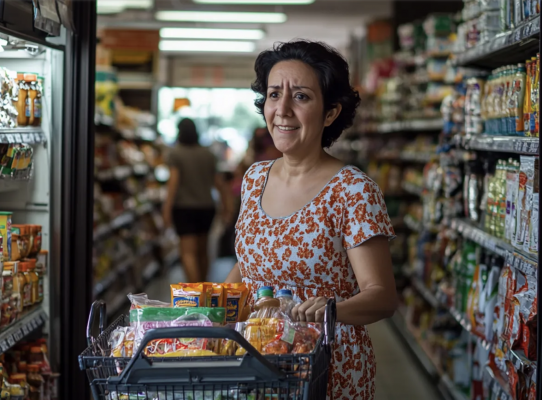
I didn’t find out what happened at the self-checkout until later.
Carlos, the bagger who often helped on Sundays, came over while stacking paper towels.
“You know Verónica thought that guy was the manager, right?” he said with a grin.
He told me all about Verónica’s antics and her attempt to get me fired.
I laughed until I cried. “How do you know all that?”
Carlos smiled. “Alma told me. I get it. Spanish is my first language.”
That made me smile even more. Carlos was the one who told me their names and more about Verónica. And now he gave me something better: proof that sometimes, doing the right thing really pays off.