

The Cassowary: Australia’s most dangerous bird and its surprising role in the rainforest ecosystem
Australians are often known for their toughness and bravery, especially considering the dangers that lurk in their country.
With a vast array of venomous snakes, spiders, and even the notorious drop bear, it's easy to understand why they might seem fearless.
However, there is one creature in Australia that still manages to strike fear into even the bravest hearts.
This fearsome bird is the cassowary, one of the largest bird species in the world, known for its intimidating appearance.
Standing as tall as a person, the cassowary has shiny black feathers, piercing eyes, and large, dagger-like claws on its feet. These birds, which resemble relics from another age, are often described as looking like living dinosaurs.
Cassowaries are flightless birds, classified as ratites, and they are often regarded as the world’s most dangerous bird. Unlike their more famous relative, the emu, which is one of Australia’s national symbols, cassowaries are reclusive creatures.
They prefer to stay in the deep rainforests, where they are unlikely to come into contact with humans. Unfortunately, these magnificent birds are now endangered.
Though they may be feared for their appearance, cassowaries play a crucial role in their environment. As the largest frugivores (fruit eaters) in the world, they consume and digest a wide variety of fruits every day, spreading seeds through their waste, which contributes to the regeneration of the forest. This makes them an essential part of maintaining the rainforest ecosystem.

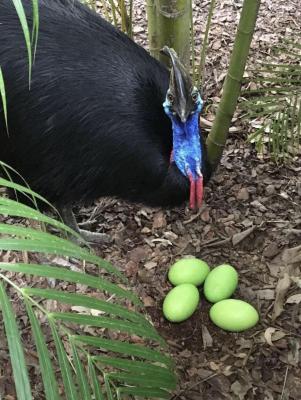
Interestingly, cassowaries are also unique in the animal kingdom because of their parenting habits. While female cassowaries lay eggs and abandon the nest, it is the male cassowary who takes on the responsibility of incubating the eggs and raising the chicks.
They are highly protective of their young, and incidents of cassowaries defending their chicks from human interference have been recorded.
Despite their intimidating nature, cassowaries are more likely to be killed by humans than the other way around. Many cassowaries meet their end at the hands of people, and experts urge caution when encountering these birds in the wild.
Visitors to Queensland, where cassowaries are most commonly found, are advised to stay calm and avoid drawing attention to themselves if they come across one. It’s best to remain quiet, move slowly, and avoid displaying food, as feeding these birds can make them aggressive and alter their natural behavior.
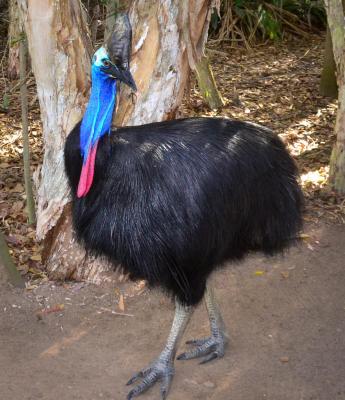
There have been instances of cassowaries being startled by reflections in dark-colored vehicles or windows, leading to aggressive behavior.
In some areas, locals have even placed screens to prevent the birds from seeing themselves in the glass and reacting defensively.
Cassowaries are not protected in some parts of the world, such as Papua New Guinea, where locals sometimes hunt and eat them. The species found in this region is smaller and known as the dwarf cassowary.
While they might seem like terrifying creatures, experts believe that humans can coexist with cassowaries if they respect their space. A notable example of this came when the Community for Coastal & Cassowary Conservation (C4) put up a statue of a male cassowary outside their office, only for a female cassowary to show up and attempt to court the statue.
When she didn’t get the response she was hoping for, she aggressively attacked and damaged the fiberglass figure. Today, the statue is displayed safely inside the office.
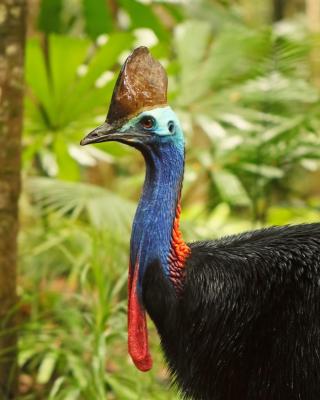
In summary, while cassowaries may be feared by many due to their size and strength, they are also a vital part of the rainforest ecosystem.
Proper understanding and respect for these birds are essential for both their protection and the safety of humans who may encounter them in the wild.


