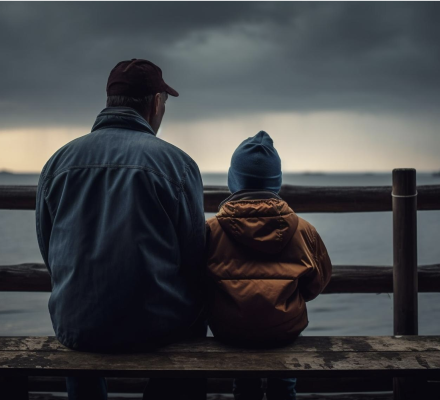
The day I confronted my aunt and uncle: A tale of betrayal, justice, and revenge
The day I confronted my aunt and uncle with the truth, I watched the color drain from their faces. Eight years of lies collapsed in seconds. They had stolen everything from me—my inheritance, my home, even the memory of my parents. But revenge, as they say, is best served with undeniable proof.
Sometimes, the people who claim to protect you are the very ones you need protection from. I learned that the hard way. But I also learned something even more important: even when everything seems lost, justice can still prevail.
I was ten years old when my world shattered.

It was a Saturday like any other. Cartoons played on the TV, a half-eaten bowl of cereal beside me, and the comforting thought that my parents would be home soon from their grocery run. Jenna, my babysitter, was on the couch texting, barely paying attention to me.
“They should’ve been back by now,” she muttered, checking the time for the third time in ten minutes.
I shrugged, unbothered. Sometimes Dad took Mom to her favorite coffee shop after errands. They deserved it.
The doorbell rang at 3:42 p.m.
I remember because I had just looked at the clock, wondering if we’d still have time to bake cookies like Mom had promised.
But it wasn’t my parents at the door. It was Aunt Margaret and Uncle David. Standing behind them was a police officer.
“Amelia, sweetheart,” my aunt said, kneeling to my level, her voice shaking. “Something bad happened.”
The words that followed were a blur. Accident. Instant. No pain. All those phrases adults use to try to make
death hurt less.
The funeral lives in my mind in fragments… black clothes, hushed voices, strangers telling me how sorry they
were.
I remember standing between my aunt and uncle, their hands heavy on my shoulders like anchors, staring at
two caskets.

“You’ll live with us now,” Uncle David said later. “We’ll take care of everything.”
And “everything” included my house. That beautiful two-story colonial with the big backyard where Dad built me a treehouse. The kitchen where Mom taught me to make her famous cinnamon rolls. The living room where we watched movies every Friday night.
“We’ll handle it,” they promised.
But they didn’t.
They moved me into their house. Into the basement, to be exact.
They called it my “special space,” but it was dark, smelled like detergent and old boxes. My clothes hung on a metal rack, not in a closet.
My bed was a creaky futon that groaned every time I moved.

As for my house—my parents’ house—it was rented out. My bedroom became someone else’s. Mom’s beloved garden? Paved over for extra parking.
“It just makes financial sense,” Uncle David said when I cried about it. “Property is an investment, Amelia.”
When I was fourteen, I found out what they had really done. I overheard Uncle David on the phone, bragging about how profitable the rental was.
“Best decision we ever made,” he laughed. “The girl has no idea, and the property value’s doubled.”
That night, I asked to see the will. The one that supposedly gave them the right to everything.
“It’s complicated,” Aunt Margaret said dismissively. “You wouldn’t understand.”
“We’re doing what’s best for you,” Uncle David added. “Your parents would want us to be practical.”
I played along for years. Kept my head down, did my homework, and pretended to be grateful.
“Thank you for taking me in,” I’d say at family gatherings, like they expected me to.
But I was always listening. Always watching.
One night, while cleaning the basement, I found a loose floorboard hidden under an old rug. Curiosity got the best of me. I pried it open with Uncle David’s screwdriver.

Inside was a bundle of papers, wrapped in worn cloth.
My heart raced as I read the title: Last Will and Testament.
And it had my name.
Not theirs.
The house, my parents’ savings—everything was meant for me.
I didn’t confront them right away. I knew I had to be smart.
The will was dated months before the accident, with valid signatures and witnesses. Everything was to be held in trust until I turned eighteen. Then it would all be mine.
My aunt and uncle had lied. For years.
The next day, I asked my friend Mia to meet me at the public library.

“This is serious,” she whispered, eyes wide as she read the will. “Really serious.”
“I know,” I said. “But what can I do? I’m only seventeen.”
“My mom’s cousin is a lawyer,” she said. “He owes her a favor. Maybe he can help.”
A week later, we were sitting in a small downtown office. Mr. Reeves, a kind-eyed, bald man, studied the document carefully.
“This will is legitimate,” he said finally. “If what you’re saying is true, your aunt and uncle committed fraud. You can fight this.”
“But I don’t have money for a lawyer,” I admitted.
He smiled. “We’ll worry about that later. For now, let’s gather evidence. You turn eighteen soon?”
I nodded.
“Then wait. Once you’re legally an adult, you’ll have more options.”

For months, I played the obedient niece to perfection.
But I was planning.
With Mia’s help, I gathered everything. Photos of the rented-out property. Audio recordings. Bank statements showing how they used my inheritance.
On my eighteenth birthday, they handed me a cheap card and a twenty-dollar bill.
“Thanks,” I said. Then casually, I asked, “Can I see my parents’ will? Now that I’m an adult, I’d like to understand what they wanted.”
Uncle David’s face hardened.
“Why? It’s not your house.”
“I’m just curious,” I said.
“Well stop being curious,” he snapped. “In fact, now that you’re eighteen, you should start thinking about moving out. We don’t owe you anything.”
I smiled.
“Are you sure about that?”
They looked confused.
“Because I found something in the basement. Something that says otherwise. And I know everything. The fake will. The bribes to the judge and lawyer. That you were broke when my parents died. You forged the will and stole my home.”
They froze. Silence filled the room until my uncle finally barked:
“Who’s going to believe you? Where’s your proof?”

I pulled some papers from my backpack.
They lunged for them, but they weren’t ready for what came next. They walked right into my trap.
Their eyes scanned the document. Their expressions shifted from smugness to panic.
“What is this?!” my aunt shrieked.
“How dare you?!” my uncle roared.
Across the top of the document, in big bold letters, it read: **YOU ARE BEING RECORDED.**
At that moment, the door opened. Mia walked in, phone in hand, recording.
“Hi, guys,” she said cheerfully. “Just capturing this special moment.”
I reached behind the TV and pulled out a hidden camera.
“Smile for the camera,” I said. “Because this is going straight to court.”
“You little—!” Uncle David shouted, stepping toward me.
“I wouldn’t,” Mia warned. “Assault charges won’t help your case.”
We left them frozen in fear.
The next day, I returned to Mr. Reeves—this time with Mia’s mom, Mrs. Sarah.
“We’re taking this case pro bono,” she said firmly. “What they did is unforgivable.”
The legal battle was brutal. They hired expensive lawyers, painted me as a troubled teen.
But the evidence was overwhelming.

The fake documents. The bribed officials. The lawyer who finally confessed.
Four months later, the verdict came: guilty of fraud.
“The court orders the immediate return of all assets to the rightful heir, Amelia,” the judge declared.
That weekend, I watched from the front porch as the tenants moved out. I didn’t renew the lease.
I walked through every room. Memories came flooding back.
The first thing I did? Tore up the parking lot. I hired landscapers to restore Mom’s garden. We planted all her favorite flowers.
Bit by bit, I took my life back.
I enrolled in community college using some of the recovered funds. Not long after, I invited Mia and her mom over for dinner.
“I couldn’t have done this without you,” I said, raising my glass.
“You did the hardest part,” Mrs. Sarah replied. “You stood up for yourself.”
That night, in my old bedroom, I thought about everything I’d been through. I lost my parents. I was betrayed. But I found my way home.

And I learned something: when someone takes what’s yours, you fight back—even if it’s against your own family.
But I also learned something else. Family isn’t always blood. Sometimes, it’s the people who show up when no one else does. Like Mia and her mom.
They fought for me when no one else would.