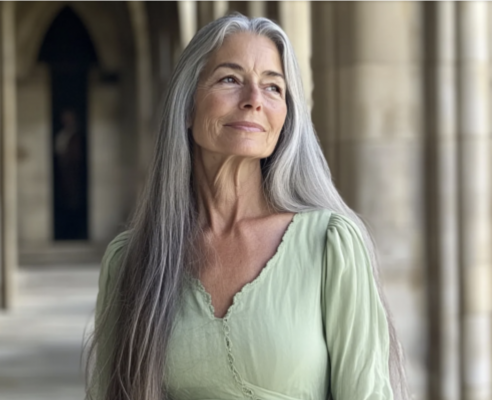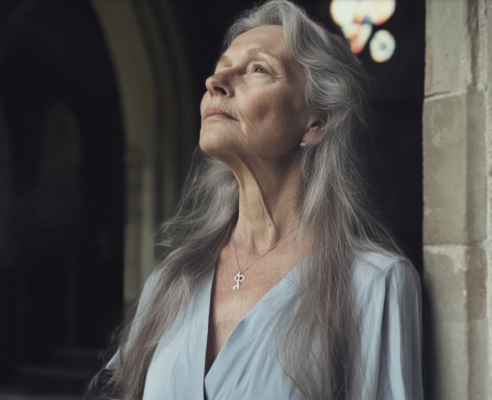
The last chapter: Eleanor’s legacy
When Eleanor is abandoned by the church she served for nearly 50 years, her silence speaks louder than any sermon. As her granddaughter watches how pain turns into clarity, a final act of truth is set into motion. This is an unforgettable story about legacy, faith, and the silent power of not being forgotten.
The day of my grandmother's funeral was sunny. There were no thunderstorms, no storm clouds. Just heat. The kind of heat she always carried with her.
Her name was Eleanor, and she served her church for almost five decades without asking for anything in return. Until she needed them. And they gave her nothing.
No church leader came. Not by accident, but by design. They weren't invited.
But it wasn’t always like that. My grandmother was a pillar in that church. A Southern Baptist congregation that prided itself on “family values,” tradition, and photos of pastors shaking hands with senators.
She was the kind of woman who showed up without being asked, who filled in for the sick nursery worker, cooked extra casseroles, and stayed late cleaning folding tables.
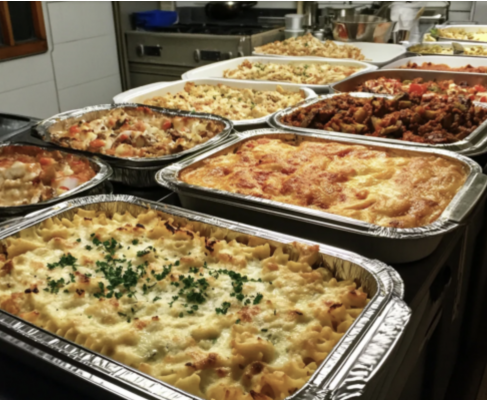
She taught the Youth Bible Study every Sunday night, helped plan fellowship dinners, drove the church van to retreats and choir tours. She tithed faithfully and made additional donations to National Missions. She even funded scholarships for kids in the church who couldn’t afford to go on mission trips.
No one asked her to, she just did it.
She was faithful. She was humble. She was invisible, as older women often are—doing all the work but rarely speaking up.
Her greatest gift wasn’t her service, but how she made people feel. You never left Eleanor’s kitchen or classroom without feeling bigger. She saw you. That was her superpower.
I was seven years old the first time I stayed at Grandma Eleanor’s house alone. Grandpa Walter was away on a fishing trip, so it was just me and her. I remember waking up in the middle of the night, scared by a dream I couldn’t remember, and walking down the hall in my socks.
I didn’t even have to knock—she was already opening the door.
She let me crawl into her bed without saying a word. Her sheets smelled of lavender and old books. She hummed a hymn I didn’t know, but the melody stayed with me for years. Her hand rubbed gentle circles on my back until my breathing slowed.
That was her magic. She didn’t always know what to say. But she knew what you needed.
When I had my first heartbreak at sixteen, she was the only one I wanted to talk to. She didn’t give advice. She didn’t offer clichés. She just served sweet tea in glass jars and sat with me on the porch.

At one point, she reached out, touched my knee, and said, "If someone makes you feel small, they don’t deserve to be close to the big and beautiful things inside you."
I cried harder after that, not because I was sad, but because she saw me. She always did.
She taught me how to pray, how to iron a blouse properly, and how to take the right path without letting people walk all over me. She had a quiet strength that felt like standing next to a mountain.
No flash. No noise. Just solid, constant presence.
She was more than my grandmother. She was the compass by which I measured the world.
And when she was abandoned, when they made her feel small, I promised myself I wouldn’t let that be the last chapter of her story.
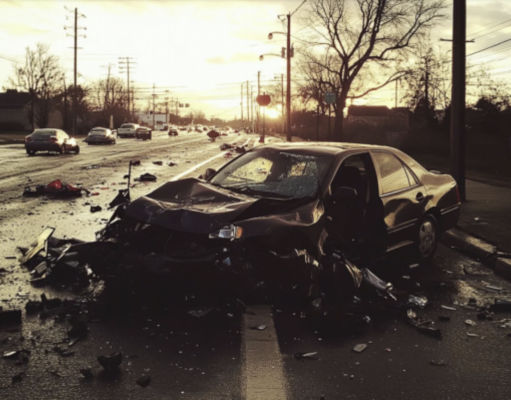
My grandmother was 73 years old when everything changed. She had a car accident that left her disabled. Her legs never fully recovered. Her bones ached constantly. The woman who used to tend the garden before dawn now struggled to climb the porch steps without her cane.
So she wrote letters. She called. She asked members of the congregation to take her, pray for her, even visit her.
They didn’t come. Not one of them.
Not Pastor J., the man who baptized her grandchildren and gave her the plaque for "More Years of Service."
Not Pastor M., the younger one who took over the youth ministry and once proudly proclaimed to the congregation that "Mrs. Eleanor’s potato salad could save souls."
For ten years, she stayed home. She listened to sermons online.
"Come back home, Callie," she said to me one day on the phone. "Let’s listen to sermons together, honey. Let’s pray together. And when we’re done, we can have some fresh scones with jam. I’ve taught Grandpa how to bake."
I used to do exactly what she wanted. She was my favorite person in the whole world, I would have done anything she asked.
Grandma mailed in her tithe. She still sent birthday cards and batches of cupcakes to the children in the church she used to teach.
And still, they never came.
I was 16 when I realized what was happening. I visited Grandma every Sunday after church, still in my dress and heels, sometimes bringing her slices of lemon cake from the bakery she liked.
Every time, without fail, she asked the same question.
"Did you see Pastor J., my Callie? Did he say anything about me?"
At first, I lied. Not big lies, just soft little lies that fell easily into her heart.
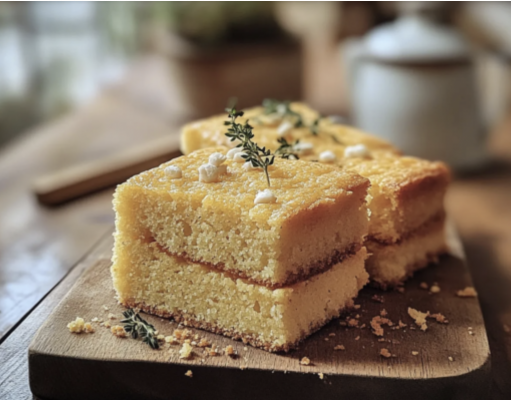
"He said he’s praying for you," I would nod. "He asked how you were. He said he misses your cornbread, Grandma."
It made her smile. That hopeful, pained smile people wear when they know something isn’t true but need to believe it anyway. I hated how easily she accepted the crumbs of comfort I gave her.
But one day, I couldn’t do it anymore.
She asked me again as I added a teaspoon of sugar to her tea. Her eyes were full of hope, and the soft sleeves of her cardigan.
This time, I wasn’t going to lie.
"Grandma... they don’t talk about you anymore. I’m sorry."
"What do you mean, Callie?" she asked.
"I mean... they don’t ask about you anymore."
She didn’t flinch. She just nodded once. As if she already knew. As if her heart had already made peace with being forgotten. But I saw her hand stop halfway as she stirred her tea.
She didn’t drink it that day.
And she never mentioned them again.
The final blow came when she was dying.
She was in palliative care, fragile and shrinking. Her skin was like paper against the white sheets. The machines beeped softly in the background like a countdown. Her breathing was shallow. Still, she asked for Pastor J.
"Just to talk, Callie," she sighed. "Just once more. I want to go over the services. The hymn that will be sung. That verse from Isaiah, the one about wings like eagles."
I nodded and told her I’d pass the message along. But he never came.
Instead, Pastor M. showed up. With his too-white teeth and shiny shoes. He smiled too much. Walked fast and talked faster, like he was in a hurry.

He stayed exactly 15 minutes and spent 12 of them circling the same question.
"Have you remembered the church in your will, Eleanor?"
My jaw almost hit the floor.
"I know you’ve always had a generous heart, Eleanor," he said, placing his hand over hers as if he owned it. "And the Lord sees your faithfulness. A donation could mean a new roof. A scholarship. A real legacy."
He didn’t ask if she was scared. He didn’t ask what she needed. He didn’t ask what hymns touched her soul. Instead, coldly and calculatingly, he asked about money.
Grandpa was in the corner of the hospice room, his fists clenched so tight his knuckles were white. His jaw was moving, like he was chewing the words to keep them from coming out.
"She’s not gone yet," he said. "And this isn’t the time."
Pastor M. smiled even wider, like he was used to swallowing shame and calling it grace.
"I’m just planting seeds, Brother Walter. Planting seeds so something beautiful can grow..." he said, waving the air as if he were blessing us.
He left with the same cocky calm with which he arrived. Clipboard under his arm. Stiff-collared shirt. Not a word about heaven. Not a word about Grandma’s life.
After the door closed, silence filled the room like smoke. Then Grandma cried.
I hadn’t seen her cry in years. Not after the accident. Not when she lost friends, strength, or dignity. But this... this cut something deeper.
"He didn’t ask about my soul," she whispered. "He only asked about my money."
Grandpa sat next to her at that moment. He didn’t say much. He just held her hand, like he always did when words weren’t enough.
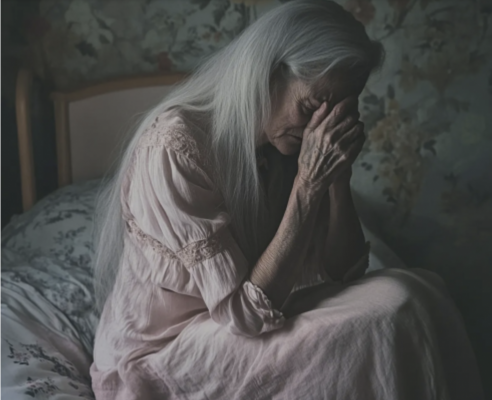
I remember sitting there, watching them both, feeling how the pain transformed inside me. Not just from what we were losing, but from how little she received after giving so much.
That day, something broke. But not in a bitter way. It was clarity.
In the following six months, Grandma planned. Silent, constant. With every ounce of intention she used to pour into youth retreats and Bible study lessons, she rewrote the final chapter of her story.
And when she passed away, we honored her in the way she would have wanted. No hypocrisy. The service was held in a modest funeral home, not at the church. Just soft music, folding chairs, and people who showed up.
Grandpa made that call.
"They don’t have the right to mourn her in public when they ignored her in private," he said.
He stood at the front of the room that day. Grandma’s worn leather Bible pressed against his chest like a shield. His voice didn’t tremble. He wasn’t angry, just honest.
"The church she gave her life to gave her nothing in return. They abandoned our Eleanor. And when she was dying, they came asking for her money, not her forgiveness, not her blessing. Just her estate."
We sang "It Is Well with My Soul," the same hymn Grandma used to hum while kneading dough in her kitchen. We passed the microphone, and people stood up to share stories. About Grandma’s cornbread, her Sunday hugs, the time she drove a van full of noisy teenagers to the neighboring state and kept calm with nothing but peppermint oil and a firm voice.
They remembered her, not for what she gave, but for who she gave it to.
Two weeks later, we gathered for the reading of the will. Denise, Grandma’s lawyer, had been in her Bible study group years ago. That day, she wore a soft blue dress and smiled sweetly at all of us before opening the file in her lap.
I was surprised to see the pastors enter, dressed in their finest, looking around the room as if they owned it.
"I heard she left something to the church," Pastor M. said, to no one in particular. He smiled as if he already knew he was about to receive a big payout.

The will began.
To my grandfather, her husband of 54 years, Grandma left her share of the house and their joint savings, along with a letter about the first time they danced barefoot in the kitchen.
"You gave me the strength to give to everyone else," she wrote. "Now, I give it all back to you, my love."
To me, she left her recipe book, her first Bible with the pages worn from love, and a bracelet she said she bought when I was born because the stone reminded her of my eyes.
"My girl Callie, you are the light of every room. You have been one of the brightest lights in my life, honey."
To others, she left quilts she had sewn herself, keepsakes stored in labeled boxes, small funds for children’s college accounts, and handwritten notes folded like prayers.
Then Denise paused. She looked directly at the two pastors and cleared her throat.
"This next part is addressed to the pastors. It’s a personal statement from Eleanor."
She unfolded a second page and began reading.
"To the pastors of the church I once called home:
I loved you. I served the Lord beside you. I gave decades of my life to you. But in my last years, when I could no longer bring you food or money, I became invisible to you. I waited for calls that never came. I invited you, and you stayed away.
You left me alone. Until it was time to collect. And then, all you wanted was what I could give you. Not my stories. Not my fears. Not my prayers. Only my assets.
I once planned to leave 20% of my estate to the church. I believed in the mission. I believed in you.
Pastor J., you ignored me.
Pastor M., you reduced me to a transaction.
For this reason, I leave each of you a penny.
My final donation has gone instead to Reverend Lila Hayes. She brought me food. Prayed with me. Sat with Walter and Callie and my children. She was the hands and feet of the Lord when you were only the mouth. You broke my heart. But I won’t let you benefit from it."
"This is unnecessary," Pastor J. muttered. "Cruel."
"No," said my grandfather, standing beside me. "What you did was cruel. This is just the truth. And it was about time."
They left without saying another word.
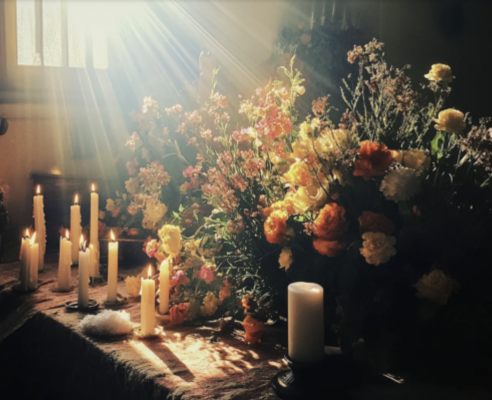
The money Grandma donated was enough to fund a year of the church’s food pantry, legal assistance for foster families, and new books for its children’s literacy program.
"Your grandmother was a light. Thank you for letting us see her shine one last time."
And that was my grandmother, Eleanor.
"I hope those fools learned their lesson, Callie," Grandpa Walter said. "Now it’s in the Lord’s hands."