

The scientific method for perfectly boiled eggs
If you believe you've mastered the art of boiling eggs, there may still be room for improvement in achieving the "perfect" boiled egg.
Boiling an egg perfectly is a difficult task because the egg white (albumen) and yolk have different compositions, which require distinct cooking temperatures to reach the ideal taste and texture.
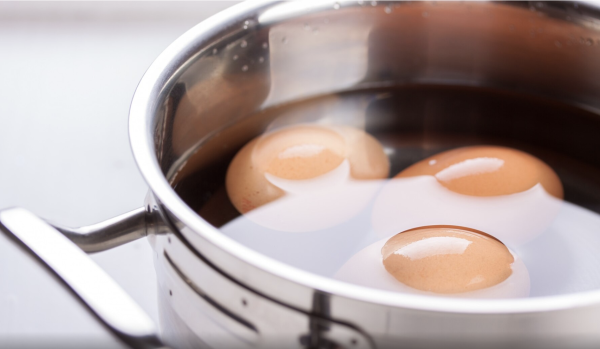
However, scientists claim they have cracked the code with a new method known as "periodic cooking." This technique involves alternating the eggs between cycles of hot and lukewarm water to cook both the albumen and yolk at the same time, without them separating.
The findings were published in the journal Communications Engineering on February 6.
Periodic cooking not only creates the perfect texture and flavor for both the egg white and yolk, but it also ensures that the egg retains more nutrients, offering health benefits when compared to other popular methods like hard-boiling or sous vide.
Experts explain that cooking is a scientific process and adjusting the cooking temperature based on the properties and structures of the egg proteins can enhance its quality.
Interestingly, this technique does not require special equipment and can be tried at home. The research team, led by Dr. Ernesto Di Maio, tested periodic cooking in a standard kitchen, using only common utensils and a bit of patience.

According to Di Maio, the team relied on mathematical models and simulations to predict how heat transfers through the egg, helping them identify the ideal cooking conditions for both parts of the egg.
By adjusting water temperature and density, they were able to determine the optimal time intervals to switch the eggs between hot and lukewarm water.
To test this method, the researchers used four different cooking techniques: hard-boiling, soft-boiling, sous vide, and periodic cooking. They prepared 160 eggs in total, with 40 eggs for each method.
The traditional methods served as control samples to compare the temperature profiles, texture, and nutrient retention. Hard-boiled eggs were cooked for 12 minutes, soft-boiled for 6 minutes, and sous vide eggs for one hour at 65°C (149°F).
For the periodic method, the eggs were alternated between hot water at 100°C (212°F) and lukewarm water at 30°C (86°F) for two minutes each, repeating the cycle eight times for a total of 32 minutes.

The results showed that, unlike the traditional methods, which raised the internal temperature steadily, the periodic method kept the yolk temperature constant at 67°C (152.6°F).
Meanwhile, the albumen reached varying temperatures depending on whether it was in hot or lukewarm water. This dynamic heat distribution enabled both the albumen and yolk to reach their ideal textures.
Although the periodic cooking method is a promising concept, some experts have pointed out that the 32-minute cooking time might be too long for everyday use.
Most people, they argue, are more likely to seek quick solutions when preparing meals and may not have the time to follow a lengthy process for something as simple as boiling an egg.


