The seat at the table: A silent battle for love and respect
He told me his family was close — but I didn’t realize how much until the night I quietly slid across the restaurant bench while his mother sat beside him, smiling as if she’d just won something.
I never thought a dinner reservation would become a metaphor for my place in my boyfriend’s life.
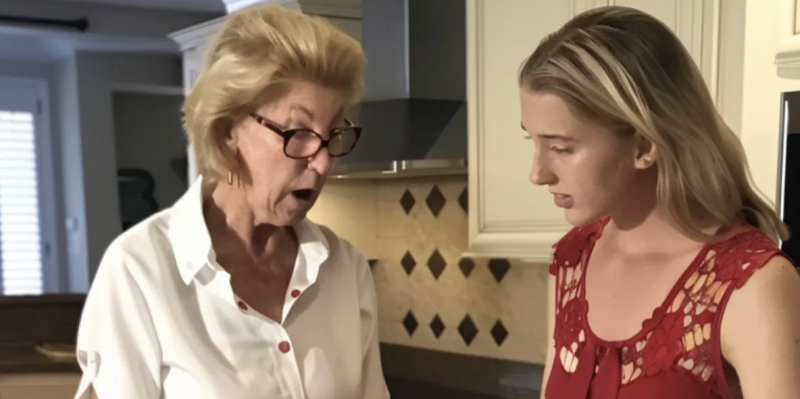
Matt and I had been together almost two years. Two sweet, uncomplicated years… except for one complication wrapped in pearls and a very polite passive aggression: his mother, Diane. She was one of those women who hide their sharp edges behind a friendly smile.
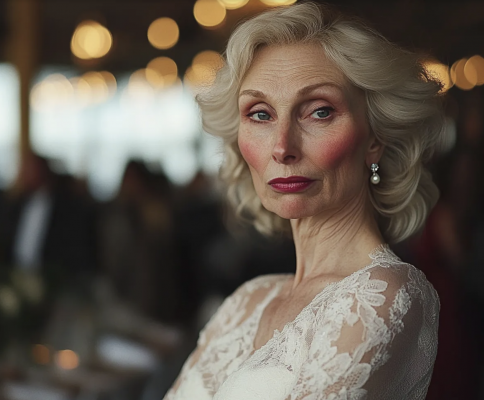
Diane had that old-fashioned elegance that draws every eye when she walks into a room. Her voice was always soft enough to make her cutting remarks sound like compliments you later regret accepting. From the start, she was skeptical of me.
It wasn’t obvious. I could tell from the way she looked at me, as if searching for flaws behind my smile.

Still, I tried. I smiled, helped in the kitchen, remembered her birthday, brought flowers when we visited. I thought I was making progress.
I was wrong.
Last weekend was Matt’s birthday, and he invited me to dinner with his family at a beautiful Italian restaurant tucked away in a quiet neighborhood.
I got ready carefully, picked a dress I knew Matt loved, and brought a gift I’d spent weeks planning: a signed vinyl from his favorite band. I was genuinely excited. I wanted it to be a special night.
We arrived together — him holding my hand, me clutching the wrapped gift. His parents and younger sister were already seated. That’s when I noticed: Diane had reserved the seat next to Matt, with her purse carefully placed on the chair, like marking her territory.
Still, I smiled. “I’ll sit on the other side,” I said, sliding into the seat across from her. A waiter brought the menus. I leaned slightly toward Matt to comment on the ravioli, and that’s when she acted.
With a sing-song laugh that might seem innocent to someone who didn’t know her, Diane leaned in and said:
—“Sweetheart, you always have to sit right next to Matt, don’t you?”
I blinked.
—“Excuse me?”
—“Let’s see how you do with a little distance,” she said with a smile that never reached her eyes. Then, as if she were just asking me to pass the bread, she stood up, pointed at my chair and said:
—“Move over, dear.”
I stared at her.
At first, I thought it was a joke. No one would do that in public, at a dinner, on their son’s birthday… right? But her smile didn’t fade. She made the gesture again, this time with both hands.
—“Come on, come on.”
The whole table burst out laughing. Including Matt. My boyfriend. My partner. The man I thought was on my side. He laughed as if it were an innocent joke, not an adult woman deliberately humiliating another.
My cheeks burned as I slowly slid my chair one seat down. Diane sat between us, a triumphant expression hanging on her like perfume.
Minutes passed. I stayed quiet, staring at the centerpiece: a small candle flickering inside a glass globe.
My hands trembled beneath the tablecloth. Diane practically clung to Matt, laughing too loudly at his jokes, touching his arm as if he were still a child. She even wiped his cheek with a napkin, as if I didn’t exist.
She wasn’t just a loving mother. She was a woman obsessed with control. And I wasn’t invited to that game.
After five minutes, I couldn’t take it anymore.
I stood up silently, my chair scraping the floor. Diane looked up, surprised. Matt finally looked at me — for the first time since she sat down. I grabbed my purse, looked him in the eyes, and said:
—“Honestly, I think I’m going to go. Happy birthday, Matt.”
I didn’t wait for a response. I walked straight to the exit, passing the waiter with the wine bottle.
Matt called me an hour later. I let it go to voicemail.
Then came the texts.
—“What the hell was that?”
—“You made a SCENE at my birthday dinner.”
—“You embarrassed me in front of my family.”
I didn’t respond.
Then Diane wrote.
—“Oh, dear, you were so sensitive tonight. I was just joking. Hope you’re feeling better.”
That word again. Joking. As if my humiliation was entertainment. As if my pain was a joke.
I didn’t reply to her either.
The next morning, I woke up wondering if I’d overreacted. I checked the messages, wondering if maybe I was too dramatic. Maybe it was a joke. Maybe I should have laughed with them.
But then I remembered her voice:
—“Move over, dear.”
It wasn’t a joke. It was a test. And I failed — not for leaving, but because I was never meant to win.
After some time, I messaged Matt:
—“I didn’t leave because I was angry. I left because you laughed. You saw me humiliated and thought it was funny.”
He replied later:
—“It wasn’t that bad. You’re overreacting. You need to learn to take a joke.”
That’s when I understood: he wasn’t going to get it. And he didn’t want to.
Because defending me meant confronting his mother. And that was something he wasn’t willing to do. I wasn’t just competing for a seat at the table. I was competing for a place in his life — and I was losing.
Finally, I decided to apologize. I messaged him a few days later.
—“You’re right. I should have handled it differently. Why don’t you and your family come over for dinner this weekend? I’ll cook. I want to properly apologize.”
He replied almost immediately:
—“Thanks. I really appreciate it.”

I spent the whole week preparing. Made truffle pasta from scratch — his favorite. Cleaned the apartment, lit candles, played soft jazz in the background. The table was set. Or rather, tables.
Because when they arrived, they froze.
There were two tables.
One, long and elegant, set for six, with fresh flowers and gold cutlery — like what you’d expect at a “family dinner.”
The other, smaller — a round table in the corner of the dining room — had only two chairs. On it, a framed photo of Matt and Diane at some family event — her hugging him, smiling like a perfect mother. And next to it, a small sign I made with cursive letters and gold glitter:
“FOR MOM AND HER TREASURE ONLY”
I greeted them with a warm smile.
—“Dinner’s ready! Diane, Matt, that table is for you,” I said, pointing to the small one. “I thought it’d be unfair to separate you again. Hope you don’t mind.”
Complete silence.
Matt blinked.
—“Wait… what’s this?”
—“Oh, come on,” I said with a light laugh. “Don’t be so sensitive. It’s just a joke.”
Diane laughed — genuinely, I think — and patted Matt on the shoulder.
—“Isn’t it funny?”
He seemed less convinced. But he said nothing. Sat with her.
The rest of us sat at the big table. As the courses went by, soft laughter started. I felt the glances — curious, amused, uncomfortable — directed toward the corner where Matt and his mother sat.
Diane talked happily, clearly in her element. Matt, on the other hand, shifted in his seat. Occasionally, his eyes darted to the main table, where we toasted, told stories, and politely tried not to look.
No one said a word. No need to.
He was sitting exactly where he belonged.

That night, just after midnight, my phone vibrated.
—“That was more than petty. Clearly, you didn’t learn anything. It’s over. You don’t know how to take a joke.”
I stared at the message for a while, then typed:
—“Oh, I know how to take a joke. I dated you all this time.”
And now it’s over. Goodbye.
I put down the phone, blew out the last candle, and curled up on the couch with a glass of wine.
For the first time in a long time, I felt like I had the whole table to myself. No need to move. No need to shrink.
Just peace.
And honestly, that was the best joke of all.