The Surrogate Mother Was Rejected by the Intended Parent, and the Reason Almost Ruined Three Families
I volunteered to be a surrogate and carried my best friend's baby for nine months. The moment her baby boy was born, she looked at him and said, "I can't take him." I was left numb. I gave her a child. She gave me a truth I wasn’t ready for.
When my best friend, Rachel, told me she couldn’t carry a pregnancy to term, I was the first to say, "Let me do it. Let me carry your baby."
Carrying a baby for the third time felt like a strange, fragile miracle. Rachel came to every ultrasound, holding my hand and calling her baby our miracle even before he had a name.
I threw up for most of the pregnancy. My mom and my two kids were the ones holding my hair back and keeping the house running while I worked.
Twenty-one hours. That’s how long labor took. Every hour was pain so intense that you start bargaining with things you don’t even believe in.
When they placed him in the nurse's arms and he let out that first furious cry, I had nothing left. No words. No tears. Just hollow relief from a body that had finally done the biggest thing it had ever been asked to do.
Rachel was by my side the whole time, gripping my hand so tightly that my fingers went numb by the 14th hour.
The nurse cleaned the baby and wrapped him in a white blanket. Rachel stepped forward, trembling, eyes already wet, reaching for him. And then she stopped.
The nurse shifted the blanket to check his legs, and there it was: a dark, jagged birthmark running along his upper thigh, about the size and shape of a thumb pressed into his skin.
Rachel’s face drained so completely that it scared me.
"No," she whispered.
"It’s just a birthmark," the nurse said gently, still smiling. "Very common."
Rachel stepped back. Her hand went to her mouth.
"I can’t take him."
The room fell silent. Her husband, Marcus, looked at her across the room with an expression that started as confusion and shifted into something else entirely. Something that looked a lot like fear.
"Rachel," he said. "What are you doing?"
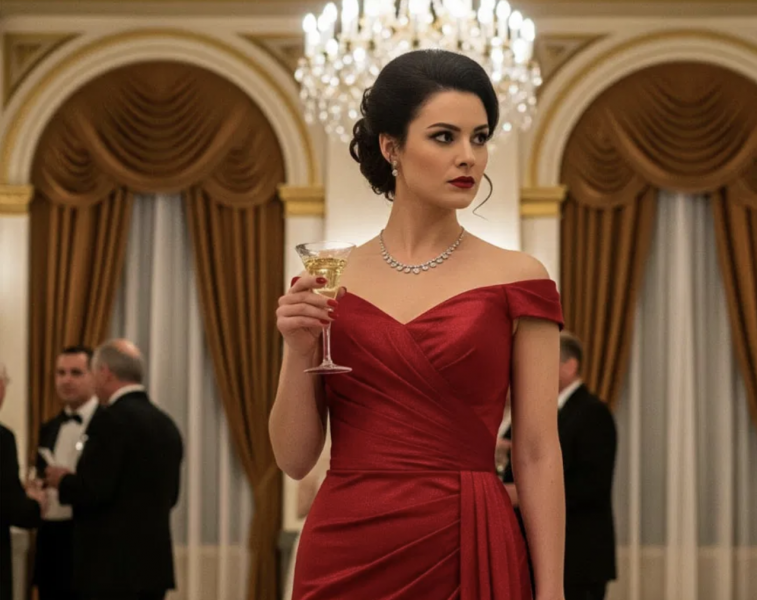
She didn’t answer. She pointed at the birthmark. Then, in a voice I’d never heard from her in 15 years of friendship, she said, "That’s not possible. I’ve seen that exact mark before… years ago, when Daniel used to jog with you in the summers, both of you in shorts."
I didn’t know what that meant. But Marcus did.
I was still shaking. My body was raw, the blanket around my shoulders doing nothing, and I watched my best friend fall apart in front of me without understanding why.
Marcus had gone pale, no longer confused but terrified.
Rachel immediately grabbed her phone and made a call.
"Get your wife on the line," she said. "She deserves to see this."
Nearly 30 minutes later, a young couple rushed into the room.
Rachel turned on them the second they walked in.
"How could you?" she demanded, her voice breaking with every word. "That’s your baby, Daniel. Only you have that mark on your thigh."
The man, Daniel, opened his mouth but nothing came out.
It was Marcus who spoke first, and when he did, it came out like something he’d been hiding behind his teeth for years.
"I had a vasectomy," he admitted, facing Rachel. "Before we ever talked about kids. When you brought up IVF, I panicked. I didn’t tell you. I used my brother Daniel’s sample instead of my own." He swallowed hard. "I thought it wouldn’t matter. It was still your egg."

The silence that followed was the loudest thing I’ve ever experienced in a hospital room.
Rachel made a sound that wasn’t laughter or sobbing but was somewhere in between, a terrible in-between. "You let me believe this baby was ours," she snapped. "For nine months, you let me believe..."
"I donated," Daniel interrupted, his voice defensive and cracking. "He told me you agreed. He said it was a family decision."
Claire, Daniel's wife, looked at him as if she were seeing a stranger’s face in place of the familiar one. "You donated your sperm?" she whispered.
"He said you knew," Daniel repeated, but now with less conviction.
Rachel shook her head slowly. "I can’t raise a baby who’s the embodiment of a lie. Every time I look at him, I’ll see exactly what you did."
She walked out of the ward. I called her twice. The door slammed shut behind her.
I turned to Marcus. "You let me carry this baby for nine months without telling us the truth?"
"I'll fix it," he said weakly. "I’ll sort everything out."
Then he left too. Daniel and Claire followed, arguing quietly down the hallway.
And I was left alone in that hospital bed with a newborn in my arms, a baby no one had claimed, and one question that kept circling: If they don’t take him, who will?
I was discharged three days later.
My mom was already living with us, helping with my kids, Mia and Caleb, while I worked. She stood in the doorway that afternoon holding both of them, gazing at the baby in my arms with that particular expression she wears when she’s right but doesn’t want to say it out loud.
"You were already barely keeping your head above water," she muttered. "And now this."
"I carried him for nine months, Mom," I said. "He’s not disposable because adults made a mess."
She shook her head, but she stayed. She got up for 3 a.m. feedings when I couldn’t move and didn’t say another word about it, which in itself was a form of love.
Rachel didn’t call. Didn’t text. Marcus did. He sent diapers, formula, and a box of baby clothes still in their packaging. All of it came in cardboard boxes on my porch, like guilt disguised as logistics.
One night, maybe a week in, I was rocking the baby in the dark at 2 a.m., and I just said it out loud to the empty room:
"Justin."
It was the name Rachel had chosen at the 20-week ultrasound. "Justin," she had whispered with her hand flat against my belly. She’d been so certain, so joyful.
The name still fit him—this small, serious, warm-breathed little person who had absolutely no idea of the mess he had been born into.
Mia and Caleb started calling him baby brother three days in, and I stopped trying to correct them.
I heard through mutual friends that Rachel had gone back to work.
I didn’t reach out. I didn’t know how, and I had enough to handle between two kids, Justin, and the job I had returned to with reduced hours.
One afternoon, I ran to the supermarket for formula, Justin strapped to my chest in the carrier. I turned down the baby aisle and found Rachel standing there.
She was staring at a row of formula cans like they had asked her a question she didn’t know how to answer.
I didn’t announce myself. I didn’t say her name. I just walked past, adjusting Justin in the carrier, and he made that small, burrowing noise he always made when he was content.
A woman nearby glanced over and smiled. "He’s absolutely beautiful."
"Thank you," I said.
Rachel slowly looked up.
She saw Justin’s face first. Then the way he’d tucked himself against me, fingers curled into the fabric of my shirt, completely at ease the way newborns are when they trust the person holding them fully.
Rachel’s eyes filled with tears before she could stop them. But she turned her cart and walked to the other end of the aisle without saying a word.
Two weeks later, I made a decision.
Waiting wasn’t working. The silence was only hardening, and Justin deserved a name that was spoken in front of the people who loved him, not just whispered to him in the dark.
I texted Rachel: "We’re officially naming him Justin on Saturday. I thought you should know. You don’t have to come."
No reply.
I set up a small gathering at my house: my mother, a couple of close friends, and my neighbor who had brought meals for three weeks straight. Nothing elaborate. Just people who’d shown up.

Marcus arrived. So did Daniel and Claire, who looked like they'd been arguing for two straight weeks and had reached a fragile truce.
I was quietly told at the door that Rachel wasn't coming.
I nodded and went to pick Justin up from the bassinet, and he immediately grabbed my finger, as he always did, which still moved me every time.
That's when the doorbell rang.
Everyone in the room froze in that particular way people do when they’ve all been hoping for something they didn’t want to say aloud.
I opened the door.
Rachel was standing on the porch. She looked thinner, tired in a way that sleep wouldn’t fix. But her eyes were clear, and she was standing straight.
She had come. That was the thing that mattered.
"I wasn’t ready before," she said. "I’m not sure I am now. But I’m here."
I stepped back and let her in without saying a word.
She moved through the room slowly, and people parted for her the way people do when they sense that a moment is happening and they don’t want to interrupt it. Marcus watched her from across the room. She didn’t look at him.
She looked at Justin.
I walked over to her and held him out, and she took him the way you take something you’ve been trying not to want, carefully, as if she were half-expecting it to hurt.
Justin went quiet the second he was in Rachel’s arms. He stopped fussing and turned his face toward her collarbone, simply still, like he recognized something.
Rachel’s breath caught on an exhale. "He knows my voice," she whispered. "I talked to him every week. He knows me."
"He does," I said.
She pulled him closer, pressed her face into his hair, and cried in a way I hadn’t seen her cry since her first miscarriage three years ago in her kitchen.
The betrayal was still there. The anger too. But something else had moved in beside it.
She looked at that baby and finally understood that he wasn’t a lie. He was just a child. And he already knew her voice.
"I named him Justin," I said softly. "Like you said at the ultrasound. You were so sure about it."
Rachel nodded without lifting her head. "It fits," she managed.
It did.
Three days later, I showed up at her door with Mia, Caleb, and a stuffed bear Caleb had insisted on bringing because, in his words, "Justin needs a friend."
Rachel answered, holding him against her shoulder. The sight of it, that specific ease, as if he’d already decided, loosened something in my chest I hadn’t realized was still clenched.
"Come in," she said softly.
Mia and Caleb blew past her immediately, beelining for the living room with the comfortable confidence of children who’ve been welcomed somewhere before.
Rachel and I stood in the doorway for a moment. Justin was between us in the most literal way.
I saw it cross her face: the gratitude, the apology, and the complicated love forged by something that might have broken a weaker friendship.
"Thank you," Rachel whispered. "For not giving up on him. Or on me."
"You showed up, Rachel. That’s the part that mattered."
Marcus and Rachel were in counseling. Daniel and Claire were too. None of it was clean.
But Justin was in his mother’s arms. Mia and Caleb were raiding Rachel’s refrigerator in the background. And my best friend was looking at this baby the way she’d looked at ultrasound photos, like he was something she’d been waiting for.
Justin was never the betrayal. He was just the truth that nobody had been brave enough to face until a seven-pound baby with a birthmark on his thigh made it impossible to look away.
Secrets nearly destroyed three families that day. A baby stitched them back together, one tiny fist at a time.