The Treehouse promise: A mother's journey through grief, memory, and the quiet magic of a sister’s goodbye
When I reviewed the security footage that night, my hands were trembling. There was Max, waving at the window like always. But a few meters from the old treehouse, something moved in the shadows. A figure that made my heart stop.
Life was perfect. Once.
Richard and I had built something beautiful together. We had two wonderful children and a house filled with laughter.
Our daughter Ellie was twelve, all arms and legs and endless questions about everything. Our son Max was eight. He was Ellie’s faithful shadow, hanging on to her every word.
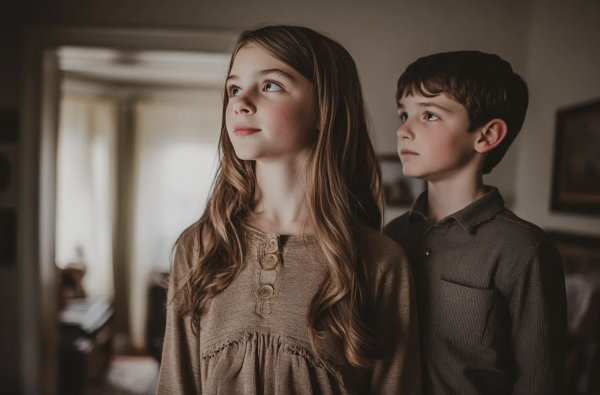
We were the kind of family people envied—weekend soccer games, family movie nights, and beach vacations where the kids built sandcastles until the sun went down. Richard used to joke that we were living in a sitcom. And honestly, it sometimes felt that way.
Until everything changed.
It started off almost insignificantly: Ellie began complaining about being tired all the time.
She’d come home from school and collapse on the couch, saying her legs hurt. We thought it was growing pains—normal for her age.
“Mom, I don’t feel good,” she’d say.
“You’re growing, sweetheart,” I’d reply. “Your body’s working hard.”
But the fatigue got worse. Then came the bruises. Purple marks on her arms and legs that she couldn’t explain.
“I don’t remember bumping into anything,” she’d say, staring at the dark spots in confusion.
Richard and I would exchange worried looks over dinner, but we kept telling ourselves it wasn’t serious. Kids get tired. They bruise easily. We were probably just being paranoid parents.
Then came the doctor’s appointment.
“We need to run some tests,” Dr. Martinez said gently. “There are a few things we want to rule out.”
“Rule out.” Such an innocent phrase, yet so heavy when you’re sitting in a sterile white office, holding your daughter’s hand.
First came bloodwork. Then more tests. Bone marrow biopsies. CT scans. Every appointment felt like sinking deeper into a nightmare we couldn’t wake up from.
“Acute lymphoblastic leukemia,” the oncologist said.
Three words that shattered our perfect world into a thousand pieces.
“Am I going to be okay?” Ellie asked, her voice barely a whisper.
“Yes,” I said instantly, gripping her hand. “Yes, my love. We’re going to fight this together.”
And we fought. God, how we fought.
Hospital stays became our new normal. Chemotherapy schedules replaced soccer practice. Instead of school assignments, we had medication charts and clinic visits. Ellie’s long, beautiful hair fell out in clumps, but she wore her bald head like a crown.
“I look like a warrior,” she’d say, striking superhero poses in the hospital mirror.
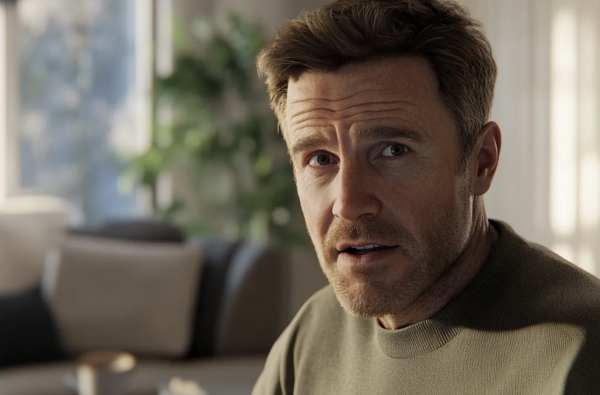
Richard was incredible through those months. He slept on those awful hospital chairs, learned to give injections, and could make Ellie laugh even on her worst days. He brought Max to visit her every afternoon after school, and the three of them would snuggle up on that tiny hospital bed to watch movies on the tablet.
“We’re still a family,” Richard would whisper to me in the hallway at night. “We’re going to make it.”
I believed him. I had to believe him.
For eight months we lived in that world of treatments, hope, and small victories. Ellie’s levels would improve, then crash. She had good days—almost normal ones—and others when she couldn’t even lift her head.
But she never gave up. Not once.
“I’m going to beat this stupid cancer,” she’d tell anyone who would listen. “It picked the wrong girl.”
We all believed her. She was so brave, so determined. How could cancer win against someone with that much fight?
But it did.
On a Tuesday morning in March, with the spring sun streaming through the hospital window, Ellie lost the battle. She fought with everything she had, but in the end, cancer took her anyway.
And the pain broke something in our family that I don’t think will ever fully heal.
Richard buried himself in work, staying late at the office. Max became quiet and withdrawn, spending hours in his room with the door closed.
And me… I just tried to survive each day without falling apart.
Richard had been especially close to Ellie.
She was his little girl, and their bond was so deep that I sometimes felt a twinge of envy. Losing her devastated him in ways I’m still trying to understand.
Max struggled too, in his eight-year-old way. He had lost his big sister, his protector, his best friend.
The house felt too quiet without her constant laughter. It was heartbreaking.
We were all drowning in grief, trying to figure out how to live in a world that no longer made sense.
I was just beginning to function again when I noticed something strange.
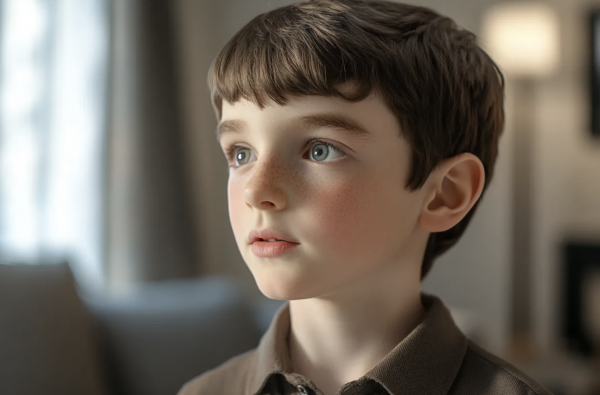
Every evening at dusk, Max would walk to the back door, look out into the yard, and wave. Silently, with a small smile.
At first, I didn’t think much of it. Kids have their quirks, right? Maybe he was pretending. Maybe it was just his way of coping. We all had our ways of managing the grief.
But after a week, curiosity got the better of me.
“Hey, sweetheart,” I asked one evening, walking up beside him as he looked through the glass door. “Who are you waving to?”
He didn’t hesitate. Didn’t turn or act embarrassed, like a child usually would.
“To Ellie,” he said, completely matter-of-fact.
My heart dropped into my stomach.
“Ellie’s not… here anymore, honey. You know that, right?”
He finally turned to look at me.
“She is.”
The certainty in his voice chilled me. This wasn’t a game or fantasy. He truly believed it.
“Max, what do you mean?”
“She’s out there,” he said, pointing toward the old treehouse Richard had built years ago. “She waves back.”
Something about it unsettled me deeply.
That night, after Max was asleep, I sat in the dark living room staring into the yard. The motion-activated lights flicked on, casting long shadows across the grass. Everything looked normal. Empty. As it should be.
But I couldn’t shake the feeling that something was off.
Then I remembered the security cameras.
Richard had installed them last year after a neighbor’s house got broken into. We had cameras covering the front yard, the driveway, and the back patio. If Max was seeing something, maybe the footage would help me understand.
With trembling hands, I opened the app on my phone. I found yesterday’s date and skipped ahead to 6:30 p.m.—about the time Max usually waved.
And I couldn’t believe what I saw.
There was Max, standing at the window, waving. Just like I’d seen.
But a few meters from the treehouse, something moved in the shadows.
A figure. A silhouette.
It looked like Ellie. Same height. Same posture, with her hip tilted just slightly. And she was wearing something that nearly stopped my heart:
Her favorite sweater. The purple one with the bright star on the front. The one she never took off before she got sick.
I watched, frozen in horror, as that figure raised a hand and waved back at Max.
Was I imagining things? Was my grief tricking me?
I watched the video again. And again.
Each time, the same thing: Max waving. The figure returning the gesture.
I sat there for two hours, replaying that 30-second clip over and over, eyes burning.
Something was happening in our backyard. Something I couldn’t explain. And somehow, my little boy was at the center of it.
The next night, when Max went to his usual spot by the window, I was ready. Instead of watching from a distance, I sat beside him on the floor.
“Max,” I said softly, “are you really waving to Ellie?”
He nodded, eyes still fixed on the yard.
“She comes every night now.”
“Can you… can you show me?”
“Come,” he said.
He led me outside through the sliding glass door. We walked across the grass until we stood beneath the treehouse.
“This was our magic place,” he whispered.
My throat tightened. They’d spent so many hours up there—playing, telling stories, sharing secrets.
“Before she got really sick, Ellie told me she’d always be here,” he went on. “That if I waved every night, she’d know I remembered her. She said… she’d find a way to wave back.”
“She promised, Mom. She said dying doesn’t mean you disappear forever. It just means something different.”
That was so Ellie. She’d always had an old soul—wise beyond her years, even at twelve.
Then, behind the treehouse steps, I heard a rustle. A figure stepped from the shadows, and for a moment, I thought it was her. My knees nearly gave out, and I had to lean on Max to stay upright.
But it wasn’t Ellie.
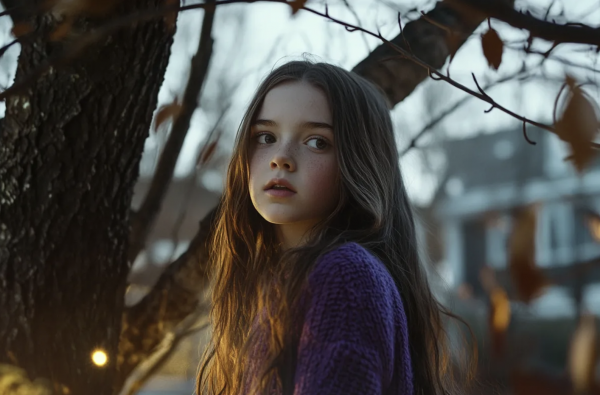
It was a girl her age, with long brown hair and nervous eyes. She looked familiar, but I couldn’t place her through the fog of shock.
“Hi,” she said quietly, stepping forward shyly. “Sorry if I scared you.”
Then it clicked.
“Ava?”
Ava nodded, embarrassed and worried.
“I was Ellie’s best friend at school. I know this is weird, but I can explain.”
“You’re the one in the video,” I said. “The one Max has been waving to.”
“Yes.” She twisted her hands nervously. “Ellie asked me to come sometimes. Before… well, you know. She said if I did, Max would feel better knowing someone was still looking out for him. So I come for a little while after dinner. My mom thinks I’m at the park.”
She tugged on the purple sweater she was wearing.
“She gave it to me before her last trip to the hospital. Said it would help me remember her when I missed her too much.”
And that’s when I broke.
I sat down in the grass and sobbed. Everything I’d been holding in came pouring out like a flood.
Max wrapped his little arms around me and held on tight.
“It’s okay, Mom,” he whispered. “Ellie’s not all the way gone. She’s just different now.”
Ava sat beside us, tears on her cheeks too.
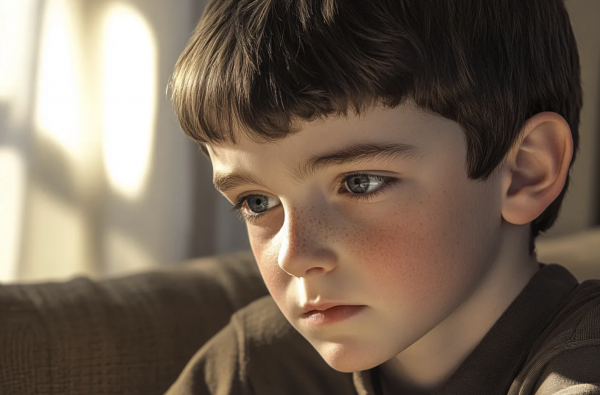
“She asked me to look out for Max if anything happened,” she said. “She was worried he’d be too sad.”
Since then, it’s become our nightly ritual.
Every evening, Richard, Max, and I go to the treehouse together as a family. Sometimes Ava joins us too. We wave to the sky, sit in the grass, tell stories about Ellie, and remember all the ways she made our lives better.
And somehow, little by little, we’re healing. One silent wave at a time.
The pain hasn’t gone. I don’t think it ever will. But it no longer feels like it’s drowning me—it feels more like something precious I carry with me. A reminder of how much love we shared, and how lucky we were to have had her, even for a short while.
Max still waves every night.
And now, so do I.