The year that changed everything: A grandmother’s journey from loss to love
Seven years ago, my daughter left her two young children at my doorstep, promising to return in a year. I believed her. But that year turned into silence. Now, suddenly, she’s back, demanding her kids. She has no idea how much everything has changed, or how hard it will be to take them back.
Do you know those mornings that start out normal, until they suddenly become the day that splits your life in two? Seven years ago, I woke up on one of those mornings.
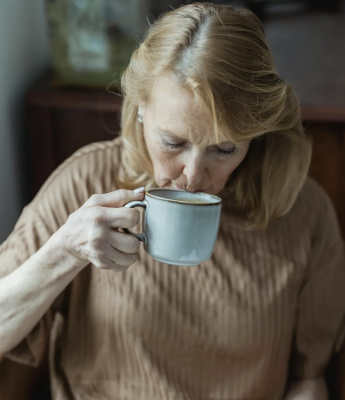
Thick fog hung over my porch like a gray blanket, and there she was — my daughter, with a suitcase in one hand and the other gently stroking my gray hair, as if I were the child who needed comfort.
“We’re moving to the city to start a business. We need you to watch the kids until things settle down,” she said. “Just for a year.”
Behind her legs, two little faces looked up at me: Emma, six years old, with pigtails that never looked quite right, and Jake, eight, clutching a worn-out stuffed elephant.
Their eyes held a deep uncertainty.
My daughter kissed my cheek, hugged each child with a squeeze three seconds too short, and walked toward the car where her husband sat, drumming his fingers on the steering wheel.
But when she turned for one last look, there was something in her eyes that didn’t say “See you soon.” It said goodbye.
The kids stood frozen in the hallway, backpacks still on, as if ready to run away at any moment.
I knelt beside them and forced a smile.
“So, I’m going to take care of my grandkids for a year?” I said cheerfully, brushing Emma’s bangs from her eyes. “How lucky am I! That’s 365 days to spoil them with cookies!”
But they didn’t buy my attempts to cheer them up.
At first, it wasn’t so bad. We soon found a routine, and the kids got used to living with me. Their parents called every night, which gave them some comfort.
Then the calls became less frequent.
“Surely they’ll call tomorrow,” I’d say with a smile after each day without word. “Starting a business is hard; they must be tired.”
Weeks turned into months, and I found myself telling the same story over and over. The lie wore thin like a sweater washed so many times you can see right through it.
A birthday passed — Jake’s ninth.
I bought a dinosaur cake and wrote “With love, Mom and Dad” on the card, even though I was alone at the kitchen table while the kids slept.
Then another birthday — Emma’s seventh. This time a ballerina cake, with the same lie written carefully in my neatest handwriting.
After two years, even the phone calls stopped.
No more awkward conversations where my daughter’s voice sounded like it came from another planet.
No belated birthday greetings, no news of the business that had forced them to abandon their children.
Only silence — thick and permanent like concrete.
That’s when I stopped pretending it was temporary and fully took on the role they had abandoned.
Mother, father, nurse, guardian, cheerleader — whatever these kids needed, I became.
They clung to me with the quiet desperation of those left behind, and honestly, I clung to them just as fiercely.
We became a family. Not the one you plan, but the one that grows in the spaces other families leave empty.
I sewed Halloween costumes: a vampire cape for Jake and a witch dress for Emma, which she wore for three years because she loved it.
I shouted until I lost my voice at soccer games, cheering from the sidelines while other parents looked on curiously.
I waited backstage at every piano recital, watching Emma’s fingers stumble over “Für Elise” with the pride of any mother.
I wiped tears, noses, and scraped knees. Helped with math homework that gave me headaches, and listened to teenage dramas that felt catastrophic at the time.
The void left by their parents filled — not with forgetting, but with new memories.
By the fifth year, I no longer checked my phone for missed calls.
By the sixth, I put their school photos in the front of my wallet.
By the seventh, I truly believed that chapter of our lives was closed forever.
Then came that Sunday morning that changed everything again.
I was making pancakes — with chocolate chips Jake loved and Emma pretended to hate but always asked for more.
The knock on the door echoed through the house like thunder. I wiped my hands on my apron, flour still on my fingers, and opened it.
There they were.
My daughter looked older, somehow sharper. Her husband stood behind her, drumming his fingers with the same energy as seven years ago.
Now they looked like successful people, dressed in expensive clothes, confident postures, and the shine that comes from having life figured out.
“Mom,” she said as if we’d spoken yesterday. “We’ve come to take the kids.”

The casual tone — like picking up dry cleaning left too long — stabbed me like a dagger.
“Excuse me?” My voice came out smaller than I wanted.
“The business is stable now,” her husband cut in, checking his watch. “We have space. You did your part.”
Like raising their children was a task I checked off a list.
“I did my part?” I repeated, voice breaking. “You act like I only watched the kids for a weekend. These kids have a life here. A family here. Friends, schools, routines—”
My daughter’s face scrunched up the way it used to when she was sixteen and I wouldn’t let her stay out past midnight.
“Mom, don’t make this dramatic. You always overreact to everything.”
I stood there, flour on my hands, listening as my daughter reduced seven years of my life to an overreaction. The cold reality hit me like ice water: they hadn’t come back out of love.
They came back for possession.
The Rebellion
The next day, they returned with suitcases and cardboard boxes, walking through my house like they owned it.
But when they started going upstairs toward the kids’ rooms, Emma appeared at the top, fists clenched, thirteen years old and fierce as a wildcat.
“We’re staying!”

Jake, now fifteen and tall enough to look his father in the eye, stood beside his sister.
“We live here. Grandma is our mom now. This is our home.”
I held my breath, waiting for sweet words, bribes, or parental authority that would break their resistance.
But their mother’s face turned furious.
“Don’t be ridiculous! You’re coming with us. This is not a choice!”
“If you try to take us,” Jake said flatly and calmly, proud and sad at the same time, “we’ll call the police.”
“How dare you talk to me like that?” my daughter snapped, more wounded ego than motherly concern.
“They left us,” Emma said, voice breaking for the first time since they showed up. “They didn’t even call on our birthdays. They can’t be our parents now just because it suits them.”
Her husband muttered something about spoiled kids under his breath and stormed out the front door.
My daughter stood frozen, staring at her kids like strangers speaking another language.
When Emma and Jake passed by without even looking at her, heading back to their rooms to continue the lives they’d built without her, she finally understood.
This wasn’t about legal rights or biological ties. It was about love — and she’d lost her right to it seven years ago.
She turned and left too.
That was eight years ago.
They never called again, sent cards, apologies, or explained what kind of business was worth abandoning their children for.
I learned to stop crying for the daughter who never really came back.
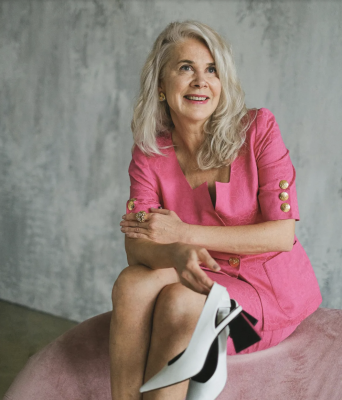
The woman who appeared at my door wasn’t the girl I raised — she was someone completely different, someone capable of walking away from love twice and feeling justified both times.
Instead, I raised two young adults who chose love over biology, and who understood that family is more than shared DNA.
My grandchildren are now young adults.
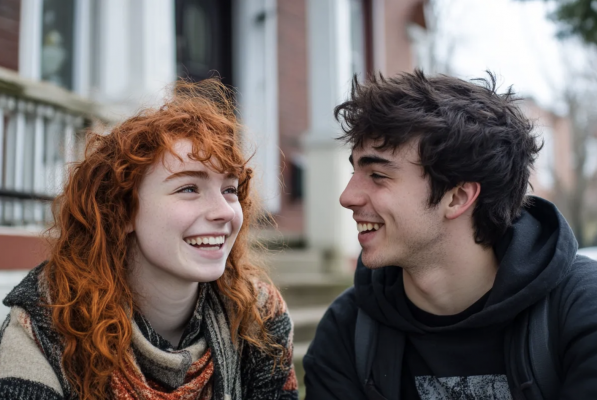
Emma is in college studying to be a teacher. Jake works and saves money. They call me every day, even when they’re busy.
We share coffee in the mornings and gossip at night, like the family we chose to be.
When someone asks about their parents, they simply say, “Grandma raised us,” with a pride that makes my heart swell with happiness.
I may have lost a daughter through all of this. But I gained two incredible human beings who remind me every day what true family means.
And you know what? I wouldn’t change a single thing.