When Mara’s backyard garden became the neighborhood’s free-for-all
When Mara’s humble garden became the target of entitled neighbors, she had no choice but to draw a line they couldn’t ignore. What started as quiet frustration soon turned into something far more defiant. In a world where boundaries are blurred, Mara learned that sometimes protecting what matters feels a lot like rebellion.
My name is Mara, and I grow vegetables so my family can eat.
Not because it's trendy. Not for social media likes. Simply out of necessity—pure and urgent. We’re not wealthy, not even close, but we do what we can to get by. Every tomato, every carrot, every cucumber in that patch behind my house is the result of sore knees, long mornings, and whispered prayers at night that the squirrels don’t beat us to the harvest.
If I could afford a proper fence, trust me, I would’ve put one up long ago. But fences aren’t free. Neither is food. And while people love to romanticize the whole “farm to table” dream, let me tell you—when your family’s table depends on your hands in the dirt, there’s nothing cute or poetic about it.
It all started with something small: a “community pantry” my neighbor Julián set up at the end of his driveway. Just some wooden boxes, painted cheerfully, filled with spare canned goods and dry items.

He called it *The Sharing Shelf*. Posted a selfie with it on Facebook and a paragraph about kindness and unity—things that always sound better when you're not the one paying for them.
I thought it was a nice gesture. But then people started treating my garden like an extension of that idea.
At first, it was small—missing cucumbers, a few radishes pulled up and left limp and brown like discarded wrappers. I tried to blame animals—maybe raccoons or desperate squirrels—but the neatness of the theft gave me a pit in my stomach.
I even doubted myself. Maybe I miscounted. Maybe I harvested more than I remembered.
Until I saw her.
A woman lifted her toddler—maybe three years old—over my low fence like she was helping him onto a playground. He landed right in my kale bed, laughing with joy. His little shoes crushed three perfect plants.
She looked me dead in the eyes as I stood on the porch with the hose in hand. And instead of backing off or apologizing, she waved cheerfully.
“Hurry up, Henry! Get the red ones!”
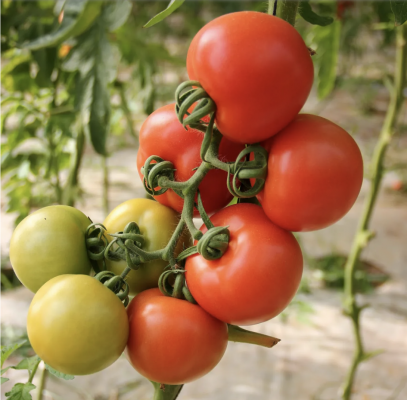
The “red ones” were my tomatoes. My dinner. My fresh pasta sauce—in the hands of a child.
I froze, somewhere between disbelief and a rage that tightened with every second.
After that, I put up signs. Big ones. Clear and impossible to miss.
PRIVATE PROPERTY — DO NOT TOUCH
I added a second, smaller fence—not strong enough to stop someone determined, but clear enough to draw a line. A visible boundary. A call for respect.
But to the same people who ignored me, the signs became invisible. The fence, just decorative. The message? Dismissed.
No one cared. Not about the effort, not about the food I was trying to grow.
I even hung a tarp on the street-facing corner to block the view—hoping if they couldn’t see the garden, they’d stop treating it like a public display. That lasted exactly three days. Someone moved it.
One afternoon, I caught a middle-aged man tiptoeing through my squash plants like a cartoon burglar. He had a Bluetooth earpiece in and a fistful of cherry tomatoes.
I shouted. He jumped—but didn’t apologize.
“I was just grabbing a few,” he said. “It’s our anniversary tonight—I’m making my wife a cherry tomato salad!”
“This is my garden!” I snapped. “Get out!”
Then there were the teens who slipped in at sunset. Empty soda cans left beside my lettuce rows. They lounged in my garden like it was a park, laughing as they trampled my work.
The next day, I marched to Julián’s door, still shaking with frustration.
“I get it, Julián,” I said, arms crossed, dried mud on my gloves. “Your pantry is a nice idea. But it’s encouraging people to take from everywhere—including my garden. And that’s not okay.”
Julián smiled, but it didn’t reach his eyes. A wide, toothy, condescending grin.
“Can’t you share?” he asked.
I stared at him, stunned.
No. I can’t share food with people who don’t respect boundaries.
“I grow vegetables to feed my family,” I said through clenched teeth. “We’re not swimming in money or extra food, Julián. If I had enough to give away, I would. But I don’t.”
“Come on, Mara, it’s just a few tomatoes…” His smile wavered, trying to stay polite but clearly annoyed that I wouldn’t roll over.
I bit my tongue and walked away—before I said something I couldn’t take back.
Because the truth is, it wasn’t just about vegetables. It was about **respect**. About being told again and again that my effort didn’t matter.
It was about early mornings spent digging with aching wrists while my kids slept. About hours watching YouTube videos on composting and soil pH because I couldn’t afford to fail. About crying on the driveway one weekend when a busted hose drowned half my seedlings, and I had to start over. About grocery bills that didn’t add up and the impossible choice between a bag of oranges or a bottle of oil. About sunburned afternoons hunched over bean rows that might never sprout.
And after all that—every blister, every sacrifice—I was being told I should be *grateful* I had enough to give away.
That didn’t sit right.
But the next morning, I discovered half my zucchini had been stolen. Uprooted. Gone.
That was the final straw.
I spent the next week simmering in fury. Sleepless nights, replaying every smug smile, every missing vegetable. The worst was the Facebook group—neighbors posting photos taken through the fence, tagging me with nasty comments:
“If she has that much, she can share a little. At least with a family in need.”
“Wow, didn’t know Mara could be so selfish.”
“She used to be a social worker, can you believe that? Sometimes you think you know someone…”
It was like they thought I was hoarding during a famine. Which couldn’t have been further from the truth.
I considered installing a camera. But then I remembered the old irrigation system in the shed—automated, weather-sensitive, smart. I hadn’t used it in over a year, not since a software glitch drowned my strawberry patch.
But the motion sensors? They still worked.
So I spent a full day recalibrating. Tweaked the nozzles, redirected the pipes. Set the sensitivity just right. And waited.
The first victim was a woman with a yoga mat slung over her shoulder. She leaned over the fence to grab a pepper and—fwoosh!—a high-pressure jet hit her square in the chest. She shrieked, stumbled back, and fell in the mulch. Her mat? Soaked.
Next came a man in cargo pants, reaching for my carrots. Hiss… blast! He flailed, slipped, and crawled out of the garden muttering curses.
After that, the visitors mostly stopped.
*Mostly.
A few still tried. But word got around. Fast.
The Facebook group lit up:
“She’s a maniac with a hose—watch out!”
“There’s a water trap in Mara’s garden. Totally uncalled for!”
A few days later, Julián cornered me at the mailbox.
“This is harassment,” he said loudly, making sure others could hear.
“It’s just water,” I replied. “If people didn’t trespass, they wouldn’t get wet.”
“You’re ruining the spirit of this neighborhood,” he snapped. “You’ve become the cranky woman no one wants to deal with.”
“I’m defending my home,” I said. “And I don’t care if that makes me unpopular, Julián. You should’ve respected me. All of you should have.”
Because if this neighborhood actually cared about community, they’d ask before taking. They’d read the signs. They’d know the difference between generosity and exploitation.
Of course, Julián didn’t like that. He stopped looking me in the eye after that.
But my garden began to recover. Slowly, cautiously, like it still didn’t trust the peace. Tomatoes ripened without vanishing. Peppers stayed on the vine.

No more broken stems. No more footprints in the mulch. My youngest, who hadn’t mentioned the garden in weeks, finally asked for salad again.
And this time, I could say yes.
One afternoon, while I was pulling a stubborn weed, I heard soft footsteps on the gravel. I stood slowly, bracing myself for another confrontation.
But it wasn’t a trespasser. It wasn’t even an angry neighbor.
It was a girl—maybe twelve or thirteen—with a small paper bag in her hands. She stayed on her side of the fence. Didn’t even touch the line.
“I just wanted to say sorry, ma’am,” she said quietly, not meeting my eyes. “My brother took stuff from here… a lot of stuff. My mom made him say sorry, but… I don’t think he meant it.”
“What’s in the bag?” I asked, caught off guard by her honesty.
“Cookies,” she shrugged, suddenly looking very young. “My mom and I baked them.”
I took the bag—not because I needed cookies, but because she’d been kind. Because she stayed outside the fence. Because she looked me in the eye and told the truth.
She understood.
As she turned to leave, she paused and looked back.
“I think what you did with the sprinklers was awesome,” she said. “My brother said you were crazy… but I think you’re really smart.”
“Thanks,” I smiled.
That night, I cooked with my husband. I finally felt happy, and I wanted to feed that joy.
“Seems like the peace is finally back,” he said gently.
“They thought I was crazy,” I nodded.
“Well, a little,” he teased. “But in the good way.”
“I just wanted to protect something that matters,” I said, leaning on his shoulder.
“You did,” he replied.

My garden still isn’t perfect. Weeds show up. Rows grow crooked. Some days the spinach wilts under the sun, and rain never comes.
But it’s mine. And finally, it’s respected.
People still slow down as they pass, but they stay on the street. They read the signs. They understand the limits.
Julián eventually moved his pantry to another block. Posted a new photo, gave a new speech about kindness. I never liked him much. But I didn’t hate the pantry—it was never the problem.
The problem was entitlement.
If someone had simply asked—really asked—I might have handed over a tomato or two with a smile.
But instead, they took. Again and again.
And I had to show them that taking without asking has consequences.
Even if those consequences come with a blast of cold water and a bruised ego.

Now I’m saving up for a greenhouse. And I’ll keep feeding my family—with food I grow with my own hands.