When respect is earned: A stepdaughter’s lesson in kindness and boundaries
Do you know that feeling when someone walks all over you without a second thought?
I’m Diana, and for three months, I was treated like a maid in my own home. My adult stepdaughter left trash all over the place and acted like I was born just to serve her. But I made sure she learned that patience and kindness have limits.
My husband Tom and I built something beautiful together over more than 10 years: a cozy home on Redwood Lane, where laughter echoed down the halls and Sunday mornings meant pancakes and crossword puzzles.
My son Rick, from my first marriage, was thriving at college. And Kayla—Tom’s 22-year-old daughter from his previous marriage—well... she pretty much existed on the edge of our world.
I tried. God knows I tried. Birthday cards with heartfelt messages, invites to girls’ nights that went unanswered. Gentle questions about her dreams met only with shrugs.
Kayla wasn’t mean. She was worse: indifferent… like cheap wallpaper you learn to ignore.

But when she called Tom that rainy Tuesday afternoon, her voice breaking with tears, asking if she could come home “just for a little while,” my heart broke.
“Of course, honey,” Tom said without even looking at me to check. “You’ll always have a place here.”
I squeezed his hand and smiled. What else could I do?
Three days later, Kayla arrived like a storm in designer boots, dragging three suitcases, two big bags, and a duffel bag that looked like it could fit a small family.
She brushed past me without a word and claimed the guest room—the one I’d carefully decorated with soft blues and fresh flowers.
“This’ll do,” she declared, dropping the bags with bangs that made the picture frames rattle.
“Welcome home, sweetie!” I said, waiting in the doorway. “I made your favorite casserole for dinner.”
She looked up from her phone. “Oh, I already ate. But thanks.”
Her portion of casserole sat untouched in the fridge for a week before I threw it out, hands trembling with disappointment.

The signs showed up within days. Kayla left a bowl of cereal on the coffee table, milk forming a thin film on top. Her makeup wipes scattered around the bathroom sink like confetti after a sad party.
I found myself trailing her mess, picking up the pieces of a life she left behind without a care.
“Kayla, sweetheart,” I said gently one morning, holding up an empty water bottle I found wedged between the couch cushions. “Could you please put this in the recycling?”
She looked up from her phone, blinked slowly, and shrugged. “Sure. Whatever.”
But the bottles kept appearing… under the sofa, on windowsills. Rolling across the floor like tumbleweeds in a ghost town.
“She’s just settling in. Give it time, Di,” Tom shrugged when I mentioned it.
Two weeks became a month, and the clutter multiplied like bacteria in a petri dish. Amazon boxes tossed by the door—open, empty, and abandoned. Plates migrating from the kitchen to every surface, forming little colonies of neglect.
One night, I found a banana peel under the couch cushion. A real, brown, sticky banana peel—like something out of a cartoon.
“Kayla,” I called, “can you come here for a second, sweetheart?”
She appeared in the doorway, impeccably dressed in a way that made my heart ache. “She’s just like her mother!” Tom always said.
“What’s wrong?” she asked, not moving from the frame.
I held up the banana peel. “I found this under the couch.”
She stared at it, then at me. “So?”
“So? Kayla, this isn’t… it’s not normal.”
“It’s just a banana peel, Diana. Relax.”
Just a banana peel, right. Like the growing pile of neglect wasn’t slowly suffocating me.
“I’m not trying to be difficult,” I said. “I just… need you to help keep our home clean.”
She sighed—a sound that cut through me like glass. “Okay. I’ll try to be more careful.”
But nothing changed. If anything, it got worse.
The breaking point came on a Sunday that started so promising. Tom had left for his weekly golf game with friends, kissed my forehead, and promised to bring Chinese food for dinner. I spent the morning deep cleaning the living room.
I vacuumed, dusted, and made everything shine like it did when it was just Tom and me.
I stepped into the backyard to pick some cherry tomatoes, humming an old song Rick loved. For a moment, I felt like myself again. Then I went back inside… and froze.
Takeout bags from the night before were scattered across the coffee table like casualties of a battle. Soda cans abandoned on the wood floor, leaving rings that would surely stain. Bright orange Cheeto dust embedded in the cream-colored carpet I’d saved for months to buy.
And there was Kayla, feet resting on my spotless coffee table. Swiping her phone with the casual indifference of someone who’d never bothered to clean up after herself.
She caught my eye and smirked. “Oh, hi Diana! I’m starving. Can you make those pancakes? The ones you made for my birthday last year.”
“Excuse me?”
“Pancakes! I’m craving something homemade, and yours are pretty good.”

I stared at her for a long moment, taking in the destruction of my morning’s work, the casual cruelty in her ask, and how she looked at me like I only existed for her convenience.
“You know what?” I said. “I think I’m out of pancake mix. Order food!”
That night, lying next to Tom’s gentle snores, I made a decision. If Kayla wanted to treat me like hired help, fine. But she was about to learn that even hired help can quit.
The next morning, I began my experiment. Every dish left out stayed exactly where it was. Every wrapper, empty container, and proof of her existence in our home remained untouched by my hands.
By Tuesday, the coffee table looked like a landfill.
“Diana?” Kayla shouted from the living room that afternoon. “Did you forget to clean here?”
“Oh,” I said, peeking my head out. “Those aren’t my dishes.”
She blinked. “But… you always clean them.”
“Do I?” I asked, tilting my head like I was genuinely confused. “I don’t remember agreeing to that.”
Tom came home to find Kayla grumbling as she loaded the dishwasher for the first time since moving in.
“What’s going on?” he asked me quietly.
“Just encouraging a little independence.”
He frowned but didn’t push.
By Thursday, I’d moved to phase two of my plan. Every piece of Kayla’s trash—empty chip bags, used tissues, rotting fruit—got a special delivery back to her room.
I carefully wrote her name on a Sharpie and left it on her pillow with a note: “Thought you’d want this back! Love, Diana.”
The first time she found her trash arranged in her room like some weird art installation, she stormed downstairs.
“What the hell is this?” she demanded, holding up a moldy apple core.
“That’s yours! I didn’t want to throw away something important to you.”
“It’s trash, Diana!”
“Really? Then why’d you leave it under the sofa?”
She opened her mouth, closed it, then opened again like a fish gasping for air.
“This is crazy!”
“Hmm! Guess it is.”
The final blow came the following Tuesday. After finding a week’s worth of Kayla’s mess all over the house—candy wrappers, banana peels, half-eaten sandwiches in various stages of decay—I got an idea.
Her work lunchbox was on the counter. She grabbed it without looking and ran out like usual.
I carefully filled it. I arranged each piece of trash from the week like some twisted bento box. Moldy apple core here, empty chip bag there, and a used makeup wipe folded neatly in the corner.
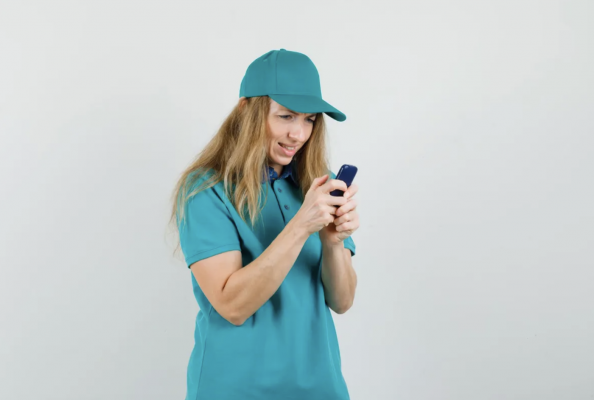
At 12:30 p.m., my phone buzzed with messages:
—WHAT THE HELL, DIANA?!
—YOU PUT TRASH IN MY LUNCHBOX!
—EVERYONE AT WORK THINKS I’M CRAZY!
—WHAT’S WRONG WITH YOU??
I typed slowly, savoring every word: “Thought you’d like some leftovers for lunch. Have a great day!”
The silence that followed was beautiful.
When Kayla came home that night, she didn’t slam the door or storm to her room. Instead, she lingered at the doorway, really looking around the house… maybe for the first time since she arrived.
Tom worked late, so it was just the two of us.
“Diana?” she called.
I looked up from my crossword—the same one Tom and I used to do together on Sunday mornings.
“Yes?”
“The living room looks nice.”
I looked around. Yeah, it did. Clean and peaceful, like a home instead of a dump.
“Thanks!”
She nodded and went upstairs. I heard the soft sounds of someone actually putting things away instead of letting gravity take its course.
The next morning, I woke up to find the living room spotless. Her dishes were in the dishwasher. Her clothes folded neatly in a pile by the stairs.
Kayla appeared in the kitchen doorway, hesitant in a way I’d never seen.
“I cleaned,” she said.
“I noticed. Thanks.”
She nodded, grabbed an apple from the fruit bowl, and headed for the door.
“Kayla?” I called.
She turned.
“The pancakes… if you ever want some, just ask nicely. That’s all I ever needed.”
Something shifted in her expression. Not an apology, but something that gave me hope.
“Okay,” she said. “I’ll remember that.”
It’s been two months since the Great Redwood Lane Lunchbox Incident, and while Kayla and I probably won’t braid each other’s hair or share deep secrets, we’ve found something better: respect and kindness.
Now she cleans up after herself. Says please and thank you. She even helped me plant flowers in the front garden, though she complained the whole time about dirtying her nails.
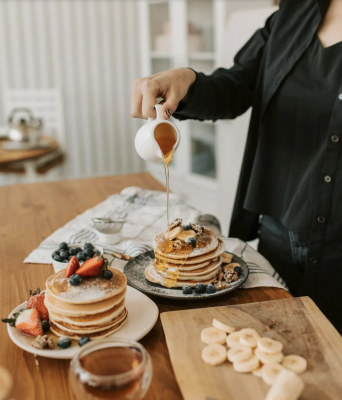
Last week, we made pancakes together… for the first time in months. She ate four and really smiled when she said they were good.
Tom asked me recently what changed, what spell I’d cast to turn his hurricane of a daughter into a human being.
I just smiled and said, “Sometimes people need to see the mess they’re making before they clean it up.”
Some lessons are best learned the hard way. And sometimes, the people who love us enough to teach those lessons have been invisible all along.