

Beauty Sleep: Why Rest and Relaxation Impact Appearance
We’ve all heard the term "beauty sleep," but how much truth is there behind the phrase? While many of us believe that a good night’s rest can do wonders for our skin and overall appearance, the science behind the concept is not as simple as it sounds. Let’s explore the truth behind beauty sleep, how sleep affects your physical appearance, and tips to ensure you wake up glowing.
The Science Behind Beauty Sleep
Sleep is essential for your overall health and well-being, but it’s also crucial for your skin, hair, and even your mood. During deep sleep, the body goes into repair mode, carrying out important restorative processes that promote physical health. Among these:
- Cell Repair & Growth: Growth hormones are released, which help in muscle repair and cellular regeneration.
- Immune System Boost: A strong immune system helps fight infections, keeping your skin and body in top shape.
- Memory & Mental Health: Quality sleep supports brain functions, helping with memory formation and emotional regulation.
- Hormonal Balance: Sleep reduces stress hormones, ensuring your body functions optimally, even at the cellular level.
These vital processes can directly influence your appearance, contributing to healthier skin, stronger hair, and a more youthful look. But how does sleep deprivation impact your beauty?
How Sleep Deprivation Affects Your Appearance
Despite the many benefits, many adults in the U.S. don’t get the recommended seven hours of sleep. Over time, sleep deprivation can lead to noticeable changes in appearance. Here are some common effects:
- Pale Skin & Fine Lines: A lack of sleep can reduce collagen production, which may lead to wrinkles, crow’s feet, and sagging skin.
- Drooping Eyes & Dark Circles: When you’re sleep-deprived, your skin becomes less resilient, leading to puffiness and dark circles.
- Skin Dehydration & Breakouts: Insufficient rest reduces skin hydration and increases oil production, making it prone to acne and irritation.
- Tired, Less Attractive Appearance: Studies have shown that sleep-deprived individuals appear fatigued and less attractive due to a duller complexion and drooping features.
- Beyond the physical changes, lack of sleep can also affect your emotional well-being, leading to stress and irritability, which in turn, influence your perception of beauty.
The Potential Benefits of Beauty Sleep
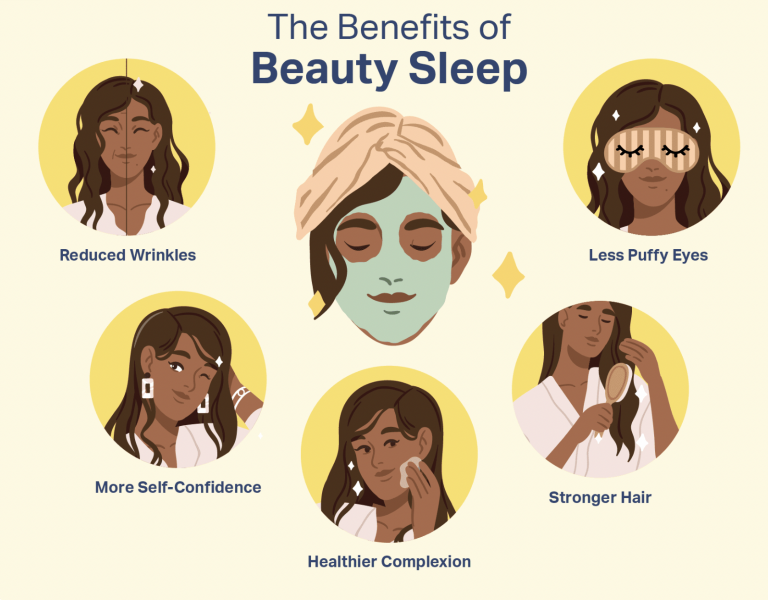
On the flip side, getting enough quality sleep can work wonders for your appearance. Here’s how:
Reduce Wrinkles & Fine Lines
Collagen, the protein responsible for skin elasticity, is essential for maintaining a youthful complexion. Sleep deprivation can interfere with collagen production, leading to sagging and wrinkles. Studies suggest that even one night of poor sleep can cause skin to lose its firmness.
Enhance Your Complexion
During sleep, the body’s blood flow increases, promoting skin repair. The skin also works to repair sun damage, making quality rest a vital part of maintaining a smooth, glowing complexion.
Diminish Dark Circles
While the science on dark circles is still developing, many believe that a lack of sleep causes blood vessels under the eyes to dilate, creating dark circles. However, when you’re well-rested, your skin is better able to manage this vascular issue, helping reduce the appearance of dark under-eye circles.
Strengthen Hair
Hair health is also impacted by sleep. Lack of sleep leads to increased stress hormones like cortisol, which can disrupt the hair growth cycle and lead to thinning or hair loss. Adequate rest helps maintain a healthy scalp and strong hair growth.
Tips to Get More Beauty Sleep
The key to reaping the beauty benefits of sleep lies in your sleep hygiene. Follow these tips for better rest:
Keep a Regular Sleep Schedule
Going to bed and waking up at the same time each day ensures your body’s internal clock stays in sync. Consistency is crucial for quality sleep.
Create a Relaxing Sleep Environment
Make your bedroom a sleep haven. Keep it cool, dark, and quiet, and invest in comfortable bedding. Consider using blackout curtains or white noise machines if necessary.
Exercise Regularly
Physical activity promotes better sleep. However, avoid exercising too close to bedtime, as it can leave you energized and make it harder to fall asleep.
Wind Down Before Bed
Engage in calming activities before bed, such as reading or meditating. This helps your body relax and signals that it’s time for rest.
Limit Screen Time
The blue light emitted by electronic devices can disrupt your sleep cycle. Aim to turn off electronics at least an hour before bed to give your body time to unwind.
Avoid Lying Awake in Bed
If you’re unable to fall asleep after 20 minutes, get up and do a quiet activity like reading or listening to calming music until you feel sleepy.
Consult a Doctor
If sleep issues persist, it’s important to speak with a healthcare professional to rule out sleep disorders that may be affecting your quality of rest.
Conclusion: Sleep Your Way to a Radiant Glow
While the phrase “beauty sleep” may seem like a myth, there’s undeniable evidence that getting quality rest can improve your appearance. From boosting collagen production and enhancing your complexion to preventing hair loss, a good night’s sleep is more than just a luxury—it’s a health essential.
So, the next time you’re tempted to skip sleep, remember: it’s not just your energy that will suffer, but your skin, hair, and overall appearance. Prioritize rest, and you’ll wake up feeling—and looking—your best!


