Everyone Told Woman to Leave Her Partner in a Wheelchair – She Stayed, Then Discovered His Secret After He Left
For nearly 36 years, my father called my mother “my angel.” After everything they had been through, we thought we understood why. But when we brought the letter he had hidden downstairs, my mother took one look at the envelope and turned pale. Her reaction made me question what we still didn’t know.
My mother was cutting apples when my sister Beth and I brought Dad’s hidden letter into the kitchen.
The moment she saw the envelope, she put down the knife.
“Where did you find that?”
“In the attic,” I replied. “Under the photographs.”
Beth placed the wooden box on the table. Mom stared at it.
Dad had been dead for almost a year.
Whatever he had hidden, he had never told her.
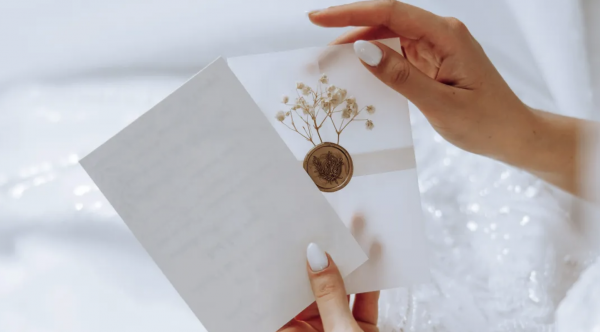
On the envelope, he had written: “For my angel. I’m sorry I had to keep this from you for so long. Please open it on your first birthday without me.”
My name is Cara.
I was only nine months old when Dad’s accident changed our lives.
He was 25 years old.
Mom was 23.
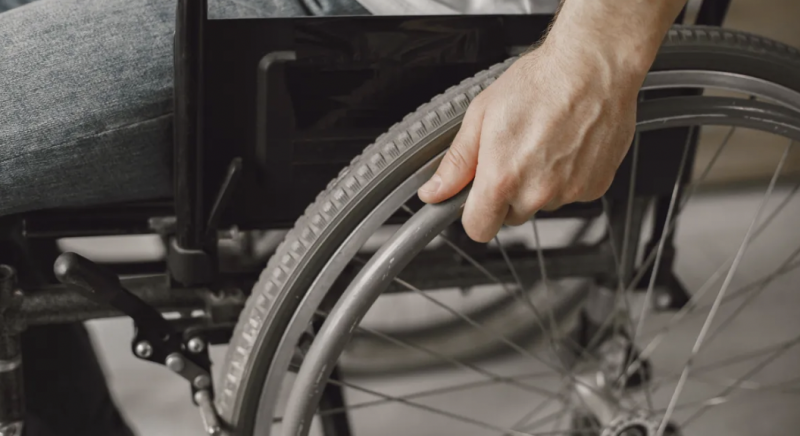
He survived, but he never walked again.
The left side of his face was permanently disfigured.
Doctors warned that complications from his injuries might leave him with only ten more years to live.
Everyone expected Mom to leave him.
Her parents begged her to start over.
My grandmother even brought it up at my first birthday party.
Mom refused.
Against the doctors’ expectations, my parents had two more children.
Dad lived long enough to watch all three of us grow up.
He died shortly after Mom’s 59th birthday.
For nearly 36 years, he called her “my angel.”
We thought we knew everything about their marriage.
“Did Dad ever mention this?” Beth asked.
Mom shook her head.
“Then why do you recognize the box?”
“He kept old things in there. I thought he had thrown everything away.”
She picked up the photograph inside the box.
It showed our parents smiling outside their first apartment, before the accident.
On the back, Mom had written two words: “Before everything.”
Her expression changed when she read those words.
“Should we open it?” I asked.
“My birthday isn’t until next month.”
“We can wait.”
Mom nodded, but when we left, the apples remained untouched.
In the following weeks, I couldn’t stop thinking about her reaction.
Our family had always told the same story: Dad’s accident, Mom’s loyalty, the children they had against all expectations, and their long marriage.
Whenever someone praised her devotion, Mom smiled awkwardly and changed the subject.
I had always assumed she was simply being modest.
One afternoon, while helping her pack for the move, I asked whether she had ever regretted staying.
She stopped stacking the plates.
“Why are you asking that?”
“Everyone says you never thought about leaving.”
“People say a lot of things, Cara.”
“But it’s true, isn’t it?”
“Loving someone doesn’t mean you never feel like running away.”
I stared at her.
“Did you?”
“Those first few years were harder than you can imagine.”
“Did Dad know?”
“Sometimes. Other times, we were too afraid to say what we really felt.”
Before I could ask anything else, she said she wanted to finish packing alone.
Mom turned 60 on a Saturday.
Beth and I arrived with breakfast. Our younger brother, Daniel, had visited the previous evening because he had to work that day.
After breakfast, Mom brought the box to the table.
“I think we should read the letter together.”
Inside the envelope were four handwritten pages.
The first few lines sounded exactly like Dad.
Then everything changed.
“My angel, if you’re reading this, it means I’ve missed another one of your birthdays. I’m sorry. I wanted to spend many more years by your side than the doctors predicted, and somehow, we managed to get them.”
“There’s something I should have told you a long time ago. I knew about the suitcase.”
Mom stopped reading.
“What suitcase?” I asked.
She lowered the letter.
“After your father’s accident, there was a time when I thought I couldn’t go on anymore.”
“Go on with what?”
“Being married.”
I waited for her to correct herself.
But she didn’t.
“I packed a suitcase. I wrote him a letter. I planned to take you to my parents’ house.”
“But you didn’t leave.”
Mom looked at me.
“Yes, Cara. I did.”
“For how long?”
“Three nights.”
Beth leaned forward.
“You actually left Dad?”
“I told him I needed to rest. And that was partly true.”
She lowered her eyes.
“I had no idea he knew.”
Mom continued reading.
“I found your note beneath the clothes you were packing into the suitcase. You wrote that you loved me but couldn’t keep living the way we were living. You said you were disappearing.”
“I thought you couldn’t bear being married to me anymore.”
Mom covered her mouth with her hand.
I pictured Dad in his wheelchair while she packed her bags.
“But Dad needed you,” I said. “How could you leave him?”
“Cara,” Beth warned.
“No. I want to understand.”
Mom placed the pages on the table.
“Your father needed help. But so did I.”
She told us about the months following the accident.
Dad came home after a long hospitalization and rehabilitation.
He needed help bathing, dressing, transferring from his wheelchair, and managing everyday tasks.
His pain was unpredictable. His confidence had completely collapsed.
Mom was caring for a baby while learning how to care for him.
Her parents helped occasionally, but every visit came with another lecture about leaving him.
Dad hated depending on others, and Mom ended up carrying almost everything on her own.
He refused help from the neighbors and resisted using equipment that could make everyday tasks easier.
When Mom suggested hiring someone to help, he accused her of wanting to transfer the responsibility of caring for him to someone else.
“He wasn’t cruel,” she said. “He was frightened. But sometimes, I was the only person around when all that anger came out.”
She described sleepless nights, endless medical appointments, and barely having time to shower.
“One night, I cried sitting on the bathroom floor because I hadn’t showered in two days.”
Her eyes filled with tears.
“Then I felt guilty for crying because I thought he was suffering more than I was.”
Beth took her hand.
“Why didn’t you ever tell us?”
“You were children. Later, things got better.”
Mom turned toward me.
“I didn’t leave because he was disabled. I left because I was disappearing inside our marriage.”
“Did you plan to come back?”
She lowered her eyes.
“I wanted to come back.”
“That’s not what I asked.”
“I know.”
She took a deep breath.
“I wasn’t sure I could.”
I had spent my entire life believing Mom had made one decision and never questioned it again.
Now I knew she had almost changed her mind.
At her parents’ house, my grandmother was delighted.
She helped take care of me, prepared meals, and told Mom she could start her life over.
For the first time in months, Mom managed to sleep through most of the night.
“I woke up feeling relieved. Then I hated myself for feeling that way.”
My grandmother started talking about apartments and jobs.
But Mom couldn’t imagine the future her mother described.
“She kept saying I could find another husband. As if that was what I wanted.”
On the second night, Mom called Dad.
He answered immediately.
She asked whether he had eaten and whether the neighbor helping him had stopped by to check on him.
He said everything was fine.
But he didn’t ask when she would come home.
“I thought he was angry,” Mom said. “I didn’t realize he believed I might never come back.”
On the third day, my grandmother warned her that returning would ruin her life.
Mom asked what would happen if she still loved her husband despite everything.
My grandmother replied that love wasn’t enough.
“She was right about that,” Mom admitted.
Beth frowned.
“What do you mean?”
“Love wasn’t enough to make our situation work.”
Mom needed help, rest, and permission to admit she was unhappy without making Dad feel rejected.
So she went home.
But she didn’t simply unpack her suitcase.
She sat beside Dad and explained that their marriage couldn’t continue the way it had been.
She needed outside help.
She needed time for herself.
She needed a husband who understood that exhaustion didn’t mean rejection.
Finally, Dad admitted that he was afraid everyone would eventually abandon him.
“He asked if I still wanted him,” Mom said.
“What did you tell him?”
“I said yes.”
She paused.
“But wanting to be with him didn’t mean I could do everything on my own.”
Over the following months, Dad accepted help and learned to handle more tasks independently.
Mom found a part-time job and started seeing her friends again.
Gradually, their marriage became something both of them could live in without losing themselves.
They still argued, but they learned to talk honestly about their needs.
“That was when we truly started over,” Mom said.
I looked at the letter.
“Then why did Dad think you came back out of pity?”
Mom shook her head.
“I don’t know.”
She picked up the next page.
“When you came back, I thought you had decided you couldn’t live with the idea of abandoning me.”
“I heard everything you said about needing changes. I knew you were exhausted.”
“But I couldn’t believe you still wanted me.”
Mom paused briefly.
“So I tried to become someone you wouldn’t regret staying with.”
“I worked hard to become a better husband. I wanted to give you reasons to be happy.”
“Somewhere along the way, we became happy again. I know we did.”
“But I never forgot your note. Whenever someone called you a saint, I wondered whether they were right.”
“Whenever you told me you loved me, I wondered whether you only said it because you knew I needed to hear it.”
Mom’s voice broke.
She handed me the page.
I continued reading.
“I should have asked you about the letter. I should have told you what I had seen.”
“But I was ashamed.”
“I thought that asking would force me to hear you admit something you were trying to hide to spare me.”
“So I spent our entire marriage afraid of an answer I never had the courage to ask for.”
I lowered the page.
Dad had always seemed certain of Mom’s love.
He called her his angel in front of strangers, held her hand, and told us he was the luckiest man in the world.
I thought those gestures came from confidence.
Now I understood that some of them came from fear.
Mom was crying.
“I told him I loved him so many times...”
“I know,” Beth whispered.
“I thought he believed me.”
She wiped her eyes.
“Sometimes, he would ask whether I was happy. I said yes because I was.”
She had spent decades reassuring Dad without knowing what he was afraid to ask.
I remembered how many times I had praised Mom for never giving up.
Maybe those compliments reminded Dad of the suitcase.
And perhaps they also made Mom afraid to admit how difficult everything had been.
“Mom, I’m sorry I asked how you could leave him.”
She shook her head.
“I spent years asking myself the same question.”
Only one page remained.
Mom wiped her eyes and began reading.
“My angel, I’ve been thinking about why I started calling you that.”
“When I woke up after the accident and saw your face, I thought that if you could still love me, maybe I could survive.”
“But over the years, I made a mistake.”
“I loved you so much that I forgot you were allowed to be human, too.”
Mom stopped.
Then she continued.
“I let people praise your sacrifice as though you had no needs of your own.”
“You had the right to be tired. Angry. Unhappy sometimes.”
“I know we had a good marriage. I remember the wonderful years, our children, and the arguments we eventually learned to resolve.”
“But I owe you an apology for never asking what you needed.”
“I spent too many years thanking you for staying instead of asking what you needed.”
Her hands trembled.
“When I’m gone, please don’t spend the rest of your life trying to prove that staying was the right choice.”
“Sell the house. Travel. Make friends. Be angry about the difficult years. Remember the happy ones.”
“If you find someone who makes you happy again, don’t think you owe me an apology.”
“You gave me a life I never imagined I would have. I hope you know I wanted you to have a life of your own, too.”
“Happy birthday, my angel.”
“With all my love.”
Mom folded the letter.
“I wish he had just asked me.”
Beth put her arm around her.
“I didn’t come back because I felt sorry for him,” Mom said. “I came back because I missed him. Even when I was angry, he was still the person I most wanted to tell things to.”
She smiled through her tears.
“He could make me laugh when I was furious. He remembered everything I liked. When I started working again, he told everyone how proud he was of me.”
She touched the photograph.
“He wasn’t just someone I took care of. He was my husband. I wanted him by my side.”
I remembered Dad helping us with our homework, making up bedtime stories, and waiting by the window when we came home from school.
“He knew you loved him,” I said.
Mom nodded.
“I think he did. Most of the time.”
She looked toward the hallway where his wheelchair used to stand.
“I just wish he had believed he deserved that love.”
That afternoon, we ate birthday cake around the kitchen table.
Mom told stories we had never heard before, including the time Dad tried to cook dinner on his own and ended up ruining three pans.
She laughed until she cried.
For once, those stories weren’t about her sacrifice.
They were about two imperfect people who had learned to live together.
Later, Mom showed me the property documents.
“I’ve been wondering whether selling the house would be a mistake.”
“Do you want to stay here?”
She looked around.
“Not really. The house is too big. Sometimes the memories are wonderful. Other times, they’re exhausting.”
“Then sell it.”
“Your father loved this place.”
“He loved you more.”
Mom smiled.
“Yes. I think he did.”
We spent the evening choosing the photographs she wanted to keep.
She selected pictures from every stage of their marriage, including some taken after the accident.
The photograph that had been inside the wooden box was placed in a frame.
Before I left, Mom put Dad’s letter back inside the box.
“Your father wasn’t perfect, Cara.”
“I know.”
“Neither was I. But we built something good together.”
I hugged her.
For most of my life, I had believed Mom’s greatest act of love was refusing to leave Dad after the accident.
Now I knew she had once walked away, carrying me in her arms, without being certain she would return.
And she had come back with something far more honest than a promise to endure anything.
She had returned because she wanted to build a marriage worth staying in.
A few weeks later, the house went on the market.
Mom called me about a smaller apartment she had found near the park.
She sounded excited about the sunny kitchen and the possibility of having friends over.
Then she paused.
“Do you think your father would approve?”
I remembered his letter.
“I think he’d be happy to see how excited you are.”
Mom laughed.
“He’d probably complain about the smaller kitchen.”
“He definitely would.”
After we hung up, I looked at the photograph she had given me.
Dad was standing beside her, smiling, with his arm around her waist.
I had always thought that picture showed the happiest version of my parents, before everything went wrong.
But their real love story came afterward.
It happened when their marriage nearly fell apart, when they learned to ask for help, and when they chose to build something better.
Mom hadn’t stayed because leaving was impossible.
She stayed because, after everything, she still wanted to come home.