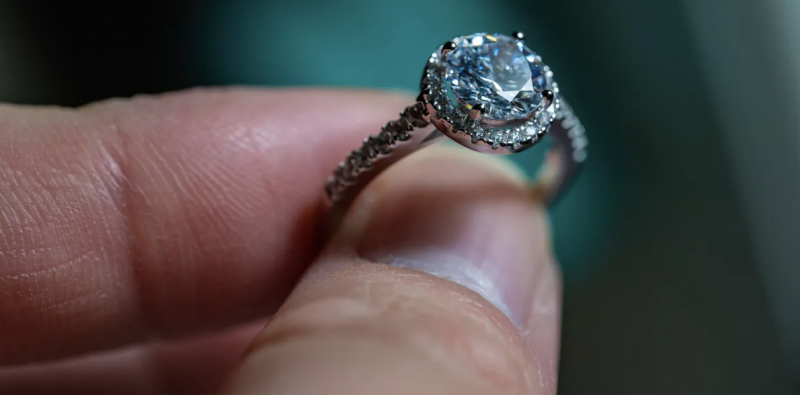
For three years, my husband missed every one of my birthdays. It wasn’t until after our divorce that I learned the truth.
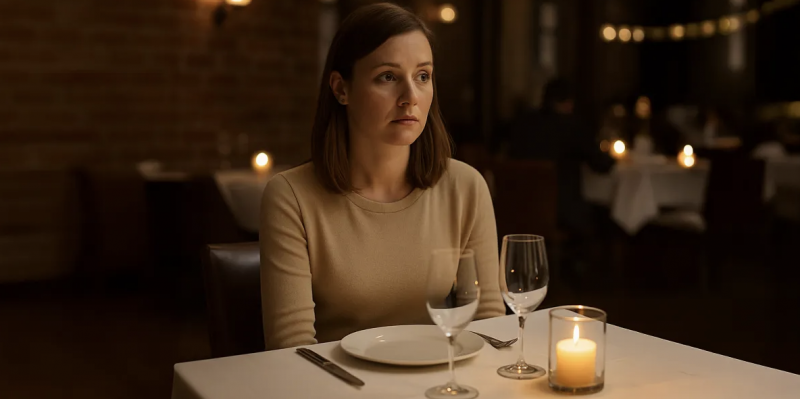
On my birthday, I sat alone at a candlelit table for two—again. Three years, three absences, and a husband always late, full of excuses. But that night, I couldn't take it anymore. I told him it was over... and I thought I was really decided—until I discovered the truth he had been hiding.
The corner of the booth was there, just as I liked it. Far enough from the noise, close to the window, to watch the world go by.
The brick walls radiated a sort of cozy silence, as if they were keeping secrets.
The old jazz played from above, soft and slow, like a heartbeat. I used to love that place.
The candle on my table flickered, the wax forming a small pool at its base. It was halfway down—just like the wine in my glass.
The seat across from me was empty, untouched. Not even a wrinkle in the napkin.
The waiter had already passed by twice. Each time, he asked with a kind smile if I was ready to order. Each time, I said: "Just a few more minutes."
But when he passed by the third time, his smile changed. It was the kind of smile you give someone you start to feel pity for.
"Are you ready to order, ma'am?" he asked softly.
I didn't look up right away. I just kept staring at the empty seat.
Then I blinked, forced a smile that didn't reach my eyes, and said: "I'm leaving soon."

He nodded, stepping back with silent grace, but I could feel it—the pity floating in the space where there should have been a celebration.
I carefully folded my napkin, as if it really mattered.
I slung my bag over my shoulder. My heels echoed on the ceramic floor like a clock marking time too excessively.
I passed tables full of couples toasting, laughing softly, lost in one another.
Outside, the night air cut through my skin. It was that kind of cold that makes you feel awake, even when you don't want to be.
"Sarah!"
I froze.
I turned. And there he was. Mark. My husband. Out of breath, his tie crooked, his hair tousled by the wind.
"I'm so sorry," he said. "There was traffic and I—"
"No," I said. The words got stuck in my throat like ice.
"You don’t have the right to do this again."
"I tried—"
"You tried for three years, Mark. Three birthdays. Every time you were ‘busy,’ or ‘late,’ or ‘forgot.’ I can't do this anymore."
"I didn’t mean to—"
"I don’t care." My voice cracked, but I stood firm.
"I’m your wife. We deserve more."
He looked away.
"You’ll get the divorce papers tomorrow," I said.
And I walked away, the heels tapping against the sidewalk. He didn’t follow. He stayed there—alone, under the streetlight.
Two weeks after the divorce papers were signed and sealed, the world started to calm down again.
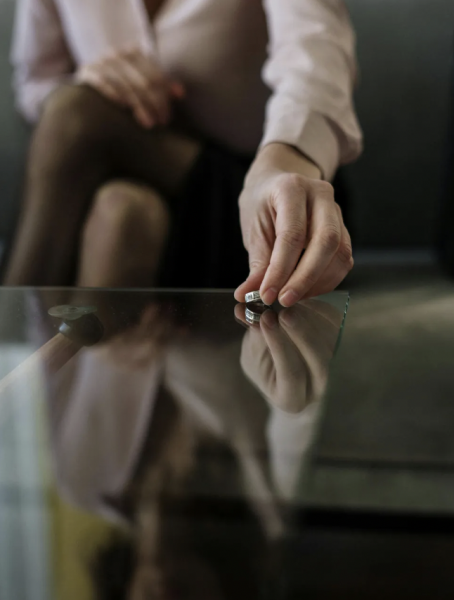
The silence in my house no longer felt sharp—just numbing. That afternoon, I was drinking lukewarm coffee and folding towels when a knock echoed through the house.
I opened the door, and there she was—Evelyn, Mark's mother.
She looked different. Not her usual polished, judgmental self.
Her hair was messy from the wind, and her face—usually stiff with pride—was tired and soft, as if carrying something heavy.
"I know I’m not your favorite person," she said, holding a stiff leather bag with both hands.
"And I know you probably don’t want to see me. But I need to tell you something."
I didn’t say anything. I just stepped aside to let her in.
We sat at the kitchen table like strangers waiting for a bus. The clock was making time too loud. I waited.
She coughed.
"You were always... stubborn," she said. "You weren’t easy. But I never doubted that you loved my son."
"I loved him," I said, my voice flat.
She nodded. "Well, he loved you, yes. Even though he had a strange way of showing it."
I looked at my chipped cup. "He had plenty of chances."
She didn’t disagree. She just placed a small folded paper on the table.
"There’s something you didn’t know. I didn’t think it was my place to say it, but now... now I think it’s worse to hide it from you."
I unfolded the paper. It was an address. Written by hand.
"What is this?"
She stood up, zipping her coat.
"Go see for yourself. You don’t need to talk to him. You don’t even have to get out of the car. But if you ever cared, even a little, you should know."
And then she left, her coat fluttering in the wind like a flag.
The cemetery was quiet—too quiet, as if the earth was holding its breath.
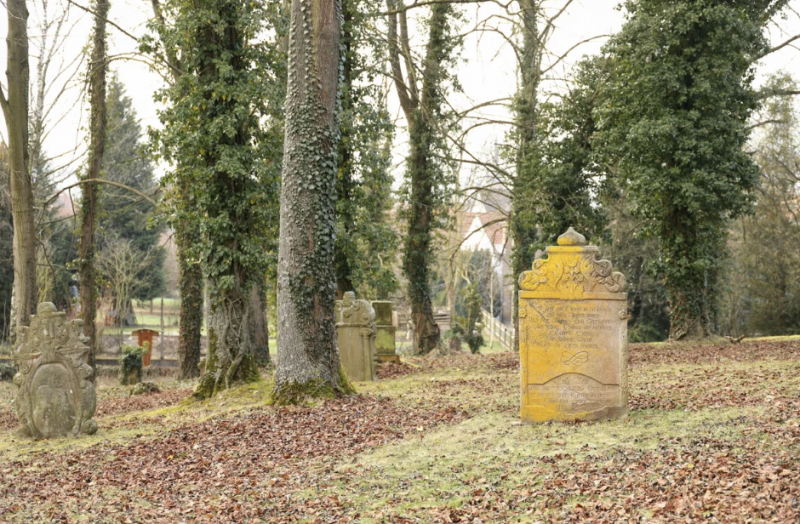
The sound of gravel crunched beneath my shoes as I passed by old, weathered headstones.
The oaks along the path were tall, their branches heavy, their leaves whispering secrets I didn’t want to hear.
I walked slowly between the rows, reading the names of strangers, some lost young, others older. Each marked by pain.
My chest tightened, as if something was pressing against my ribs. Then my eyes stopped.
Lily Harper Born: October 12, 2010 – Died: October 12, 2020
I stopped. My hands went cold. My birthday. The same day. The numbers stared at me as if they knew I’d be there eventually.
There was no long message. No flower carved in the stone. Just her name, her dates, and the weight of a short life, interrupted halfway.
I stood there, reading the inscription over and over, as if I could make it say something different if I blinked hard enough. But it didn’t change. It never would.
A chill ran down my spine, and I reached out, touching the edge of the stone with my trembling fingers.
Then I heard it.
"What are you doing here?"
I turned slowly. Mark.
He looked thinner. His coat was dusty, and his eyes—those soft brown eyes—looked hollow, as if sleep had forgotten him.
"I didn’t expect to see you," he said, his voice low and flat.
"I didn’t expect this," I whispered. "Who was she?"
He looked at the grave.
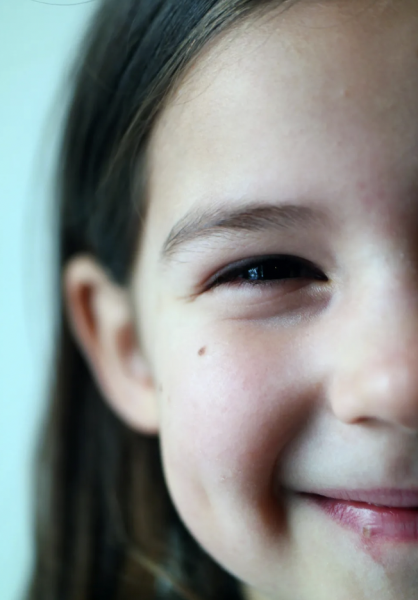
"My daughter. From my first marriage."
The words hit like a punch to the chest.
"She was ten," he said, after a pause.
"Car accident. Her mother and I... we couldn’t make it. We divorced shortly after the funeral."
I couldn’t speak. I didn’t know what to say. I could only kneel beside the grave.
Someone—I assumed it was him—had left fresh flowers in a glass jar.
They were a bit wilted, but still beautiful. And beside them was a small plastic tiara.
The kind little girls wear when they want to feel like princesses.
"Did you come here every year?" I asked, almost in a whisper.
He nodded.
"Every year. On her birthday."
"On my birthday," I said.
He looked away, his jaw tight.
"I wanted to be there for you. I tried. But I couldn’t do both. I didn’t know how to celebrate you while I was grieving for her. It felt like a betrayal. To both of you."
We sat on a wooden bench near the edge of the cemetery, far enough from the other graves to feel alone, but close enough to still hear the wind passing through the leaves like a silent song.
The air was damp, filled with the smell of wet earth and the sweet aroma of fallen leaves. Somewhere near, a crow cawed, sharp and solitary.
I stared at the ground for a long time. My heart was full of so many things I couldn’t name. Finally, I broke the silence.
"I thought you didn’t care," I said. My voice sounded small, even to myself. "I thought you had forgotten me."
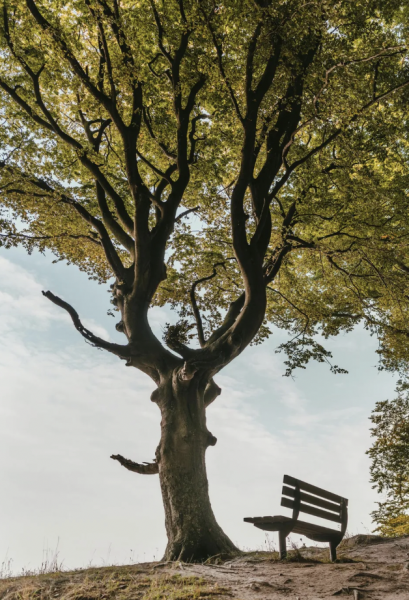
Mark looked at me, his face tired and sincere. "I never forgot you," he said. "Never. I loved you, Sarah. I still love you."
I looked at his hands resting in his lap. I knew those hands. They had held mine at so many dinners.
They turned up the volume when we danced in the living room.
They rubbed my back during long car trips and reached for me during sad movies.
"You should have told me," I said, my voice harsher than I meant.
He looked away, then looked back. "I was afraid," he said.
"I was afraid you would leave me. I was afraid that if I opened that door, everything would collapse."
I nodded slowly.
"You should have trusted me."
He swallowed hard, blinking quickly, as if fighting everything he hadn’t said in years.
"I know," he said.
"You’re right."
I sighed deeply, looking toward the trees.
"I can’t change what I did. And you can’t either. But maybe..." I paused, looking at him.
"Maybe we can change what comes next."
He looked at me, and I saw something shift in his eyes. Something soft. Hope, maybe.
"I’m not saying we go back to the way it was before," I added.
"But maybe we try again. From the beginning. No lies. No silence. No secrets."
Mark blinked several times and gave a small, cautious smile. "I’d like that," he said, almost in a whisper.
I nodded. "Then we try."
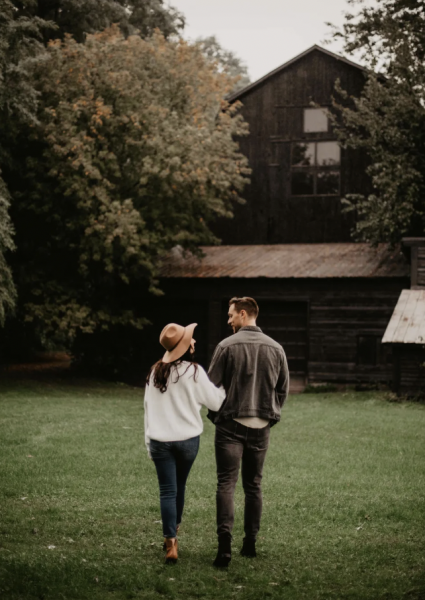
A year later, the world seemed softer. The pain hadn’t gone away, but it wasn’t as sharp.
Mark and I were together at Lily’s grave, bundled in coats and our breaths forming small clouds.
The wind rustled the leaves of the trees around us, and the leaves—golden, red, and brown—danced on the grass.
I knelt down and placed a small chocolate cake on the ground, just enough for one candle. Mark knelt beside me and carefully placed a photo of Lily.
She was smiling widely, wearing the same plastic tiara I had seen months before.
My chest tightened, but not from pain—more from love. For a girl I never met, but now carry in my heart.
We stayed there in silence for a while, and then we went to a quiet restaurant on the outskirts of the city. The place had checkerboard floors and hot coffee.
We shared a slice of apple pie in the booth in the corner. The same one where people came to start over.
Mark pulled out a small, carefully wrapped box from his coat pocket.
"It’s for your birthday," he said.
I opened the box slowly. Inside was a gold necklace with a small lily-shaped pendant.
My eyes filled with tears. "It’s beautiful," I said, my voice barely holding together.
"I’ll never miss another one," he said.
"I know," I whispered, reaching for his hand.
Because now, we didn’t just celebrate one life. We honored two.
And the best part—we did it together.