How animals experience time in their own unique ways
Humans have a relatively unique and structured sense of time, often organized by clocks, schedules, and calendars. We tend to categorize time into past, present, and future, and our daily lives are centered around the ticking of the clock.
But what if time isn’t perceived the same way by every species? What if animals, with their vastly different sensory systems, experience time in a manner that is foreign to human understanding?
Humans experience time in a way that is influenced by both conscious awareness and biological rhythms. Our circadian rhythms, the natural 24-hour cycle that dictates our sleep-wake patterns, are a great example of how our biology ties us to the passage of time.

We also rely heavily on external cues, like the position of the sun, clocks, and events in our daily lives, to measure the progression of time.
As a result, time becomes something that we actively think about, structure, and control. However, not all species interact with time in the same way.
Let’s take a closer look at some of the ways animals sense time differently than humans.
Many animals, especially those with keen senses, are not bound by the same strict concept of time that humans are.
Their sense of time is often more immediate and practical, driven by instincts and survival needs rather than abstract measurements.
For instance, many animals still rely on circadian rhythms, much like humans, to guide their behavior. However, some species experience time cycles that diverge from the 24-hour day.
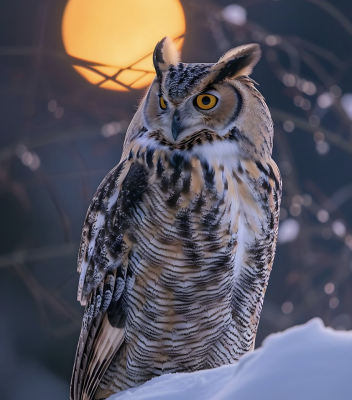
For example, nocturnal animals like owls, bats, and some rodents operate primarily during the night, and their perception of time is influenced by their night-centric lifestyle.
Some animals, like certain fish and amphibians, even possess a sense of time that is not based on Earth's day-night cycle.
Instead, they follow lunar cycles or tidal rhythms, using environmental cues like the position of the moon or tides to guide behaviors like breeding and migration.
Another fascinating aspect of animal time perception is the speed at which some species process information. For example, flies and other insects experience time differently from humans because their brains process visual and sensory information much faster.
In fact, studies suggest that a fly’s brain is capable of processing information at rates much higher than a human’s.
This faster processing rate allows them to perceive motion and time as moving more slowly compared to humans. What might appear as a blur to us could be experienced as more deliberate and slow-moving to a fly.
Memory plays a crucial role in how animals perceive time. Humans rely heavily on memory to construct a narrative of the past, and our memories are usually anchored in clear chronological events.
However, many animals live more in the moment. While some species, like certain birds, can demonstrate long-term memory and recall information about past events (such as the location of a food source), many animals are more focused on the immediate future.

Dogs, for example, are known for their remarkable ability to sense time intervals, though it may not be in the same linear way humans do.
When a dog waits for its owner to return home, it doesn't necessarily have a fixed concept of how long the wait is, but it can anticipate events based on routines and repetition.
This suggests that animals may sense time in a more fluid, event-driven manner.
Despite all this, scientists are still trying to grasp how animals truly perceive time. One approach involves using behavioral experiments to understand how animals react to different time intervals.
For example, researchers have trained animals like rats and birds to respond to signals at specific times, observing their responses to varying durations between those signals.
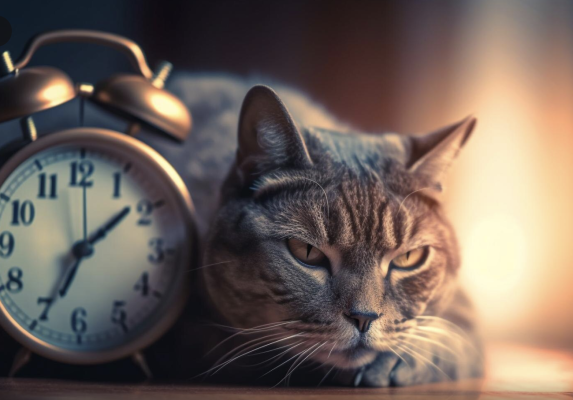
One famous experiment by the psychologist David Rosenbaum found that when rats were exposed to different lengths of waiting periods, they could distinguish between time intervals based on behavioral cues, like food reinforcement or social interaction.
Similarly, researchers have found that primates such as chimpanzees and orangutans can also have a sophisticated understanding of time intervals in some situations, though they may not organize their perceptions of time in the same manner humans do.
Evolution has shaped the way animals experience time. For example, migratory species like monarch butterflies and Arctic terns have evolved an acute sense of time to help them navigate their long-distance journeys, which rely on precise timing of seasonal changes.
Similarly, predators like cheetahs and hawks are finely tuned to respond quickly and efficiently to movements in their environment, demonstrating a different relationship to time that is entirely based on immediate needs for survival.
Animals living in more stable environments, such as certain species of tortoises or turtles, may have a more relaxed approach to time, living in a slower-paced rhythm dictated by their biological cycles and physical needs.
In the end, the way animals perceive time differs widely from the human experience. While humans structure time based on clocks and future-oriented thinking, animals often experience time through their instincts, sensory experiences, and immediate needs.
This fascinating divergence between species reminds us that time itself is a human construct — one that may not be experienced in a fixed or predictable way by the other creatures with whom we share the planet.
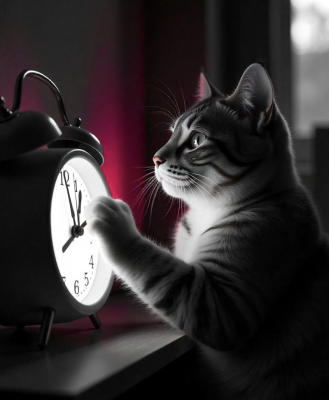
As science continues to uncover the mysteries of animal cognition and sensory systems, we may begin to understand even more about the diverse ways in which time unfolds in the natural world.
Whether it's a cheetah’s lightning-fast reaction times or a bat’s nocturnal patterns, animals remind us that time is a fluid and multifaceted experience — one that exists on a completely different scale.