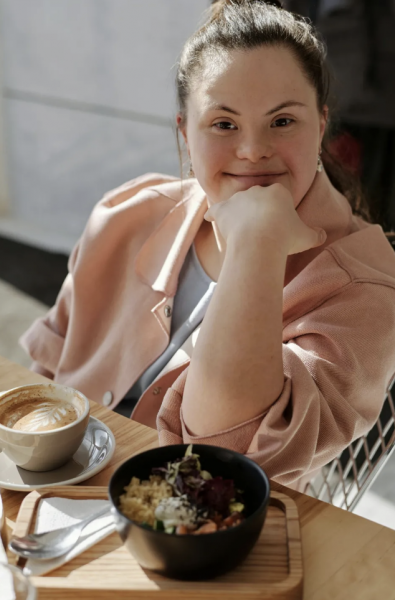
I adopted a girl with Down Syndrome, who was rejected by everyone, right after spotting 11 Rolls-Royces parked outside my front porch.
They told me I was too old, too lonely, and too broken to matter, until I adopted a little girl that no one wanted. A week later, 11 black Rolls-Royces parked in front of my house, and everything I thought I knew about her changed.
I never imagined I would write something like this. I’m 73 years old, a widow, and most people think women my age should settle for knitting, watching TV, and waiting for the inevitable. But life didn’t give me that kind of ending. No, it gave me a story that still makes my hands tremble when I tell it.
My name is Donna, and I’ve lived in the same weather-worn house in a small town in Illinois for nearly fifty years. I raised two children here. I buried my husband here. I’ve seen this porch covered in snow and funeral flowers. I had a full life, yes, but nothing prepared me for what happened after my husband Joseph passed away.
When Joseph died, the silence hit me like an out-of-control train. After almost 50 years of marriage, there’s no real way to prepare for this kind of emptiness. Without him, even the ticking of the clock on the wall seemed too loud. He had been my compass, my steady hand, and the man who always kept the coffee pot full and remembered to put gas in my car when I forgot.
The night after his funeral, I sat on the edge of our bed, holding his flannel shirt, still faintly smelling of cologne and mint. I didn’t cry much. I just stared at the spot on the wall where his coat used to hang. I don’t know why, but the house seemed to have exhaled and become empty.
The only sounds were from the animals I had adopted over the years, mostly cats and some old dogs from the shelter that no one wanted. My kids hated it.
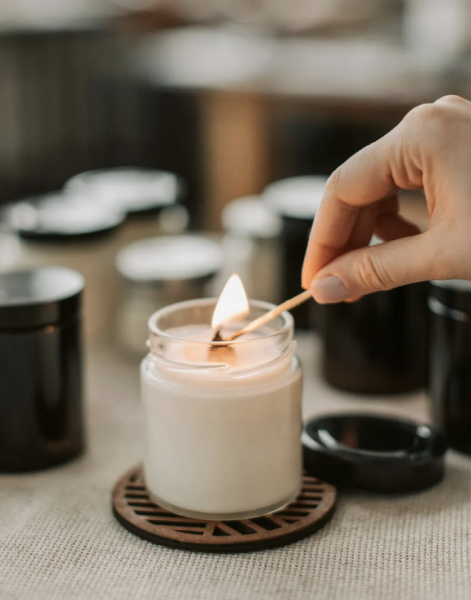
“Hi, Mom, it smells here,” my daughter-in-law Laura said one night, wrinkling her nose as she lit a lavender-scented candle.
“You’re turning into one of those crazy cat ladies,” my son Kevin added, looking around as though he was embarrassed to even be there.
After that, they stopped visiting me, saying they were busy, even though I saw them in photos on social media, smiling at wine tastings and house parties. My grandchildren once came over to eat cookies, but now they barely send messages.
Christmas was the hardest. I’d make a pot of Earl Grey tea and sit by the window, watching the snow accumulate on the steps, wondering how a house that used to be so full of life could feel so silent.
I tried. I really did. I joined a gardening club. I started volunteering at the library. I even baked banana bread for the local fire department. But nothing filled the space Joseph left. I learned that grief doesn’t leave through the door; it lives in the hallway, waiting for you in every silent moment.
Even in rooms full of people, I felt like a ghost, unseen.
And then, one Sunday morning at church, something happened that changed everything.
I was helping organize hymnals in the back room when I overheard two volunteers whispering near the coat rack.
“There’s a newborn at the shelter,” one said quietly. “A little girl. She has Down syndrome. No one’s going to take her.”
“No one wants a child like that,” the other replied. “She’s too much work. She’ll never live a normal life.”
Their words hit me like a punch. I didn’t think. I just turned around and said, “Where is she?”
The younger volunteer blinked. “Sorry?”
“I want to see her,” I said.
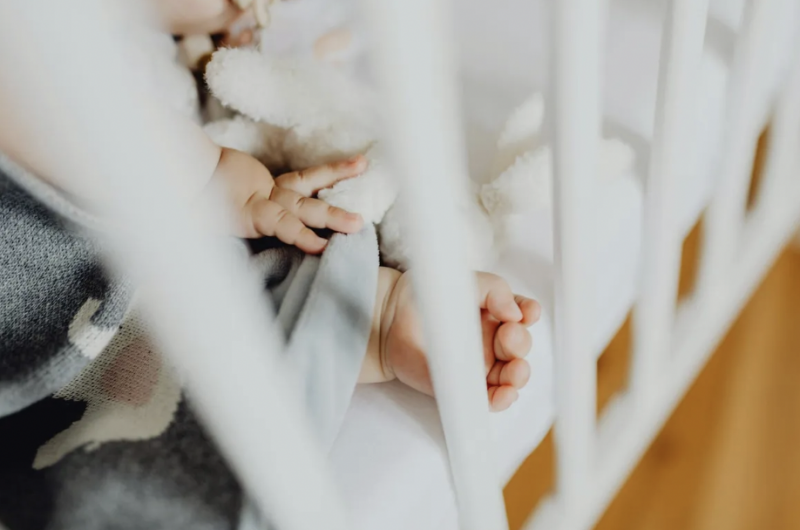
Later that afternoon, I went to the shelter. The room was small, smelling faintly of formula and antiseptic. And there she was, so tiny, wrapped in a thin, faded blanket. Her fists were clenched under her chin, and her lips made the softest sounds as she slept.
When I leaned over the crib, her eyes opened. Big, dark, curious eyes. She stared at me as if trying to understand me, and something inside of me, something I thought was numb, suddenly broke.
“I’ll take her,” I said.
The room went completely silent. A woman in a red sweater looked up from her clipboard.
“Ma’am…” the social worker stuttered. “With your age—”
“I’ll take her,” I repeated.
She stared at me for a long time, as if waiting for me to back down. But I didn’t.
Taking that baby home was like bringing light into a house that hadn’t seen the sun in years. But not everyone saw it that way.
The neighbors began whispering. I caught them peeking through their curtains, as if watching a bizarre show.
“That crazy widow,” I heard Mrs. Caldwell murmur one day as she watered her begonias. “First, all those animals, now she’s got a baby with a disability?”
Kevin showed up three days later, his face red with anger.
“Are you crazy?” he shouted, barging into my kitchen like he still had the right to do so. “You’re 73! You can’t raise a baby. You’ll be dead before she even finishes high school!”
I stood by the stove, holding the baby close to my chest. Her little hand was gripping the collar of my cardigan, as if it were a lifeline.
“So I’ll love her with every breath until that day comes,” I said calmly.
Kevin’s face twisted. “You’re humiliating this family.”
I looked at him for a moment, really looked at him. “Then you don’t deserve to call yourself family,” I said, and walked to the door, closing it behind him.
I named her Clara. There was a little outfit in her hospital bag with the name stitched in purple thread. That was enough for me. Clara. It just felt right.
She started smiling a week later. Every time she held my fingers, it felt like she had been waiting her whole life for me to show up.
Exactly seven days later, I heard the engines.
Not one, but several. The kind of low, powerful rumble that makes your skin tingle. I went out onto the porch with Clara in my arms, breathless.
Eleven black Rolls-Royces were lined up in front of my dilapidated house. Their chrome gleamed in the afternoon sun, and the windows were so dark I couldn’t see inside.
Then the doors opened.
Men in black suits stepped out one by one. They looked like they belonged to some kind of high-level government agency or secret society.
They walked slowly toward my porch. One of them raised his hand and knocked on my door.
My legs almost gave way.
One of the men stepped forward, tall, with graying hair and a calm, unreadable face. His voice was steady, but carried the weight of formality.
“Are you Clara’s legal guardian?”
I adjusted Clara in my arms and nodded slowly.
“Yes,” I said. My voice came out hoarse. “Why?”
He took an envelope from a leather folder and handed it to me without saying a word. My hands trembled slightly as I opened it. Inside were papers: thick legal documents, stamped seals, and even a letter from a lawyer.
I sat down on the porch swing, holding Clara close as I flipped through the first page.
Clara wasn’t just an abandoned baby. Her biological parents had been young, successful entrepreneurs in the tech industry, from what I could understand, living fast, building an empire, and apparently doing so with heart. They had died in a tragic fire at their home shortly after she was born.

Clara was their only child. The only heir.
Everything they had, from the massive mansion in the countryside to their investments, cars, and a bank account that made my jaw drop, was left to her. But since no one had claimed her, everything had been in legal limbo.
Until me.
I looked at the men in suits standing silently in my yard, those 11 shiny black cars gleaming like some surreal dream.
“You mean… she owns all of this?” I asked, blinking.
A younger man with glasses stepped forward. “Yes, ma’am. Everything belongs to Clara. And now that you’re her guardian, it is your responsibility to manage it all until she reaches adulthood.”
I looked at Clara, her soft cheek resting against my chest, a small sigh escaping her lips as she slept. I didn’t know whether to cry, laugh, or faint.
Inside, the lawyers explained the options. One of them pulled out a set of architectural plans and pictures of the mansion. The property had 22 rooms, marble floors, manicured gardens, a pool house, and staff accommodations. All of it was Clara’s by right.
“You and Clara can move immediately,” one of them said. “We can help hire staff: nannies, nurses, and a house manager. You can raise her in comfort and security.”
For a moment, I let my imagination run wild. Chandeliers. A nursery with golden details. A grand piano in the living room. A chef who’d make heart-shaped pancakes.
But then Clara stirred in my arms, making that soft little sound she always made when she was cold or needed to be closer to me. I looked at her, and in that moment, the fantasy crumbled like stale bread.
This wasn’t love. This was money trying to dress up emptiness.
“No,” I said, stroking Clara’s back.
The lawyers blinked, surprised. “Ma’am?”
“I’m not raising her in a velvet cage. I didn’t adopt her to polish her like a trophy. I adopted her because no one else would.”
I took a deep breath, straightening my shoulders more than I had in months.
“Sell the mansion. Sell the cars. Everything.”
“But—”
“I know what I said.”
So we did.
And with every penny, we built two things that truly mattered.
The Clara Foundation, named in her honor, would offer therapy, education, and scholarships for children with Down syndrome. I wanted no child like Clara to ever be called “too much work.”
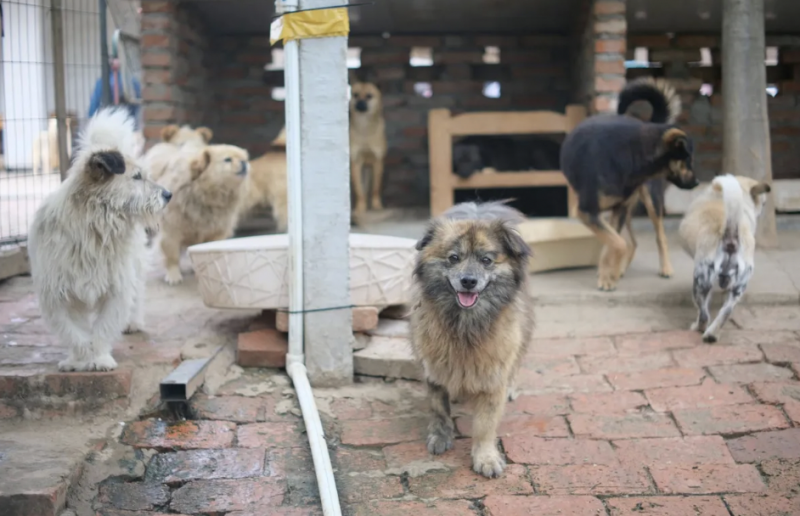
And secondly, I finally built the animal sanctuary I had always dreamed of. It wasn’t fancy, but it was full of warmth, open fields, and space for abandoned animals that no one wanted. My house remained the same, but now it was next to a big barn full of rescued dogs, blind cats, and chickens with one leg.
People called me irresponsible. “You could have had it all,” a woman told me at the store. “You’re wasting her future.”
But the truth is, I’ve never felt so alive.
Clara grew up in a home full of fur, laughter, and the constant sound of music and conversation. She was full of energy, curious, extremely creative, and stubborn enough to make a donkey blush.
“Clara, no! The cats don’t need glitter!” I’d yell as she passed by, leaving a trail of sparkles falling from her hands.
She painted every surface she could reach: walls, furniture, even the tiles in the kitchen. Her favorite thing was sitting at the piano and playing her own songs, loud and proud, always out of tune but sung with all her heart.
Doctors said she would never speak fluently or control her emotions. But Clara proved them all wrong.
She went to school, made friends, and even got into trouble for kissing a boy in the library at seven.
At 10, she got up on stage at a Clara Foundation event, with the microphone trembling in her hands, and clearly said, “My grandma says I can do anything. And I believe her.”
I cried so much that night I almost needed to be carried by one of our volunteers.
The years flew by faster than I would have liked. Clara grew tall and graceful, with dark eyes and a smile that could melt any bad day. At 24, she started working full-time at the animal sanctuary. She cleaned kennels, bottle-fed kittens, and kept a notebook with detailed descriptions of each animal’s quirks and moods.
One afternoon, she came into the kitchen, her cheeks flushed.
“There’s a new volunteer, Grandma. His name is Evan.”
I raised an eyebrow. “That’s why you’ve got your hair done and are wearing perfume to the barn?”
She laughed and threw a pillow at me.
Evan had Down syndrome too. He was quiet, thoughtful, and had a gentle patience that balanced Clara’s energetic nature. He drew pictures of the animals in a little notebook and carried candy in his pocket to share with the dogs.
I watched them fall in love, slowly. Gently. The way good love always starts.
Then, one night, Evan showed up at my door, shirt neatly folded, palms sweaty.
“Mrs. Walker,” he said nervously. “I love her. I want to take care of her. Always. May I?”
I walked over to him and wrapped him in a hug.
“Yes, Evan. A thousand times yes.”
Last summer, Clara got married in the garden of our sanctuary.
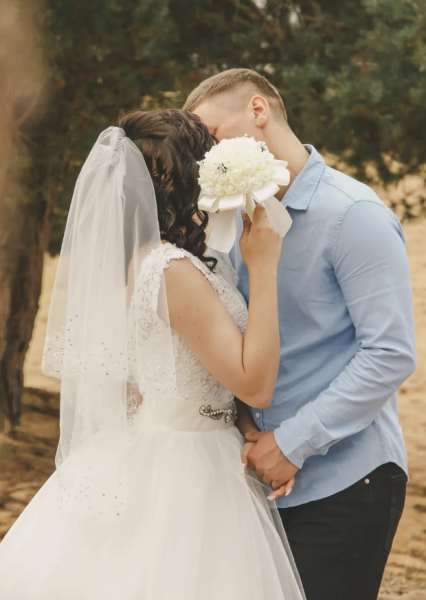
She wore a simple white dress with lace sleeves and a crown of daisies in her hair. Cats wandered freely between the guests' legs. Evan waited at the altar in a blue suit and sneakers, smiling.
Her brother, Kevin, didn’t come. Neither did Laura. They sent a card, and that was enough for me.
But Evan’s family, crying, laughing, and dancing, embraced Clara as if she had always been theirs.
During the vows, Clara held Evan’s hands and said, “You’re my person. I choose you.”
And that smile on her face? It could light up the sky.
I sat in the front row, holding a kitten in my lap, and thought about everything we had overcome.
The looks. The whispers. The people who said I was ruining her life.
She won’t last a year.
That baby will never be wanted.
And yet, there she was, more wanted than anything in the world.
Now, I’m old. My back hurts. My knees complain whenever I stay in the garden too long. My kids still don’t call. Kevin moved to Arizona. Laura posts selfies at the beach. I’ve stopped looking.
But I don’t need them.
I have Clara. I have Evan. I have a sanctuary where broken things come to heal. I have letters from families who received scholarships from the Clara Foundation, photos of children learning to speak, walk, and sing.
Clara gave me this.
She gave me a life more meaningful than any Rolls-Royce, more powerful than any inheritance.
And when my time comes, and it’s not far off now, I’ll leave in peace. Not because I was rich, smart, or well-liked, but because I chose love over fear.
Because I looked at a baby no one wanted and said, “I’ll take her.”
And in the end, she didn’t just save me.
She saved a thousand others too.
Her little hand holding mine on that first day was the beginning of everything I never knew I needed.
So maybe, just maybe, someone out there will read this and feel that tug on their heart. The one that whispers: Do it. Love anyway. Take the chance.
Because sometimes, the smallest and most unwanted soul can change everything.