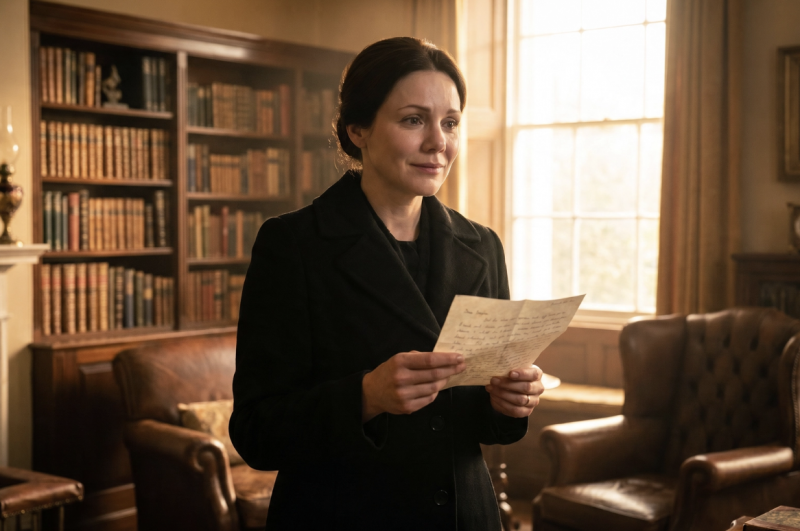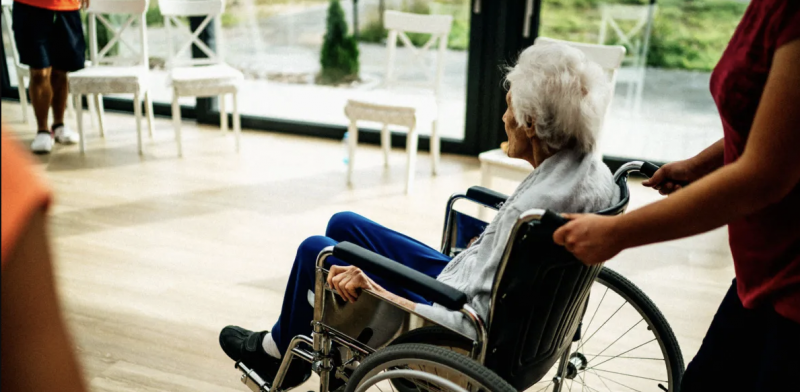
I left my job to take care of my husband’s mother. At her funeral, her lawyer handed me an envelope just as my husband served me divorce papers.
For years, I believed sacrifice was simply part of loving a family. I never imagined that everything I gave up would eventually lead to a day that changed everything.
The first years of my marriage felt like sunlight through a kitchen window—warm, ordinary, and comforting in the best way. I was 23 when I met Dean, 25 when I married him, and from the very first dinner with his family, I knew I had found a soft place to land. His mother, Eleanor, never really let go of me after that first meeting.
She never called me her daughter-in-law. Not even once.
“This is my daughter, Claire,” she would say at every gathering, her hand resting on my arm as if she had been waiting years to say it.
For nearly a decade, life unfolded exactly as planned. Dean rose through the ranks at his firm. I built a stable marketing career that I truly enjoyed. We bought a small home, hosted Sunday dinners, and talked about the future.
Then Eleanor received her diagnosis.
I remember sitting at her kitchen table when she told us, her hands wrapped around a mug she never drank from. My husband reached for her first. I reached for him.
“We’ll figure this out together,” Dean said. “All of us.”
“I don’t want to be a burden,” my mother-in-law (MIL) whispered.
“You’re not a burden,” I told her. “You’re family.”
At first, we really did manage it together. Dean took her to appointments on Tuesdays. I handled Thursdays. We organized her medication with colored boxes and laughed when we mixed up morning and evening pills.
My husband’s siblings, Margaret and Paul, called often from out of state, full of apologies and gratitude.
For a while, it worked.
Then Eleanor’s condition worsened. The good days shrank, and the difficult nights increased. Around the same time, Dean received the promotion he had long wanted.
“They need me out of state twice a month,” he said one night, loosening his tie. “Maybe more. Longer hours too.”
“We’ll manage,” I said.
Even then, I noticed small things. The way Dean turned his phone face-down when I entered the room. The quiet sigh whenever his mother was mentioned, as if her illness was an inconvenience.
I told myself he was just exhausted.
We had the conversation on a Sunday after Eleanor fell while trying to make tea. Dean sat across from me at the dining table, hands folded.
“One of us has to be here full-time, Claire.”
“I understand.”
“I can’t leave work right now. Not with this promotion,” my husband said.
“So you want me to quit my job?”
“Just temporarily,” he replied. “Until things stabilize. A year, maybe two.”
I stared at the ceramic bowl Eleanor had given us at our wedding. I thought about her trembling hands when she held a spoon.
“I don’t know, Dean. Can we keep talking about other options?”
He only sighed.
After weeks of difficult talks, we decided.
“Alright,” I said. “I’ll take care of her, just for a while.”
“Just for a while,” he agreed.
He squeezed my hand like it was settled, like he had won something. I didn’t yet understand how “a while” could become something that swallowed years.
Seven years passed.
My work clothes stayed untouched in the closet, eventually feeling like costumes from another life. Friends stopped calling, slowly then completely. I stopped holding it against them.

My hands learned different skills.
How to braid Eleanor’s thin silver hair without hurting her.
How to sort pills into weekly organizers.
How to read pain in her expression before she said a word.
“You don’t have to keep doing this, Claire,” my MIL said one afternoon.
“I want to,” I replied, tucking her blanket in.
“You’re stubborn. Just like me.”
“I learned from the best.”
She laughed, then it turned into a cough. I stayed with her until it passed.
Some nights she couldn’t sleep, so we sat under a low lamp in the kitchen. She told me about her wedding day, a man she almost married before Dean’s father, and a baby she once lost that the family never spoke about.
“You’re the only one I tell these things to,” she said once.
“Why me?” I asked.
“Because you stay.”
Dean stopped staying home long before I fully noticed.
Late nights at work became normal. Plates cooled untouched. Our anniversary passed without acknowledgment. When I mentioned it later, he looked at me like I was speaking another language.
“I’ve been overwhelmed, Claire,” my husband said.
“I know,” I replied quietly.
“Don’t turn this into something.”
“I’m not.”
But inside, I was. I just didn’t want to admit it. I kept telling myself he was grieving early, that watching his mother decline was breaking him in silence.
I made excuses as easily as I once made grocery lists.
Five more years passed, filled with caregiving—cooking, lifting, comforting, and sitting through pain and confusion.
At some point, Eleanor became one of the closest people in my life.
One evening, she grabbed my wrist with unexpected strength. Her eyes were clearer than they had been in weeks.
“Claire. Listen to me.”
“Yes, Mom, I’m here.”
“You’ve given more than anyone understands. Even more than my own son.”
“Please don’t talk like that,” I said, holding back tears.
“I won’t let it mean nothing. Do you hear me?”
I didn’t truly understand. I thought it was medication talking, or an elderly woman trying to make peace. I kissed her forehead and told her to rest. She kept looking at me as if memorizing me.
“You deserve your own life again.”
“I have a life,” I said softly.
“You have mine,” she replied. “I want you to have yours.”
My MIL died on a Tuesday morning at sunrise, four years after her husband. I was holding her hand. Dean was at work.
He returned hours later, asked if I had arranged the funeral home. I had. He nodded and went upstairs.
The funeral was small.
People called me strong. I didn’t feel strong—I felt empty.
Standing near the casket, I tried to breathe slowly like she once taught me. Then Dean touched my arm.
“Claire. Come with me.”
I thought he needed comfort. Instead, he held a folder.
Dean pulled me aside, away from the room, toward a quiet corner near the casket. I assumed he wanted to grieve privately with me.
But he didn’t look like someone grieving. He looked like someone finishing business.
“Claire, stay calm,” he said, handing me the folder.
My name was on it.
“What is this?” I asked.
“Divorce papers. This has been coming for a long time. Now that Mom is gone, there’s no reason to continue pretending.”
The room spun.
“You’re doing this here?”
“It’s simpler. I’m offering a settlement. Sign it. Don’t make a scene today.”
My hands shook.
Twelve years of sacrifice reduced to a folder in my arms.
Before I could respond, a man stepped forward.
“Claire. One moment.”
Mr. Hartwell, Eleanor’s lawyer, approached with a sealed envelope.
“Your MIL instructed this be given to you today. No exceptions.”
Dean stiffened.
“This isn’t appropriate—”
“She was very clear,” the lawyer said. “It must be delivered now.”
He placed the envelope in my hands.
I opened it.
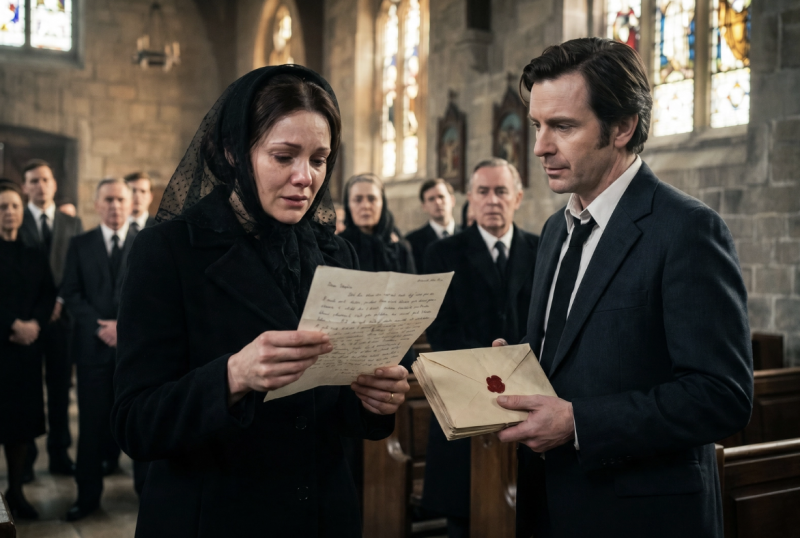
The first page was a handwritten letter in Eleanor’s neat script.
Below it was her updated will. Then additional documents I didn’t immediately understand. I read the will first.
The house, her savings, and controlling shares in her late husband’s company were all left to me. Not shared. Not divided. Fully to me.
My stomach dropped.
Then I read the letter.
“My dearest daughter. By the time you read this, my son will have already acted as I expected. Do not be surprised. I wasn’t until I made sure.”
I kept reading.
“Two summers ago, I answered Dean’s phone when it rang. You were outside. A woman named Whitney was calling, and the way he spoke to her told me everything. Later I found a hotel receipt in a jacket you had brought me.”
I froze.
“I had my doctor confirm I was fully sound of mind. Mr. Hartwell helped me update everything, and I hired an investigator named Reyes.”
I turned the pages.
Messages. Receipts. A compiled report.
Evidence of Dean moving money, secret conversations with Whitney, and plans mentioning “after Mom passes.”
I couldn’t breathe properly.
I looked at Dean. His face was pale, eyes darting across the documents.
“Mom was confused,” he said quickly.
“She wasn’t,” Mr. Hartwell replied calmly. “Not at any point.”
I held the papers close and felt something I hadn’t felt in years—solid ground.
Dean’s siblings moved closer.
“She told me everything,” Margaret said quietly. “For years.”
Paul nodded. “She wasn’t confused. She was preparing.”
Dean opened his mouth but nothing came out.
I held the folder he had given me, then pressed it back into his chest.
“I’m not signing anything today,” I said. “My lawyer will respond.”
“I’ll be in contact,” Mr. Hartwell added.
I let the folder fall to the floor and walked away.
Later, I moved into the home Eleanor left me.
While going through her belongings, I found another note in her jewelry box.
“Return to the work you loved, Claire. You still have time.”
I cried for a long time. Then I made a call.
I enrolled in a refresher course the following Monday. My old colleague Sarah answered immediately and laughed through tears.
“We’ve been waiting for you.”
I visited Eleanor’s grave on a quiet Sunday with yellow tulips, her favorite.
“Thank you,” I whispered. “For seeing me. For staying.”
The wind moved through the trees, and for the first time in years, I felt like I could begin again.