I raised my fiancé’s ten children after he abandoned us. Three decades later, his lawyer showed up at my door with an envelope, saying he had been instructed to deliver it that day.
I thought I had finally understood why my future collapsed just a week before my wedding, but it took thirty years to uncover how much of the truth I had never been told.
I was 32 when I met Robert. He was 5 years older than me—gentle, deliberate in speech, and already carrying a life that should have made me hesitate.
He had 10 children.
Yes—10.
His wife had died 2 years earlier, and he had been raising them alone when I first noticed him at the grocery store, struggling with a cart full of cereal boxes while a toddler kept reaching toward me.
That toddler was Sophie.
“I’m sorry,” Robert said, lifting her into his arms. “She does that to anyone who smiles at her.”
“Then I guess I’ll keep smiling,” I replied.
He laughed softly, exhausted but warm, and something inside me shifted before I could stop it.
I didn’t just fall for Robert—I fell for all of them.
Amanda was 15 and already far too serious for her age. Derrick barely spoke unless something was broken. Sue gestured constantly when she talked. Jacob and David, twins, turned every task into competition. The quadruplets were pure chaos, and Sophie called me “Mama” before anyone corrected her.
Within months, I was at their house most evenings. I helped with schoolwork, cooked meals, searched for missing socks, tended scraped knees, and learned which child needed gentleness and which needed honesty.
Six months later, my boyfriend proposed over meatloaf and mashed potatoes, while all 10 children pretended not to be listening from the hallway.
“Will you marry us?” he asked.
I said “yes,” crying, and wedding plans began.
My mother, Helen, thought I had lost my mind.
“10 children, Margaret,” she repeated every Sunday. “You haven’t even lived your own life.”
“They are my life, Mama.”
“You’re being reckless.”
I let her say it, because she didn’t understand.
Two weeks before the wedding, I tried on my dress in the mirror. Amanda zipped it up while Sophie clapped and the boys peeked in, pretending to be disgusted. I was happier than I had ever been.
Then I saw Robert in the reflection.
He stood at the doorway, watching me with an expression I didn’t recognize—not joy, not sadness, but something like memorizing the moment.
“You look beautiful,” he said.
“You’re not supposed to see it.”
“I know. I just wanted to remember.”
Even then, I think he already felt something was wrong. He had been tired for months, losing weight, hiding headaches behind smiles.
The morning Robert disappeared, the house was unnaturally silent. It was 1 week before the wedding.
No footsteps. No sound from his side of the bed.
“Robert?” I called.
Nothing.
Amanda stood at the top of the stairs, arms wrapped around herself.
“Mama Margaret,” she whispered, “Daddy’s truck is gone.”
I told her he probably ran an errand, but I could see she didn’t believe me.
After calling his phone and finding it off, I spent the next hour contacting everyone—his brother, coworkers, friends, even my mother.
No one had seen him.
Then I noticed a folded note on the kitchen table, weighed down by the sugar bowl.
My hands trembled as I opened it.
“I’m sorry. I can’t do this anymore.”
That was all.
No explanation. No goodbye. No mention of the children.
I read it again and again, hoping it would change.
Then Sophie entered in pajamas, wrapped her arms around my leg, and looked up at me with Robert’s eyes.
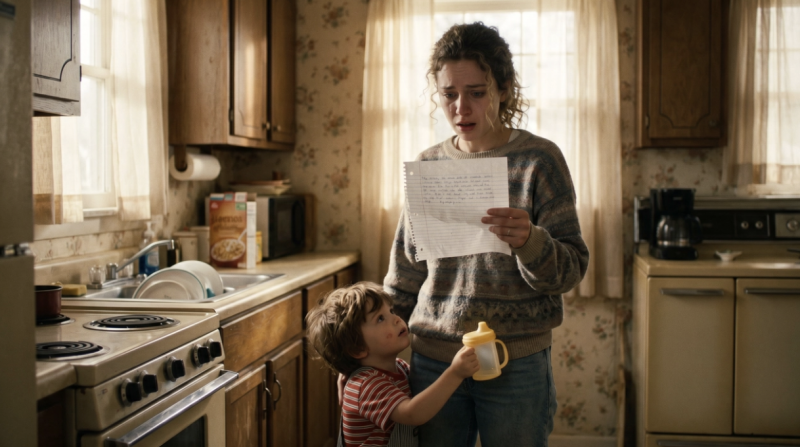
“Juice, Mama?”
That was the moment everything split.
My mother called again.
“Margaret, this is a sign,” she said after I explained. “Let the system take them. You still have a life.”
“They’re upstairs.”
“They aren’t your responsibility.”
“I can’t send them away.”
“You’re being foolish.”
“I can’t.”
She hung up.
Others followed—relatives, friends, even people from Robert’s side of the family. They all said the same thing: the children could go into care, I was too young to sacrifice my life, someone else could handle it.
But I looked at them sitting at my table and knew I couldn’t abandon them. I loved them as my own.
At the county office, a woman reviewed everything carefully.
“Are you sure?” she asked. “Ten children is overwhelming. This is only the beginning of guardianship.”
“I know.”
“You can still step back.”
“I can’t.”
My signature shook as I signed.
It took years for everything to finalize, but in my heart, they were already mine.
The first year was nearly unbearable. I worked days in a fabric warehouse and nights sewing uniforms. Amanda cooked simple meals. Derrick handled yard work. Sue managed laundry. Jacob and David argued constantly, usually just to laugh.
At night, I often wondered why Robert left.
Maybe someone else.
Maybe debt.
Maybe fear.
Maybe I wasn’t enough.
I never found an answer.
A few men tried to enter my life in those early years, but every conversation ended the same way.
“10 children?” they would say, then disappear.
Eventually I stopped trying. My life became school runs, bills, sickness, laughter, and bedtime prayers.
My parents remained distant. My mother still called at Christmas.
“Are you still doing this, Margaret?”
“They’re my children.”
“They aren’t yours.”
“They are.”
I stopped answering.
Life continued anyway.
Amanda became a pediatric nurse. Derrick opened a garage. Sue became a teacher. Jacob and David became engineers and still argued constantly. Sophie became a social worker, saying she chose it because she wanted to help children the way I had helped her.
I cried for an hour after she told me.
30 years passed, and I never regretted it.
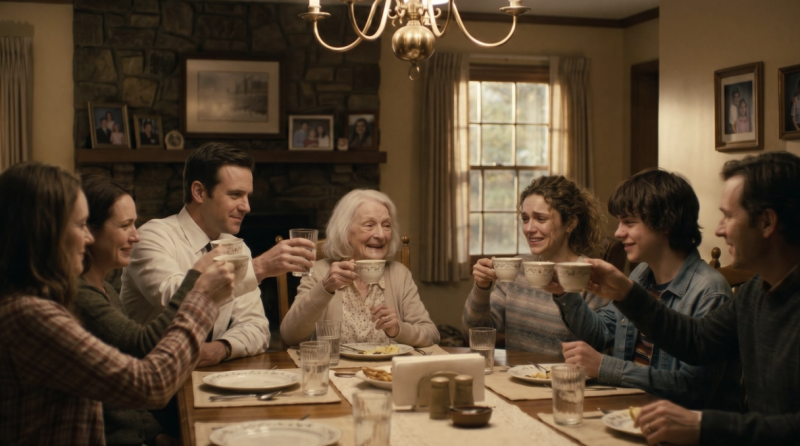
Every Saturday, they came home. Grandchildren filled the house. The kitchen always smelled like food, tea, and warmth.
That Saturday was no different—until someone knocked.
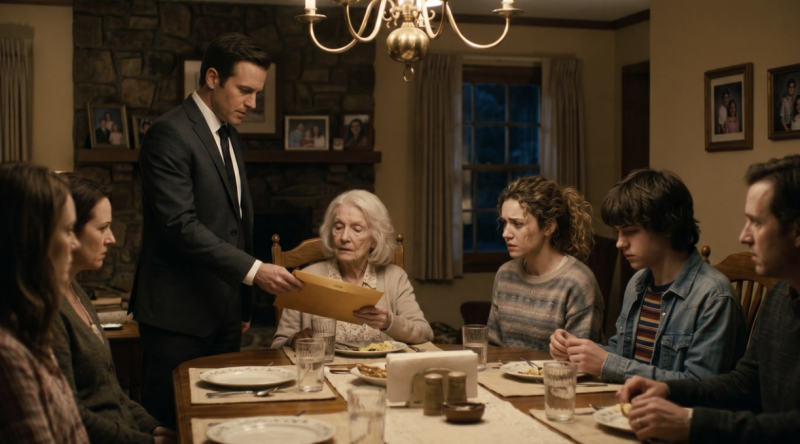
I opened the door to a man in a gray suit holding a folder.
“Margaret?”
“Yes.”
“I’m Mr. Johnson. Robert’s attorney.”
The room behind me went silent.
He handed me an envelope with my name written in a handwriting I had not seen in 3 decades.
“This was to be delivered today,” he said. Then he left.
My hands shook as I opened it.
Robert wrote that he had been ill before the wedding—fatigue, headaches, weight loss, all signs he ignored.
A week before the wedding, doctors diagnosed him with a serious illness. He was given months, maybe a year. There was a treatment, but no guarantee.
“I couldn’t marry you knowing I might leave you a widow and the children fatherless. So I left. I thought cruelty would hurt less than watching me die slowly.”
I stopped reading.
Sophie took my hand.
I continued.
“The treatment worked unexpectedly. By the time I recovered, 2 years had passed. I came back once. I drove by the house 3 times. I saw Amanda bringing groceries, Derrick teaching the twins to fix a bike, Sophie running to you calling you ‘Mama.’”
“I sat outside for nearly an hour. I understood I had already broken something. They had stability, and you were their mother. I feared returning would destroy everything.”
“So I left again.”
He wrote that he never remarried, lived quietly, and built a modest life. Every spare dollar went into a trust for us.
He also hired someone to check on us over the years—never interfering, only confirming we were safe.
He knew about everything.
Graduations. Careers. Lives.
The final part blurred through tears.
“You gave them the life I couldn’t. I’m not asking forgiveness. Only that you know I loved you all, even from afar.”
Silence filled the room.
For 30 years I believed I wasn’t enough.
Now I understood I had carried the wrong pain.
Derrick wiped his eyes. Sue whispered that he had watched them grow. Sophie held my hand tightly.
“I forgive him,” I said finally. “I’m 62, and I can’t carry anger anymore.”
I raised my cup.
They all followed.
“To Robert,” I said.
“And to Mama,” Amanda added.
Then all of them repeated it together.
“To Mama.”
And for the first time, the empty space he left behind no longer felt like loss.
It felt like part of the table that held us together.