I woke up to find my dog staring at me—And then I saw what was under the bed
At first, I thought he just needed to go out.
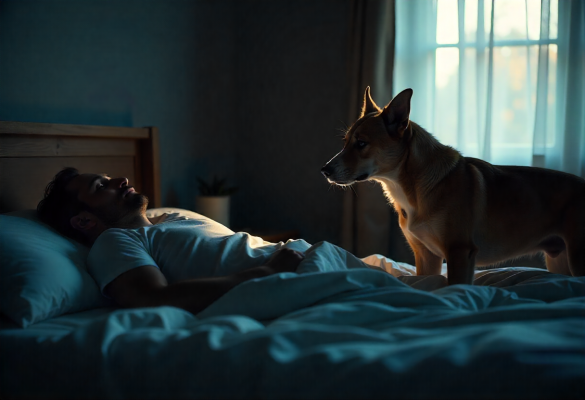
Murphy usually nudges me with his nose or scratches at the side of the mattress when he wants something. But that morning, he didn’t move—he just stood there, frozen, ears slightly back, eyes locked on my face like he was trying to tell me something.
I groaned and rolled over, still half-asleep, mumbling something about “five more minutes.”
But then I noticed something strange.
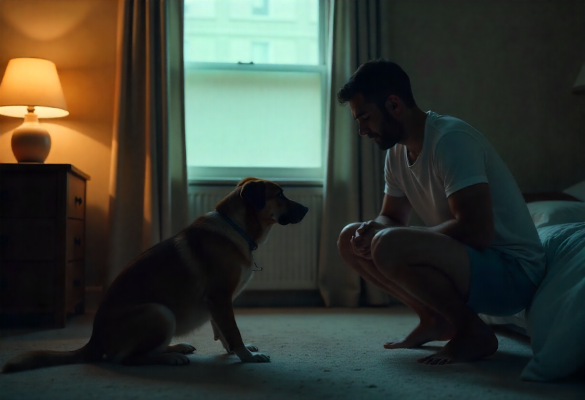
He wasn’t exactly looking at me. His head was tilted… just slightly downward. Toward the space under the bed.
I sat up quickly, heart racing. Murphy didn’t move.
I whispered his name. He glanced at me for a moment, then looked back under the bed.
I don’t know what compelled me, but I lowered my legs over the edge, leaned forward until my cheek was nearly resting on the mattress, and peeked underneath.
It took a second for my eyes to adjust to the shadows.
That’s when I saw her.
Wide, terrified eyes staring back at me from the darkness. A girl. No older than twelve. Curled up like a rabbit in its burrow, her small hands clutching the bed frame.
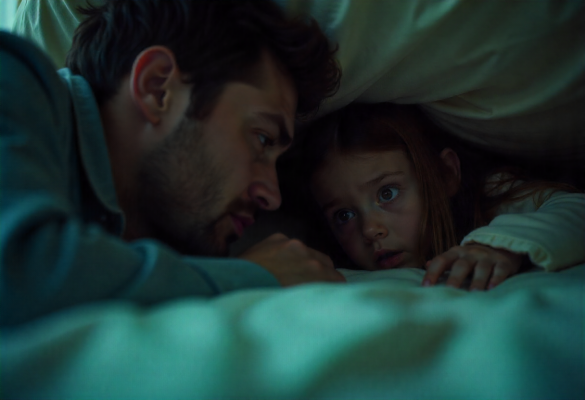
I gasped and scrambled backward so fast I slammed my shoulder into the nightstand. Murphy didn’t flinch. He just kept staring.
Stumbling to my feet, trembling and confused, my voice cracked as I asked, “Who are you?”
She didn’t answer. Her lips moved like she wanted to speak, but no sound came out. She didn’t look wild or dangerous—just… scared.
“Hey… it’s okay. I’m not going to hurt you.” I crouched again, this time gently.
She didn’t move. But her eyes followed me. That was something.
Murphy stepped forward slowly and sat beside me. I felt his warmth against my knee. His tail swayed once. Slowly.
“I’m going to call someone, okay?” I said softly, though I wasn’t sure who I even meant.
Just as I turned to grab my phone, she whispered, “Don’t.”
I froze.
Her voice was barely audible, but I heard it. And I felt the fear in it.
“Why not?” I asked, blinking.
She looked around nervously, her small body shaking. “He’ll find me.”
That gave me chills.
“Who?” I asked.
She didn’t answer.
So I made a choice. One I didn’t fully understand at the time. I told her she could stay. That I wouldn’t tell anyone. That she was safe here. And somehow… that was enough.
She crawled out slowly.
Wearing an oversized hoodie and mismatched socks, her hair tangled, cheeks sunken like she hadn’t eaten properly in a long time. She looked like she’d been running—or hiding—for far too long.
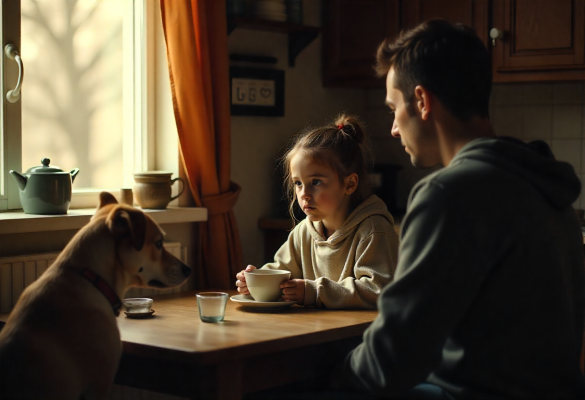
I made her toast and gave her orange juice. Murphy stayed close to her, like he’d known her forever.
We didn’t talk much. She didn’t even tell me her name. She just sat at the kitchen table, holding the cup of warm tea I made, staring out the window like she was expecting someone to break in.
Later that day, I called in sick to work. The situation was too delicate to risk leaving her alone.
Around noon, I gently asked, “Do you want me to call someone? A friend? Your parents?”
She shook her head quickly. “They don’t know. They can’t know.”
I wanted to press, but something in her eyes stopped me.
For the next two days, she barely left the guest room, except to eat. She slept a lot, with Murphy curled up beside her like a loyal guardian.
The more I watched her, the more I realized how desperately she needed help—not the kind you find at a hospital or a police station. The kind that comes from trust.
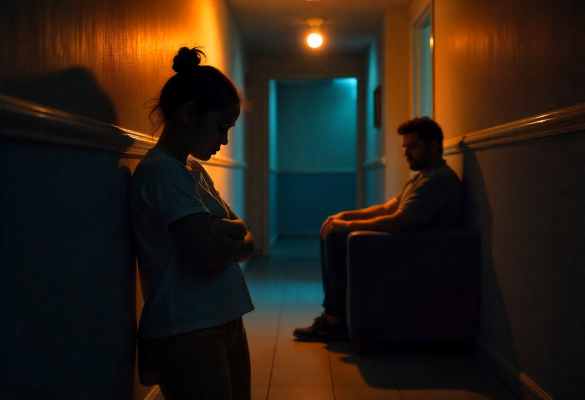
On the third night, as I was dozing off on the couch, I heard soft footsteps and found her in the hallway, hugging herself.
“I had a brother,” she whispered.
I sat up. “Yeah?”
“He used to tell me stories. About magic trains and flying cats. Every night before bed.”
I smiled gently. “Sounds like a wonderful brother.”
“He died last year. After that… things got worse.”
That’s when she started to open up.
Her stepfather wasn’t who he seemed. Her mother didn’t believe her. So she ran. Took a bus, walked for miles, hid in garages and under porches. She picked my house at random when it started to rain. The back door had been unlocked.
I should’ve felt fear—or maybe anger.
But all I felt was sorrow.
“You’re not alone anymore,” I told her. And I meant it.
The next morning, she told me her name: Nora.
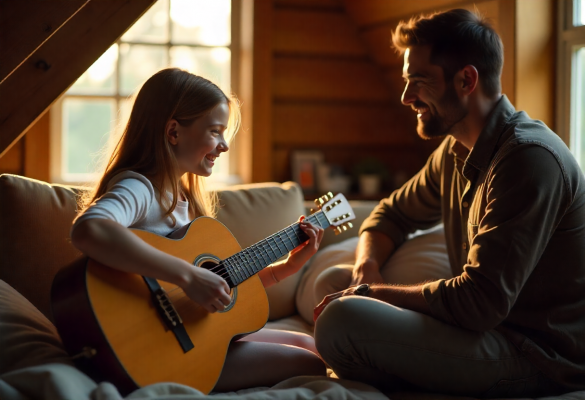
A few days later, I found an old guitar in the attic and taught her a few chords. She lit up like I’d never seen before. Played for hours, softly humming to herself.
I called a friend who works at a youth support center. She promised discretion and came over to “have tea” with us.
Nora liked her.
Slowly, we began to build something. I signed up to be a temporary guardian. It wasn’t easy—the paperwork, the interviews, the wait. But I pushed through.
So did Nora.
We painted the guest room together. She picked a soft blue, “like the sky on good days,” she said.
Months passed.
Murphy never left her side.
She went back to school. Made a few friends. Even joined the art club.
She still had bad nights. Panic attacks. Flashbacks. But she learned to talk about them. Sometimes I’d wake up to the sound of her crying, and I’d sit with her, just listening.
One night, nearly a year after she first appeared under my bed, she came into the room holding a small trophy.
“Second place in the school art show,” she said, trying to sound casual—but her smile gave her away.
I hung it on the fridge like it was a Nobel Prize.
Then came something I didn’t expect.
One afternoon, I got a call. From her mother.
She’d been looking for Nora for over a year. Said she had left her husband. That she hadn’t known what was happening until recently. That she’d finally seen the signs.
I didn’t know what to believe.
But I told Nora. Because it was her right to know.

She didn’t say much. Just grew quiet.
A week later, she asked to see her mom. So we arranged it.
Their reunion was slow, tense—but real. Her mom cried. Nora didn’t. At least, not right away.
But a few days later, she started writing her letters. Then came phone calls. Then visits.
Finally, after months of cautious steps, she moved back in with her mother.
The house felt quieter. Emptier.
Murphy still wandered into her room at night, looking puzzled. I knew exactly how he felt.
But the story doesn’t end there.
A year after she left, I received an envelope in the mail. Inside was a photo of Nora, now taller, holding a certificate from her school—“Student of the Year.”
There was a note:
“Thank you for believing in me when no one else did. With love, Nora.”
There was something else inside—a drawing.
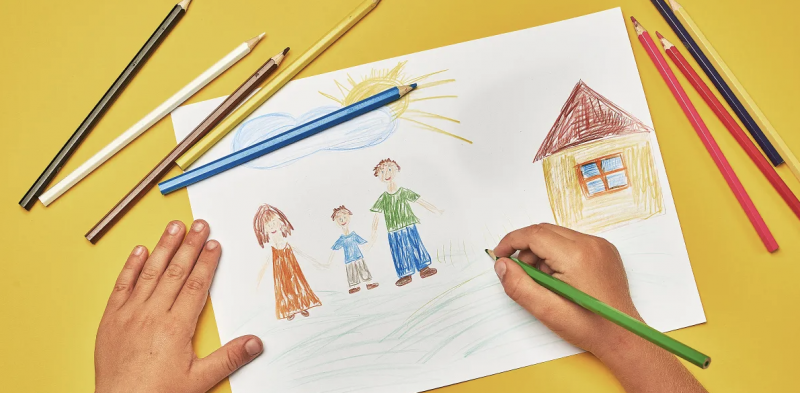
Me, Murphy, and Nora, sitting on the porch under a sky painted soft blue.
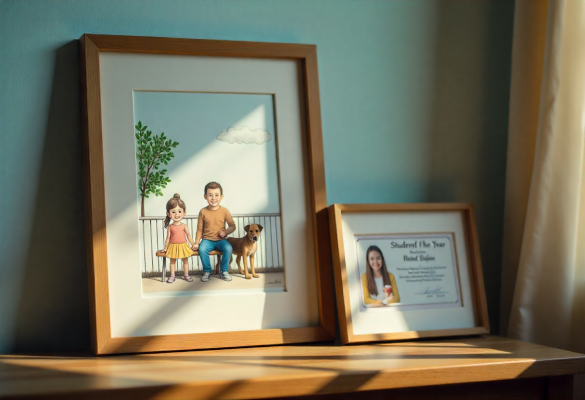
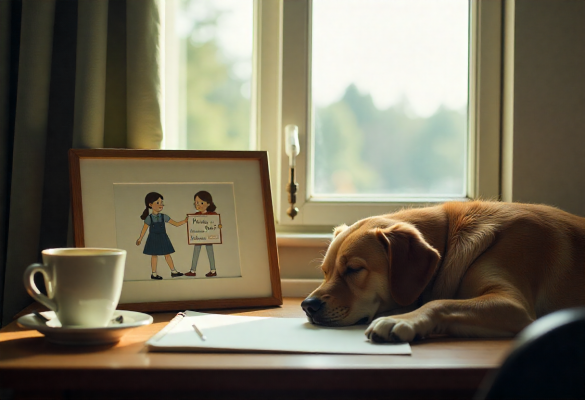
I keep that drawing framed on my desk.
Because sometimes, people come into your life unexpectedly and leave a mark you never saw coming. They remind you that doing the right thing—just because it’s right—can change everything.
You don’t need a cape. Just kindness. Just patience. Just the courage to listen when someone whispers, “Don’t.”
Life doesn’t always give us warnings. Sometimes, it gives us choices.
That morning, I thought I was just getting up to let my dog out.
Instead, I woke up to the chance to change a life.
And in doing so, I changed mine too.
Sometimes, the people who need us most… don’t cry out loud.
They’re waiting—for someone to notice. To ask. To care.
So if anyone ever looks at you the way Murphy looked at me that morning…
Maybe check under the bed.
You never know what kind of miracle might be hiding there.