
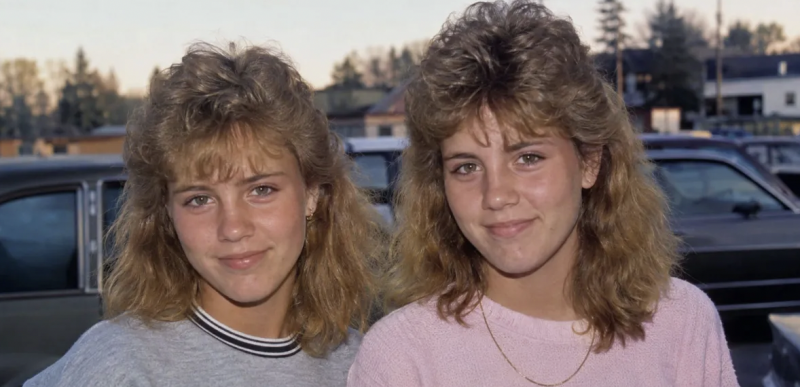
My Twin Sister Vanished Wearing Her Sunflower Sweater on Our 16th Birthday in 1986. Forty Years Later, My Granddaughter Came Home Wearing That Same Sweater and Told Me, “The Cleaning Lady at My School Gave It to Me.”
For forty years, I lived with an unanswered question: why did my twin sister leave and never come back? Then my granddaughter brought home something I hadn’t seen since 1986. I thought it would explain Laura’s disappearance, but instead, it forced me to question everything my family had told me.
The plate slipped from my hand before I realized I had stopped holding it.
It shattered on the kitchen floor.
“Grandma!”
My eight-year-old granddaughter, Sophie, took a step back.
Cream-colored yarn. A huge yellow sunflower and one brown petal.
“Grandma!”
“Take it off.”
Sophie blinked.
“What?”
“Sweetheart, please. Take the sweater off.”
Her smile disappeared.
“But Dolly gave it to me.”
“Take it off.”
My stomach tightened.
“Who’s Dolly?”
“Our new cleaning lady at school.”
I crouched beside her.
“Did Dolly ask you to go somewhere or keep a secret?”
“Who’s Dolly?”
“No. She gave me the sweater in the hallway because I was cold. My teacher was right there.”
That reassured me.
Sophie took off the sweater.
“Did I do something wrong?”
“No, sweetheart.”
I turned the collar inside out.
“Did I do something wrong?”
There, sewn in faded red thread, were two initials.
L.M.
My hands began to tremble.
And suddenly, forty years disappeared.
In 1986, my twin sister, Laura, and I turned sixteen.
Our mother, Annette, had spent months knitting our birthday sweaters. Mine had daisies. Laura’s had a huge sunflower with one accidental brown petal.
Mom offered to redo it.
Laura laughed.
“Leave it. Now Emelia can’t steal mine.”
I threw a baby carrot at her.
Mom offered to redo it.
That night, relatives filled our house while Dad grilled hamburgers and Laura stole frosting from the cake.
Around nine, she kissed Mom on the cheek and headed for the door.
“I’m going out for some fresh air. Save another slice of cake for me!”
Those were the last words I ever heard her say.
Laura never came back.
“Save another slice of cake for me!”
There was no note, no missing suitcase, no phone call, and no sunflower sweater.
For years, every late-night phone call made my heart stop.
Mom searched until the day she died.
Dad was different.
Within a few months, he stopped participating in the searches. He put Laura’s photographs away in boxes. Over time, even saying her name around him could make an entire room fall silent.
Mom searched until the day she died.
I told myself grief had hardened him.
Dad was ninety years old and lived twenty minutes away in a nursing home. His body had grown frail, but his mind remained sharp.
Until that afternoon, I believed his silence was simply the way he had found to survive losing Laura.
Then Sophie pointed at the sweater.
I told myself grief had hardened him.
“Dolly said you should look inside.”
I looked at her.
“Inside what?”
“Under the flower.”
She showed me a tiny seam beneath the sunflower.
I had never noticed it.
“Inside what?”
I loosened a thread and slipped two fingers through the opening.
Something hard touched my fingertip.
I pulled it out.
A small wooden sunflower pendant fell into my palm.
My knees went weak.
“Grandma?”
I stared at the pendant.
Dad used to carve wooden flowers for us when we were little. Mine was a daisy. Laura’s was that sunflower.
I had only seen hers once after childhood: on the night Laura disappeared, clutched in Dad’s hand beneath the porch light.
“Why are you crying?” Sophie whispered.
I had only seen it once after that.
“Because your great-grandfather had this the night my sister disappeared.”
She looked at the pendant.
“Then how did Dolly get it?”
“I don’t know.”
For forty years, that answer had controlled my life.
I wasn’t going to let it happen for another day.
“I don’t know.”
I called Sophie’s mother and asked her to come home early.
Then I took the sweater and drove straight to the school.
At the reception desk, I asked to speak with Dolly.
The woman behind the counter told me she was finishing up nearby.
I waited.
Five minutes later, a woman in her thirties pushed a cleaning cart through the double doors.
At the reception desk, I had asked for Dolly.
She stopped when she saw me.
Her eyes went straight to the sweater folded over my arm.
“You must be Emelia.”
I didn’t like that she knew my name.
“You gave this to Sophie. My granddaughter.”
“Yes.”
“Why?”
Dolly glanced at the reception staff.
“Can we talk somewhere more private?”
“No.”
Her eyebrows rose.
“I’ve spent forty years waiting for people to tell me things. Start talking here.”
“Can we talk somewhere more private?”
She swallowed hard.
I held up the pendant.
“Who gave you this sweater?”
“My mother.”
“What’s her name?”
Dolly hesitated.
“Who gave you this sweater?”
I stepped closer.
“Please don’t make me pull every word out of you.”
Her eyes filled with tears.
“Laura.”
I studied her face.
She didn’t look exactly like Laura.
“Laura is your mother?”
“Yes.”
“Is she alive?”
“Yes.”
I sat down.
For forty years, I had imagined every possible ending to Laura’s story. None of them included this.
“Is she alive?”
“And Thomas? Is he your father?”
“Yes. They stayed together for a few years.”
I looked at the sweater.
“And Laura still never came home?”
Dolly took a deep breath.
“She did.”
“When?”
“1992.”
Six years after she disappeared.
Laura was twenty-two.
“How do you know?”
“Because she took me with her.”
I stared at Dolly.
“What?”
“Your father found them outside.”
She nodded.
“She said my father, Thomas, went to your house on your birthday. His family was leaving town, and he asked her to go with them.”
“She just left?”
“Not exactly.”
“What does that mean?”
“Your father found them outside.”
My hand tightened around the sweater.
“What happened?”
“They argued. He told her that if she left with Thomas, she shouldn’t expect to be able to come back.”
I heard Dad’s voice in my head immediately, not because I had heard him say those exact words before, but because they sounded exactly like him.
“What happened?”
“She thought he was bluffing.”
“And then?”
“She left.”
I looked away.
I had spent years imagining someone had taken Laura.
I never imagined she had left angry, believing she could fix everything later.
“She thought he was bluffing.”
“How long did she stay with Thomas?”
“A few years. I was born when my mother was twenty.”
“What happened to them?”
“They grew up. Mom wanted to stop running. Thomas didn’t.”
“And that’s when she came back?”
“Not immediately. By then, coming home meant admitting she had made a mistake.”
I understood that more than I wanted to.
“She thought he was bluffing.”
“So what changed in 1992?”
“Me.”
Dolly’s voice softened.
“Becoming a mother made her understand what your mother must have gone through.”
My throat tightened.
“So she brought you home.”
“Yes. I was two.”
Laura was twenty-two.
“So she brought you home.”
“What did she expect to happen when she knocked on the door?”
“She thought your mother would answer.”
“Was Mom home?”
“No. You weren’t either.”
I leaned forward.
“Who answered?”
“Your father.”
My stomach turned cold.
“Dad told us he never saw her again.”
Dolly didn’t answer.
She didn’t have to.
“What did he do?”
“Your father…”
“What did he do?”
“He told her she couldn’t come back.”
I stood up.
“No.”
“Emelia…”
“He wouldn’t have done that without telling Mom.”
Dolly’s expression told me otherwise.
“She tried to come back again?”
“Not home.”
“Why?”
“Because she believed him.”
“Believed what?”
“That your family had finally moved on. That coming back would only hurt all of you again.”
I stared at her.
“Did he tell her I said that?”
“Mom never told me exactly how he put it.”
“Good. Then don’t guess.”
Dolly nodded.
I picked up the sweater.
“Where is Laura now?”
“Nearby.”
My heart raced.
“Does she know you gave this to Sophie?”
Dolly looked down.
There was my answer.
“No.”
“Where is Laura now?”
I let out a short laugh, not because anything was funny.
“You thought that after forty years, you could just hand my granddaughter a sweater and let me figure out the rest?”
“I asked Mom to contact you for years. Sophie’s class was making family trees, and they put the projects on the wall. I saw hers while I was cleaning.”
“Even so, it wasn’t your decision to make.”
“I know.”
“One more question. Did Laura tell you where this pendant came from?”
Dolly nodded.
“She said your father returned it to her when she came back home.”
Dad had been holding that pendant the night Laura disappeared.
If Laura had it afterward, he had seen Laura.
There was no room for doubt anymore.
“One more question.”
I picked up my purse.
“Where are you going?”
“To ask my father why he let my mother die believing her daughter never came home.”
Dad was watching television when I walked in.
“Emelia. You’re here earlier this week.”
I placed the wooden sunflower on his tray.
“Where did you get this?”
His face changed.
“Where did you get that?”
“You saw Laura after 1986?”
“No.”
The lie came too quickly.
I placed the sweater across his lap.
“Where did you get this?”
“She came back.”
Dad looked away.
That was enough.
“When?”
His shoulders dropped.
“1992.”
The room seemed to shrink.
“She came back.”
“She was alone?”
“No.”
“She had a girl.”
Dad closed his eyes.
“Dolly.”
His eyes opened again.
“She had a girl.”
“You met her.”
“Yes.”
A look of relief passed over his face.
That made me furious.
“What happened?”
“Emelia, that was decades ago.”
I pulled a chair closer and sat directly in front of him.
“You met her.”
“Not because of me. I only found out today.”
His mouth tightened.
“Tell me.”
Dad looked at the sunflower.
“Your mother was out. Laura knocked on the door. She said she had come home.”
My throat closed.
“And what did you say?”
“Your mother had finally started sleeping again. You had moved out. Things had calmed down.”
“Calmed down?”
“People had stopped talking.”
“About Thomas?”
Dad looked down.
“Calmed down?”
“About everything. About Laura leaving. About me not being able to control my own daughter.”
I stared at him.
“Control?”
“That’s not what I meant.”
“That’s exactly what you said.”
Dad looked down.
“That’s not what I meant.”
“She was sixteen.”
“She knew what she was doing.”
“No. No sixteen-year-old understands what forty years means.”
He flinched.
“What happened before she left?”
“She knew what she was doing.”
Dad rubbed his forehead.
“I found her at the gate with Thomas. I told her to come inside.”
“And when she refused?”
His voice faltered.
“I told her that if she left with him, she shouldn’t expect to come back.”
“I told her to come inside.”
Tears burned my eyes.
“You said that to your sixteen-year-old daughter?”
“I didn’t think she would leave.”
“But she did. And six years later, she came back anyway.”
Dad covered his face.
“But she came back.”
“What did you say in 1992?”
“I said she couldn’t just come back and reopen all those wounds.”
“Did Mom say that?”
“No.”
“Did I?”
“No.”
“Did Laura?”
“No.”
I leaned forward.
“Then who were you protecting?”
“All of you.”
“No.”
“Emelia…”
“You were protecting yourself from admitting you were wrong.”
“I was trying to save the family.”
“All of you.”
His mouth trembled.
“I was ashamed.”
“I know.”
That was the hardest part.
I understood how one bad choice could turn into decades of silence.
But understanding didn’t mean forgiving.
“Did Laura ask about me?”
Dad looked down.
“Yes.”
My chest tightened.
“What did she ask?”
“She asked if you blamed her.”
“What did she ask?”
“And what did you tell her?”
“That you had suffered because of what she did.”
I stared at him.
“Did you tell her I looked for her?”
“No.”
“Did you tell her Mom never stopped looking?”
“No.”
“Did you tell her I would have opened that door?”
His eyes filled with tears.
“No.”
I stood up.
“You didn’t protect us, Dad. You spoke for us.”
He began to cry.
At ninety years old, he looked smaller than I had ever seen him.
For most of my life, that would have been enough to make me stop.
But not that day.
“I love you.”
He looked up.
“But you spoke for us.”
“I thought I was saving the family.”
“Your love doesn’t make what you did less serious.”
“I thought I was saving the family.”
“You spared yourself one difficult conversation and gave all of us forty years of questions.”
He had no answer.
At the door, he called my name.
“I thought I was saving the family.”
I stopped.
“Will you come back tomorrow?”
My hand remained on the doorknob.
“I don’t know.”
Then I left.
“I don’t know.”
The next morning, I took Sophie to school myself.
“Is it because of Dolly?” she asked.
“Yes. Just not because you did anything wrong.”
After she went inside, I waited near the entrance.
Dolly appeared ten minutes later.
“Emelia.”
“I need five minutes.”
We started walking.
“How did it go with your father?”
“He admitted Laura came back in 1992.”
Dolly slowly exhaled.
“He also told me what he said to her.”
“I’m sorry.”
“I know.”
“But the fact that your father was wrong doesn’t make Laura right.”
Dolly looked at me.
“He was the reason she stayed away.”
“I’m sorry.”
“He was one of the reasons.”
“Emelia…”
“No. I’m not asking you to defend her.”
That made her stop.
I turned to her.
“He was one of the reasons.”
“Laura was sixteen when she left. I can understand a sixteen-year-old girl making a terrible decision.”
Dolly lowered her eyes.
“But she wasn’t sixteen forever. She was twenty-two when she came back. She was thirty, then forty.”
“She was ashamed.”
“So was I.”
“She thought you would hate her.”
“She didn’t know that because she never asked.”
Dolly was silent.
“Mom carries that guilt.”
“Just as she should. Dad doesn’t get all the blame just because it’s easier to be angry at him.”
Dolly nodded.
“You’re right.”
“Mom carries that guilt.”
“You’re right.”
“Does Laura know about the sweater?”
“She does now. She was furious.”
“Good.”
“She cried too.”
“Good.”
“That doesn’t fix anything.”
“No.”
“She asked about me?”
“All night.”
I let out a short laugh.
“Forty years too late.”
“All night.”
Dolly took something from her coat pocket.
“This is her number.”
I looked at the paper in her hand but didn’t take it.
“She wants you to call.”
“Of course she does.”
“Do you want me to tell her no?”
I thought about Dad closing that door in 1992.
Then I thought about Laura spending the next thirty-four years letting that one door speak for me.
“No.”
Dolly waited.
“Tell her something else. I know what Dad did. I know why she left. And I know she had years when she could have contacted me on her own.”
I thought about Dad.
Dolly nodded.
“Anything else?”
“Yes.”
Finally, I took the paper from her hand.
“I’m not going to call her.”
“Then why did you take it?”
“Because I’m tired of letting other people control what I know.”
I folded the number once and put it in my purse.
“If Laura wants to see me, she can come to me.”
“I’ll tell her.”
“And, Dolly?”
“Yes?”
“Don’t involve Sophie in this again.”
“I won’t.”
“Good.”
Three weeks passed.
Laura didn’t come.
Strangely, that hurt less than I expected.
Maybe because, this time, I knew the truth.
I visited Dad once during those weeks.
He said Laura’s name without whispering.
I didn’t forgive him.
He said Laura’s name.
On Sunday, Sophie sat at the kitchen table coloring while the sunflower sweater lay beside me.
“Grandma?”
“Hmm?”
“Are you still waiting for your sister?”
I looked at the brown petal Mom had once offered to fix.
“No.”
Sophie frowned.
“But don’t you want her to come?”
“I do.”
“Then you’re not waiting?”
I smiled.
“No, sweetheart. There’s a difference between leaving a door open and standing in it.”
I carefully folded the sweater.
For forty years, Laura’s absence had shaped my life.
Dad had made a terrible decision.
Laura had made many more afterward.
And I had spent decades paying for both of their mistakes.
Not anymore.
If my sister came, I would listen.
If she didn’t, I would still wake up tomorrow.
For the first time since 1986, that felt like enough.


