The Burden of Truth: A Daughter’s Inheritance
After my father’s death, I inherited his farm and the heavy silence he left behind. But hidden among his belongings, I found a letter that revealed the truth about our land—a truth that explained years of hatred and showed how one single decision had ruined more than one life.
Coming home from my father’s funeral, the last thing I expected to find on my doorstep was a pile of dog poop. At least, I hoped it was from a dog. I stood frozen for a moment, staring at the mess as if it were a personal insult from the universe.
Of course, I knew who was behind it. There was only one family in the neighborhood petty enough to do something like that.
I clenched my fists, crossed the yard, and knocked hard on their door. It wasn’t long before the door creaked open, revealing Walter.
He was almost seventy, with gray hair and slumped shoulders—the kind of man who might have once been strong, but now wore his bitterness like armor.
“What the hell is wrong with you?” I exploded. “Can’t you go a single day without your damn games? My father just died. I buried him this morning. Don’t you have even a shred of decency?”
“What the hell are you talking about?” he asked.
“Don’t play dumb with me. I know you’re the one who left that dog crap on my porch.”
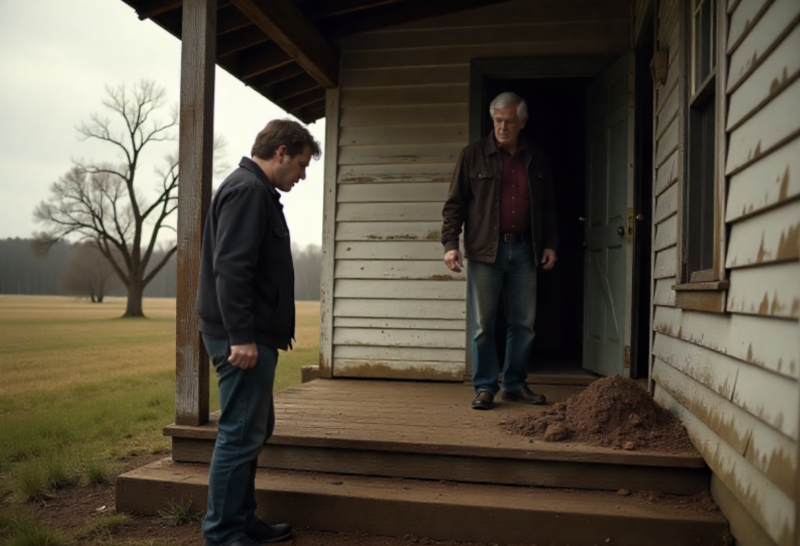
A laugh escaped his lips. He turned his head and whistled, and seconds later, a huge Rottweiler came running. Walter patted the dog’s head with fake affection.
“See? Duke’s a free spirit. He must have decided your house was the perfect place to leave his little gifts,” Walter said with a sarcastic smile. Then, looking at the dog, he added, “Good boy. Keep it up.”
“Are you crazy? Clean it up!” I demanded.
“Oh no, Claire. I won’t set foot on your damn property. Not since your dad got that restraining order against me. Remember? I can’t come near your house.”
With deliberate slowness, he slammed the door in my face.
I returned to the yard, shoulders slumped, grabbed a shovel, and spent ten long, humiliating minutes scraping and cleaning up what his beloved Duke had left me.
Later, when the house was silent except for the ticking of the old grandfather clock in the hallway, I sat on the couch and let the tears fall.
Dad had always been the one to stand up to the neighbors, to defend me when the world felt too cruel. But he was gone, and now I was alone to fight those battles.
I thought about the farm he left me—an inheritance that felt less like a gift and more like a burden I didn’t know how to bear.
He had been a successful farmer, a man who made sure his family never went without. Walter’s family hated us for that—or so he said. He claimed it was pure jealousy.
The war with Walter’s family had lasted as long as I could remember, stretching back into a past I never fully understood.
I promised myself I’d go to the farm the next day. Maybe then I’d find clarity, maybe some peace.
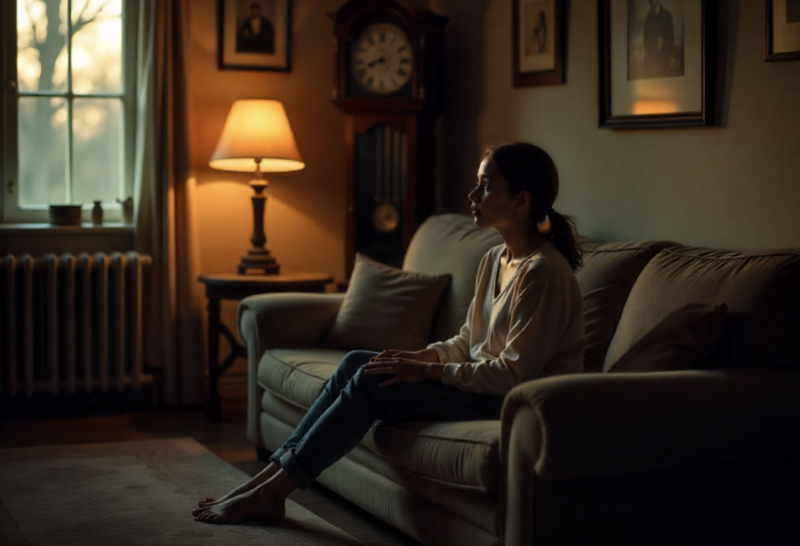
But that night, all I could do was sit quietly, let the pain wash over me, and admit how much I already missed him.
At dawn, I drove to the farm—the place that had defined so much of my father’s life and now, like it or not, defined mine.
In his will, Dad had written that he left me a special message somewhere on the farm, though he didn’t say what it contained or exactly where to find it.
For years, he had walked those furrows like a king in his kingdom—greeting the workers, checking on the animals, humming some old tune.
Now, it was just me, stepping out of the car with a heavy heart and a to-do list I wasn’t ready for.
Miguel, one of the workers, appeared near the barn. He took off his cap as soon as he saw me and bowed his head.
“Claire, I’m very sorry for your loss,” he said softly.
I frowned.
“Miguel, why are you here? I gave everyone the week off.”
“I came to feed the animals,” he replied. “I couldn’t leave them hungry.”
“Did my dad ever tell you he left me a message here? Something important?”
“No, ma’am. If he did, I never heard about it.”
I thanked him, though disappointment gnawed at me. When he left, I entered the farmhouse.
Everywhere were traces of his life—the man who had been so big to me—and now it all looked like rubble I had to sort through.
I rolled up my sleeves and began the task: three piles—what to keep, what to give away, what to throw out.
Each object carried the weight of a memory, and by the time the sky darkened, I was exhausted.
I decided to make some tea before giving in to fatigue. In the kitchen, I reached for the jar of dried herbs my father had collected.
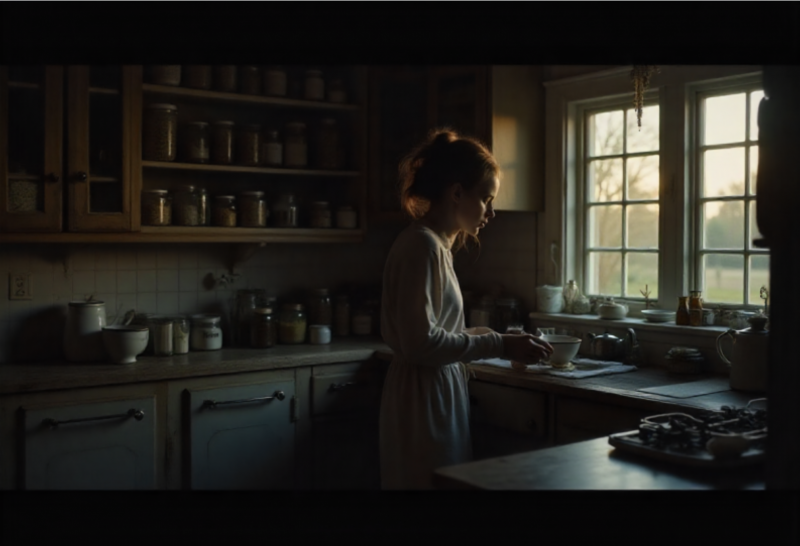
My fingers brushed the shelf and suddenly something slipped and fell with a dull thud. I bent down and froze.
It was an envelope, with my name written in my father’s unmistakable handwriting.
That had to be the message he promised in his will. But before I could open it, a sound broke the silence. At first it was faint, like footsteps dragging over gravel.
I looked up, heart pounding. The farm was supposed to be empty. Miguel had left hours ago, and there was no reason for anyone else to be there.
I ran outside, the cold air stinging my face. Just as I stepped off the porch, I saw a figure climbing into a car parked by the road.
The engine roared and in seconds the vehicle sped away.
I barely had time to make out the shape, but I knew something was wrong. Why would someone come all this way only to leave so fast?
I turned back toward the house and my stomach churned.
The front walls of the farm were splattered with red paint, words scrawled in wild, angry strokes: Liar. Devil. Idiot. The accusations screamed from the wood, dripping like fresh wounds.
I covered my mouth, tears spilling before I could stop them.
My father had been buried less than twenty-four hours and already his name was being defiled.
Trembling, I staggered inside and headed straight to the living room where the security monitor was.
My hands searched for the buttons until I opened the front door camera. There it was—the car driving away.
The image was blurry, but the license plate was clear. I knew exactly who it belonged to.
I didn’t go straight home that night.
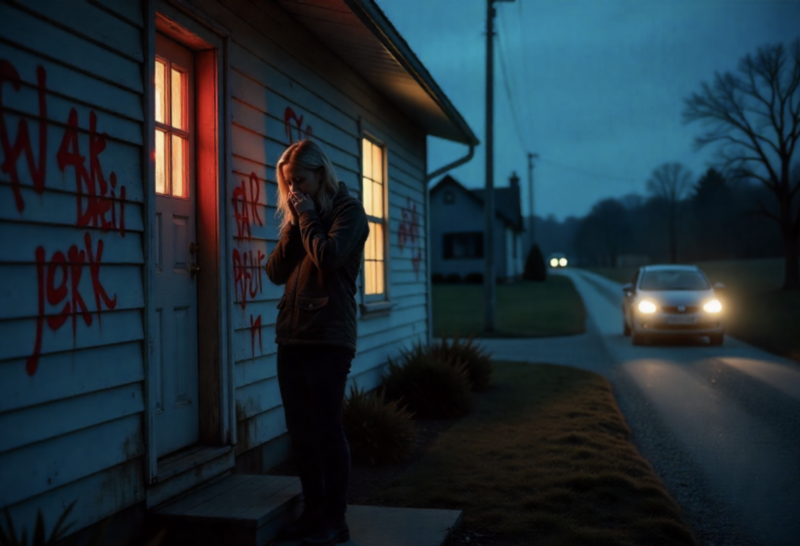
Instead, I stopped in front of Walter’s house—the place I feared most in the world. I knocked hard until the door opened.
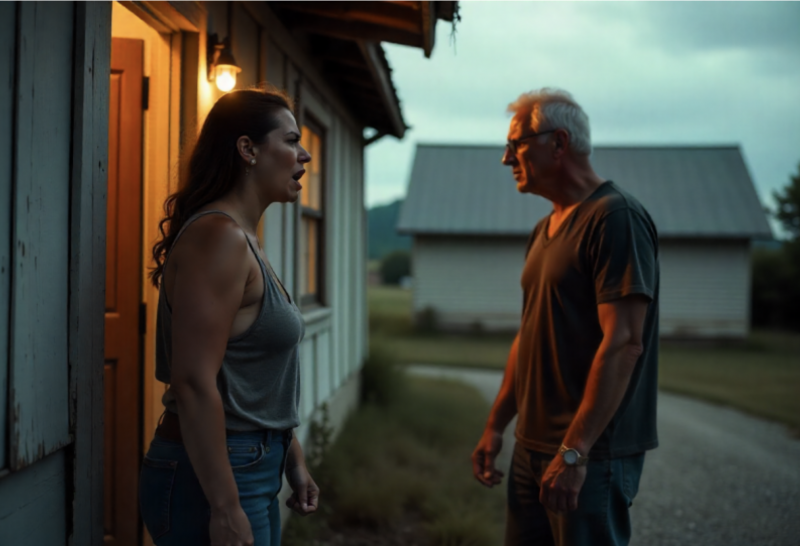
“How could you?” I shouted before he said a word. “How did you let your family do something so vile?”
“What are you talking about, Claire?”
“Don’t play innocent,” I snapped. “Your son Carlos went to the farm and covered the house in insults. I saw the paint, the car, the license plate. It was him.”
“Carlos! Get out here!”
Carlos appeared moments later—tall, broad-shouldered, jaw clenched.
“What’s she talking about now?” Walter asked.
“I’ll tell you,” I said. “You vandalized my father’s house. You stained his name. He’s dead, Carlos. Is this how you honor the dead?”
Carlos’s face twisted with rage.
“Your family deserved it. Every word I painted was true.”
“Deserved? Why? For being successful? For having more than you?”
He stepped closer.
“Don’t play innocent, Claire. You know exactly what your family did. Your father destroyed ours, and you go around pretending to be the victim. You’re just like him.”
His words hit me like a slap, but before I could answer, Carlos slammed the door shut. I pounded on it several times but no one opened.
Finally, through a crack in the window, I shouted:
“If this doesn’t stop, I’ll go to the police!”
Back at my house, I sat in silence, still shaking from the confrontation.
I took the envelope from my bag. My fingers hesitated at the seal, but I forced myself to break it. Inside was a letter.
“Claire,” it began, “I couldn’t leave this world without telling you the truth. I’ve carried this weight my whole life and I can’t keep pretending to be the man you thought I was.
You deserve to know why Walter and his family hate us so much. Long ago, he and I were friends—closer than brothers.
We dreamed of owning a farm together. Neither of us had the money alone, so we agreed to buy it jointly.
But then your mother was expecting, and I panicked. I wanted to give my family security and convinced myself I had no other choice.
I took Walter’s money but put the deed only in my name. I left him with nothing. I stole his savings and his future.
It was the worst mistake of my life, and no matter how good I tried to be afterward, nothing could erase it.
I’m sorry for lying to you, for making you believe I was a better man than I really was.”
My hands trembled as I finished reading. I wanted to tear up the letter, burn every word to ashes.
But destroying the letter wouldn’t undo what my father had done. The man I trusted most had built everything on a betrayal.
I sat for a long time with the letter in my lap until I knew what I had to do. I took the farm keys and walked back to Walter’s house.
Carlos opened the door again.
“Didn’t I tell you? We don’t talk to liars.”
“I didn’t know the truth until tonight,” I said. “I just found out. And I need to talk to your father.”
Walter appeared behind him.
“What do you want now, Claire?”
I held out the keys.
“This is yours.”
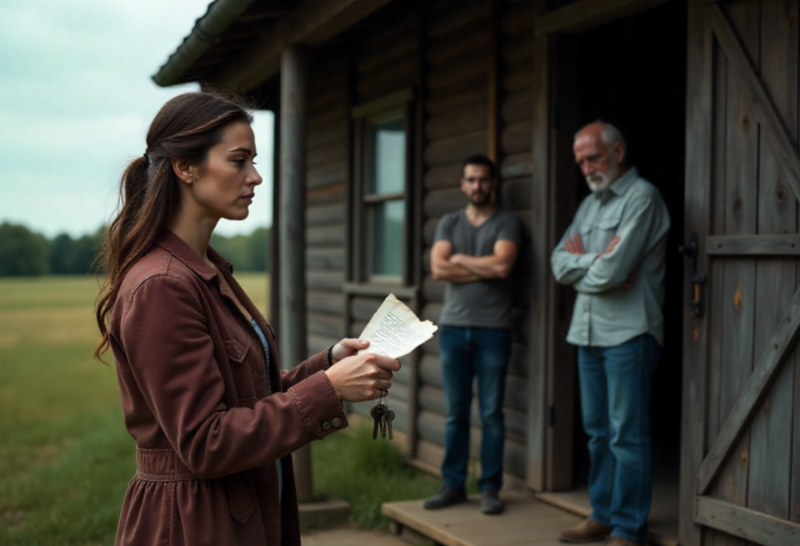
“What my father did to you was unforgivable. He took everything from you, and you lived with that all your life. This farm was always meant to be yours. Tomorrow I’ll call a lawyer and we’ll transfer it properly. But tonight I want you to know I don’t want to keep something that was never ours.”
Walter looked at me as if I spoke another language.
“You’re saying... you’re giving us the farm?”
“Yes,” I said firmly. “Because I can’t live in that house without knowing the truth. And because I’m sorry.”
For a long moment, he was silent, then he whispered:
“Thank you.”
Carlos stepped forward.
“I was wrong about you,” he said softly. “You’re not like him.”
I nodded and turned to leave, but Walter stopped me.
“Stay. Share a meal with us.”
I shook my head.
“I don’t deserve a seat at your table.”
His voice softened.
“Children shouldn’t carry the punishment for their parents’ sins. Come in, Claire.”
It wasn’t forgiveness—not yet—but it was a start. Slowly, I stepped inside.