

The first flights: A journey through the skies
The story of flight is a tale of ambition, innovation, and sheer perseverance. For centuries, humans have dreamed of soaring through the skies like birds, but it wasn’t until the late 19th and early 20th centuries that these dreams began to take form.
The idea of flying has been around for as long as humans have observed nature. The myth of Icarus, who flew too close to the sun with wings made of wax and feathers, is one of the earliest stories to capture human imagination.
But it wasn’t just in mythology; inventors and visionaries throughout history have tried to build machines capable of flight.
The most notable of these early dreamers was Leonardo da Vinci, who sketched plans for a flying machine in the 15th century. His designs, such as the famous "ornithopter" (a bird-like contraption), were visionary, but it was clear that technology wasn’t yet advanced enough to bring his ideas to life.
The breakthrough in human flight came at the turn of the 20th century, thanks to two brothers from Dayton, Ohio: Orville and Wilbur Wright. Their journey toward powered flight was not without challenges, but they persistently worked on the problem, using lessons from previous failures.
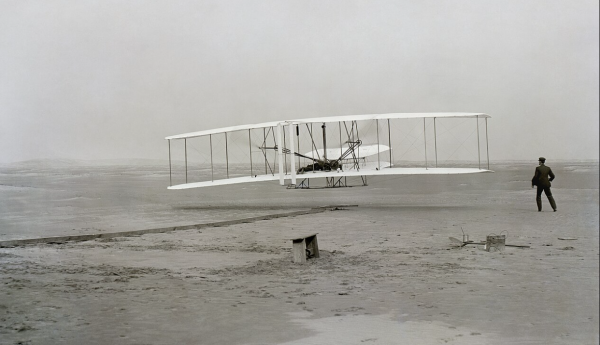
On December 17, 1903, the Wright brothers made history with the first sustained, powered flight in Kitty Hawk, North Carolina. The aircraft, the Wright Flyer, was a biplane with a wingspan of 12.3 meters and a 12-horsepower engine.
Orville piloted the first flight, which lasted 12 seconds and covered 36.5 meters. It wasn’t much, but it was the beginning of a new era.
Later that day, Wilbur took the controls for a slightly longer flight—59 seconds over 260 meters. These modest first flights were monumental, demonstrating that powered flight was not only possible but could be controlled and sustained.
The Wright brothers’ success came after years of experimentation with gliders and their unique approach to flight control. They understood the importance of controlling an aircraft in three dimensions (pitch, roll, and yaw), a concept that made their designs more stable and controllable than previous attempts.
While the Wright brothers were the first to achieve powered flight, they weren’t the only ones pursuing the dream of human flight. A number of other inventors were working on similar technologies, some even before the Wright brothers achieved success.
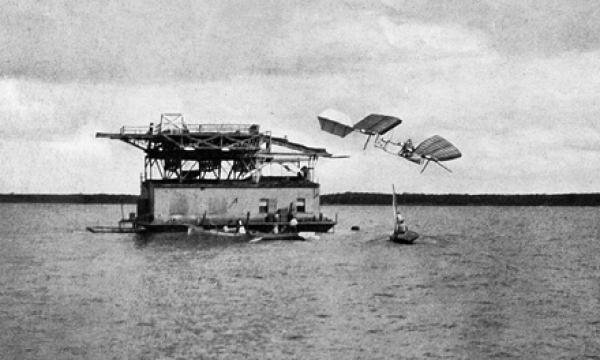
Samuel Langley was a pioneering American astronomer and aviation researcher who tried to build an aircraft called Aerodrome. In 1903, Langley’s plane, powered by an engine, was launched from a houseboat on the Potomac River. However, it failed to fly, crashing shortly after takeoff. Langley’s efforts were ultimately unsuccessful, but they contributed to the scientific understanding of flight.
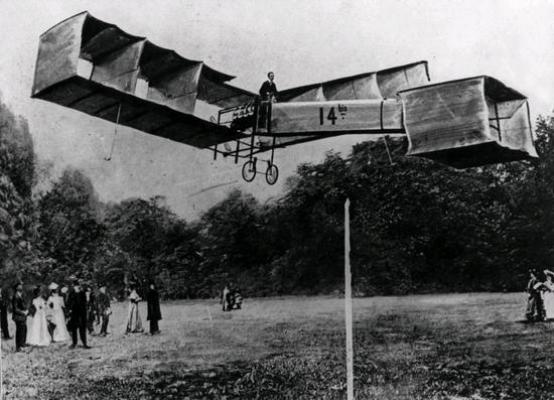
Alberto Santos-Dumont, a Brazilian aviator, made a critical contribution to early flight in Europe. He is often credited with achieving the first successful powered flight in Europe. On October 23, 1906, he flew his aircraft, the 14-bis, in Paris, covering a distance of about 60 meters. Santos-Dumont’s flight, unlike the Wright brothers' early flights, was witnessed by a large crowd, making it a widely recognized event in aviation history.
The first flights were just the beginning of an era of rapid progress in aviation. After the Wright brothers’ successful flights, aviation technology evolved quickly.
Within a decade, airplanes became faster, more reliable, and capable of flying greater distances. The advent of World War I in 1914 accelerated the development of military aviation, leading to more advanced aircraft designs.
In the 1920s, aviation pioneers like Charles Lindbergh and Amelia Earhart captured the world’s imagination with their long-distance flights. In 1927, Lindbergh became the first person to fly solo nonstop across the Atlantic Ocean, from New York to Paris, in his plane, The Spirit of St. Louis.
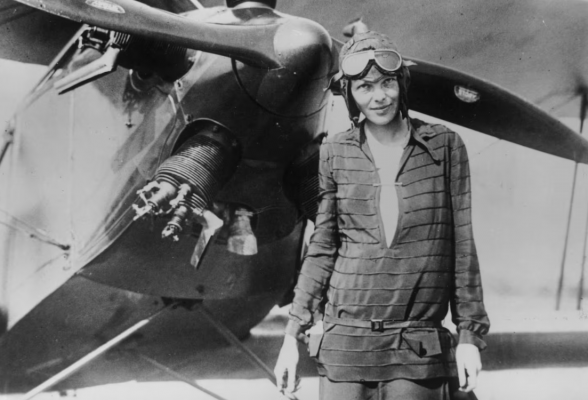
Meanwhile, Amelia Earhart became the first woman to fly solo nonstop across the Atlantic in 1932, a major achievement for women in aviation.
The commercial airline industry also began to take off in the early 20th century, with the **Boeing 247** and the Douglas DC-3 paving the way for modern air travel.
The first flights in history were moments of triumph, but they were only the beginning of an ongoing journey. Today, aviation has revolutionized travel, shrinking the world and making distant lands accessible to anyone with a passport.
Aircraft are faster, more efficient, and safer than ever before, and the dream of flight continues to inspire new generations of inventors and explorers.
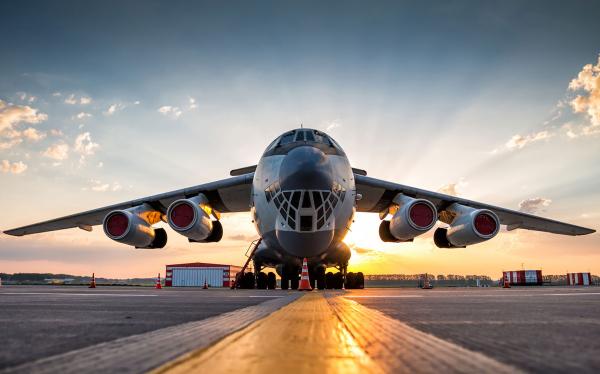
As we look to the future, we can only imagine where aviation will go next. From electric planes to potential missions to Mars, the story of flight is far from over. It all began with the dreamers who took to the skies, from Da Vinci’s sketches to the Wright brothers’ first powered flight—each step bringing humanity closer to mastering the skies.


