

The heavyweight champion who defied a nation
In 1912, Jack Johnson stood as one of the most remarkable and controversial figures in sports and American culture. As the first Black man to hold the title of World Heavyweight Champion, he had already made history by defeating Tommy Burns in 1908.
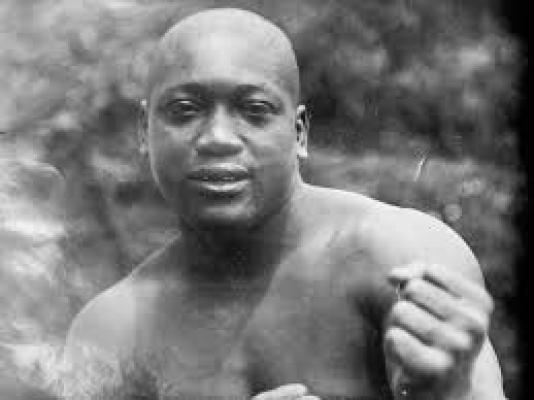
However, it was his victory over James J. Jeffries in 1910—a former undefeated champion lured out of retirement to restore the title to the so-called "white race"—that turned Johnson into a symbol of both pride and outrage. His overwhelming triumph humiliated Jeffries and enraged a racially divided nation.
By 1912, Johnson’s fame had transcended the boxing ring. He lived lavishly, drove expensive cars, wore elegant clothes, and openly courted white women—actions that defied every social code imposed on Black Americans at the time. His confidence and public lifestyle were seen as dangerous by a society that sought to maintain racial hierarchies.
As a result, Johnson became the target of relentless scrutiny and hostility, not just from the press, but also from the federal government.
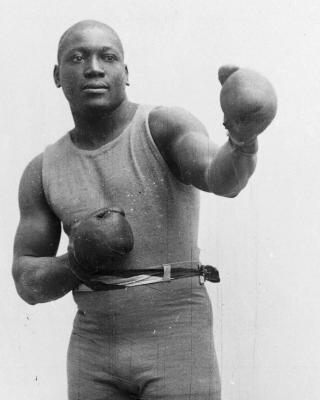
That year, Johnson’s private life became the basis for legal action. Authorities charged him under the Mann Act, a federal law meant to combat sex trafficking but often used to police morality.
The accusation claimed that he had transported Lucille Cameron, a white woman who would later become his wife, across state lines for immoral purposes. When she refused to testify against him, federal prosecutors sought another woman from his past, Belle Schreiber, to revive the charges.
The legal pressure mounted rapidly. Anticipating the outcome, Johnson eventually fled the country in 1913 while out on bail, but the events that led up to that decision unfolded throughout 1912.
During this period, he continued to fight internationally and found more welcoming audiences abroad, particularly in Europe and Latin America, where he was treated with far more respect and less racial animus.
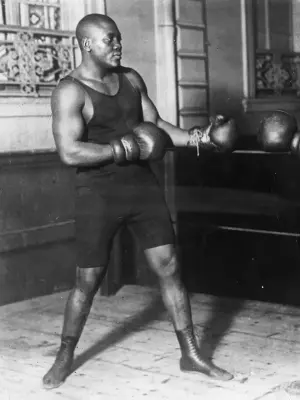
Jack Johnson’s presence in the public eye was far more than that of a sportsman. He was a direct challenge to the racist ideals of his era. His very existence, as a proud and unapologetically successful Black man in a world built to suppress him, became a political statement. His boldness incited both admiration and fury, making him a central figure in the early struggle for racial equality in America.
Although Johnson would eventually return to the United States and serve time in prison after being convicted under the Mann Act, his legacy continued to grow. His experience stood as a powerful example of how race, justice, and celebrity collided in early 20th-century America.
Over a century later, his story was revisited, and in 2018, President Donald Trump issued a posthumous pardon, recognizing the injustice that had been done.
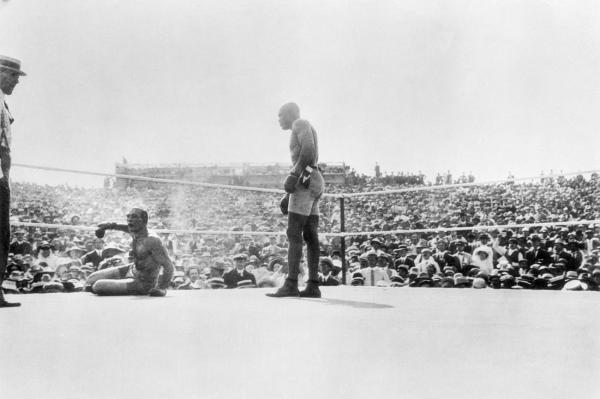
In the year 1912, Jack Johnson was not just a champion in the ring—he was a defiant symbol of resistance against a society desperate to silence him. His impact extended far beyond boxing and into the larger fight for dignity and equality.


