The Hidden Song: A Neighbor’s Secret Revealed
When I walked through Mrs. Halloway’s door that night, I thought I was just going to feed a hungry cat. I had no idea I was about to uncover a secret that would change everything I thought I knew about fame, family, and forgiveness.
I’m 38 years old, married, with two kids. We live in one of those quiet Midwestern towns where everyone waves from their porches and knows your business before you do.
After almost a decade here, I thought I’d know all my neighbors inside and out.
But the truth is, you never really know your neighbors. Not completely.

To be honest, from day one, everyone on our street was kind. Mrs. Peterson brought us cookies, the Johnsons invited us to their Fourth of July party, and the Martínez family let our kids run through their sprinklers on hot summer days.
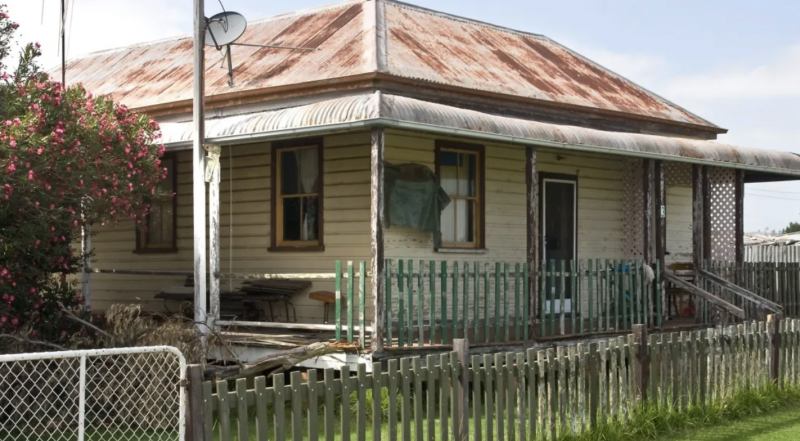
Everyone welcomed us… except for the woman who lived in the old, weathered Victorian house at the end of the street. Mrs. Halloway.
No one knew her first name, and no one had ever been invited inside her home. Every few days, she’d shuffle to the mailbox wearing worn-out pink slippers and an old housecoat. Her gray hair was always tied up in a messy bun that looked like it hadn’t seen a brush in weeks.
She never looked anyone in the eye. Never said hello. Never smiled.
“She lost her husband years ago,” Mrs. Peterson told me one afternoon while we watched our kids ride their bikes. “A tragic story. Some people never recover from a loss like that.”

But Mrs. Johnson had a different theory.
“I heard her only son died young,” she said. “A car accident or something awful like that. That’s why she doesn’t talk to anyone anymore.”
The stories changed depending on who told them, but one thing was always the same: Mrs. Halloway never received visitors. Ever.
No family came to holiday gatherings. No friends dropped by for coffee. The mailman left packages on her porch, and they could sit there for days before she picked them up.
But sometimes, late at night, when I took our golden retriever for a walk down the block, I’d hear something coming from her house. Soft music. Sad, ghostly piano melodies that tightened my chest.
And always, without fail, there was a cat’s silhouette on her windowsill, watching the world go by.
Two months ago, just after midnight on a Tuesday, red and blue lights began flashing against our bedroom wall like a strobe. I sat up in bed, heart pounding before I was even fully awake.
I looked out the window and saw an ambulance parked right in front of Mrs. Halloway’s house.
I ran out, barefoot and still in pajamas, not even thinking about how I looked. Something deep in my stomach told me I had to move, that I needed to help somehow.
Her front door was wide open. Paramedics rushed in and out, radios buzzing with medical terms I didn’t understand.
When they carried Mrs. Halloway out on a stretcher, she looked so small and fragile beneath the white sheet. Her face was paper-white, with an oxygen mask over her nose and mouth.

But then, just as they passed me by, her eyes found mine. She lifted a trembling hand and gripped my wrist with surprising strength.
She lowered the oxygen mask slightly to speak.
“Please… my cat. Don’t let her starve.”
I nodded quickly.
“I’ll take care of her. I promise.”
The paramedics gently removed her hand and hurried her into the ambulance. Within minutes, they were gone, leaving only the spinning red lights reflected in the houses and the fading echo of sirens.
There I stood, barefoot on the sidewalk, staring at Mrs. Halloway’s front door. The door that had been locked for over two decades was now open like an invitation.
I’ll never forget crossing that threshold.
Inside, the smell of dust and damp wood hit me like opening a long-sealed chest.
Her cat—a skinny orange tabby with white paws—ran straight to me, meowing loudly enough to echo down the empty hallway. She was clearly starving.
I followed the cat to the kitchen, my bare feet sticking slightly to the linoleum floor. The room was small and cluttered, with piles of unopened mail everywhere, but it worked. I found cat food in the pantry and filled her water bowl from the tap.
I should have left then. Fed the cat, locked the door, and gone home to bed. But curiosity pulled me further inside, deeper into the house.
The living room was covered in white sheets, like a ghost story come to life. Everything was hidden and protected. Curious, I pulled back one of the sheets.
Underneath was a grand piano. A beautiful old baby grand, with yellowed keys worn by time and age. Sheet music lay scattered across the top, filled with handwritten notes and lyrics in faded blue ink.

That’s when I saw a black-and-white framed photo on the mantel. It was a glamorous picture of a young woman in a sparkling evening gown, standing in front of a microphone, eyes closed as if lost in the music.
I froze because I recognized that face.
I’d grown up obsessed with jazz music. My dad raised me listening to scratchy old vinyl records he’d collected since his teen years. Every Sunday morning, he’d play Ella Fitzgerald or Billie Holiday while making pancakes, and I’d sit at the kitchen table, listening to those incredible voices fill the house.
And that woman in the photo? She was a singer from the 1960s who’d been famous for one haunting song that topped the charts, then vanished completely.
My dad used to say she was “the greatest mystery in music history.” She released a record, toured for about six months, and then disappeared without a trace.
“No one ever knew what happened to her,” Dad would say. “One day she was on every radio in the U.S., and the next it was like she never existed.”
But there she was. Living across the street. Feeding a cat and playing sad piano music at midnight.
The next morning, I drove to the hospital with a bouquet of daisies and my heart in my throat. I found Mrs. Halloway in room 314—so fragile yet alert, oxygen tubes in her nose, monitors beeping softly around her bed.
“Mrs. Halloway,” I whispered, pulling up a chair. “I know who you are.”
Her eyes narrowed immediately, and her voice was sharp despite the tubes. “No, you don’t.”
I leaned in closer and lowered my voice more.
“My dad had your record. I recognized the photo on your mantel.”
She stayed perfectly still. The only sound was the steady beep of the heart monitor and the soft hiss of oxygen.
Finally, after what felt like forever, she whispered: “Close the door.”
When we were alone, she said, “I swore I’d take that secret to the grave.”
She told me everything in fragments between coughs and tears that hurt my chest.
She’d been the singer I suspected. She’d had one record deal, one tour, one shot at the dream she’d carried since childhood singing in church choirs.

But her husband, Richard, was also her manager—and he was controlling and violent in a way that gave me chills.
He kept all her money, told her what songs to sing, what clothes to wear, and what to say in interviews. When she tried to speak up, he ignored her. When she tried to leave, he threatened to hurt their daughter.
“He convinced the label I was unreliable,” she whispered, staring at the ceiling. “Said I had drinking problems and mental illness. None of it was true. But who would they believe? Him, or a scared girl from a small Ohio town?”
When she finally found the courage to try and escape with her daughter, Richard told her he’d make sure she never saw the girl again. He had lawyers, money, and connections, while she had nothing.
So she disappeared. Walked away from the stage, from fame, and from the music that had been her whole life. She became “Mrs. Halloway” and moved to our quiet street to live in the shadows.
“And then, years later, my daughter died in a car accident,” she continued. “Richard died shortly after. All I had left was the music no one could hear, and that damn cat.”
From then on, I visited her every day. Brought homemade chicken soup, helped with physical therapy exercises, and fed her cat, Melody.
At first, she rejected my help—embarrassed and stubborn. But slowly, like ice melting in spring, she began to open up. Let my kids call her “Grandma.” She even played piano for them once, her fingers trembling but still magical as they found the keys.
One night, I anonymously posted on a vintage music forum, asking if anyone remembered her. Responses flooded in within hours.
“The lost voice of the sixties.”
“Her record now sells for thousands.”
“I’ve searched for her story my whole life.”
People had never forgotten her. They’d been waiting and wondering for decades.
I haven’t told her about the forum yet. She seemed too fragile and scared to be found.
But part of me knew the world deserved to hear her story.
One rainy Thursday afternoon, Mrs. Halloway called me to her hospital bed. Her voice was barely audible.
“Dori, I lied about something important.”
My stomach dropped like a stone.
“About what?”

Tears rolled down her cheeks.
“My daughter didn’t die in a car accident. She left me. She blamed me for staying silent… for letting her father control us both. Said I was weak and pathetic. She changed her name and started a whole new life. I never saw her again.”
I felt like I couldn’t breathe.
“Do you know where she is now?”
Mrs. Halloway’s wrinkled hand shook as she reached into the drawer beside her bed and handed me a folded piece of paper.
“The last address I could find. From about five years ago. I was too scared to go there.”
I unfolded the paper with trembling fingers.
It was an address in my own city, about 20 minutes from my house.
I wrestled with myself for three whole weeks. Was this really my place? Would Mrs. Halloway’s daughter want to be found after all these years? What if I was reopening wounds better left closed?
But something about that frail woman in the hospital bed and the deep sadness in her eyes when she spoke of her lost daughter kept pushing me forward.
Finally, on a sunny Saturday morning, I drove to the address Mrs. Halloway had given me. It was a modest house in a residential neighborhood, with a tidy front yard and children’s bikes scattered around the driveway.
My heart pounded so loud I could hear it in my ears as I walked up to the front door and rang the bell.
A woman answered within seconds. She looked to be in her fifties, with intense green eyes and the same delicate bone structure as Mrs. Halloway. There was no doubt they were related.
“How can I help you?” she asked, polite but cautious.
“Uh, hi. My name’s Dori,” I stammered. “I think I know your mother.”
Her face went completely pale. Without another word, she slammed the door so hard it shook the frame.
But just as I turned to walk back to my car, I heard a young voice from inside the house.
“Mom, who was that who just called?”
I thought: a teenager. Mrs. Halloway had a granddaughter I never knew about.

I went back to the hospital and told Mrs. Halloway everything. She started crying before I finished.
“She has a daughter,” Mrs. Halloway whispered. “I’m a grandmother and I never knew.”
“Would you want to meet them?” I asked gently.
Mrs. Halloway nodded, tears still running down her cheeks.
“I’m dying, Dori. The doctors told me yesterday. Maybe just a few weeks left. I can’t fix the past, but maybe… maybe I can at least try to say I’m sorry.”
The next week, I brought Mrs. Halloway to her daughter’s house in a wheelchair I rented from the hospital. She was shaking so much I thought she might collapse before we even reached the door.
Her daughter, Susan, opened the door again. The anger was still there, flashing in her eyes like lightning.
“How dare you bring her here?” Susan said coldly.
But then her own daughter appeared in the doorway—a beautiful teenager with Mrs. Halloway’s musical eyes and Susan’s strong jaw.
“Mom, who is this?” the girl asked, looking curiously at Mrs. Halloway.
And in that frozen moment, three generations of women stared at each other across 26 years of silence and pain.
In that instant, Susan’s anger cracked—just a little. Maybe it was seeing her daughter’s innocent curiosity, or maybe it was seeing how fragile and small Mrs. Halloway looked in that wheelchair.
She stepped aside and let us in.
I sat quietly in a corner while Mrs. Halloway wept, reaching trembling hands toward the granddaughter she never knew existed. The teenager, Emma, didn’t carry the heavy family history. She just saw an older woman who looked sad and lonely.
Susan didn’t forgive her mother right away. The conversation was raw, bitter, and filled with decades of pain. But little by little, seeing her daughter’s gentle kindness toward Mrs. Halloway softened the hardness in Susan’s face.
“I waited for you to save us,” Susan said through tears. “For years, I waited for you to have the courage to leave.”
“I was scared,” Mrs. Halloway whispered. “I thought he’d take you away forever. I thought staying was protecting you.”
“It wasn’t,” Susan said simply. “But I understand why you thought it was.”

When we left that day, Mrs. Halloway whispered to me in the car:
“Now I can die in peace. They know I never stopped loving them. They know I tried.”
Mrs. Halloway passed away peacefully in her sleep two weeks later, with Melody curled up beside her on the hospital bed.
At her funeral, Susan and Emma sat in the front row. My husband played Mrs. Halloway’s song on the piano as my kids cried like they had lost their real grandmother.
Emma sang softly, her voice as beautiful and deep as her grandmother’s once was.
And me? I couldn’t stop thinking about that night with the ambulance, when I crossed a door that had been locked for 26 years. How a hungry cat led me to uncover a secret that changed Mrs. Halloway’s life.
Sometimes, being a good neighbor means more than just waving from the porch.
Sometimes it means stepping into someone else’s story—and helping them write a better ending.