The history of cartoons: From Renaissance sketches to animated classics
The concept of cartoons has a long and complex history that spans centuries, making it difficult to credit a single individual as the sole inventor.
The origins of what we now call cartoons can be traced back to the Renaissance period, where the word “cartoon” itself comes from the Italian “cartone,” meaning a large sheet of paper.

During this time, artists used preparatory drawings—cartoons—as full-sized sketches for paintings, frescoes, or tapestries. These drawings were not meant to be humorous or animated, but served as guides for larger works of art.
The transformation of the cartoon from a simple sketch to a humorous or satirical drawing began in the 18th and 19th centuries, particularly in Britain. Artists like James Gillray and George Cruikshank played an essential role in shaping the political cartoon.

They used drawings to mock political figures and societal trends, publishing their work in newspapers and pamphlets. These early cartoons combined illustrations with clever captions to convey a message, establishing a format that persists to this day.
In the mid-19th century, the magazine Punch, published in London, became one of the most influential platforms for this type of artwork. It is within the pages of Punch that the term “cartoon” was first used in its modern sense to describe humorous or satirical illustrations.
This marked a major turning point in the evolution of cartoons, as they began to be seen not just as art or commentary, but also as a form of entertainment.
The invention of animated cartoons came later and is often credited to several pioneering figures. One of the earliest known animated films is Fantasmagorie, created by French artist Émile Cohl in 1908. It featured stick-figure characters and surreal transformations, and it is widely regarded as one of the first fully animated cartoons.

Around the same time, American cartoonist Winsor McCay developed his own animations, such as Gertie the Dinosaur (1914), which demonstrated a more sophisticated level of character development and storytelling.
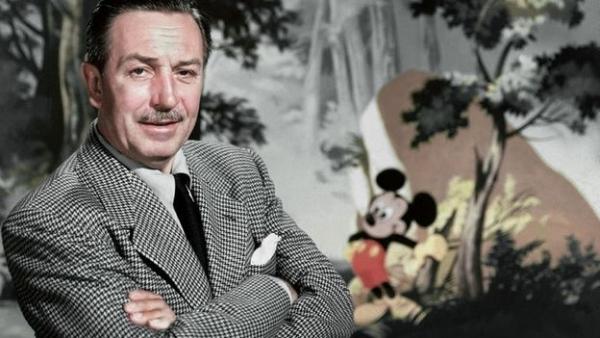
The idea of the modern cartoon—particularly the animated kind that has become central to global pop culture—was refined and popularized in the 20th century by figures like Walt Disney.
Disney, along with his team of animators, created characters such as Mickey Mouse, who debuted in Steamboat Willie in 1928. This cartoon was notable not only for its animation but also for its synchronized sound, which was groundbreaking at the time.
In summary, the invention of the cartoon was not the work of a single person but the result of gradual development over many centuries.
From Renaissance sketches to satirical magazine illustrations and finally to animated characters on screen, the cartoon has evolved through the contributions of many artists and innovators. Each played a role in shaping cartoons into the diverse and dynamic art form we know today.