
The rich in-laws wanted a “Perfect” Daughter-in-Law — I agreed to quit my job, but my condition left them speechless
My name is Abbie. I’m 27 years old and earn $170,000 a year doing a job I love. My fiancé, Tim, teaches third grade because he’s passionate about shaping young minds — not because he has to. He could live in luxury off his family’s old money for the rest of his life.

That doesn’t bother me. But last Friday, in a mansion with $30,000 rugs and monogrammed silverware, Tim’s parents decided that my independence was negotiable.
It was supposed to be just dinner. A warm Fourth of July evening. I wore a sundress, brought a bottle of California wine, and prepared myself for the usual awkward wedding-planning questions.
As the champagne fizzled on my tongue, I sat across from Tim’s parents in their immaculate dining room. Crystal chandeliers cast dancing shadows over mahogany walls lined with portraits of stern-faced ancestors.
“Abbie, dear,” Michelle — my future mother-in-law — began in that sweet-yet-condescending tone wealthy women use when they think they’re about to charm you, “We wanted to talk about your... situation.”
I set my fork down.
“My situation?”
Arnold, Tim’s father, cleared his throat and adjusted his gold cufflinks.
“Your career, of course. After the wedding, you’ll stay home. It’s what’s expected.”
I laughed.
“Excuse me?”
Tim’s fork clinked against his plate. He couldn’t even look at me.
“We’ve always believed a man should provide for his family,” Michelle continued. “You earning more than Tim... creates an imbalance. It undermines what a marriage should be.”
I froze.
“And what should a marriage be?”
“A partnership with clearly defined roles,” Arnold said, slicing into his steak. “Frankly, it’s emasculating when a wife earns more than her husband. People notice. They talk.”
“What people?”
“Our people!”

I looked at Tim, silently begging him to say something — anything — to defend me. He just pushed his food around like a child avoiding vegetables.
“Tim?”
He finally looked up, face flushed.
“They... have a point, Abbie. Maybe it wouldn’t be so bad to take a break. Focus on... other things.”
“Other things? Like what?”
“Well,” Michelle jumped in, overly cheerful, “You could redecorate the guest house. Host charity events. Start a family, naturally.”
“I could also cure cancer or end world hunger,” I replied. “But that’s not what this is about, is it?”
“No need for sarcasm, young lady,” Arnold snapped.
“Young lady?” I stood, my chair scraping the floor. “I’m not your young lady. I’m a grown woman who built her career from nothing — while your son was finger-painting with third graders.”
“Abbie,” Tim pleaded, “Please. Sit down.”
“No. Let me get this straight. You want me to give up everything I’ve worked for because it makes your son look bad?”
“That’s not it,” Michelle said. “It’s about doing what’s right for the family.”
The room fell silent. Outside, sprinklers hissed over a perfectly manicured lawn. The only sound in an air heavy with tension.
“Fine,” I said at last. “I’ll consider it. But only on one condition.”
Arnold raised an eyebrow.
“You’re not in a position to make demands.”
“Aren’t I? If you want me to give up my career, then set up an irrevocable trust. Match my current income — $170,000 a year — for the next 35 years, adjusted for inflation and raises. That way, I can focus on being the ‘perfect wife’ without sacrificing my financial future.”
Michelle’s wine glass froze midair.
“Excuse me?”
“You heard me. That’s over five million dollars. If you want me to walk away from that, back it up with money.”
“That’s... absurd!” Arnold sputtered, face red with anger.
“Is it? You’re asking me to sacrifice my future for your comfort. That seems like a fair trade.”
“You’re being transactional,” Michelle snapped. “Marriage isn’t a business deal.”
“Isn’t it? You’re literally trying to buy my obedience. At least I’m honest about the price.”
Tim finally spoke.
“Abbie, that’s... a lot of money.”
“It’s my money, Tim. Money I won’t be earning while I’m home arranging flowers and hosting tea parties.”

“That’s not what we’re asking,” Michelle insisted.
“Oh no? Then what are you asking?”
“To trust us. To trust Tim. That we’ll take care of you.”
“Like you took care of Jennifer? Tim’s ex? The one who left her nursing career to become the ‘perfect fiancée’ — until you decided she wasn’t good enough?”
Arnold gripped his knife tightly.
“That was different.”
“How?”
“She lacked... refinement.”
“Or she lacked money?”
“Abbie, please,” Tim begged. “This isn’t helping.”
“You’re right. Let’s try something else. A prenup. If I give up my career and we divorce, I get half of Tim’s trust fund. Fair compensation for my sacrifice.”
Michelle went pale.
“Absolutely not.”
“Why not?”
“That money is family legacy. Not something a stranger can claim.”
“But I won’t be a stranger. I’ll be your daughter-in-law. Tim’s wife. The mother of your grandchildren.”
“You’ll be Tim’s wife,” Arnold said coldly. “Not a beneficiary of our estate.”
“I see. You want me to give up my independence, my career, and my financial security. You want me to gamble everything on a marriage with no safety net, no prenup, and no compensation. All because you’re uncomfortable that I earn more than your son?”
“It’s not discomfort,” Michelle protested. “It’s about what’s right.”
“No, it’s about control.”
I walked around the table, my heels echoing on the marble floor.
“You want a grateful, dependent daughter-in-law. Someone who smiles pretty and never asks why she gave up everything for a man who won’t even defend her in his own house.”
“That’s enough,” Arnold barked, standing. “You’re being completely irrational.”
“Am I? Because from where I’m standing, I’m the only reasonable person here.” I turned to Tim. “Your parents want me to sacrifice my future for their image. And you’re just sitting there, nodding like it makes sense.”
“It’s not that simple, Abbie.”
“Yes, it is. Either you value me as a partner, or you don’t. Either you respect what I’ve built, or you don’t. Either you want a wife, or you want a kept woman.”
“That’s not fair,” Michelle said.
“Fair? You want to talk about fair? Fair would be supporting your son’s fiancée — not trying to undermine her. Fair would be celebrating my achievements — not resenting them. Fair would be welcoming me into your family — not trying to change who I am.”
“We just want what’s best for Tim,” Arnold said.
“No, you want what’s best for your reputation. There’s a difference.”
I picked up my purse with steady hands, despite the storm raging inside me.
“I’ve spent 10 years building something I’m proud of. I’ve worked 60-hour weeks, skipped vacations, and sacrificed relationships. I’ve earned every dollar solving real problems for clients who value what I do.”
“And we admire that,” Michelle said weakly. “But marriage requires compromise.”
“This isn’t compromise. It’s surrender.”
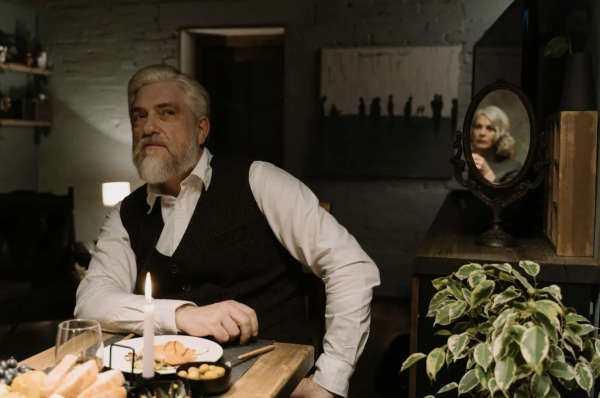
Tim stood at last.
“Abbie, wait. Can we talk privately?”
I stared at him.
“Talk about what, Tim? You’ve made your stance perfectly clear.”
“No, I haven’t.”
“Exactly! Your silence is your stance. Your refusal to defend me is a stance. Letting them dictate our future is a stance.”
“They’re my parents.”
“And I was supposed to be your wife. Which matters more?”
The question hung in the air. Michelle and Arnold stared at him expectantly. Tim opened his mouth, but no words came.
“I’ll make it easy,” I said. “I’m not quitting my job. I’m not giving up my career. And I’m not sacrificing my financial independence just so your son can feel more manly. If his masculinity depends on my unemployment, that’s his problem — not mine.”
“You’re being selfish,” Arnold growled.
“Am I? Or am I being smart? If you want me to give up my livelihood, don’t be surprised when I ask for that commitment in writing. If you can’t do that — fine. I’ll keep working. And you can keep dreaming of a daughter-in-law who tolerates this nonsense.”
I grabbed my purse.
“This isn’t love. It’s control. And I don’t tolerate being controlled. I’m not a remote-controlled toy.”
“If you walk out that door,” Michelle said icily, “don’t expect to be welcomed back.”
“Not even in your dreams,” I shot back. Then turned to Tim. “Your move.”
He stood frozen, hands trembling. The man I thought I’d marry — build a life with, maybe have kids with — felt like a stranger.
“Abbie,” he whispered, “please don’t leave like this.”
“Then give me a reason to stay.”
We stood on opposite sides of the dining room... and of the chasm that had opened between us in a single dinner.
I waited for him to choose me.
He didn’t.
It’s been three days since I walked out of that house. Three days since I gave Tim the clearest decision of his life. He hasn’t called. He hasn’t texted. No flowers. No apologies. No promises.
Maybe I should be heartbroken. Maybe I should be doubting myself.

But you know what? I’m not.
I’m angry. Disappointed. Frustrated. Because the man I loved turned out to be a coward. But I’m not broken.
I know my worth. And it’s not measured by how small I’m willing to make myself to please others.
If Tim and his parents want a wife who gives up everything for their approval, they can find a goat. I hear they’re obedient, don’t earn “offensive” salaries, and look lovely in family portraits.
As for me? I’ve got code to write, clients to impress, and a future to build. On my terms.