
The Silent Guardian: A Mother’s Unexpected Ally
When my husband disappeared right after our son was born, I was left alone to raise him. I was barely scraping by, but one day, a bill arrived stamped “PAID IN FULL.” As more debts vanished and my son started talking about a mysterious “friend,” I began to suspect someone was watching over us.
I stood by the stove, stirring instant oatmeal while Caleb rattled off facts about the T. rex. I nodded distractedly, mentally calculating if I had enough gas to make it to my second job at the café.
“Mom, did you know a T. rex has teeth as big as bananas?” Caleb swung his legs off the shaky kitchen table, oblivious to the storm brewing in my mind.
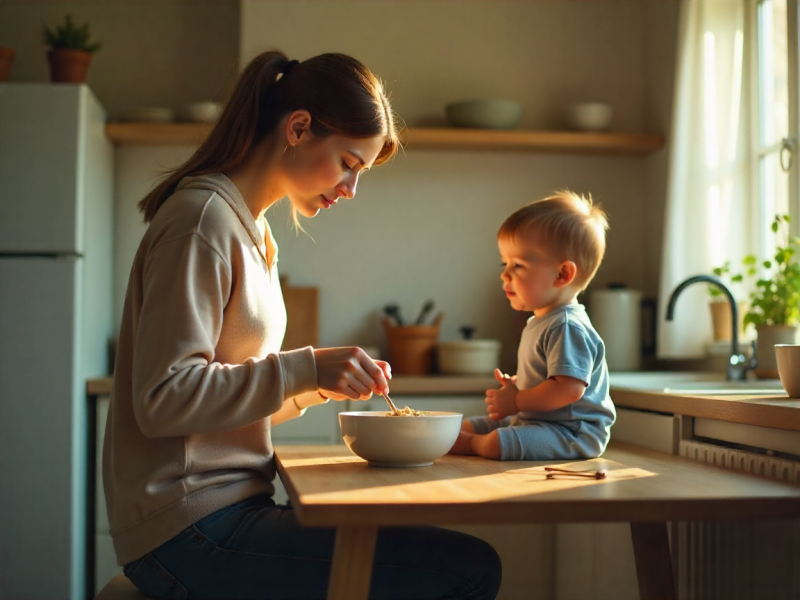
“That’s huge, champ,” I replied with the best smile I could muster.
I’d learned the secret to being a single mom was keeping your voice steady, even when the world’s falling apart. And right now, my world was definitely falling apart.
The pile of unopened letters on the counter seemed to mock me. Red stamps reading “FINAL NOTICE” peeked through the windows of the envelopes like angry eyes.
But one envelope stood out: a manila one, official, bearing the seal of a local charter school.
I hadn’t had the courage to open it. I hoped it contained good news about financial aid, but if not… I’d be starting over again.
I served oatmeal to Caleb and myself, took a deep breath, and pulled the envelope from the stack. I wouldn’t know if it was good news until I opened it, right?
I slit it open with a bread knife and pulled out the papers. I scanned the tuition information (an impossible sum: $7,800 a year) until I got to the part that really mattered: no financial aid until next fall.
The oatmeal tasted like cardboard in my mouth.
That school was my dream for Caleb. Clean hallways, teachers who actually taught instead of just babysitting, playgrounds that didn’t give you tetanus just by looking at them. But $7,800 felt like $78,000 to me.
“Are you okay, Mom?” Caleb’s voice pulled me from my spiral.
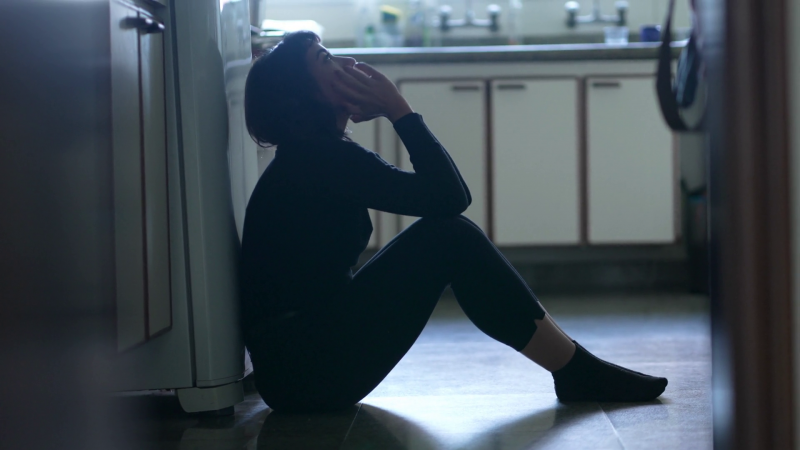
“Yes, sweetheart. Just thinking,” I forced another smile and added more oatmeal to his bowl. “Eat fast so we’re not late.”
That night, after Caleb finally fell asleep, I sat at the kitchen table with my laptop open and bills scattered like a lost poker hand.
I moved numbers around on my spreadsheet, but nothing added up in my favor. Food, rent, electricity, gas, daycare... no expense could be cut. The best I could do was shave $40 off the grocery bill—what good was that?
I buried my face in my hands and whispered to the empty kitchen, “How the hell am I going to do this?”
The next morning, more letters waited as I rushed out with Caleb. We were late because I couldn’t find his favorite dinosaur shirt, but I grabbed the last envelope as I left.
Once Caleb was safely in class, I tore open the receipt.
My hands started shaking when I read at the bottom of the page, clearly printed: “BALANCE PAID IN FULL.”
I read it three times. No mistake.
I was sure I hadn’t paid that bill, so I pulled out my phone and checked my bank account right there in the parking lot.
No changes. Definitely hadn’t paid. So who did?
The only logical explanation was a system error. These things happen, right? Computers glitch, payments get assigned wrong. I quickly wrote an email asking about the payment and went to work.
That night, I got a reply. No mistake, no glitch. Someone had paid the bill for me.

I had no idea what was going on, but I figured I should just say thank you and move on. What else could I do?
But it didn’t end there. Days later, when I called my landlord to ask about rent, he sounded genuinely confused.
“It says here someone paid three months in advance,” he said. “Cash. Yesterday afternoon.”
My stomach dropped.
“Who?”
“I don’t know. Someone left it with your name and apartment number. Strange, but hey, your money’s safe.”
But it wasn’t my money. That was the problem.
I called Caleb’s daycare, expecting them to tell me I owed for the week.
Instead, the kind woman on the phone said, “Oh, that’s all taken care of. Someone paid your balance in full yesterday.”
“Who?” I pressed. “How?”
“Sorry, but we have a privacy policy and can’t share donor information.”
Donor information... like it was some kind of charity.
A strange feeling grew in my chest like a weed. Random paid bills, anonymous donors, privacy policies; none of it made sense. Then Caleb started talking about a “friend.”
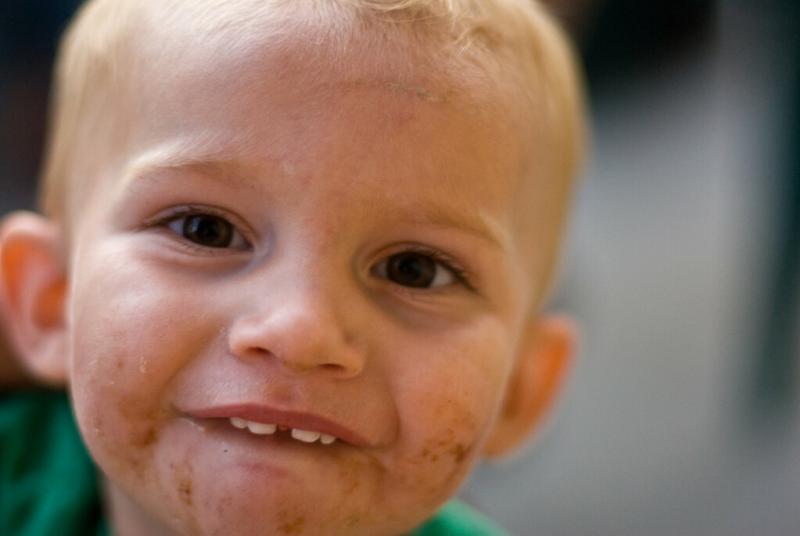
“My friend at the park gives me lollipops,” he announced one afternoon, chocolate smeared across his face.

I stopped folding laundry.
“What friend?”
“The old man on the bench. I see him after school. He’s fun. He makes paper airplanes with me and says you’re a great mom who works really hard.”
All the alarm bells in my head started ringing at once. A strange old man giving my son candy and claiming to know me? That painted a picture screaming “DANGER.”
“Caleb, honey, what does that man look like?”
“He has gray hair like Grandpa Joe from Charlie and the Chocolate Factory. But his clothes are fancier, and he buys me ice cream on Fridays.”
I tried to keep my voice calm.
“How many times have you seen him?”
Caleb shrugged.
“Lots. But only after school. Never in the morning.”
That night, I paced the apartment until I wore a path in the carpet.
The next day, I called the school, but they had no reports of any strangers nearby. I described what Caleb said, but no one had seen a gray-haired man matching that description.
I started going to the park myself, passing by at different times to look for this mysterious man. But every time I went, I arrived too late. The bench was always empty.
It was like he knew I was coming.
So I made a plan.
I took a personal day from both jobs—something I couldn’t really afford—but I had to. I told Caleb I’d be working late and arranged for him to walk to the park with his usual group of kids.
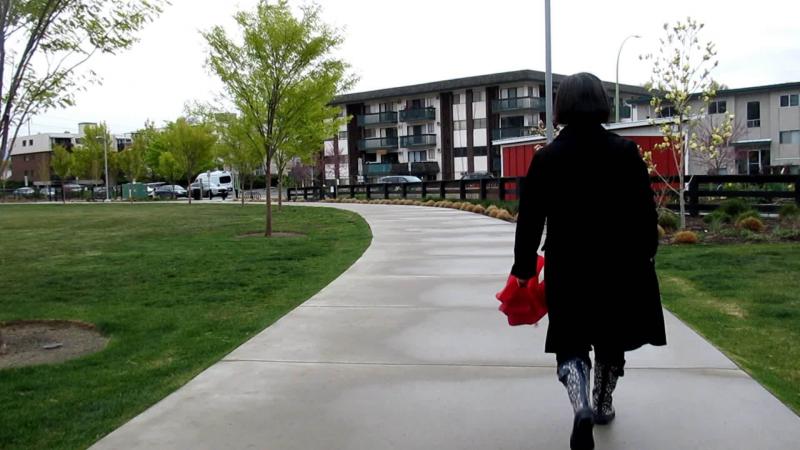
Then I followed him.
I felt like a stalker, hiding behind a tree at the edge of the park, watching my own son. But I needed to know who this man was and make sure he knew to stay away from my son.
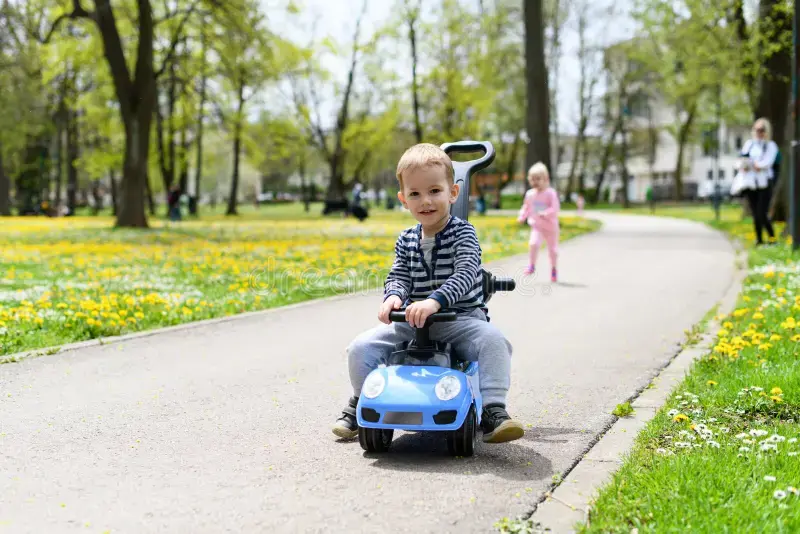
Caleb ran across the grass carefree and approached a gray-haired man sitting on the bench. The man pulled out a brown paper bag and handed Caleb a toy car with a kind smile.
My heart hammered in my chest. I started walking toward them, fast and determined, phone ready to call 911 if something went wrong.
The man looked up and saw me coming.
He said something to Caleb, who nodded and began playing with the car. The man slowly stood and walked toward me.
We met halfway across the grass, hands visible, posture non-threatening.
“Who are you?” I demanded.
The man nodded respectfully.
“I’m sorry. I wanted to introduce myself before but didn’t know how. I’m Henry. Mark’s father.”
Mark... that was Caleb’s dad, the man who left when Caleb was only a few months old and never came back.
“Are you...,” I struggled for words, “are you Caleb’s grandfather?”
Henry looked past me to where Caleb was pushing his car through the dirt.
“Yes. I know my son left. But that boy...” he nodded toward Caleb, “is still my grandson. Please, sit down and let’s talk.”
We sat together on the bench, though every muscle in my body stayed tense. I had a thousand questions and fired them like bullets.
“Why now? Why contact Caleb in secret? Why not come to talk to me?”
Henry sighed and ran his hand over his face.
“I was ashamed of what Mark did. When I tried to talk to him about you and the baby, he told me to mind my own business. Said it wasn’t his problem.”
He paused to watch Caleb play.
“I tried to find you, but didn’t know where to start. Then last month, I was picking up my neighbor’s granddaughter from daycare, and there was Caleb. I knew it was him right away. He looks just like Mark did at that age.”
“So you started watching us?”
“I started observing,” his voice was firm but sad. “I wanted to introduce myself but couldn’t find the words. When I saw how hard you were struggling, I started paying your bills.”
“That was you?”
He nodded.
“I noticed how you dressed him; his clothes were always clean but obviously secondhand. And you always looked exhausted when you picked him up. I still didn’t know how to approach you, but I wanted to help.”
I shook my head, trying to process it all.
“You could have talked to me… introduced yourself like a normal person.”
“Would you have listened? Would you have let me help?”
I looked at him, thinking of my pride, how used I was to doing everything alone, and how I’d probably have reacted if someone connected to Mark showed up at my door offering help.
“No,” I admitted. “Probably not.”
He nodded.
Caleb came running back, face full of joy and dirt, holding his new toy car.
“Mom! You met my friend!” he shouted.
I knelt beside him and took a deep breath.
“Caleb, honey, this is your grandfather. Your dad’s dad.”
Caleb tilted his head thoughtfully, as only a five-year-old can. Then he nodded solemnly and held out his hand.
“Hi, Grandpa,” he said.
Henry laughed and shook his hand.
“Nice to meet you, Caleb.”
Caleb smiled and went back to playing with his car. Henry and I exchanged a look and smiled. For the first time, I felt like I wasn’t alone.
“You should come over for dinner sometime,” I said.
Henry looked like he might cry.
“I’d love to.”
Henry came for dinner that Sunday. I made meatloaf with vegetables, and he brought a tray of macaroni and cheese.
“It’s nothing special,” he muttered handing me the aluminum tray, “just something I bought on the way.”
We ate, we talked, and somehow it all felt completely natural—like a family tradition we’d had for years.
The following Friday, I found an envelope on the door from the charter school I wanted Caleb to attend. I opened it and found a receipt: Caleb’s tuition was PAID IN FULL.
“Thank you, Henry,” I whispered, wiping away tears.