Back in 2000, I gave the last $10 I had to a homeless young man. Years later, his lawyer showed up at my doorstep carrying a box and told me, “He wanted to make sure you received what you deserved.”
Twenty-six years after I gave my last $10 to a homeless stranger, his lawyer showed up at my door with a box. What was inside led me back to a part of my son’s life I never knew existed.
Twenty-six years had passed since Daniel died, but September 30 still had a way of making the air feel heavier.
I had learned to live around that date. I had a husband who loved me, a daughter who called often just to check on me, and a home that usually felt warm and full of life.
Then the doorbell rang.
“Mrs. Nora?”
I wiped my hands and opened the door.
A man in an expensive suit stood on the porch, holding a large box.
“Mrs. Nora?”
“Yes?”
“I’m Owen’s attorney. He’s been looking for you for years.”
For a moment, the name meant nothing.
The jacket.
Then a memory hit me.
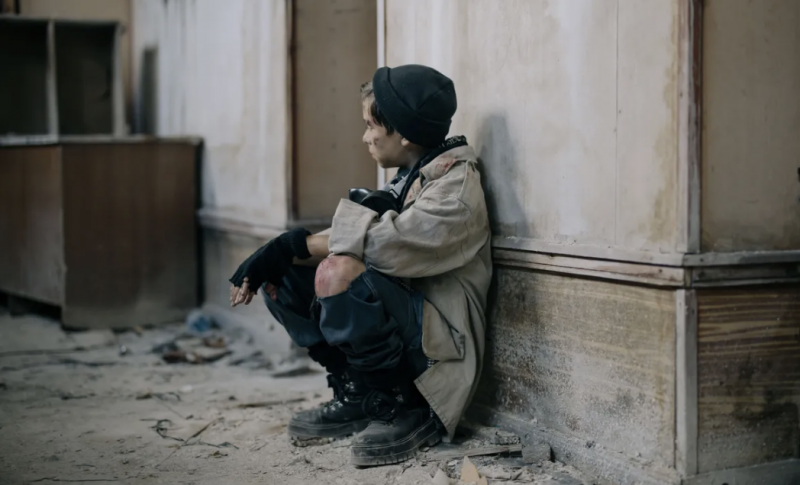
I was walking home in tears when I noticed a young man sitting on the sidewalk. He couldn’t have been more than a few years older than Daniel had been.
I almost walked past him, but suddenly I stopped.
The jacket.
There was a red sailboat stitched over the pocket.
The young man went pale.
I had sewn that patch myself to cover a tear when Daniel was thirteen.
A month before he got sick, he had donated the jacket to the church thrift store.
“Where did you get that?” I asked.
The young man went pale.
“They gave it to me. I can give it back.”
“No, sweetheart. It looks good on you.”
“I can give it back.”
Then I did something I hadn’t expected.
I sat down beside him and cried.
I told the stranger about Daniel—how sick he had been, how much I missed him, and how I still caught myself wanting to tell him things.
When I finally stood up, I took the last $10 from my pocket and held it out to him.
I did something I hadn’t expected.
“No, ma’am.” The young man looked frightened. “You need that more than I do.”
“Maybe. But you need dinner tonight. I’ll manage.”
He wiped his eyes with his sleeve.
“I’m Owen. What’s your name?”
“Nora.”
“No, ma’am.”
He wrote my name on a torn bus schedule and promised that someday he would find me.
My stomach tightened as I snapped back to reality.
“Where is he?”
His expression changed, but he didn’t answer.
“I was instructed only to deliver this personally.”
“Where is he?”
He held out the box.
I stared at it.
“What is it?”
“I wasn’t told.”
That made no sense.
I slowly took the box.
Before stepping away, he looked directly at me.
I slowly took the box.
“He made sure you got what you deserve.”
The words sent a chill through me.
“What is that supposed to mean?”
But he only apologized and said there was nothing more he could tell me.
I opened the box before he reached his car.
Just a flash drive.
There was no money inside.
No letter.
Just a flash drive.
I stood there for a long time after the lawyer drove away, holding proof of a promise I had forgotten Owen had ever made.
Twenty-six years after I gave him my last ten dollars, he had finally found me.
No letter.
I simply didn’t know whether he had sent me a gift, an apology, or a warning.
I carried the flash drive into the study with both hands. I sat down at the computer and plugged it in.
Two items appeared on the screen. A text document and a folder.
“Best photos of 1999 my luv”
My hand froze over the mouse.
I leaned closer to the screen.
“No.”
I leaned even closer.
Daniel named everything like that.
When we got our first computer, I used to complain that I could never find anything because he refused to name folders properly.
“Daniel, what does ‘super cool pics lol’ even mean?”
I used to complain.
“It means exactly what it says, Mom.”
“And why is ‘love’ spelled ‘luv’?”
He would smile at me.
“Because I’m saving valuable typing time.”
Then he would click through twenty blurry photographs and insist that each one was a work of “art.”
That had come from Daniel.
I hadn’t thought about those ridiculous folder names in years. Now one of them was glowing on my screen.
I reached out and touched the monitor with two fingers.
That had come from Daniel.
It wasn’t something that reminded me of him. It wasn’t something Owen had recreated.
Daniel had named that folder himself.
I reached out.
My eyes shifted to the text document beside it.
The file name was simple.
“Nora, read this first.”
My heart began pounding.
I opened the file.
The first line said:
I swallowed hard.
“Dear Nora, I have owed you the truth for twenty-six years.”
I swallowed hard.
The next sentence made me lean back in my chair.
“What I’m about to tell you may hurt you, and I’m sorry for that.”
My breath caught.
Owen wrote that in 2000, he had been homeless and running with several older boys who survived however they could—stealing from parked cars, stores, warehouses, anywhere they thought there was something worth selling.
Then, shortly before Daniel’s funeral, someone gave them a tip.
A young man was going to be buried with an expensive new digital camera.
My breath caught.
I kept reading.
I remembered placing Daniel’s camera beside him myself.
And suddenly, I understood something terrible.
Owen had known about my son before I ever sat beside him on that sidewalk.
I kept reading.
Owen wrote that one of the funeral home employees was willing to look the other way in exchange for money.
A few bills.
That was all it took.
A few bills. A side door left unlocked. A warning about when the room would be empty.
They slipped inside shortly before Daniel’s coffin was closed for the last time.
And they took his camera.
I shoved my chair backward so hard that it scraped across the floor.
“No.”
I shoved my chair back.
My hands were shaking.
I had chosen that camera myself.
Daniel carried it everywhere. Birthday parties. Grocery trips. He photographed puddles, cracked sidewalks, birds on telephone wires—anything that caught his attention.
Putting it beside him had felt right.
Something he loved should go with him.
I couldn’t keep reading.
And Owen had helped steal it from my son’s coffin.
For several seconds, I couldn’t continue.
I was furious.
Not sad.
Not trying to understand.
Furious.
But the letter continued.
I was furious.
“We planned to sell the camera immediately.
After you walked away, I stared at that money and realized I was wearing your son’s jacket while helping sell something stolen from his coffin.”
I covered my mouth.
Something inside me broke.
He kept it hidden.
He couldn’t return the camera. The others would have known exactly who had taken it, and Owen was afraid of what they might do to him.
So before they sold it, he removed the memory card.
He kept it hidden.
That same night, he left.
“Your kindness didn’t magically turn me into a good man, Nora. But it was the first time in years anyone treated me like I might still become someone better.”
He left.
He wrote that his life changed slowly after that. Eventually, he became successful enough to find people he once thought were impossible to locate.
He didn’t explain how. Only that he had finally found me.
Then came a sentence by itself.
“The camera belonged to your son. The memories belonged to you.”
Owen apologized.
I thought about closing everything.
He said the photographs might not contain anything I hadn’t already seen.
For a moment, I considered closing everything.
Then I clicked the folder.
Owen thought he was returning Daniel’s photographs.
He had no idea he was returning a secret Daniel had taken to his grave.
“Oh, sweetheart.”
I opened the first photograph.
Daniel was making a face at the camera, crossing his eyes and puffing out his cheeks.
A laugh escaped me before I could stop it.
“Oh, sweetheart.”
The next photographs came slowly.
There I was in the kitchen, flour on my shirt.
A laugh escaped me.
The house across the street after a snowfall.
A crooked photograph of our Christmas tree.
A pigeon sitting on a trash can that Daniel apparently considered worthy of being preserved forever.
By the tenth picture, I was crying and smiling at the same time.
I kept scrolling.
Then a woman appeared.
I frowned.
She was standing beside Daniel outside a coffee shop, smiling at the camera.
I had never seen her before. Maybe she was a coworker. Maybe someone from school.
Then came another photograph.
She was wearing Daniel’s gray sweatshirt.
Another.
He loved her.
They were holding hands.
Another.
Daniel was looking at her, not at the camera, with an expression I recognized immediately.
He loved her.
That realization hurt in a way I hadn’t expected.
My son had been in love, and I had known nothing about it.
I clicked again.
“Why didn’t you ever tell me?” I whispered.
I clicked again and stopped breathing.
Daniel was kneeling in front of the woman.
She was visibly pregnant.
His hands rested gently on either side of her belly, and he was kissing her rounded stomach.
I stopped crying.
For several seconds, I simply stared.
She was visibly pregnant.
Then I clicked again.
Daniel stood behind her, his arms wrapped around her waist.
Another photograph.
An ultrasound image.
Then several photographs that were clearly from a maternity photo shoot.
I grabbed a piece of paper and started checking the dates. My fingers trembled as I counted backward.
An ultrasound image.
Daniel had died months before that baby was born.
“Who are you?” I whispered to the woman on the screen.
Was the baby Daniel’s? Why had he never told me?
Was he planning to tell me?
And then came the question that made my heart pound harder than all the others.
What if that child was still out there?
I was going to find her.
I stared at the photographs for another moment, then pulled a notebook closer.
I had lost Daniel once without knowing the whole story.
I wasn’t going to walk away from it now.
Somewhere in those photographs was a woman who might have carried my son’s child.
And I was going to find her.
I had lost Daniel once.
I stopped looking at the photographs like a mother.
I started looking at them like evidence.
I pulled the notebook closer and went through every image again, writing down anything that might matter.
Dates.
Street signs.
Storefronts.
Names on envelopes.
Anything printed clearly enough to read.
Rachel.
The ultrasound photograph gave me the first real clue.
I enlarged the image until the edges began to blur.
Most of the patient information was cut off, but one thing remained visible.
Rachel.
Below it was the name of a clinic and a date.
I stared at the date for a long time.
It fit.
I called the clinic.
If the baby was Daniel’s, Rachel would have been exactly that far along in her pregnancy when the picture was taken.
The next morning, I called the clinic.
“I’m trying to locate someone who was a patient there in 2000,” I explained.
“I’m sorry,” the woman replied kindly, “but we can’t confirm whether someone was treated here.”
Even after twenty-six years.
I went back to the photographs.
I understood. But that didn’t make hanging up any less frustrating.
So I went back to the photographs.
This time, I noticed something I had missed before.
Rachel was sitting at a kitchen table in a candid photograph, laughing while Daniel apparently took the picture without warning.
Behind her were several envelopes.
I wrote both down.
I enlarged the image.
One address was mostly hidden. Another was turned sideways. But on the third, I could make out part of the street name and the apartment number.
I wrote them both down.
That afternoon, I went to the public library.
First, I searched old city directories, then archived newspapers and community notices.
Nothing.
Then I found an old church bulletin scanned into the local archive.
There, buried among announcements about bake sales and choir rehearsals, was a birth notice.
A woman named Rachel, with the same address, had given birth to a baby boy several months after Daniel’s death.
My hands went cold.
There was no father listed.
But... why?
For a moment, I told myself it still proved nothing.
I sat completely still.
Then I read the baby’s full name.
His middle name was Daniel.
I sat completely still.
The maternity photographs had shocked me.
That name nearly broke me.
Daniel had died before his son was born.
But someone had made sure his name lived on.
It took me less than an hour to find Rachel after that.
“I’m Daniel’s mother.”
Her last name had changed, but the old address connected enough dots that I eventually found a current profile.
I stared at her picture for a long time before sending a message.
“My name is Nora. I’m Daniel’s mother. I recently found photographs of you and my son from 1999. I would very much like to speak with you.”
Her reply came twenty minutes later.
“You have a lot of nerve contacting me after what your son did.”
I wrote a response.
I read it twice.
Then I wrote again.
“Please. I think there are things neither of us knows.”
She agreed to meet that afternoon.
Rachel was already sitting in the corner of the café when I arrived.
Older, of course, but unmistakably the same woman from Daniel’s photographs.
She didn’t smile.
My throat tightened.
“You really didn’t know I existed?”
“No.”
“Or about my son?”
My throat tightened.
“No.”
She looked away.
“I’m not lying.”
“That’s convenient.”
“I’m not lying.”
Rachel folded her arms.
“Daniel knew I was pregnant. He knew everything. We were planning the baby’s future together.”
“I saw the photographs.”
Her expression hardened.
“He disappeared.”
“Then one day, he stopped calling.”
I stared at her.
“He did what?”
“He disappeared.”
Rachel’s voice cracked, but only slightly.
“I called his number. Nothing. I went to places where I knew he spent time. Nothing. I wrote to him. Nothing.”
“He got scared.”
She gave a bitter laugh.
“He got scared.”
“No.”
“You weren’t there.”
“I was his mother.”
Rachel leaned forward.
“And I was carrying his child.”
The words hit me hard.
Rachel leaned forward.
“I waited for months, Nora. I kept thinking he would show up. Even after the baby was born, part of me thought maybe he would finally grow up and come back.”
I could barely breathe.
“He didn’t abandon you.”
“Don’t defend him.”
Her face tightened.
“Please don’t defend him.”
“I’m not.”
“Yes, you are.”
“Rachel.”
She stopped.
“What?”
I forced the words out.
“Daniel died.”
The anger disappeared from her face.
“What?”
“He got sick very suddenly.”
Rachel stared at me.
“No.”
“No.”
“He died before your son was born.”
Her lips parted.
“No.”
“I buried him.”
The silence between us became unbearable.
Rachel shook her head once.
Her lips parted again.
Then again.
“All these years...”
She covered her mouth.
“I thought he had chosen not to come back.”
“He didn’t.”
Tears filled her eyes.
“I hated him.”
“And I spent twenty-six years believing I knew everything important about my own son.”
Rachel looked at my hand before slowly taking it.
After a while, she whispered:
“Our son knows about him.”
My heart lurched.
“What did you tell him?”
She closed her eyes.
“That his father left.”
She closed her eyes.
“And now I have to tell him I was wrong.”
I squeezed her hand.
“We both were.”
She reached for her phone.
Rachel looked at me for a long moment.
Then she picked up her phone.
“I think,” she said softly, “there’s someone you should meet.”
And when I saw Daniel’s smile on the face of the young man who appeared on her screen, I understood why Owen had spent twenty-six years making sure those photographs came home.