Beyond the stars: 10 curious space facts that will blow your mind
Space is vast, mysterious, and absolutely full of surprises. While we often think of space as a dark, cold void, it’s actually a playground for some of the universe’s most bizarre and fascinating phenomena. Here are some mind-blowing facts that will make you see space in a whole new light.
Space isn’t completely silent
While space is mostly a vacuum, meaning sound can't travel the way it does on Earth, it isn’t totally silent. Electromagnetic vibrations from planets, stars, and black holes can be translated into eerie sounds. NASA has even released recordings of the "sounds" of space — and they're hauntingly beautiful.
Fun fact: Jupiter emits radio waves that sound like sci-fi laser battles!
A day on Venus is longer than a year
Venus has an extremely slow rotation. One day on Venus (the time it takes to spin once on its axis) is about 243 Earth days. But it takes just 225 Earth days to orbit the Sun. So yes — a year is shorter than a day on Venus.
Space smells like... burnt steak?
Astronauts have reported that after spacewalks, their suits carry back a peculiar odor — like burnt steak or welding fumes. This "smell of space" is likely due to high-energy particles interacting with the airlock and suit materials.
Neutron stars are incredibly dense
Imagine a sugar cube-sized amount of neutron star material — it would weigh **about a billion tons**. That’s because these stars are the collapsed cores of massive stars, where atoms are crushed so tightly that only neutrons remain.
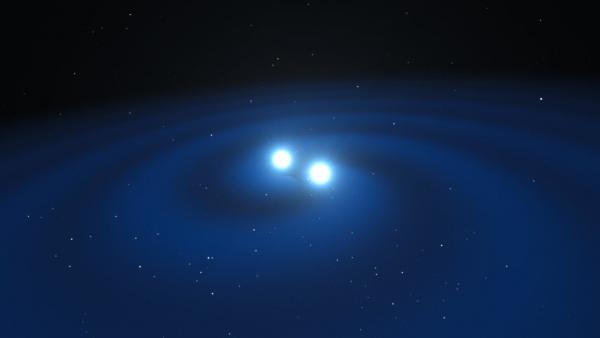
If dropped on Earth, that sugar cube would sink straight through it.
There’s a giant water reservoir in Space
Astronomers discovered a huge cloud of water vapor around a quasar 12 billion light-years away. It holds 140 trillion times more water than all of Earth’s oceans combined.
The Moon is slowly leaving us
Every year, the Moon drifts about 3.8 cm farther from Earth. Eventually, this will affect solar eclipses, but don’t worry — it won’t really matter for about 600 million years.
You could survive 15 seconds in Space without a suit
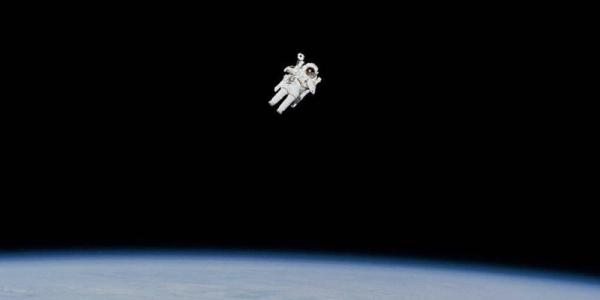
Surprisingly, you wouldn’t instantly explode in the vacuum of space. You’d lose consciousness in about 15 seconds, and if you're brought back quickly, you might survive with minimal damage. Still, we don’t recommend trying it.
There might be more stars than grains of sand on Earth
Estimates suggest the universe contains 1 septillion stars — that’s a 1 followed by 24 zeros. That’s more than all the grains of sand on all the beaches of Earth combined.
Black holes can "spaghettify" you
If you fell into a black hole, the gravitational pull would be so intense that it would stretch your body into a long, thin noodle — a process scientists call spaghettification.
There's a planet made of diamonds
The exoplanet 55 Cancri e is twice the size of Earth and is believed to be made mostly of carbon — under such high pressure that it could be literally a giant diamond.
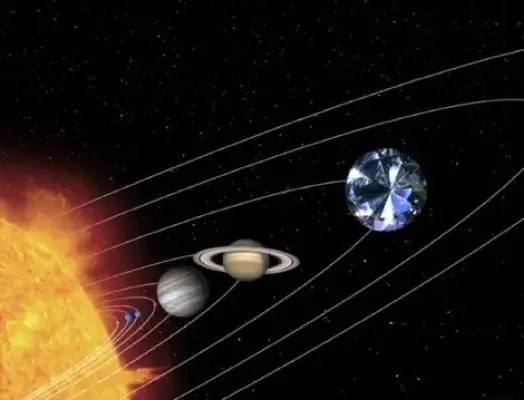
One of the most expensive rocks in the universe!
Space continues to astonish scientists and dreamers alike. With every discovery, we realize how small we are — and how much more we have to learn. From bizarre smells to star-sized diamonds, the cosmos is a place of endless curiosity and wonder.